


A will can be changed during your lifetime, but a trust created through that will follows different rules. So, is a testamentary trust revocable or irrevocable? The answer comes down to when the trust actually exists.
Although you can revise or revoke your will while alive, the testamentary trust does not take shape until after your death. Once it is established, changing its terms becomes much harder.
This distinction matters when planning an inheritance, protecting a child’s assets, or managing money left by a parent. The key is to separate what you can change now from what becomes final later.
Disclaimer: This article provides general educational information about testamentary trusts and estate planning. Trust laws and modification rules vary by state. Consult a qualified estate planning attorney for advice about your circumstances.
Is a Testamentary Trust Revocable or Irrevocable?
A testamentary trust is irrevocable. A will creates it, but only once the person who wrote it has died. From that moment, its terms are locked. Legal guides say it becomes irrevocable at death.
The will itself is not locked. While you’re alive and of sound mind, you can rewrite it or revoke it. You can also sign a codicil, a short, signed add-on.
That part feels revocable. But you’re changing instructions, and the trust itself doesn’t exist yet. Say you remarry and rewrite your will. The trust inside it changes the moment you sign.
Irrevocable also doesn’t mean frozen forever. A few narrow exceptions exist, and they come up shortly.
Why Does a Testamentary Trust Become Irrevocable at Death?
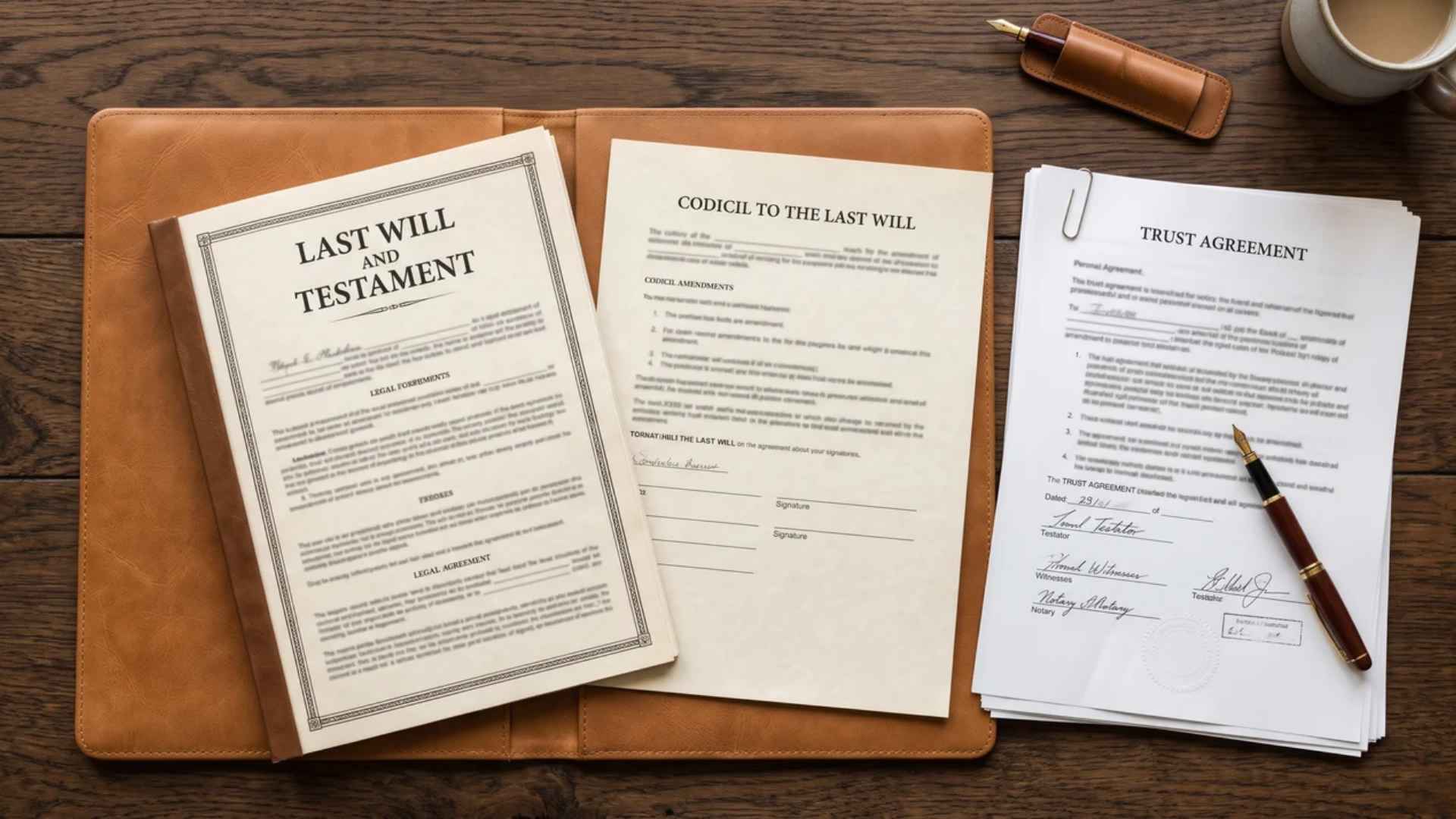
Revocability only matters when you’re alive, and the trust already exists. For a testamentary trust, those two moments never meet.
A living irrevocable trust is locked by choice, while a testamentary trust is locked by timing; nobody actively decides to freeze it, since it simply never has a revocable stage to begin with.
1. What Can You Still Change While You’re Alive?
Until you die, the trust is only text in your will. You can change that text whenever you like. You can rewrite the will, sign a codicil, or revoke the will outright. Any of those can edit or erase the trust before it ever exists.
Say a trustee you named passes away, or you divorce. You update the will, and the trust changes with it. One catch: changes only count if you’re of sound mind when you sign them.
2. How Does a Will Become a Funded Trust?
A testamentary trust follows a set path after death. Each step has to happen before the trust is real.
- The person dies, and the executor files the will with the probate court.
- The court confirms the will is valid.
- Assets named in the will move into the trust.
- The trustee takes charge, named in the will or appointed by the court.
The trust only becomes real once funding happens. At that point, the terms are locked, and the creator has no role left.
Nobody inherits the power to amend it. If a court rejects the will, the trust never forms at all. A living trust skips this path because it’s funded while you’re alive.
How long the court stays involved depends on the state. In Vermont, for example, trustees file annual accounts, though a judge can sometimes waive that.
Can an Irrevocable Testamentary Trust Ever Be Changed?
The person who made the trust can’t change it anymore. Any change has to come from somewhere else. A few narrow routes exist. Which ones apply depends on state law and how the will wrote the trust.
These routes tend to come up when a beneficiary’s needs change.
For example, a child who was meant to receive money outright later qualifies for government benefits that an outright gift would jeopardize, or when the trust’s original terms simply no longer make practical sense.
- The trust’s own terms. If the will says so, a trustee or trust protector (an outside person with limited power) can adjust some terms.
- Court approval.A judge can approve a change, usually when every beneficiary agrees.
- Settlement agreement. Beneficiaries and others with a stake can sign a binding agreement without court, so long as no main purpose of the trust is defeated.
- Decanting. The trustee pours the assets into a new trust with updated terms, where state law allows it.
None of these let anyone rewrite the creator’s wishes on a whim. A change that defeats the trust’s main purpose usually won’t pass.
Court approval can be costly and public, it usually means filing a petition, paying court fees, and creating a record anyone can access.
A private settlement agreement usually skips the courtroom and those fees, provided every beneficiary signs on. Check your state’s rules before counting on any of them.
What Does an Irrevocable Testamentary Trust Mean for Your Estate Plan?
Because the trust locks at death, your will is the one lever you hold. Everything you want the trust to do has to be right on the page. So review the will after big life changes. A new baby, a divorce, or the death of your named trustee all count.
| Testamentary Trust | Revocable Living Trust | |
|---|---|---|
| When it exists | After you die and the will clears probate | Once you sign and fund it |
| Can you change it? | Only through the will, while you’re alive | Yes, any time while you’re competent |
| Probate | Goes through probate | Generally avoids probate |
A living trust gives you control now and generally skips probate. A testamentary trust is simpler to create, but it doesn’t avoid probate.
If you only need to protect a child’s inheritance, a testamentary trust may be enough. If avoiding probate matters, it won’t do. Locked terms are the other thing to plan around. Whatever you write stays written.
Name a backup trustee so a judge doesn’t have to pick one for you. Spell out how and when money gets paid out. Vague terms get locked in too. Rules differ by state, so have an estate attorney read the final draft.
Final Thoughts
Is a testamentary trust revocable or irrevocable? Once it is established after the creator’s death, it is irrevocable. However, that does not mean every decision must remain untouched forever.
State laws, court approval, beneficiary agreements, and provisions within the trust may allow limited changes. The most important planning opportunity comes before the trust takes effect.
Review your will carefully, choose a reliable trustee, and make the distribution instructions clear. Small details can have lasting consequences when the terms become locked. Consult an estate planning attorney to make sure your trust reflects your wishes.
Frequently Asked Questions
Can a Testamentary Trust Be Changed After the Creator Dies?
Rarely, and only through narrow routes. The creator can no longer amend it, so changes must come from elsewhere. Those routes are the trust’s own terms, a court order, or an agreement among beneficiaries and the trustee. State law decides which exist, and decanting is an option in some states.
Can You Revoke a Testamentary Trust While You’re Still Alive?
You can’t, because it doesn’t exist yet. A testamentary trust lives inside your will. While you’re alive, you’re only editing instructions. Rewrite the will, add a codicil, or revoke the will, and the trust goes with it. Nothing locks until death.
Does a Testamentary Trust Avoid Probate?
No. A will creates a testamentary trust, and a will only takes effect after a probate court validates it. The trust is funded through that process, so expect court involvement and extra time. A revocable living trust, funded during life, generally sidesteps probate.
What Is the Difference Between a Revocable vs Irrevocable Beneficiary?
A revocable beneficiary can be changed or removed by the person who named them. An irrevocable beneficiary cannot be changed without their own consent. In a will, your beneficiaries stay changeable while you’re alive. Once the trust forms at death, they can’t be removed.