
A single section of land can cost you $50,000 in one county and half a million just a few miles over. That gap alone tells you the answer isn’t as simple as it sounds.
You hear “a section” tossed around in listings or from someone at the local co-op, and you nod along, but do you really know what that means in acres, let alone dollars?
If you’re trying to figure out how much is a section of land, there’s no single clean answer. The price swings hard once you factor in location, zoning, and what the ground is actually suited for.
This post breaks down the real math behind it, the costs first-time buyers usually miss, and what actually pushes the price up or down.
What a Section of Land Actually Means?
A section of land is 640 acres, or one square mile. That’s the core number, and it never changes.
This number never changes, no matter where the land sits or what it’s used for. Surveyors use it as the base unit for describing rural property, long before street addresses existed.
You’ll see it show up on deeds, plat maps, and legal descriptions, especially in older parts of the country.
In square feet, a section comes out to 27,878,400. That’s where the 640 acre figure comes from. Once you know how many acres in a section, the rest of the sizing starts to click.
Quarters, halves, and smaller splits are just fractions of this same section, so knowing this figure gives you a foundation for reading any legal description correctly, no matter how it’s written.
How Many Acres Are in a Section?
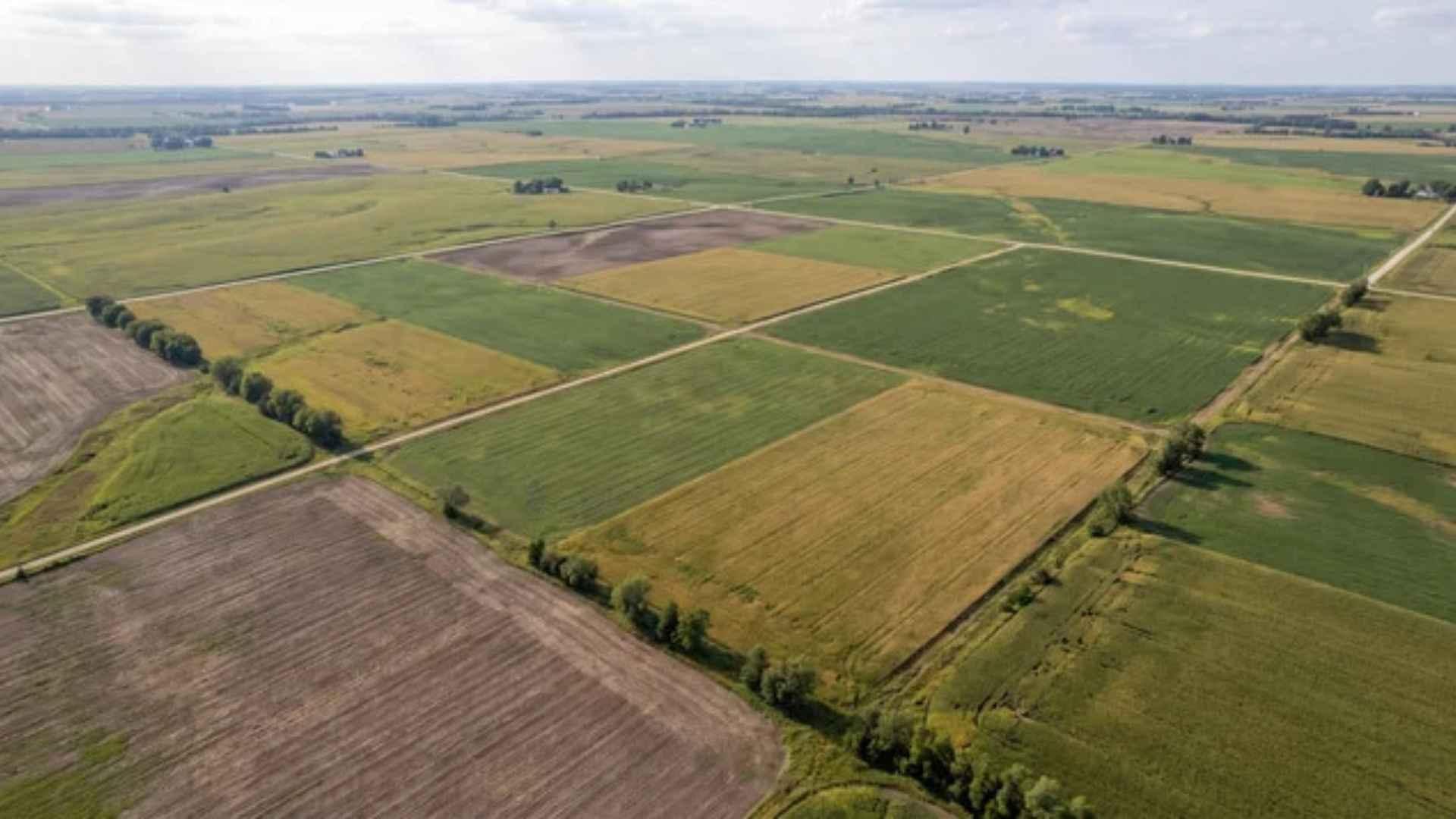
A section holds 640 acres. That’s the standard figure surveyors rely on when marking off land under the Public Land Survey System.
A section is a square mile of land, meaning each side runs 5,280 feet. Multiply those two sides together and you get 27,878,400 square feet.
One acre equals 43,560 square feet, so divide the total by that number. You land at exactly 640 acres. There’s no rounding here and no shortcut math. If you’ve been asking how many acres in a section, that’s the full answer: 640, every single time.
It’s a direct path from mile to feet, then feet to square feet, then square feet to acres. This holds true for any standard section, whether you’re reviewing a property deed, checking a survey map, or just trying to picture how much land 640 acres actually covers.
How a Section Fits Into the Township Grid?
A township is a six mile by six mile block. It holds 36 sections, arranged in a grid. Numbering starts in the northeast corner, zigzags west then east, and ends at section 36 in the southeast corner.
This system exists because roads didn’t exist yet when land got divided. Surveyors needed a way to describe rural land before streets had names. That’s why an old deed might read “Section 14, Township 3 North, Range 5 East” instead of a street address. It’s a location system based on math, not landmarks.
Not every section holds exactly 640 acres, though. Surveyors adjusted for the earth’s curve along the north and west edges, so those sections often run smaller or larger. Interior sections stay true to size. That’s the one spot where how many acres in a section can actually shift.
Quarter Sections, Half Sections, and Smaller Splits
Land doesn’t just split into halves and quarters, it splits into a whole system worth knowing before you buy.
A half sectionis exactly what it sounds like: half of one section. That’s 320 acres, split either north to south or east to west.
A quarter section is a quarter of the whole, or 160 acres. This is the size most old homestead claims were built around.
Splits keep going smaller from there, and this chart lays out exactly how each size breaks down.
| Split | Fraction of a Section | Acres | Dimensions |
| Full Section | 1 | 640 acres | 1 mile x 1 mile |
| Half Section | 1/2 | 320 acres | 1 mile x 1/2 mile |
| Quarter Section | 1/4 | 160 acres | 1/2 mile x 1/2 mile |
| Half of a Quarter | 1/8 | 80 acres | 1/2 mile x 1/4 mile |
| Quarter-Quarter Section | 1/16 | 40 acres | 1/4 mile x 1/4 mile |
Once you see the splits laid out this way, any acreage number on a listing starts to make sense.
Quarter Section vs. Quarter-Quarter Section

I’ve seen buyers pull up a listing for “40 acres” and assume it’s a quarter section. It isn’t.
A quarter section is 160 acres, a half mile by half mile square. A quarter-quarter section is 40 acres, a quarter mile by quarter mile square.
The confusion happens because both get called ‘a quarter’ in casual conversation. One person means a quarter of the section, the other a quarter of a quarter. Knowing how many acres in a section in the first place is what clears up which one you’re actually looking at.
If you’re reading a legal description, look for how many times “quarter” appears. One quarter means 160 acres. Two quarters stacked, like “the northeast quarter of the northeast quarter,” means 40 acres.
That 40 acre parcel is sometimes called “the back 40” in casual talk. It’s a nickname, not an official term, but it sticks because the size comes up so often in rural sales.
What a Section of Land Actually Costs
There’s no fixed price for a section of land: size stays constant, but value depends entirely on where that square mile sits.
Price per acre shifts based on a handful of factors that stack together:
- Location decides the biggest swing, since a section near a growing city sells for more than the same size acreage two hours outside town.
- Zoning matters just as much, with residential or commercial land usually costing more than land zoned strictly for agriculture.
- Water access adds real value too, and a reliable well or irrigation rights can push the price well above dry land nearby.
- Current use plays a role as well, since land already producing income through farming or a lease tends to price higher than raw ground sitting idle.
Using Section Size to Estimate What You’re Buying
Once you know the section size and the price per acre, the math is simple. Multiply the two, and you get a rough number to work with.
Say a listing shows a quarter section, roughly 160 acres, at an estimated price per acre for that area. That gives you a ballpark total before fees, closing costs, or any negotiation.
This number is your starting point, not your final offer. Compare it against recent sales of similar acreage nearby before you decide it’s fair.
Ask what’s included in that per acre price too. Water rights, mineral rights, and access roads sometimes get priced separately from the land itself.
Get the exact acreage confirmed before you rely on any of this math. Legal descriptions can round, and edge sections may not hold the acreage you expect.
Final Takeaway
A section of land equals 640 acres, and every other unit in this guide, half sections, quarter sections, townships, builds from that one fact.
The next time you look at a property listing or legal description, you’ll be able to tell at a glance how much land is actually involved.
Frequently Asked Questions
Is 40 acres actually a quarter section, or something smaller?
No. A quarter section is 160 acres. 40 acres is a quarter-quarter section, sometimes called “the back 40.”
What’s bigger than a section of land?
A township is bigger. It holds 36 sections, covering 36 square miles in total.
What are the exact dimensions of a section in feet?
A section measures 5,280 feet by 5,280 feet, since it’s exactly one mile on each side.
Are sections measured differently for farmland than for residential land?
No. The section itself measures the same either way. Zoning and land use affect price, not the acreage.