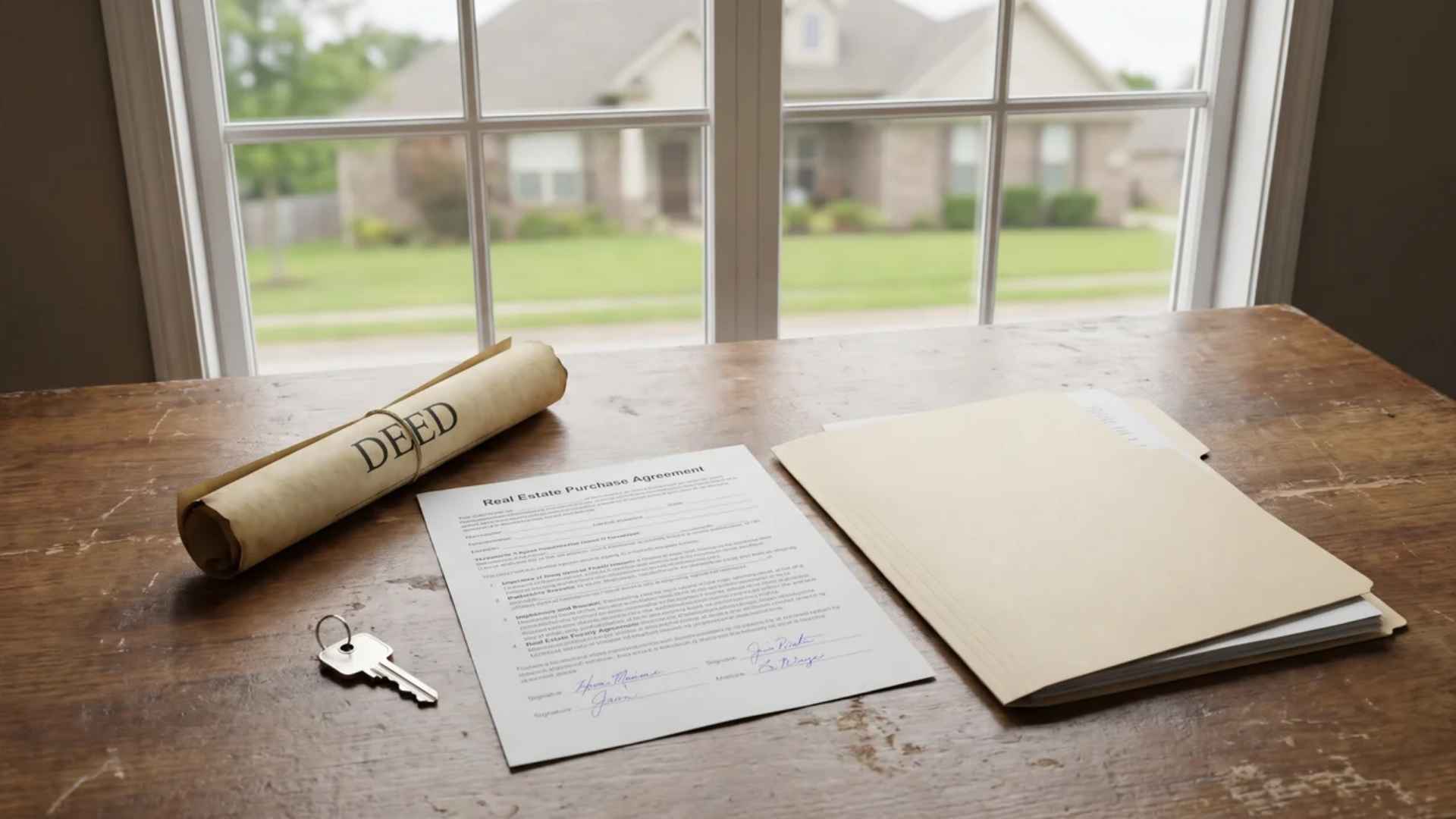

Selling a rental property starts a clock that won’t wait for the perfect deal. Under Section 1031, you have just 45 days to identify your replacement.
A Delaware statutory trust can ease that pressure. You buy a share of professionally managed real estate and leave the landlord work behind.
But the biggest limit is also what protects your tax deferral. You get no control, since a passive trust helps the IRS treat your share as real estate. So before you sign, ask yourself if you can live with that. It starts with knowing what you’d actually own.
Disclaimer: This article is for informational purposes only and does not constitute tax, legal, or investment advice. Delaware statutory trusts and 1031 exchanges involve specific eligibility requirements and financial risks. Consult a qualified tax professional, attorney, or financial advisor before making investment decisions.
What Is a Delaware Statutory Trust?
A Delaware statutory trust (DST) is a legal entity formed under Delaware law. It lets several investors hold fractional ownership in real estate or other income-producing assets.
In real estate, it is most often used to hold replacement property in a 1031 exchange. Delaware law calls it an unincorporated association and treats it as a separate legal entity.
It starts when someone signs a governing agreement and files a certificate of trust with the Delaware Division of Corporations, under the rules set out in the Delaware Statutory Trust Act.
Don’t confuse it with a family trust. A family trust is usually personal, built to pass assets to heirs. A DST is created under a state statute and built to pool many unrelated investors.
Why Does a DST Qualify for a 1031 Exchange?
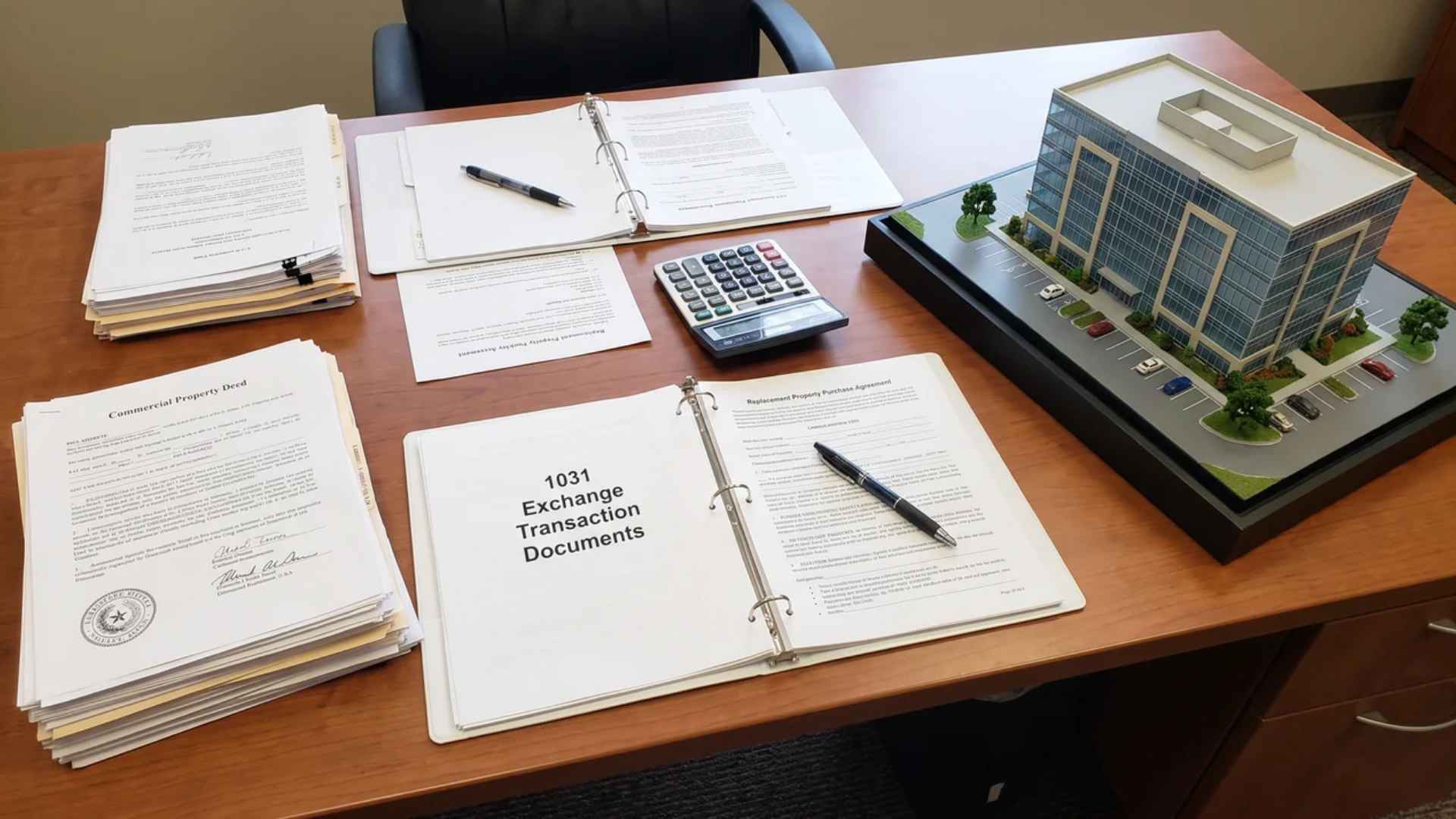
A DST qualifies for a 1031 exchange because the IRS treats each investor as owning real estate directly. That position comes from IRS Revenue Ruling 2004-86.
Under the ruling, a properly structured DST is treated as a grantor trust. Each investor is treated as owning a direct fractional interest in the real estate, not a company share.
Two ideas explain the result: how the IRS sees the trust, and the rules that keep it that way.
How Does the IRS Treat a DST as Direct Real Estate Ownership?
The ruling looks at what the trust actually does. A DST that only holds property and collects rent is classified as a trust, not a business.
Because the trust only passes income through, the IRS looks past it. You are treated as owning an undivided share of the property itself.
That matters because 1031 exchanges only work for real property. A share of a company is not like-kind to a building. A share of this trust is treated as if it were the building.
The law and the tax code see it differently.
Legally, you buy into the trust through a private securities offering. For tax purposes, the IRS sees the property. This only holds for a DST built like the one in the ruling.
Give the trustee extra powers, and the answer can change. The ruling also reflects one set of facts at one point in time. Ask a tax professional whether your exchange still fits.
What Are the “Seven Deadly Sins” and Why Do They Exist?
The ruling attaches conditions to that treatment. Investors and sponsors call them the seven deadly sins, and each one limits what the trustee can do. Each one keeps the trust passive, and passivity is what protects the tax treatment.
- No new capital from current or new investors after the offering closes.
- No renegotiating existing loans, and no new borrowing.
- No reinvesting the proceeds when a property is sold.
- Cash reserves held only in short-term debt obligations.
- Capital spending limited to normal repairs and minor, non-structural work.
- All other cash paid out to investors on a current basis.
- No renegotiating leases, except when a tenant goes bankrupt or insolvent.
Together, they stop the trustee from acting like a business owner. Business owners raise money, refinance, and reinvest. A passive trust does none of that.
Break one, and the trust risks being treated as a business. That puts 1031 eligibility at risk. So when plans change, the trust usually converts or sells instead of adapting.
How Does a DST Compare to a TIC, an LLC, or a REIT?
All three can hold real estate, but they handle a 1031 exchange differently.
| Structure | Qualifies for 1031? | Investor control | Why |
|---|---|---|---|
| DST | Yes, if built to Rev. Rul. 2004-86 | None | You are treated as owning a fractional interest in the real estate |
| TIC | Yes | Co-owners usually vote on major decisions | You hold a deeded interest, and IRS guidelines generally cap owners at 35 |
| LLC taxed as a partnership | No | Set by the operating agreement | A partnership interest is not real property, even when the partnership owns it |
| REIT | No | None | You own stock in a company, not a share of the property |
The DST is the only option here that gives you passive ownership and 1031 eligibility together.
Who Can Invest in a DST, and What Does the Process Require?
Most DST offerings are private placements, generally limited to accredited investors. A sponsor can’t sell to you until you meet that test.
Under the SEC’s accredited investor rules, you qualify with a net worth above $1 million, not counting your primary home. Income above $200,000 in each of the last two years also works, or $300,000 with a spouse or partner. Certain financial licenses count too.
Minimums vary by offering, though many start in the $25,000 to $100,000 range. The offering documents state the exact minimum investment and the expected hold, so read them closely.
After you sell, you have 45 days to identify replacement property in writing. You then must close within 180 days, or by your tax return due date if that comes first. Treasury Regulation §1.1031(k)-1 sets out both limits.
A qualified intermediary should hold your sale proceeds. If you receive the money yourself, the exchange fails. DST offerings are pre-packaged, and some close within days. That is why they often show up in backup plans when the 45 days are running short.
For example, say you sell a rental property for $900,000, with $250,000 of debt paid off at closing and a $300,000 taxable gain. You have 45 days from closing to name a DST interest in writing, and 180 days to close on it.
What Are the Benefits and Risks of a Delaware Statutory Trust?
A DST gives you passive ownership of larger real estate and a way to defer capital gains. The same restrictions that make this possible also remove your control and your liquidity.
What Do Investors Gain From a DST?
These are the gains investors talk about most. Each one traces back to the passive structure you read about above.
| Benefit | What It Means for You | What to Keep in Mind |
|---|---|---|
| No daily management | You skip tenants, repairs, and day-to-day work. | You also hand decisions to someone else. |
| Access to larger property | You can own a share of a larger commercial property than you’d buy alone. | Your share doesn’t give you control over the building. |
| No personal loan application | DSTs typically carry non-recourse debt, and you don’t apply for a loan yourself. | The trust’s debt is allocated by ownership share, with no underwriting or personal guarantee from you. |
| Debt replacement | Your share of trust debt can replace debt paid off on your old property. | To fully defer gain, replace that debt with new debt or added cash. |
| All-cash option | Some offerings carry no debt at all. | You may trade a slightly lower return for one less variable to manage. |
| Stepped-up basis for heirs | Heirs may receive a basis reset to fair market value at death. | This can wipe out capital gains tax on lifetime appreciation. Basis rules can change. |
The thread running through these gains is that you hand off the work. Check the basis rules with a tax professional.
What Does a DST Cost in Control and Liquidity?
The passivity that frees you from tenants also takes away your say. Think of it as one deal, not two lists. The tax treatment needs a passive trust. That requires strict limits on the trustee, and those limits take away your control.
| Cost or Risk | What It Means for You | What Affects the Impact |
|---|---|---|
| Loss of control | You can’t refinance, sell early or change the plan. | With a long horizon and a 45-day deadline, this may be a fair price. |
| Illiquidity | There’s usually no ready market for DST interests, and offerings run for several years. | If you might need cash in three years, it may not suit you. |
| Exit timing | The sponsor generally controls the timing and route of the exit. | Your own schedule may not match the sponsor’s. |
| Sponsor quality | The people running the offering matter a lot. | Review sponsor quality before investing. |
| Property and debt risk | Leverage, tenants, and the local market can affect results. | These risks exist apart from the trust structure. |
| Fees | Upfront costs and ongoing charges reduce what you keep. | Compare the full fee load for each offering. |
| No guarantees | Income, appreciation, and resale value aren’t assured. | You can lose money. |
The Bottom Line
A Delaware statutory trust can make a 1031 exchange easier when buying and managing another property is not practical.
It offers access to professionally managed real estate and potential tax deferral, but those benefits come with limited control and liquidity.
The most important decision is not simply whether a DST qualifies for a 1031 exchange. It is whether the investment fits your financial goals, timeline, and tolerance for risk.
Review the offering documents, compare the fees, and consult a qualified tax professional before investing.
Frequently Asked Questions
What Is the Downside to a Delaware Statutory Trust?
The main downsides are illiquidity and lack of control. DST interests are multi-year holdings with no ready market. Investors cannot direct sales, refinancing, or operations. Those limits come with the tax treatment. Fees reduce net returns, and neither income nor appreciation is guaranteed.
What Is the Purpose of a Delaware Statutory Trust?
A Delaware statutory trust pools investor money to hold title to income-producing property. Most often that property is commercial real estate. Its main purpose in investing is to let you use 1031 exchange proceeds on a fractional, professionally managed property. Under Revenue Ruling 2004-86, the IRS treats that as direct ownership, so capital gains tax stays deferred.
What Is the Difference Between a Trust and a Statutory Trust?
A traditional trust is usually a personal arrangement under common law, often used for estate planning. A trustee holds assets for beneficiaries. A statutory trust is created under a state statute, like Delaware’s, as a business or investment entity. It needs a certificate filing and a governing agreement, and it can serve many investors.
Can You Invest in a DST Without a 1031 Exchange?
Yes. If you are an accredited investor, you can buy DST interests with cash that did not come from a property sale. It works as a passive real estate investment. However, the capital gains deferral that makes DSTs popular applies only when a qualifying 1031 exchange funds the purchase.