
Receiving this kind of letter from your landlord can be stressful, especially when you are unsure whether you need to leave your home or have time to resolve the issue.
But, it is not the same as an eviction, and ignoring it can limit your options. The important thing is to understand what the notice requires and how much time you have to respond.
Knowing your rights can help you avoid costly mistakes and make informed decisions about your next steps. Now, let’s look at what a notice to quit means.
Disclaimer: This article is general information, not legal advice, and landlord-tenant rules vary by state and locality. If you’ve received a notice to quit, consult a licensed attorney or local legal aid office about your specific situation.
What Is a Notice to Quit?
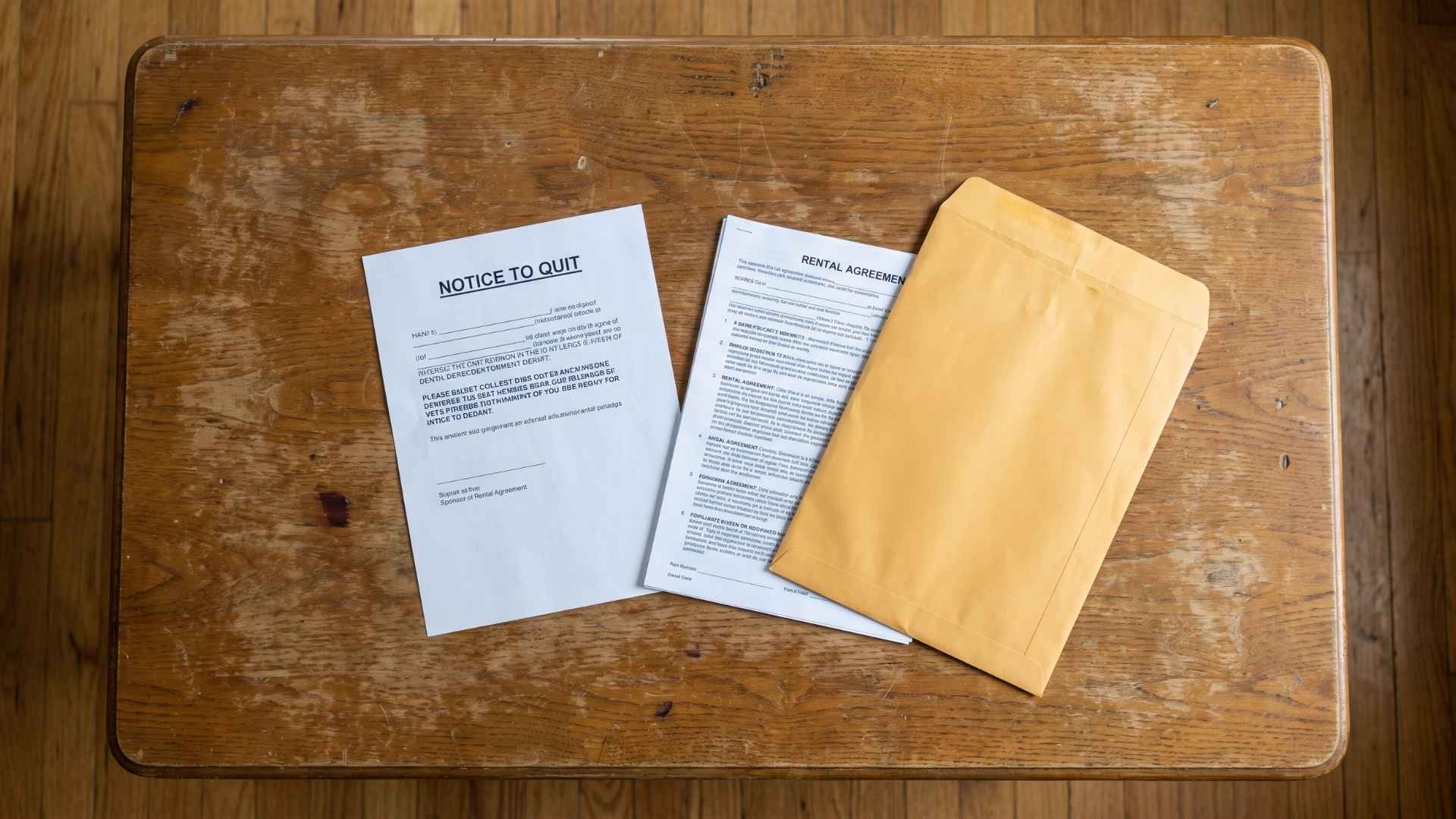
A notice to quit is a written letter from a landlord to a tenant. It tells the tenant to fix a problem or leave by a set date.
“Quit” here means leave. It has nothing to do with resigning from a job.
Think of it as the landlord’s first formal move. It comes before any court case, and it is not a court order.
The name changes by state. You may see it called a notice to vacate, a notice to pay or quit, or a termination notice.
The job is the same everywhere. It puts the tenant on written notice and starts a clock.
What Should a Notice to Quit Include?
A valid notice usually spells out a few basic facts. Check your letter for:
- Your name and the rental address
- The reason for the notice, such as unpaid rent or a lease violation
- The exact deadline to pay, fix the issue, or move out
- The date the notice was signed or delivered
- How you can respond, such as paying the amount owed to stop the process
Most notices also point to the lease section or state law the landlord is relying on. If any of these pieces are missing or unclear, make a note of it. It may matter later if the case reaches court.
What Are the Main Types of Notice to Quit?
 Not every notice works the same way. The question that matters most is whether you can fix the problem and stop the process. Four types cover most situations.
1. Notice to Pay or Quit
This one is about unpaid rent. The landlord gives you a short window to pay what you owe or leave.
In many states, that window is just three to five days, though some allow up to 14. Pay the full amount within it, and the matter usually ends there.
2. Notice to Perform or Quit
This one covers a lease violation that has nothing to do with rent. Think of an unauthorized pet, property damage, or repeated noise complaints.
You get time to fix it. If you do, the landlord usually has nothing left to pursue.
For example, if the notice is about an unauthorized pet, removing the animal from the unit within the stated window typically resolves it. If it’s about property damage, repairing it or paying for the repair usually does the same.
3. Unconditional Quit Notice
This notice gives you no chance to fix anything. You must leave by the date listed.
Landlords usually save it for serious problems, like illegal activity on the property. Since there is no cure, these cases can move to court faster.
4. No-Fault Termination Notice
Here, you did nothing wrong. The landlord simply wants to end a month-to-month tenancy.
State law sets the notice period, often 30 to 90 days . Many tenants read this notice as an accusation, but it isn’t one, it’s simply a plain end to the rental.
Is a Notice to Quit the Same as an Eviction?
No. A notice to quit is a required step before a court case. It is not an order to leave.
The date on the notice is not your move-out date. It is the point where the landlord may take the next step. Evictions follow a set order. Knowing where you are in that order tells you what you can still do.
- Notice. The landlord gives you the written notice. If it is curable, you can often fix the problem right now.
- Deadline. The date passes. You are still the tenant, and you are still in your home.
- Court filing. The landlord files a case. Some states call this summary process; others call it unlawful detainer .
- Summons. You receive court papers with a hearing date. Do not ignore them.
- Hearing. Both sides tell their story to a judge. Bring proof, such as rent receipts or photos.
- Judgment. The judge decides. If the landlord wins, a court order follows.
- Enforcement. A court officer carries out the order. Only at this point can you be made to leave.
Many tenants treat step two as the finish line. It isn’t. Several steps still sit between you and a forced move.
That also means your landlord cannot change the locks or toss your belongings. Self-help like that is generally not allowed. Only a court order counts.
Missing the hearing is the one move that can really hurt you. A judge may rule for the landlord by default.
Court names, timelines, and hearing dates differ by state. Check your local court’s website for exact dates.
What Should a Tenant Do After Getting a Notice to Quit?

What you do next depends on whether the notice is curable. Start by reading it for three things: the type, the deadline, and the stated reason.
If you can fix the problem, act fast. Paying the full balance or correcting the violation within the window usually stops the process.
Then check the notice itself. Was the rent actually late? Are the dates clear? Does the notice type match the problem?
A notice that gets these wrong may be defective. Compare it against your state’s rules before you assume it is valid.
Keep copies of the notice and every payment. Pay in a way that leaves a record. Respond before the deadline, not on it. Finally, contact local legal aid or a tenant resource.
Procedures change by state, and many legal aid offices offer free same-day phone screenings.
A quick call can catch a bad deadline or a defective notice before it costs you a defense in court.
The Bottom Line
So, a notice to quit does not always mean you will lose your home. In many cases, you may have an opportunity to correct a lease violation, pay overdue rent, or challenge a notice that does not follow state law.
What matters most is how you respond and whether you act within the required timeframe. Even when the situation seems straightforward, local rules can affect your rights and options.
Read your notice carefully, keep relevant records, and contact a local tenant rights organization or attorney if you need guidance.
Frequently Asked Questions
How long is a notice to quit period?
It depends on the notice type and your state. Pay-or-quit notices often give three to five days , though some states allow 14. Perform-or-quit notices give you time to fix the problem. No-fault notices for month-to-month tenancies often run 30, 60, or 90 days. Check your state’s law and the dates written on your notice.
Do I still pay rent during the notice to quit period?
Usually, yes. The tenancy normally continues until the notice period ends or a court says otherwise. So rent is still owed. Stopping payment can give your landlord a second reason to file. Rules on late rent differ by state, so confirm locally.
Is a notice to quit the same as quitting a job?
No. In landlord-tenant law, a notice to quit is a landlord’s written demand to fix a lease problem or leave. Quitting a job means resigning, usually with notice to your employer. The word is the same. The people, papers, and consequences are different.
Does a notice to quit go on your record?
The notice itself is a private letter between you and your landlord. A court case filed afterward is usually a public record, and tenant screening companies may report it. How long a filing shows up varies by state. Check local court and screening rules.