

Buying a home often means sending money before you reach the closing table.
That payment can feel like one more cost, especially while you are still lining up financing, inspections, and paperwork.
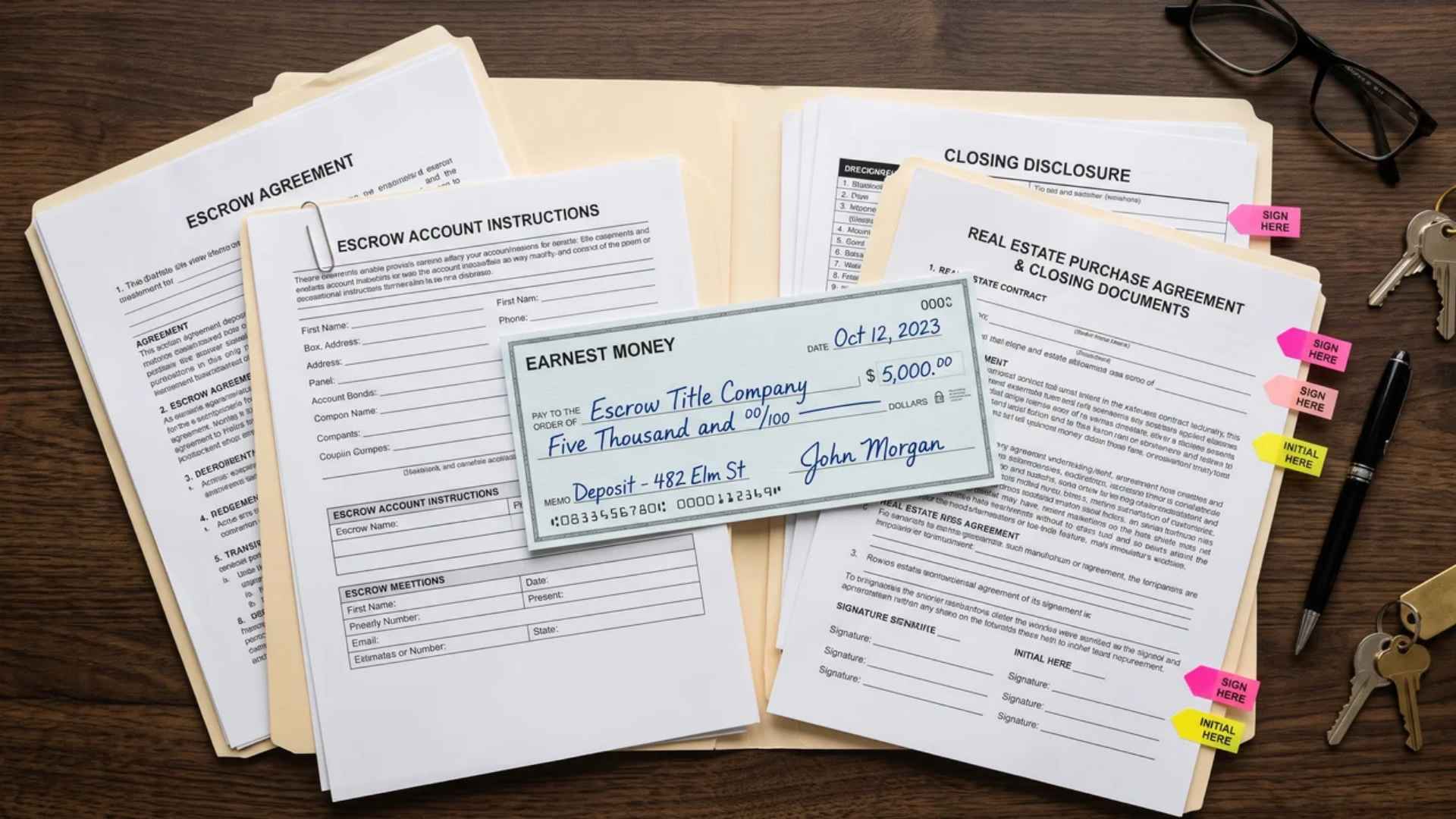
An earnest money deposit is your own cash, paid after the seller accepts your offer. That is what earnest money is when buying a home. If the deal closes, it is credited toward your purchase.
If you miss a deadline or leave the contract without a protected reason, the seller may keep the deposit. That is why the dates in your contract matter as much as the amount.
Disclaimer: This article provides general information about earnest money deposits and residential real estate transactions. Deposit requirements, refund rights, and dispute procedures vary by state and contract. Consult a licensed real estate professional or qualified real estate attorney for advice about your specific transaction.
What Is an Earnest Money Deposit?
An earnest money deposit, also called a good-faith deposit, is a payment you make after the seller accepts your offer. It shows you plan to follow through.
Sellers care because accepting your offer takes the home off the market while the sale moves toward closing.
A deposit backs that risk with real money, so it reads as a stronger offer than one with no cash behind it.
It isn’t an extra fee. It’s your own money, and it’s credited to you if the sale closes. If the sale fails, getting it back depends on your contract and your deadlines.
How Does an Earnest Money Deposit Work?
The money makes three stops: the amount you set, the account that holds it, and the closing table.
1. How Much Is the Earnest Money Deposit?
Most buyers put down 1% to 3% of the purchase price. In a competitive market, deposits can climb to 5% or even 10%. On a $250,000 home, 1% to 3% works out to $2,500 to $7,500.
A slow market can accept a smaller deposit, while a bidding war pushes it up.
A bigger deposit is safer when your contingencies are solid; if your inspection, financing, or appraisal contingency is still in the contract, you can walk away and get the money back if something goes wrong.
The extra cash makes your offer look stronger without adding real risk.
2. Who Holds the Money?
A neutral third party holds it, usually a title company, a brokerage, or a real estate attorney. Your contract names who. The seller doesn’t get the money at this stage.
It sits in an escrow account until closing or until the contract ends. You usually pay within a few days of acceptance, by wire, cashier’s check, or personal check. Your contract sets the exact due date.
Wire fraud often targets this step. Scammers send fake emails with new wire instructions that look like they came from your agent or title company.
Call the holder on a number you already trust before you send anything. Then get a written receipt.
3. What Happens to It at Closing?
If the sale closes, the deposit is credited toward your down payment or closing costs. You don’t pay it twice. Say you owe $30,000 in cash at closing and already paid $5,000 as a deposit.
You’d bring $25,000. Check the credit on your Closing Disclosure before you sign.
When Do You Get Your Earnest Money Back?
Your contract decides, and it looks at two things: why you cancel and when you cancel.
Reasons You Usually Get It Back
Contingencies protect you when the deal can’t move forward through no fault of yours. Four show up most often:
- Inspection: serious problems you and the seller can’t settle.
- Appraisal: the home appraises below your offer.
- Financing: your lender denies the mortgage.
- Title or home sale: a lien or ownership claim turns up, or your current home doesn’t sell in time.
Contingencies protect buyers only if they’re written into your contract. Waive one to look stronger, and you lose that safety net.
You also get the deposit back if the seller backs out or breaks the contract without a valid reason.
Reasons You Can Lose It
You can lose the deposit when you back out for a reason your contract doesn’t cover. Three situations show up most often:
- Changing your mind: backing out with no contingency behind the decision.
- Late payment: sending the deposit after the due date in your contract.
- Missed deadline: canceling after a contingency has expired, or skipping a required notice.
In each case, the seller may keep the money as payment for taking the home off the market. Check your contract’s dates before you act.
Contracts often label this forfeiture “liquidated damages“; a pre-agreed payment for the seller’s loss, not a penalty negotiated after the fact.
Why the Deadline Matters as Much as the Reason
Every contingency has an expiry date. After that date, it stops protecting you.
Say your inspection contingency ends on the 10th, and you spot a bad roof on the 12th. Walking away then can put your deposit at risk.
Same reason, different date, different outcome. That’s why a good reason alone isn’t enough.
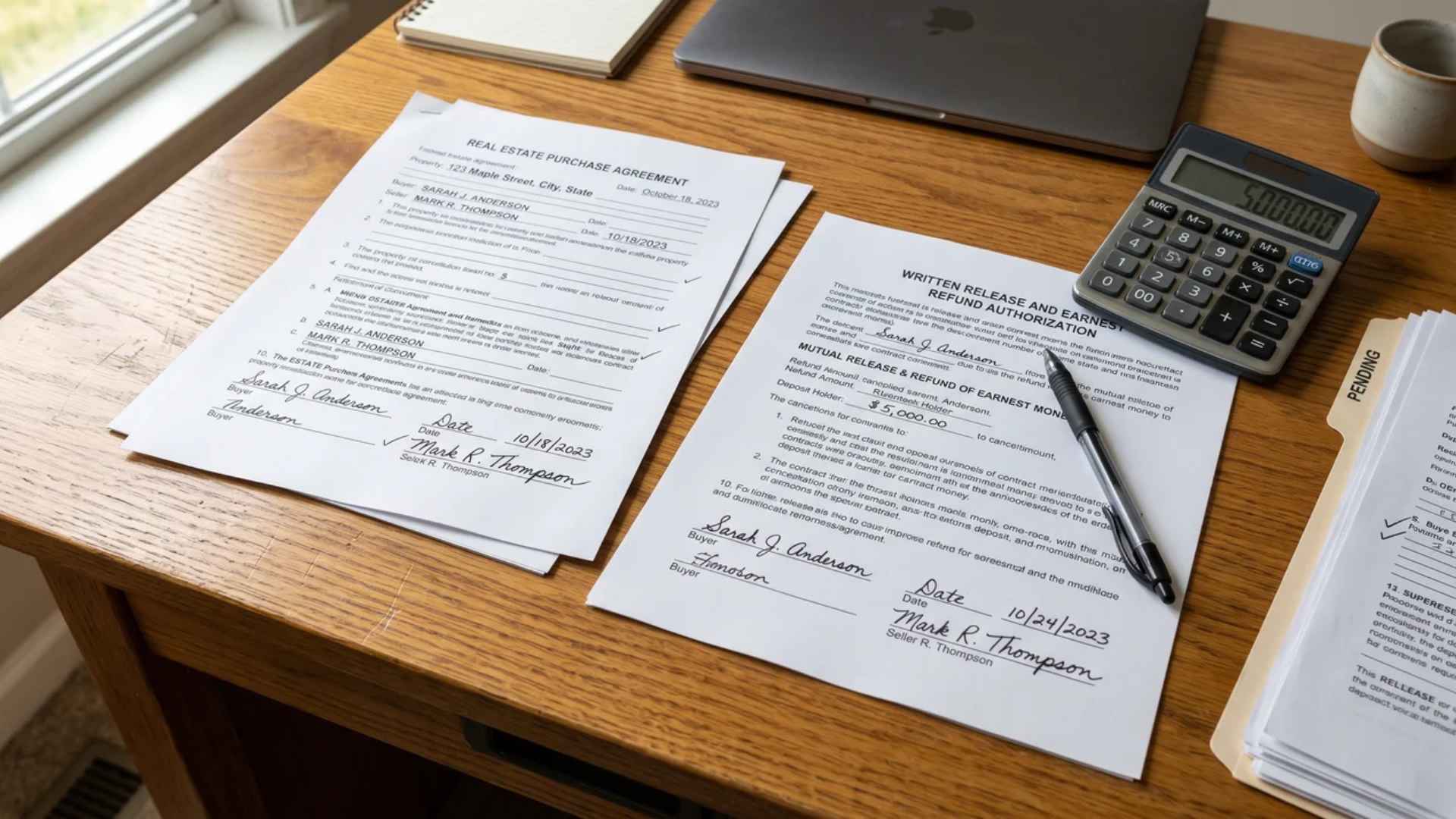
A refund isn’t automatic either. The holder often needs both sides to sign a written release, commonly called an earnest money release or mutual release form.
If the seller disagrees, the holder typically holds the money until you settle or a court decides. Rules and contract terms vary by state, so ask your agent or a real estate attorney.
Send any cancellation notice in writing, and keep a copy.
How Is Earnest Money Different From a Down Payment?
They both count toward what you pay for the home, but they work differently. Here’s how they compare:
| Earnest Money | Down Payment | |
|---|---|---|
| When you pay it | Right after your offer is accepted | At closing |
| Size | Smaller amount | Larger amount |
| What it counts toward | Your down payment or closing costs | The purchase price |
| When the seller receives it | Not before closing, unless you forfeit it | At closing |
| Risk | Can be at risk once you pay it | Changes hands at closing |
Your lender will want proof the deposit came from your own funds, so keep the receipt and bank record.
Before You Send the Deposit
An earnest money deposit is simple at heart. It’s your own money, held by a neutral party, and credited to you when the sale closes.
The part to watch is the contract. Contingencies and their deadlines decide whether it comes back.
The safest approach is to treat the contract dates as carefully as the deposit amount.
Keep proof of payment, understand which contingencies protect you, and send any required notice on time and in writing.
This gives you a starting point, but your contract determines your rights. Review it carefully before sending the funds.
Frequently Asked Questions
Is earnest money required to buy a house?
No law in most places requires earnest money, but nearly every seller expects it. Without one, your offer can look less serious. It’s also negotiable, so talk to your agent. They can help you pick an amount that fits your local market.
Is $1,000 earnest money enough?
It depends on the price and the market. In a slower market on a lower-priced home, $1,000 can work. On a mid-priced home with competing offers, it can look small next to the usual 1% to 3%. Ask your agent what recent accepted offers carried, then match that.
How long does it take to get earnest money back?
There’s no fixed timeline, but once both sides sign the release, most holders send the money back within a few business days to two weeks. Your contract and the holder’s process set the pace. Ask the holder what paperwork they need from you. If the seller disagrees, the money can sit for weeks or months while you negotiate or wait on a mediator or court to decide.
Do you pay earnest money on a rental property?
Not in the same way. Earnest money belongs to home purchases, not rentals. Renters typically pay a security deposit instead. The rules for it follow landlord-tenant law, which differs by state. Ask the landlord in writing what any deposit covers and when it comes back.