Burying someone on your own land is legal in many places, but only if you follow the right steps.
Zoning laws, state rules, and health codes all come into play, and skipping one can lead to fines or bigger problems later.
I'll walk you through which states allow home burials, what permits you'll need, and how much land the law requires. I'll also cover what happens to a burial site on your property if you ever decide to sell.
Get these details right, and you'll avoid a messy situation for your family.
Can You Legally Bury Someone on Your Own Property?
Yes, in most cases you can bury someone on your own property, but the answer depends on where that property sits.
No federal law bans home burial, so this comes down to state statutes and local rules stacked on top of each other. Some states allow it with almost no restrictions.
Others require you to notify the health department, keep the burial site a set distance from wells or water sources, or register the plot as a family cemetery.
If your land sits inside city limits, you'll likely run into more roadblocks than if you're out in a rural county.
Before you plan anything, check both your state's vital records law and your county's zoning code, because either one can stop you cold.
State and Local Rules You Need to Check
Home burial laws live in two different places, and missing one of them can undo your entire plan.
State Laws Set the Baseline
Every state has its own vital records statute, and that statute decides whether private burial is even on the table.
States like Texas, Colorado, and Idaho generally permit home burial with relatively few restrictions, while a handful of states leave most of the process to licensed funeral directors.
Three states: Indiana, California, and Washington, either ban home burial outright or restrict it so heavily that a standard private burial on your land isn't realistically possible.
If you live in one of those states, your path forward is to contact the local zoning department about establishing a formally dedicated family cemetery, which may be approved through a separate permit process.
The state law also sets ground rules like who can sign off on the burial and how quickly it has to happen after death. This is your starting point, not your final answer, because local rules can still narrow what the state allows.
Local Zoning Has the Final Say
Even when your state says yes, your county or township can still say no. Zoning codes often treat a burial site as a land use change, similar to adding a structure.
Some counties classify it as a private cemetery, which triggers acreage minimums or a formal application. Others allow it quietly as long as you're not inside city limits.
I'd recommend calling your local planning office directly, because zoning maps and burial rules rarely show up in a simple online search.
Rural Land vs City Lots
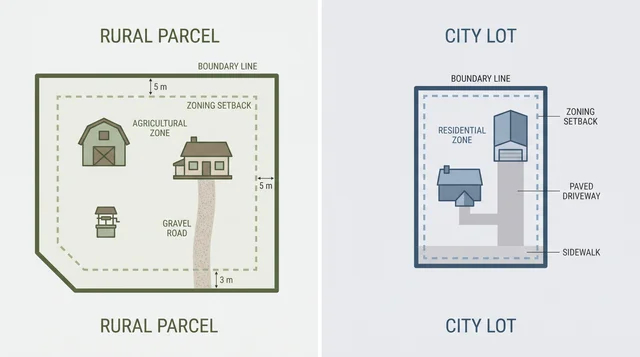
Where your property sits changes almost everything. Rural and unincorporated land usually gives you more freedom, since counties tend to regulate burial less tightly outside city boundaries.
City lots are a different story. Municipal codes often ban burial outright, partly due to lot size and partly due to groundwater and utility line concerns.
If you're on a small suburban lot with a septic system or shared water line nearby, home burial may not be realistic no matter what the state law says.
Permits and Paperwork You'll Need
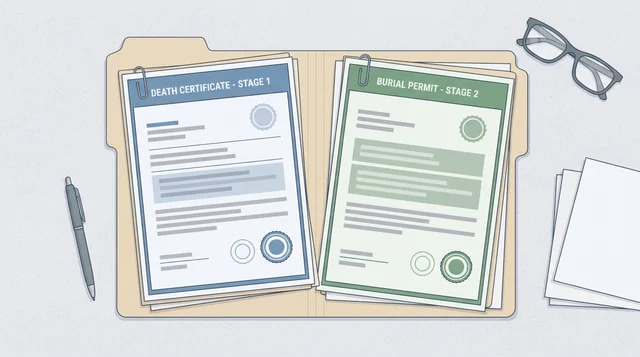
Burial isn't just about digging a hole. You need the right paperwork filed before and after.
Death Certificate and Registration
Before any burial can happen, the death has to be officially registered. A physician or coroner completes the death certificate, and it gets filed with the state or county vital records office.
This step isn't optional, and skipping it can create legal problems down the road, including issues with estate settlement or insurance claims.
Most states give you a short window, often three to ten days, to register the death and get this paperwork moving before burial can proceed.
Burial or Transit Permit
Once the death is registered, you'll typically need a separate burial or transit permit before the body can be moved or buried.
This permit confirms the death was reported properly and gives legal permission for burial to happen at a specific location. Some counties issue it fast, within a day, while others take longer if paperwork is incomplete.
Without this permit in hand, burying a body on your land technically counts as an unauthorized burial, even if you own the land outright.
Do You Need a Funeral Director?
This depends entirely on your state. A few states, including Louisiana and New York, legally require a licensed funeral director to handle at least part of the process.
Most others let families handle burial themselves, sometimes called a family-directed or home funeral. Even where it's not required, a funeral director can help you avoid paperwork mistakes.
If your state mandates one, skipping this step can make the burial invalid, regardless of how well you followed everything else.
Setting Up a Family Cemetery on Your Land
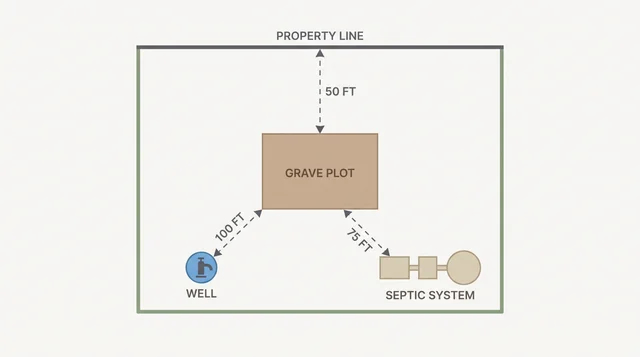
Setting up a family cemetery takes more than picking a nice spot on your land, so here's what you actually need to get right.
Minimum Acreage and Setbacks
Many counties set a minimum lot size before they'll approve a private cemetery, often somewhere between one and five acres.
On top of that, setback rules usually require the grave to sit a certain distance from property lines, wells, and septic systems, commonly 25 to 100 feet depending on the county.
These rules exist to protect groundwater and neighboring land. If your property is smaller than the local minimum, you may need a zoning variance before you can move forward legally.
Recording the Burial Site on Your Deed
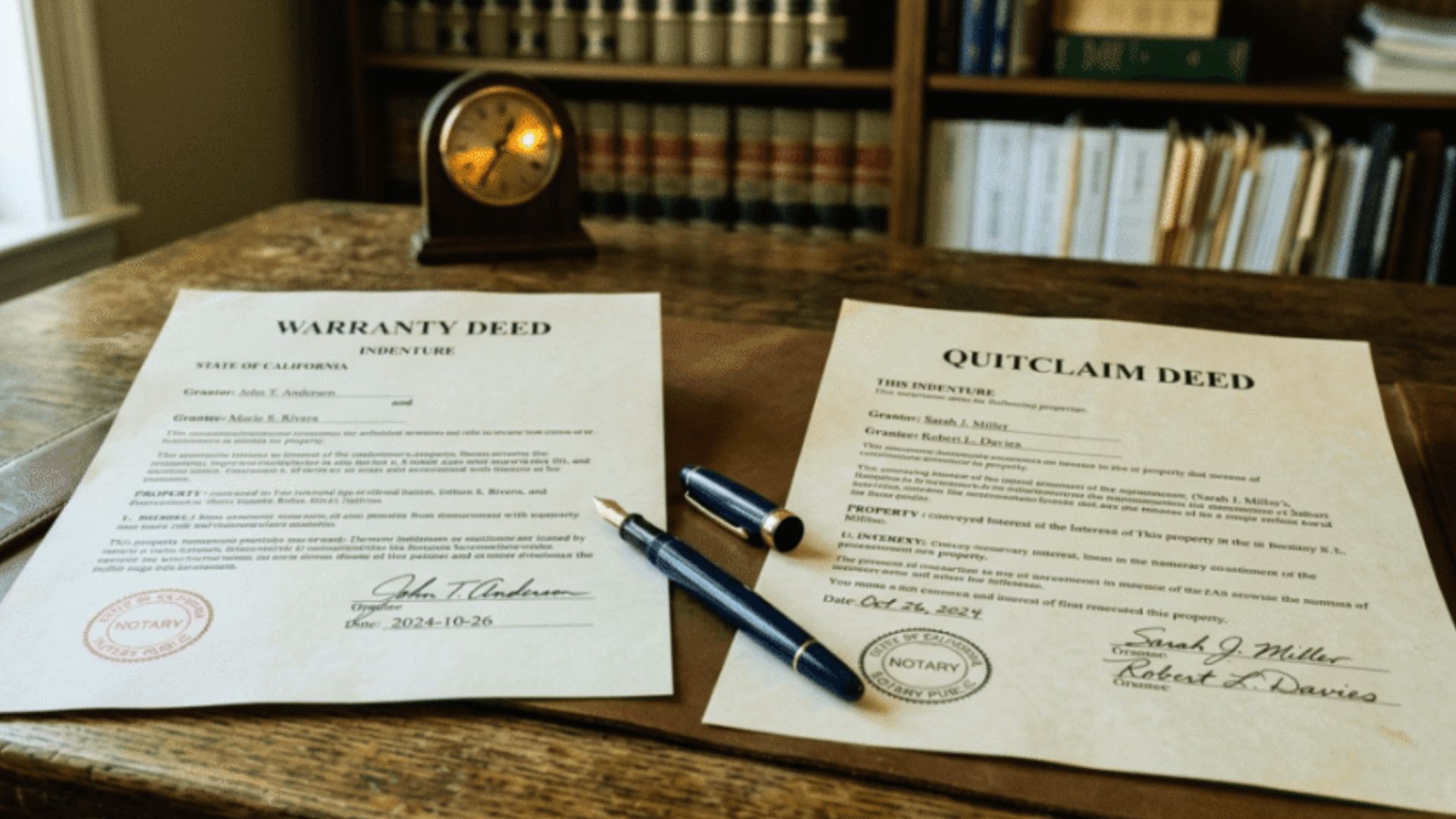
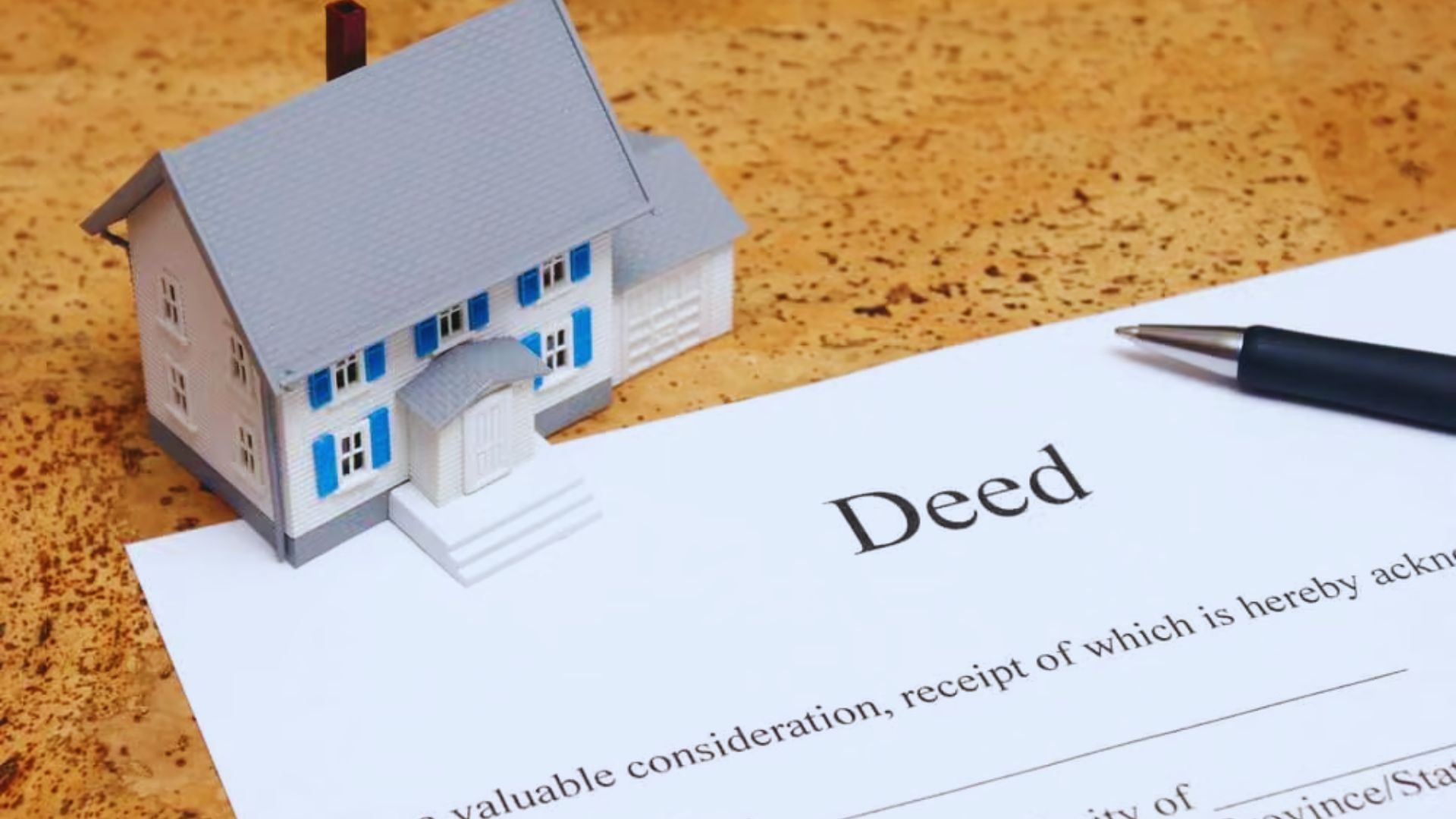
Once a grave exists on your land, most counties expect you to record it. This usually means filing a burial notation or cemetery designation with your county recorder, tied directly to the legal description of your property on the deed.
Recording matters in two concrete ways.
First, it creates a legal disclosure obligation. In most states, sellers are required to tell buyers about known burials on the property before closing. If the grave isn't on record and a buyer's title search doesn't surface it, you may still be legally required to disclose it, and failing to do so can expose you to post-sale liability.
Second, it protects future access. In some jurisdictions, family members of the deceased have a legal right to visit the grave. If the grave is unrecorded and the land sells, that access right may be difficult or impossible to enforce.
Some families go further and record an easement; a formal legal agreement tied to the deed that guarantees visiting rights regardless of who owns the property in the future. If the burial is likely to outlast your ownership of the land, talking to a real estate attorney about that option is worth the time.
Depth, Containers, and Health Rules
Most counties set a minimum burial depth, often around three to four feet of soil covering the body, to prevent exposure and protect groundwater.
Some require a vault or liner, especially in areas with a high water table. Health departments may also weigh in on embalming or container requirements if the body isn't buried quickly.
These rules vary more by county than by state, so what's fine one town over might not fly on your own land.
Why Families Choose Home Burial?
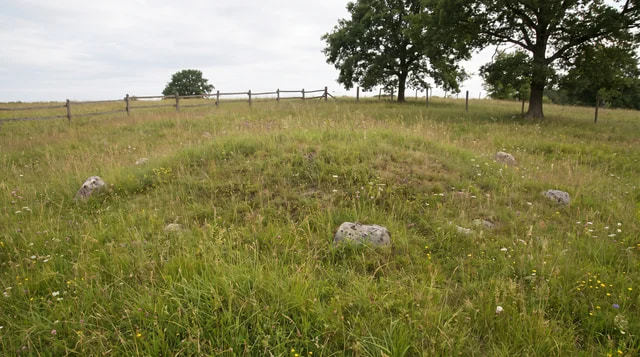
Families choose home burial for reasons that go beyond cost, though cost is often part of it
A private burial can run a few hundred dollars in permit and digging costs, compared to several thousand for a traditional cemetery plot, vault, and services; a difference of $5,000 or more depending on the region and funeral home.
Beyond money, some families want their loved one close, especially on land that's been in the family for generations.
Others are drawn to green burial, since home burial often means skipping embalming chemicals and metal caskets, letting the body return to the earth more naturally.
In practice, that usually means using a biodegradable container like a simple wood casket, a shroud, or a wicker basket, and burying at a depth that allows natural decomposition. No concrete vault, no chemical preservation.
For a lot of families, staying involved in every step also makes the process feel less rushed and more personal than a standard funeral home timeline allows.
Final Takeaway
So can you bury someone on your property? Usually yes, but only if you follow your state's burial laws and your county's zoning rules together.
Skip either one and you risk real legal trouble later, especially when it comes time to sell the land.
If you're seriously considering it, start by calling your county health department to confirm local requirements before making any plans. And if you've already set up a family cemetery, I'd love to hear how the process went for you in the comments.
Frequently Asked Questions
Do you have to pay property taxes on land where someone is buried?
Yes, in almost every state the burial plot stays part of your taxable property unless your county offers a specific cemetery exemption.
Can you legally sell property that has a grave on it?
Yes. Disclosure of the burial to buyers is required in most states, and some counties restrict new construction within a set distance of a recorded grave. Recording the burial on your deed in advance makes this process significantly cleaner at closing.
How much does it cost to bury someone on your own property compared to a cemetery?
Home burial often costs a few hundred dollars for permits and digging, compared to several thousand for a cemetery plot and services.
Can you bury cremated remains on your property instead of a body?
Yes, and it's usually easier, since most states have fewer restrictions and smaller setback requirements for cremated remains than for full burial.