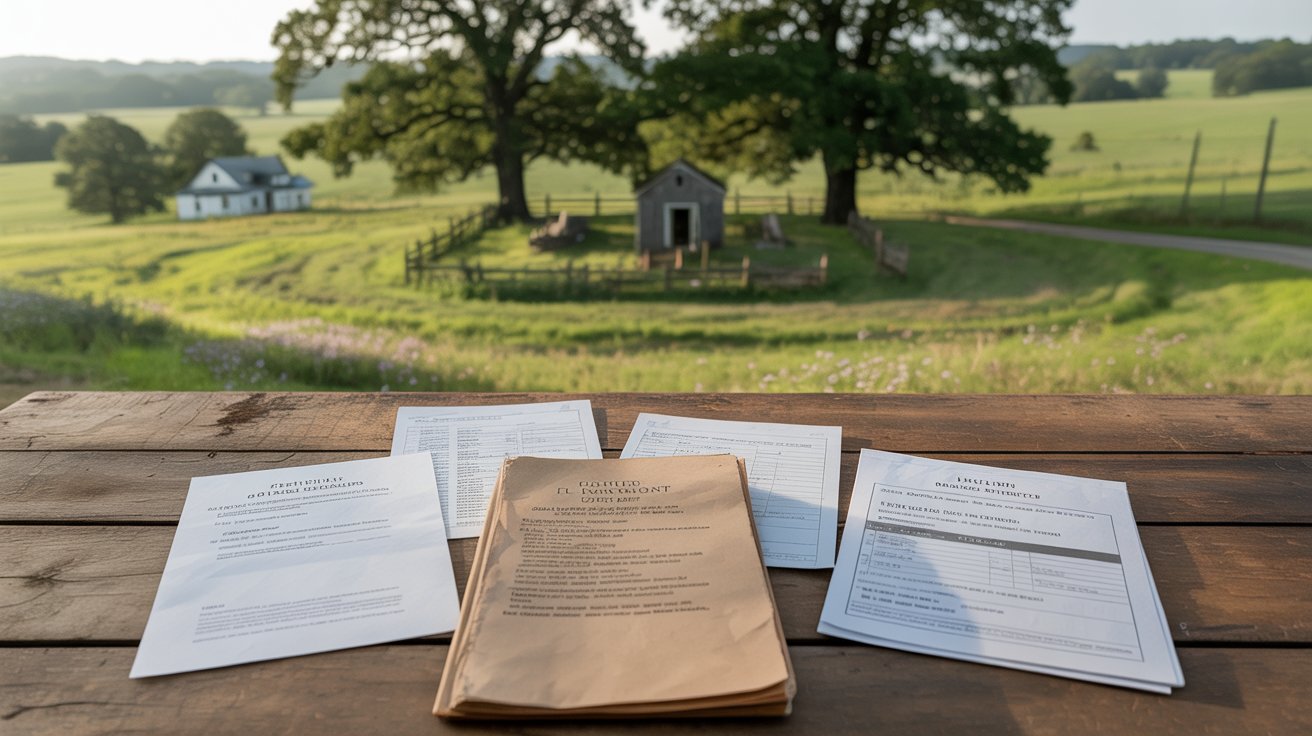
While researching property law and land ownership topics, I reviewed state water-rights doctrines, legal resources, and court decisions to understand how riparian rights affect waterfront property owners.
This is one of those topics that confuses even seasoned landowners.
If you own land next to a river, lake, or stream, these rights directly affect what you can and cannot do with that water.
In this blog, I cover what riparian rights are, how they work, who qualifies, and what laws apply.
I also cover real disputes, climate concerns, and how to protect what you own. I have written this guide to save you hours of research.
Let’s get started.
What Are Riparian Rights?
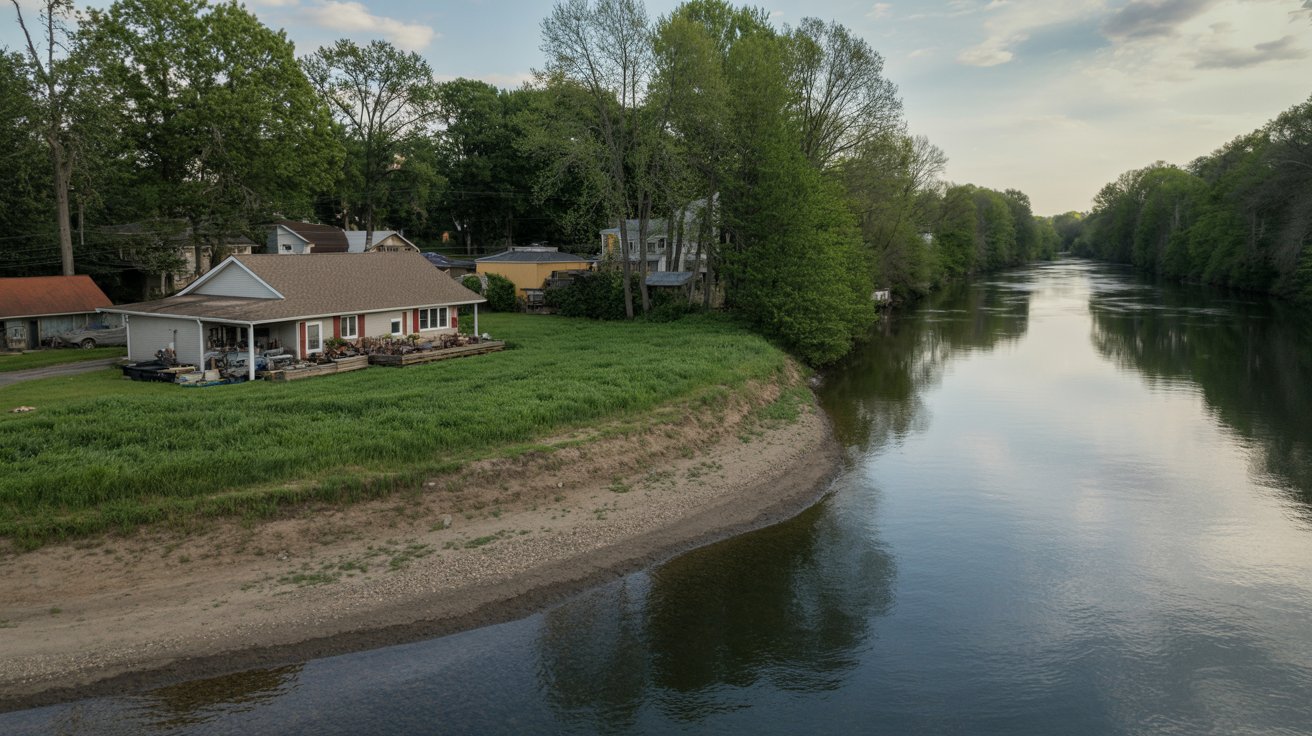
Riparian rights are the legal rights of a landowner whose property sits next to a body of water.
If your land touches a river, stream, pond, or lake, you are called a riparian owner. That status gives you the right to use the water in reasonable ways.
This concept has roots in English common law. It came to the United States through early legal traditions and still governs water use in many eastern states today.
The core idea is simple. The water flows freely. You can use it. But so can your neighbor downstream. No one person owns the water itself.
Understanding the Core Principles of Riparian Rights
There are a few rules that sit at the heart of this system.
First, only landowners whose property directly touches the water body can claim these rights. If your land does not border the water, you do not qualify.
Second, your use must be reasonable. You cannot drain a stream dry or pollute it in a way that harms others.
Third, riparian rights are tied to the land. If you sell your property, the new owner gets those rights. You cannot sell the rights separately from the land.
Fourth, no one owns the water itself. You have the right to use it, not to own it.
How Riparian Rights Work in Practice
Say I own a farm along a river. I can draw water for irrigation, water livestock, and fish in that stretch of the river.
But I cannot build a dam that cuts off flow to my neighbor downstream. I also cannot dump waste that makes the water unsafe for others.
Courts use the "reasonable use" test in most cases. They look at how much water you took, why you took it, and whether it harmed anyone else.
What counts as reasonable depends on local conditions. In wet regions, a larger draw might be fine. In dry areas, the same draw could be seen as excessive.
Types of Water Bodies Covered by Riparian Rights
Riparian rights apply to several types of water bodies.
Rivers and streams are the most common. These are moving water sources, and rights apply along the entire length of your property boundary.
Lakes and ponds are also covered. If your property borders a natural lake, you have riparian access to it.
Wetlands sometimes fall under riparian law too, depending on state rules.
Groundwater is a separate area. It is usually governed by different doctrines and varies widely by state.
Who Qualifies for Riparian Rights?
The rule is clear. Your land must physically touch the water.
If you own a lakefront lot, you qualify. If your land ends a block before the river, you do not.
Ownership matters too. Riparian rights belong to the landowner, although tenants may receive limited water-use privileges through lease agreements.
The core rights stay with whoever holds title to the land.
In some cases, easements allow non-riparian landowners to access water. But that is a different legal tool, not a riparian right itself.
Riparian Rights Laws and Legal Frameworks
Water law varies significantly from state to state.
Eastern states mostly follow riparian doctrine. States like New York, Pennsylvania, Michigan, and Florida use it as the primary framework.
Michigan codified its water use framework under the Michigan Water Resources Protection Act (Part 327 of Public Act 451 of 1994).
Florida regulates water through five regional water management districts operating under Chapter 373 of the Florida Statutes.
Western states tend to use the prior appropriation doctrine instead, which I cover in the next section.
Some states use a mix of both systems. California is a good example. There, both doctrines coexist under California Water Code Sections 1200 through 1210.
Federal law also plays a major role. Section 404 of the Clean Water Act (33 U.S.C. § 1344), administered by the U.S. Army Corps of Engineers, regulates the discharge of dredged or fill material into navigable waters.
Section 401 (33 U.S.C. § 1341) requires state certification for any federally permitted water activity. The EPA enforces water quality standards under the same statute.
For the Great Lakes region specifically, the Great Lakes–St. Lawrence River Basin Water Resources Compact governs water withdrawals across the eight U.S. Great Lakes states.
Signed into federal law in 2008 (Public Law 110-342), it limits large-scale diversions and requires regional review for significant new withdrawals.
The two Canadian provinces, Ontario and Quebec, participate through a separate but related Agreement rather than as signatories to the Compact itself.
Riparian Rights vs Prior Appropriation Rights
These two systems are very different.
Under riparian law, you get water rights just by owning land next to the water. Use is based on reasonableness and shared access.
Under prior appropriation, the first person to use the water gets priority. It does not matter if you own land next to it.
If someone upstream claimed the water rights in 1890, they get theirs before you do. This is called "first in time, first in right."
Prior appropriation is common in drier western states like Colorado, Nevada, and Arizona. Water is scarce there, so a stricter system developed.
Riparian rights work better in places where water is relatively plentiful.
Here is a quick side-by-side comparison:
| Feature | Riparian Rights | Prior Appropriation |
| Basis of Rights | Ownership of waterfront land | First beneficial use |
| Priority | Shared reasonable use | Senior users first |
| Common Region | Eastern U.S. | Western U.S. |
| Transferability | Runs with the land | Often transferable separately |
| Water Availability | Assumes shared access | Allocates scarce water |
Riparian Rights and Waterfront Property Ownership
If you buy waterfront property, these rights come with it automatically in riparian states.
You can swim, boat, fish, and draw water for personal or domestic use.
In some states, owners along non-navigable rivers may hold title to the center of the watercourse under the thread-of-the-stream doctrine. Navigable waters are treated differently.
For those, ownership often ends at the ordinary high-water mark or the shoreline. The rules depend on state law and the type of water body involved.
Knowing exactly what you own matters when it comes to docks, piers, and other structures. Check local law before building anything that extends into the water.
Common Riparian Rights Disputes
Disputes happen more often than people think.
One common fight involves upstream neighbors diverting so much water that downstream owners get little to none. This is called unreasonable diversion.
Another dispute involves pollution. If upstream activity contaminates the water, downstream riparian owners have grounds to sue.
Shoreline disputes are also common, especially about who owns what strip of land near the waterline.
Dock and pier conflicts arise when one property owner builds a structure that blocks another's access.
In all these cases, state water courts or civil courts step in to resolve the matter. Documentation and property surveys make a big difference in these cases.
Riparian Rights and Environmental Conservation
Riparian zones, the strips of land along waterways, are some of the most ecologically important areas on earth.
Riparian rights law intersects heavily with conservation rules. Many states restrict what riparian landowners can do near the water to protect fish, wildlife, and water quality.
Clear cutting trees near a riverbank may be prohibited. Building too close to a shoreline can trigger setback rules.
The Clean Water Act adds another federal layer. Section 401 requires states to certify that any federally permitted activity near water meets state water quality standards.
Section 404 requires permits for dredging or filling in navigable waters. These rules apply regardless of what your riparian rights say.
I see this as a good thing overall. Protecting these zones benefits everyone, including the property owners who rely on clean water.
Riparian Rights for Farmers, Ranchers, and Businesses
Agricultural users have some of the highest stakes in riparian law.
Farmers rely on water access for irrigation. Ranchers need it for livestock. In riparian states, they can draw water from an adjacent source as long as use is reasonable.
Large withdrawals for commercial farming, however, can conflict with other users. Courts have ordered farmers to reduce withdrawals when downstream users suffered.
Businesses near water, like mills, factories, or resorts, also hold riparian rights. But commercial use often gets more scrutiny.
A resort dumping wastewater into a river faces much stricter standards than a homeowner drawing water for a garden.
Permits are often required for commercial-scale use in most states.
How Climate Change Is Affecting Riparian Rights
Water levels are changing, and so is the law around them.
Extended droughts in many regions have reduced stream flows significantly. This puts riparian landowners in conflict more often because there is less water to share.
Flooding is also a factor. Rising water levels have caused rivers to shift course. When a river moves, property boundaries can shift too. This creates legal questions about who still holds riparian rights.
Some states are revisiting their water laws to account for these changes. Others are issuing emergency restrictions on withdrawals during dry periods.
As a property owner, I think it is smart to pay attention to how your state is adapting to these shifts. Your rights today may look different in ten years.
Real-World Examples of Riparian Rights
A few documented cases show how these rights play out.
In the Great Lakes region, the Great Lakes–St. Lawrence River Basin Water Resources Compact (Public Law 110-342, 2008) was a direct response to growing conflicts over large-scale water withdrawals.
The compact established a binding framework to prevent diversions that would harm the basin.
Under the Clean Water Act, Rapanos v. United States (547 U.S. 715, 2006) reached the U.S. Supreme Court over what waters fall under federal jurisdiction.
The case involved a Michigan landowner who filled wetlands near tributaries without a Section 404 permit. The decision still shapes how federal water jurisdiction is defined today.
One of the earliest American cases discussing reasonable use was Evans v. Merriweather (Illinois Supreme Court, 1842). Although decided in Illinois, the case helped shape the development of riparian rights principles that later influenced courts across the United States.
It established that a riparian owner cannot use water in a way that substantially harms another riparian user downstream, a standard that courts in many states still reference today.
These cases show that riparian law is not just theory. It affects real people and real money.
How to Protect Your Riparian Rights
If you own waterfront property, there are concrete steps you can take.
Start by getting a proper survey. Know exactly where your property ends and where the water begins.
Check your title documents. They should show whether riparian rights are included in your deed.
Document your water use. If a dispute arises, records showing consistent, reasonable use work in your favor.
Talk to a water rights attorney if you are buying land near water or if a neighbor is affecting your access. Early legal advice is far cheaper than a court battle.
Report violations to your state environmental agency. In Michigan, that is EGLE. In Florida, it is FDEP. Every state has a designated body to handle water complaints.
Riparian Rights by State
Rules differ depending on where your property sits. The table below shows how five key states handle riparian rights at a glance. I go into more detail on each one underneath it.
| State | Doctrine | Key Law | Regulator |
| Florida | Riparian | Chapter 373, Florida Statutes | FDEP and Water Management Districts |
| Michigan | Riparian | Part 327, Public Act 451 of 1994 | EGLE |
| Pennsylvania | Riparian | Clean Streams Law (Act 394 of 1937) | PA DEP |
| New York | Riparian | ECL Article 15 | NYSDEC |
| California | Mixed System | Water Code Sections 1200-1210 | State Water Resources Control Board |
Conclusion
Riparian rights are not just legal jargon. They are real protections that affect how you use and enjoy your waterfront land.
I covered the definition, core rules, laws by region, dispute types, and practical steps to protect what you own. The system is not perfect, especially as water becomes scarcer in many areas.
But knowing your rights gives you a real advantage. Whether you are a homeowner, farmer, or business owner along a waterway, these rules matter.
Stay informed, document everything, and do not wait for a problem to get legal advice.
Have you checked your property deed to confirm your riparian rights are clearly listed?
Frequently Asked Questions
What states follow riparian rights doctrine?
Most eastern states follow riparian rights, including New York, Florida, Pennsylvania, and Michigan. Western states generally use prior appropriation, though some states like California use both systems.
Can I lose my riparian rights if I do not use the water?
In most riparian states, rights are not lost through non-use, unlike prior appropriation states. However, specific state rules vary, so checking local law is always a good idea.
Do riparian rights apply to groundwater?
No, riparian rights typically apply to surface water only. Groundwater is governed by separate legal doctrines that differ significantly from state to state.
Can I build a dock on a river as a riparian owner?
In most cases, yes, but you may need permits from state or local agencies. Your right to access the water does not always override permitting requirements for structures.
What happens to riparian rights when I sell my property?
Riparian rights transfer automatically with the land. The new owner inherits them as part of the property. They cannot be sold separately from the land in most states.