1 acre can cost a small fortune in one state and next to nothing in the next. Same size, wildly different price. So how much is one acre really worth?
I've pulled land records across states, and most quick answers only tell half the story.
This piece breaks down what an acre really measures, why the U.S. survey acre and the international acre aren't identical, and the shapes an acre can actually take.
It also covers what pushes prices up or down by state, plus a checklist to run through before you buy.
That number means something different depending on where you're standing.
The Short Answer: How Much Is One Acre?
One acre is a unit of area equal to 43,560 square feet or 4,840 square yards. It is also approximately 0.405 hectares, making it easy to compare with the metric system.
An important point to remember is that an acre measures area, not length, so it does not have one fixed shape or set of dimensions.
A square acre looks different from a long, narrow acre, but both contain the same total area of 43,560 square feet.
Understanding these measurements can help you better evaluate land listings, compare property sizes, and visualize how much space an acre actually provides for a home, farm, or other uses.
How Big Is an Acre in Feet, Yards, Meters, and Hectares
Once you know the square footage, every other conversion falls into place. Here's how 1 acre breaks down across the units you'll run into most:
- 43,560 square feet
- 4,840 square yards
- 4,046.86 square meters
- 0.4047 hectares
- 40.47 ares
- 1/640 of a square mile
None of these numbers are rounded off for convenience. They all trace back to the same rectangle, one chain wide and one furlong long.
Why the U.S. Survey Acre Isn't Quite the International Acre
The U.S. survey acre and the international acre are almost identical, off by less than 25 square inches.
The U.S. actually works with two versions of the acre. There's the international acre and the U.S. survey acre. Both come out to 4,840 square yards, but each is built on a slightly different yard measurement.
That gap is so small you'd never spot it on a regular lot. It only shows up in old federal land surveys and a few state boundary lines.
If you're buying a typical home, this difference won't affect your purchase at all. I've seen it trip up surveyors working with century-old federal land grants, though.
Where the Acre Measurement Comes From
The acre wasn't invented as a round number. It grew out of how farmers actually worked the land. Here's where each piece of the measurement comes from:
- Described how much land a team of oxen could plow in one day
- The chain (66 feet) and the furlong (660 feet) became the standard units
- Multiply a chain by a furlong and you get 43,560 square feet, today's acre
- Older deeds sometimes measure boundaries in chains or rods instead of feet
- A rod runs 16.5 feet, a quarter of a chain
Knowing these older units keeps you from misreading a boundary line drawn a hundred years ago.
What Shape Is an Acre?
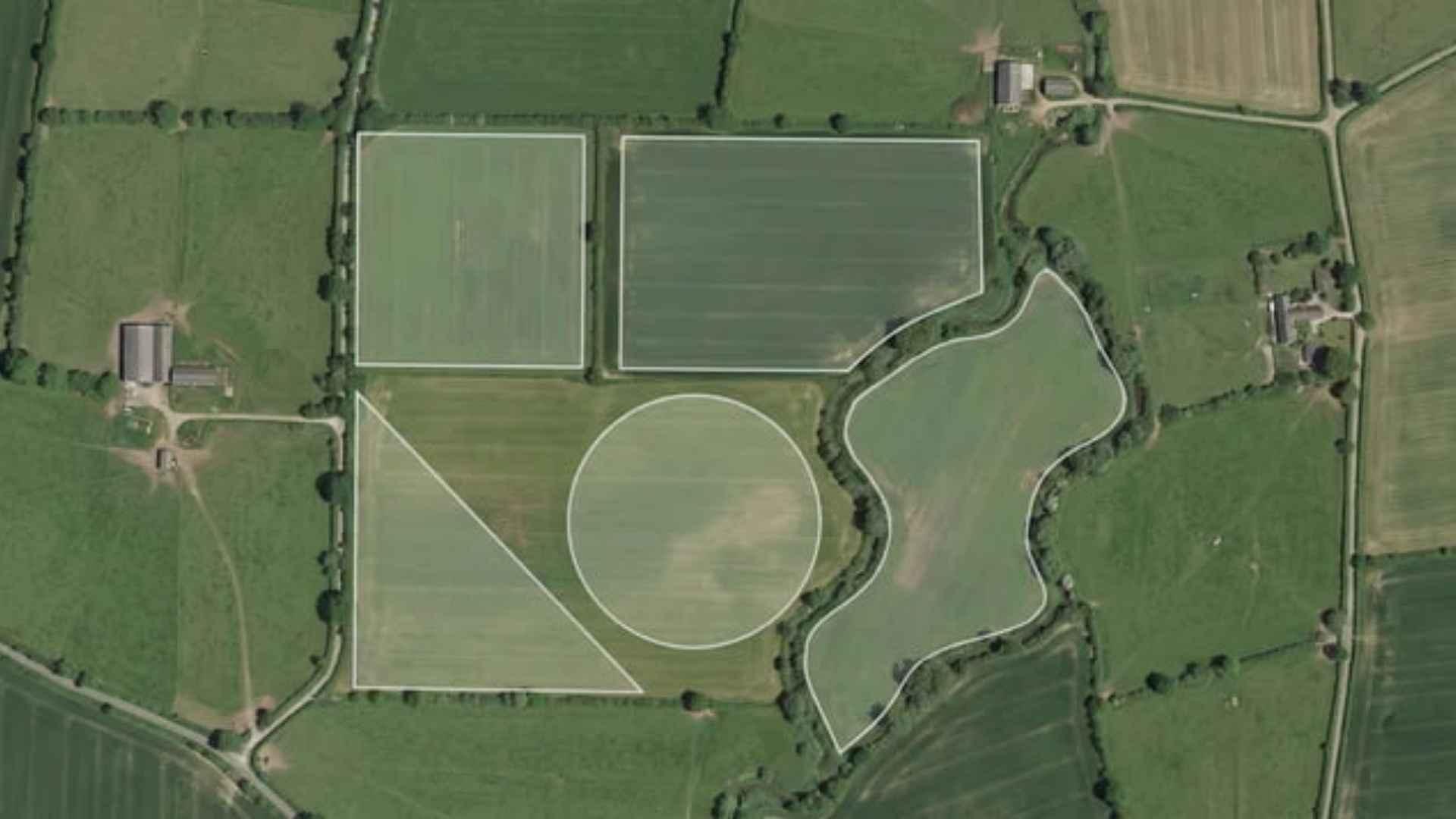
An acre doesn't have to be a square or a rectangle. It can be a triangle, a circle, or a shape with no straight edges.
The only rule that matters is the total area has to equal 43,560 square feet. Two shapes come up the most in practice, though.
A perfect square acre runs about 208.71 feet on each side, not the 200 feet most people guess. A rectangular acre, based on the old chain-by-furlong layout, measures 66 feet by 660 feet.
I've walked lots shaped like neither of these. Creeks, roads, and property lines bend an acre into all kinds of odd outlines.
Visualizing an Acre With Things You Already Know
Numbers on paper only go so far. These everyday comparisons make an acre easier to picture, especially if you've stood on any of these spots before.
- About 1.32 football fields, end zones included
- Roughly 9 basketball courts
- About 16 tennis courts
- Close to 2 city blocks in a lot of U.S. towns
None of these are exact matches, and that's fine. An acre doesn't divide evenly into any of them. What matters is the mental picture. Next time someone tells you a lot is an acre, you'll have a real sense of the ground it covers, not just a number that's hard to visualize on its own.
Why the Football Field Comparison Isn't Exactly Right

An acre equals 1.32 football fields, but only if you count the end zones.
Leave those out, and an acre covers closer to 90% of the playing field by itself. That gap trips people up more than you'd think. They picture a full field and end up off by a third.
Field size isn't fixed either. High school, college, and NFL fields all use slightly different dimensions.
None of them match an acre exactly, so the comparison shifts depending on which field you picture.
I use this comparison to give people a rough feel for scale, nothing more. I wouldn't use it to measure anything real, and you shouldn't either.
For an actual number, stick with 43,560 square feet. Everything else is just a mental picture.
What an Acre of Land Is Actually Used For
An acre shows up across a few key jobs. Farmers use it to plan crop rows, irrigation lines, and yield per acre.
Homebuilders use it to figure out how much house, driveway, and yard actually fit on a lot.
City planners lean on it for zoning too. That decides how many homes or how much commercial space a parcel can hold.
I've seen the same acre treated completely differently depending on who's looking at it. A farmer sees soil and drainage. A builder sees setbacks and square footage.
How Much Does an Acre of Land Cost?

Nationally, an acre of raw land runs somewhere around $12,000 to $18,000 on average.
That number falls apart fast once you zoom into a specific state.
In Alaska, an acre can go for around $1,250. In California, that same acre might run closer to $57,000.
Connecticut has hit as high as $75,000 an acre in some areas.
Three states, three completely different price tags for the exact same 43,560 square feet. I've seen buyers get caught off guard by this more than once.
What to Check Before You Buy Land by the Acre
Before you buy land based on acreage alone, run through this checklist first:
- Get a current survey instead of trusting the number on paper
- Check zoning and setback rules for the parcel
- Read older deeds closely for chain or rod measurements
- Have a surveyor translate old measurements into feet you can use today
A few checks now save you real money and real headaches later.
Why Land Prices Per Acre Swing So Wildly by State
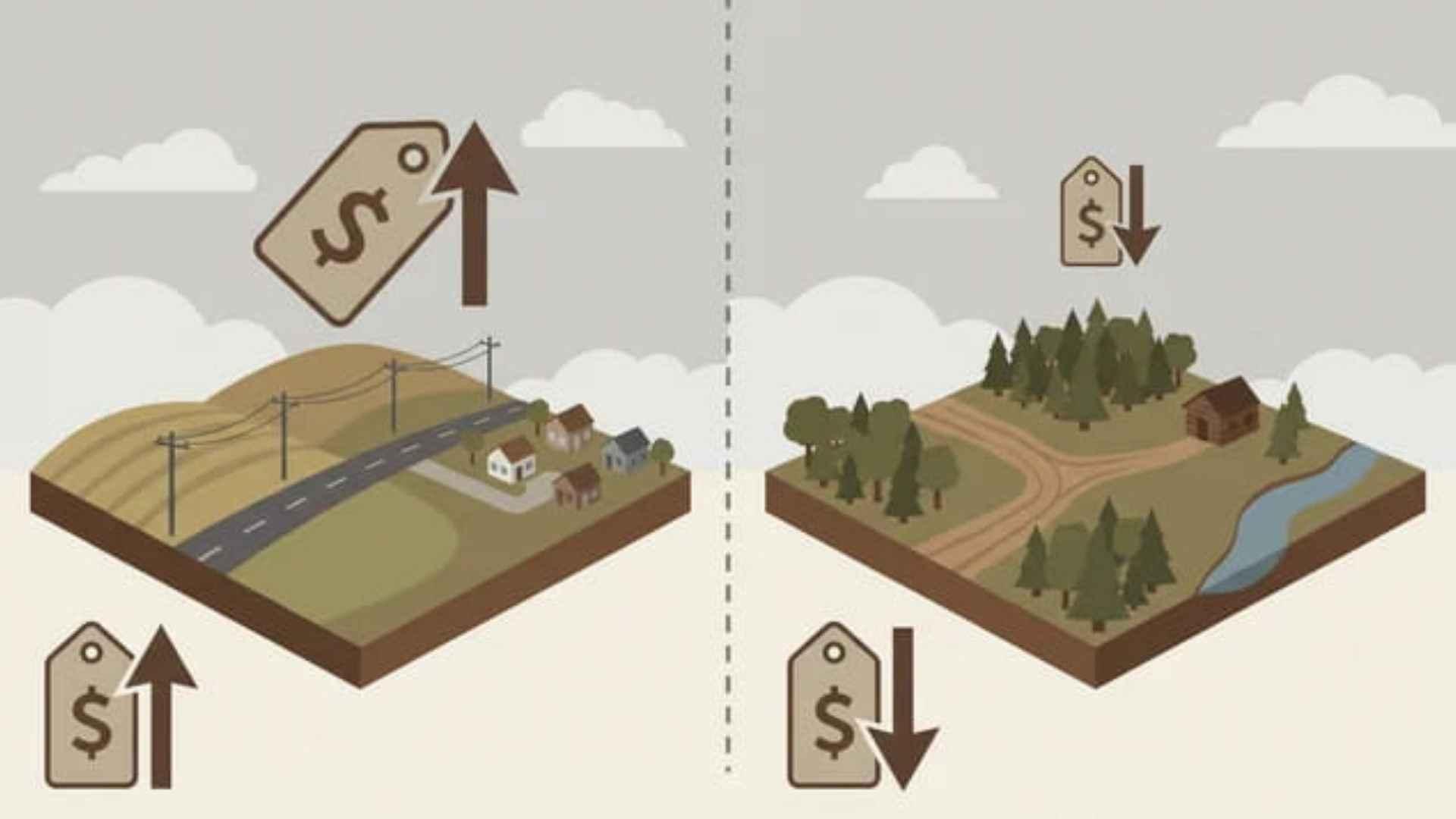
Zoning classification plays a big part in the price you'll pay. Land zoned for commercial or residential use almost always costs more than land zoned for farming. I've seen an acre zoned commercial go for four or five times what ag land a mile down the road sells for.
Water rights matter too, especially out west. Access isn't guaranteed just because the land touches a river or a well. Understanding riparian water rights can make or break what you're actually allowed to do with that parcel.
Soil quality affects what a farmer can grow there, and that shows up in the price. So does the distance how far the parcel sits from paved roads, power lines, and water hookups adds or subtracts real dollars per acre.
And that's all before location even enters the conversation. Two identical parcels a few miles apart can price out completely differently once you factor in the county they sit in, not just the dirt itself.
Final Takeaway
So, how much is one acre worth to you? That depends on where you plan to use it.
I've walked enough land to know the price tag never tells the full story. Location, zoning, and what you build on it matter just as much.
If you're still weighing your options, don't rush the decision.
Check your local listings, talk to a surveyor, and picture how you'll actually use the space. Drop a comment if you've got questions. I'll help however I can.
Frequently Asked Questions
How much is one acre of land in Texas?
Texas prices swing a lot by region. Rural cropland averages around $4,600 to $5,100 an acre right now. Land closer to major cities runs well above that.
How much is one acre of land in Florida?
Florida prices depend heavily on county and coastal distance. Rural interior land can go for a few thousand dollars an acre. Coastal city land climbs into the tens of thousands.
Is an acre the same size everywhere in the world?
Not always. The U.S. and U.K. both use the standard 43,560 square foot acre. Older Irish and Scottish acres were defined differently and actually covered more ground.