

Buy a home on a lake or along the coast, and your deed mentions rights most buyers never read closely. These are called littoral rights.
People throw this term around loosely. Sometimes they mix it up with “riparian rights.” That mix-up causes real trouble at closing, during a permit application, or after a storm reshapes your shoreline overnight.
Here’s what this bundle of rights actually covers, how it differs from riparian rights, and what happens to your property line when the water starts moving.
Disclaimer: This article is for general informational purposes only and isn’t legal advice. Littoral and riparian rights vary by state and by the specific facts of a property, so check with a local real estate attorney or your state’s land office before making decisions based on what you read here.
What Are Littoral Rights and Riparian Rights?
Littoral and riparian are two separate legal categories. The line between them comes down to one thing: does the water move?
Littoral rights belong to owners whose land sits next to still water like oceans, seas, bays, and lakes. The water stays mostly in place, bounded by a shoreline rather than a bank.
Riparian rights belong to owners next to moving water like rivers, streams, and creeks. That water flows along a defined channel from one point to another.
Neither right gives you the water itself. I know that surprises people every time I explain it. What you actually get is a bundle of privileges: the right to access the water, use the land along it, and sometimes build on it with a permit.
The water and the land under it usually stay under public or state control. This is the first place buyers trip up. A “waterfront lot” sounds like it includes the water. Legally, it almost never does.
What’s the Structural Difference Between Littoral and Riparian Rights?
What’s the Structural Difference Between Littoral and Riparian Rights?
Beyond the water-type split, littoral and riparian rights get measured differently. That difference is what matters most when a boundary fight breaks out.
How Each Boundary Gets Measured
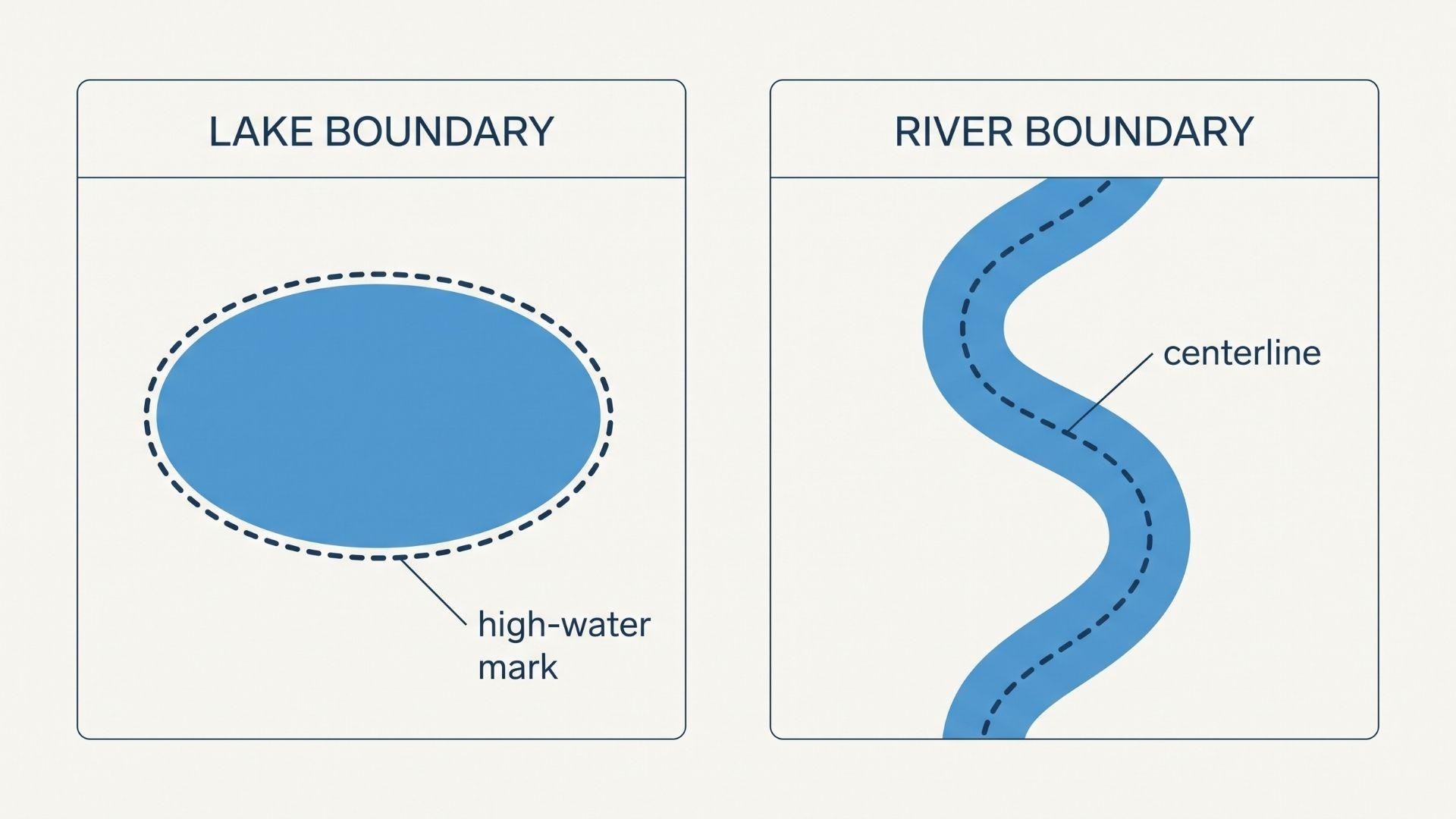
- Littoral boundaries run to the mean high-water mark, or the high-tide line. This is a fixed point based on where the water typically reaches, averaged over time.
- Riparian boundaries usually follow the center of the waterway instead. The property line runs down the middle of the river or stream, not along one edge.
This split makes sense once you picture the water itself. A lake or ocean doesn’t really have a center, it has an edge, and that edge is what gets measured.
A river has two banks with a channel running between them. Splitting ownership down the middle works in a way it wouldn’t for a bay.
Where the Disputes Actually Happen
These disputes often follow the same pattern every time.
- Riparian fights tend to center on the channel: did the river shift, and did the property line shift with it?
- Littoral fights tend to center on the tide line instead: has it moved, and who owns what now?
Both categories grant rights because your land touches water. But where that line gets drawn, and how you defend it, looks completely different depending on which one applies to you.
How Do Littoral Rights Work in Practice?
Owning littoral rights means two different things are true at once. One is what you can do with the water and shore today. The other is what happens to your boundary as the shoreline itself changes.
Most owners only think about the first one. That’s the mistake.
What You’re Allowed to Do
On the use side, littoral rights generally let you access the water from your property, use the shore for recreation, and build approved structures like docks, piers, or boat lifts along the waterline.
None of this is a free pass. Local and state rules typically control what you can build, how far it can stick out, and what permits you need first. Enforcement varies a lot by location. I’ve seen identical docks get approved in one county and rejected two towns over.
Where the Boundary Actually Moves
Three separate things can change your shoreline, and they don’t all affect your property line the same way.
Accretion is the slow buildup of land as currents or tides deposit sand along the shore over time. When this happens, your legal boundary moves with it. You gain the new land.
Erosion works the same way, backward. Land slowly washes away, your boundary shifts inward, and you lose the ground that eroded. A related doctrine known as reliction covers the opposite scenario, when receding water permanently exposes new land to the owner.
Avulsion is different, and this is the one that trips people up. It’s a sudden, visible change like a flood, a storm surge, or maybe a channel that jumps course overnight.
Because the change happens fast instead of gradually, the law typically freezes your original boundary line in place. The water may now sit somewhere else entirely. Your legal line doesn’t move with it.
I’d call this the single most misunderstood part of owning waterfront property. Visually, a shoreline that moved over ten years of accretion looks the same as one that moved overnight in a storm. Legally, those two scenarios produce opposite results for who owns the land.
This isn’t a quirk of one state’s law. Courts in the U.S. have applied the accretion-versus-avulsion split for well over a century, and it shows up in property law across coastal and lakefront states alike. Your state’s land office or a local real estate attorney can tell you exactly how it’s been applied near you.
Your Rights Travel With the Deed
Littoral rights are appurtenant. That means they’re attached to the land, not to you personally.
Sell a beachfront or lakefront property, and the littoral rights transfer to the buyer automatically. No separate paperwork. No extra negotiation. They just come with the deed.
A Quick Example
Picture a lakefront owner who builds a permitted dock along the water’s edge. Over the next ten years, currents slowly deposit sand along that same stretch of shore.
The beach grows outward by several feet. Under accretion rules, that new strip becomes the owner’s property. The boundary line shifts outward with it; no purchase required, no extra step. That’s just what owning littoral rights means in practice.
When Do Littoral Rights Apply to Your Property?
Figuring out which rights apply to you comes down to one simple test: what kind of water does your property touch?
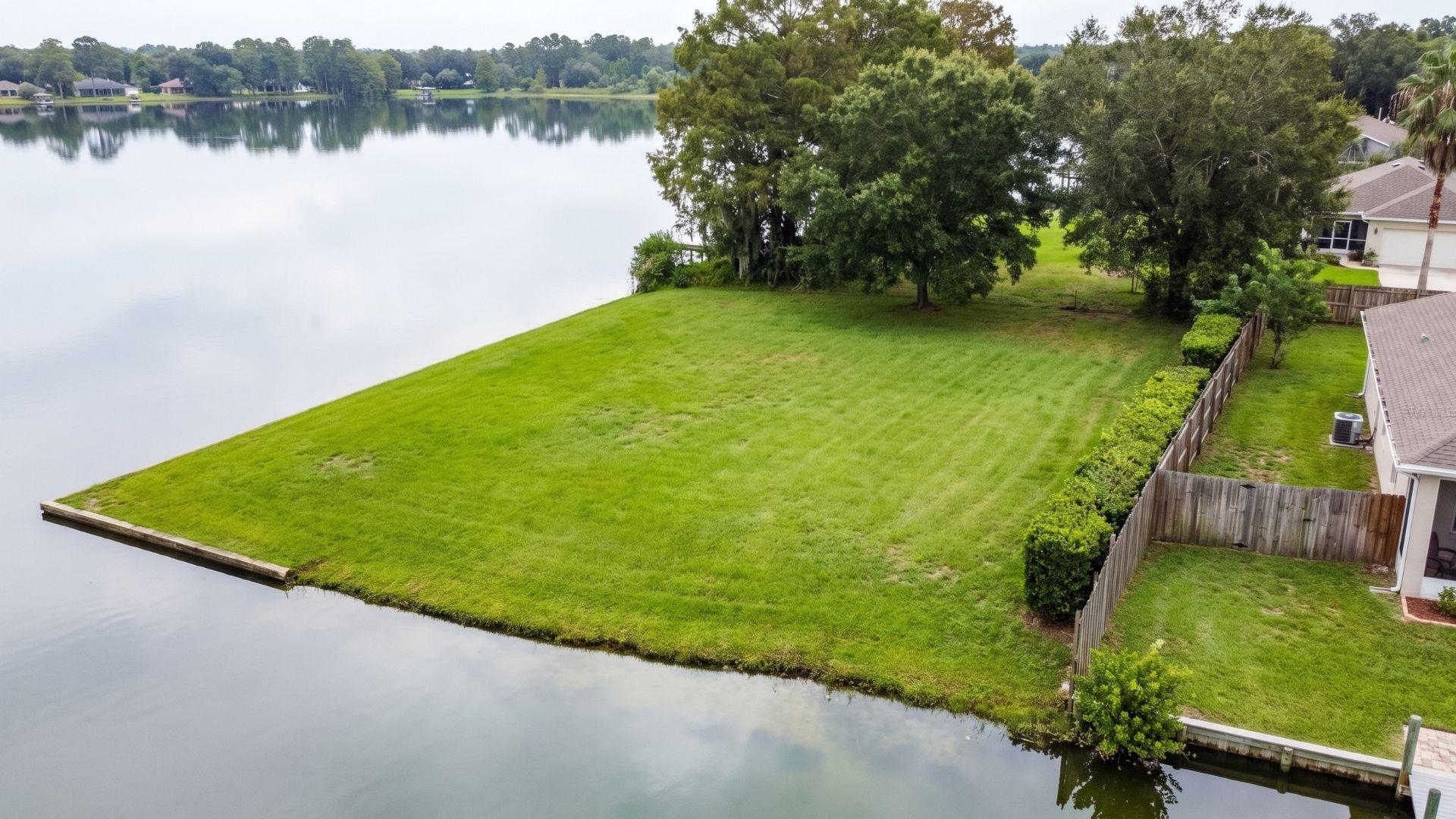
Ocean, sea, bay, or lake next door? Littoral rights apply. River or stream instead? You’re dealing with riparian rights.
The water’s behavior (still versus flowing) decides this, not the size of the water or how a listing agent describes it.
What this quick test doesn’t cover is the fine print, and that’s exactly where things get complicated. States set their own rules for where the boundary line sits, what you can build without extra review, and how much public access has to stay open along the shore.
Two lakefront properties in different states can follow very different rules, even though the basic littoral rights described above apply to both.
Florida, for example, has specific statutes protecting beachfront littoral rights that courts have fought over directly. Michigan and Texas each set their own rules for how far a dock can extend and what counts as public shoreline. Don’t assume your neighbor’s rules in another state apply to you.
Treat everything here as your starting point. Before you close on a property or start building, check the specifics with a local real estate attorney or your state’s land office.
The Bottom Line
Littoral rights hand you real privileges: access, use, and sometimes new land through accretion.
They also come with limits most buyers never see coming: no ownership of the water, boundaries that can shift overnight, and rules that change state by state.
Don’t treat a waterfront listing as simpler than it is. Before you sign anything, confirm which category your property falls into, and find out how your state handles the boundary question.
Ask about permitted structures too, since that’s where local rules tend to differ most. That single detail decides what you actually own, and what you’re allowed to build along the water.
Frequently Asked Questions
What’s the difference between riparian rights and littoral rights?
Littoral rights apply to properties next to still water like oceans, bays, or lakes. Their boundaries run to the high-water mark. Riparian rights apply to properties next to flowing water like rivers or streams, with boundaries usually following the center of the channel. Both grant access and use rights, the water type and boundary rule are what differ.
What are examples of littoral rights?
A lakefront owner building a permitted dock is one example. So is accessing the shoreline for recreation, or gaining new land when accretion deposits soil along the property over time. These rights also transfer automatically to a new owner when a littoral property sells, since they’re attached to the deed.
What does littoral mean in real estate?
It describes a property that borders still water: an ocean, sea, bay, or lake. The term decides which legal rights and boundary rules apply to you: access and use rights up to the high-water mark, not ownership of the water itself.
Does my boundary move if the shoreline erodes or floods?
It depends on how the change happened. Gradual erosion or accretion shifts your boundary along with the water line over time. A sudden event like a flood or storm, called avulsion, doesn’t move your boundary at all. It stays fixed where it was, even though the water’s edge clearly changed.