This blog is for general information only and is not legal advice. Laws differ by state and change over time. Talk to a qualified attorney about your specific situation.
Severance is one of those real estate words that sounds harder than it is. You may have seen it in a deed or a contract and wondered what it really means. You are in the right place.
In simple terms, severance means separating one property interest from another. It can end a joint tenancy and change who inherits a home. It can also turn a fixture, like a chandelier or a deck, back into personal property.
This guide breaks it all down in plain words. You will learn the main types of severance, how a joint tenancy ends, and what happens to fixtures in a sale. By the end, your questions will have clear answers.
What Severance Means
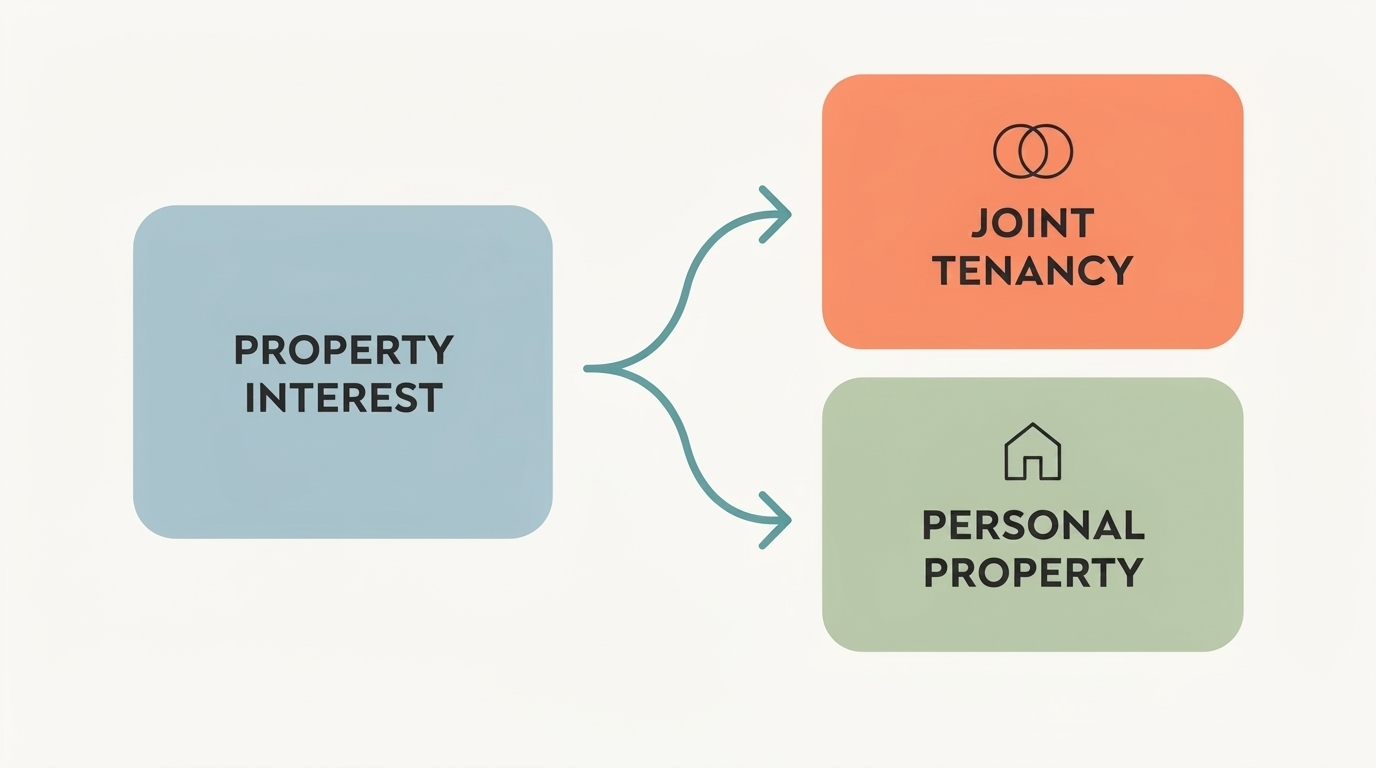
Severance in real estate means any act that separates one property interest from another.
It shows up in two main ways:
First, it can end a joint tenancy and turn it into a tenancy in common.
Second,it can remove a fixture from land, changing it back into personal property.
In legal terms, severance destroys one of the four unities that hold a joint tenancy together. The Law Dictionary, based on Black's Law Dictionary, defines it the same way and also covers cutting crops or separating anything from the land.
The Two Main Types of Severance
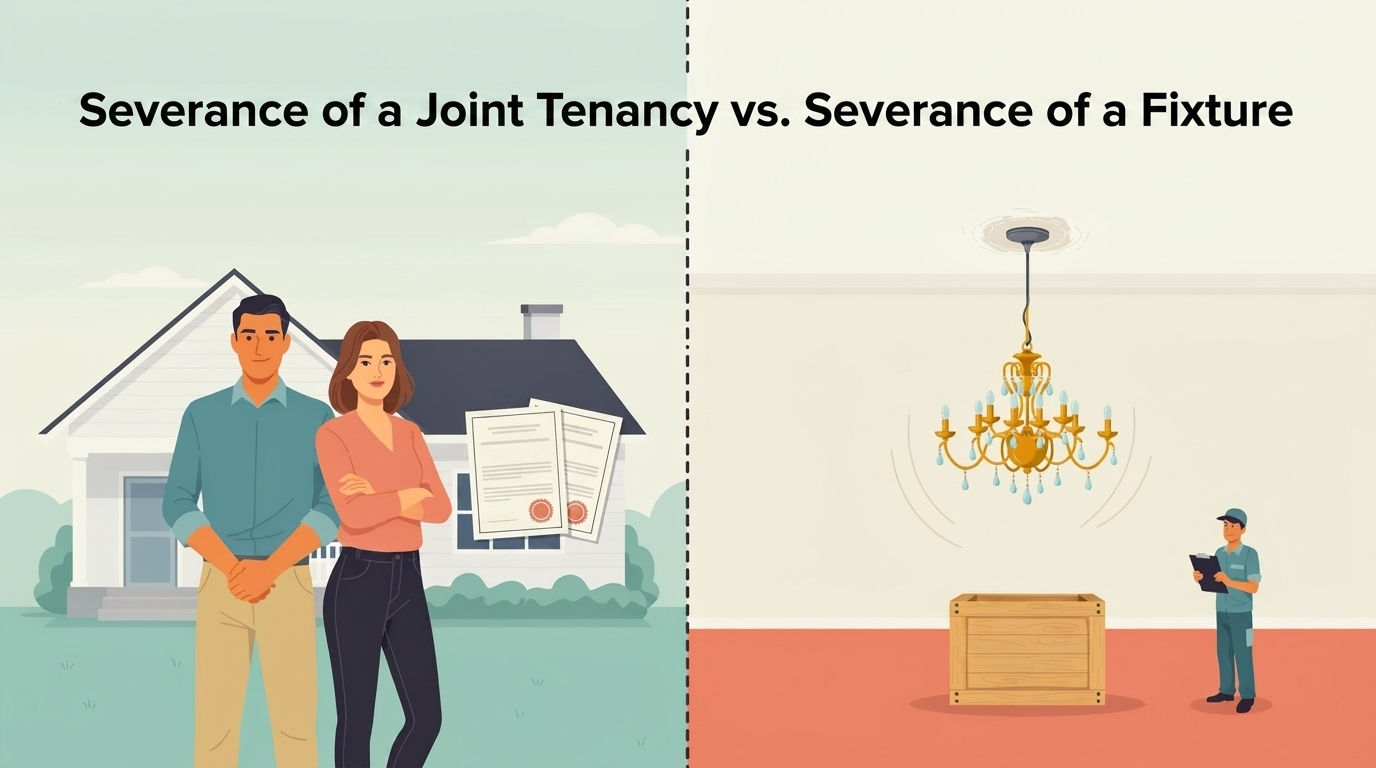
Severance takes two common forms in property law. One deals with how people share ownership. The other deals with items attached to the land.
Here is how each works:
Severance of a Joint Tenancy
A joint tenancy means co-owners hold equal shares with a right of survivorship. When one owner dies, their share passes to the others automatically. Severance breaks this link and creates a tenancy in common.
Noweach share passes through the owner's estate to their own heirs.This change decides who inherits, so it matters a lot.
Severance of a Fixture
A fixture is an item once personal property but now attached to real estate. Think of a chandelier, a built-in oven, or a wooden deck. Severance is the act of removing that item from the property.
This can mean unscrewing, unbolting, or digging the item out. Once removed, it turns back into personal property. So a chandelier taken out before a sale belongs to the seller, not the buyer.
Damage caused during removal can also lead to a dispute, so the way an item comes out matters too.
Joint Tenancy vs. Tenancy in Common
The big difference is survivorship.
In a joint tenancy, a dead owner's share passes to the other owners, so the last one alive can end up with the whole property. In a tenancy in common, each owner controls where their own share goes.
Severance turns the first form into the second.
Here is how they compare side by side:
| Feature | Joint Tenancy | Tenancy in Common |
| Right of survivorship | Yes | No |
| Share size | Always equal | Can be unequal (60-40, 70-30) |
| What happens at death | Share passes to co-owners | Share passes by will or estate |
| Consent to sell your share | Not needed | Not needed |
| Result of severance | Converts to tenancy in common | Already separate |
The table makes the choice clear. Survivorship is the feature people most often want to keep or end.
How a Joint Tenancy Gets Severed
A joint tenant does not need a court to end survivorship in most cases. There are four common ways this happens. Each one changes the ownership form.
1. By Written Notice
One joint tenant can serve a written notice that states their intent to sever. Once served, it usually cannot be taken back unless everyone agrees. The joint tenancy then becomes a tenancy in common.
The owners still share the same land, but the right of survivorship is gone.
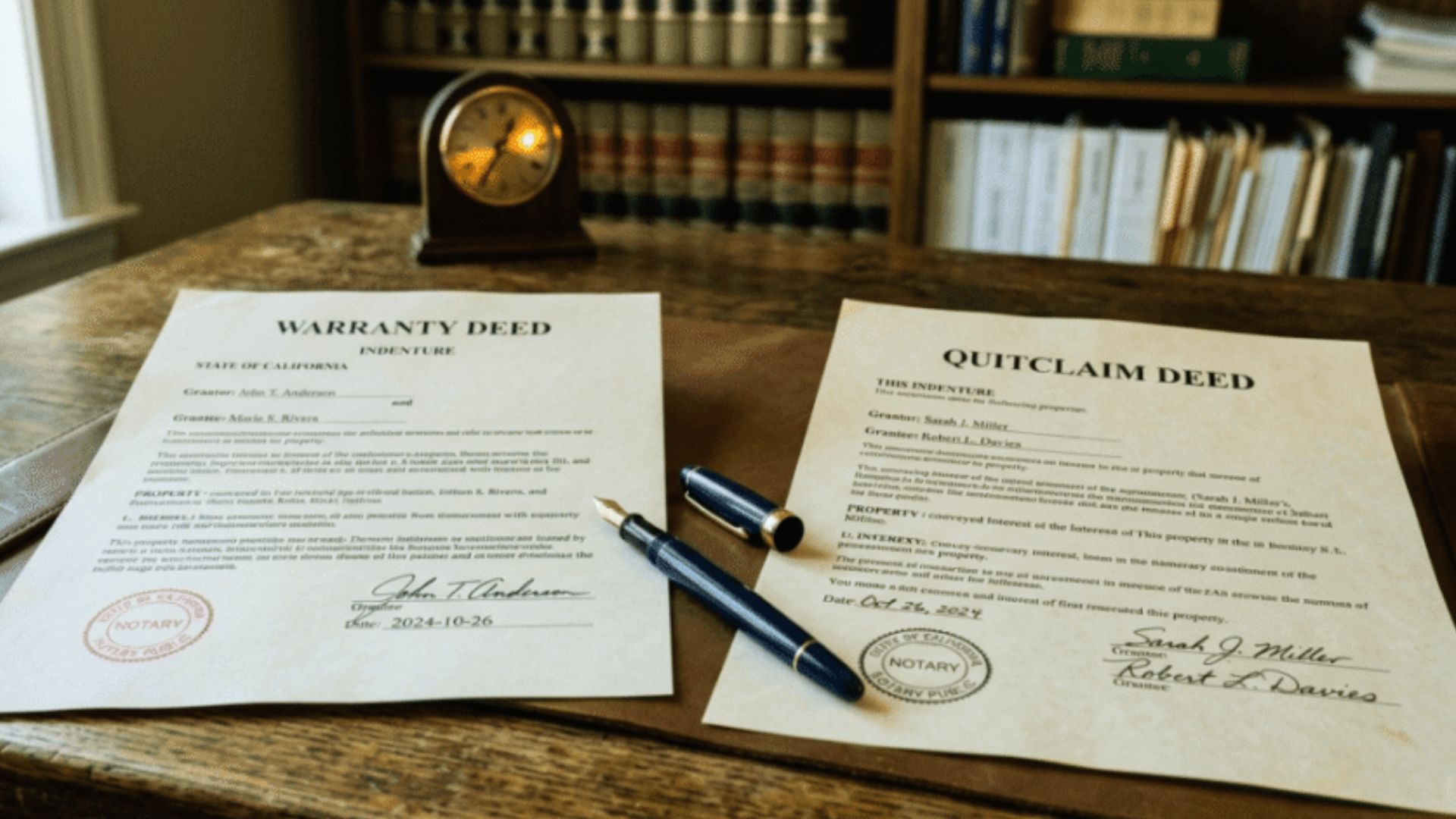
In many states, a written declaration only works once it is recorded. California, for example, does not treat an unrecorded declaration as a valid severance against the other owner (Civil Code section 683.2).
2. By Mutual Agreement
A joint tenancy can also end when all owners agree to it.They decide together to hold the property as tenants in common. This agreement does not always need a formal written paper.
But it must clearly show that every owner intended the change. For example, if co-owners sign a written plan to split rental income 70-30, that act can show intent to sever. Families often do this so each share can pass to their own children.
3. By Selling or Transferring an Interest
If one joint tenant sells or gives their share to an outsider, the joint tenancy severs on its own.The new owner becomes a tenant in common with the rest. This works by breaking the unities of time and title.
Today, an owner can even convey their interest to themselves as a tenant in common.
This modern rule comes from the California case Riddle v. Harmon (1980). The court held that a joint tenant may sever by deeding her share to herself, with no need for a middle person or "straw" owner. Older law had required that extra step, but the court called it outdated.
4. By Court Order
Sometimes co-owners cannot agree on what to do with the property.
One of them can thenfile a partition action in court. The court may order partition in kind, which splits the land into parts. Or it may order partition by sale, which sells the land and divides the money.
Keep one thing straight here. Filing a partition action does not by itself sever the joint tenancy. Partition settles the dispute, while severance changes the ownership form.
The Four Unities Behind a Joint Tenancy
A valid joint tenancy rests on four unities: time, title, interest, and possession.
Time means all owners took the title at the same moment. Title means they took it through the same deed. Interest means they hold equal shares. Possession means each has the right to the whole property.
Destroy any one of these, and the joint tenancy severs into a tenancy in common.
Spouses are one exception. They often hold property as tenants by the entireties, a form that one spouse usually cannot sever alone.
Severance During Divorce

Divorce is one of the most common reasons people sever a joint tenancy.
Say a couple owns a home as joint tenants. If one dies during the divorce, their share would pass to the other spouse automatically.
Many people do not want that. So they sever early to stop an ex from inheriting their share. That share can then go to their children or a new partner through a will instead.
One joint owner usually does not need the other's consent to sever. But timing rules can apply.
In California, filing for divorce triggers an automatic restraining order under Family Code section 2040 that limits some transfers. A family lawyer can guide the exact steps in your state.
Does Severance Affect Your Mortgage?
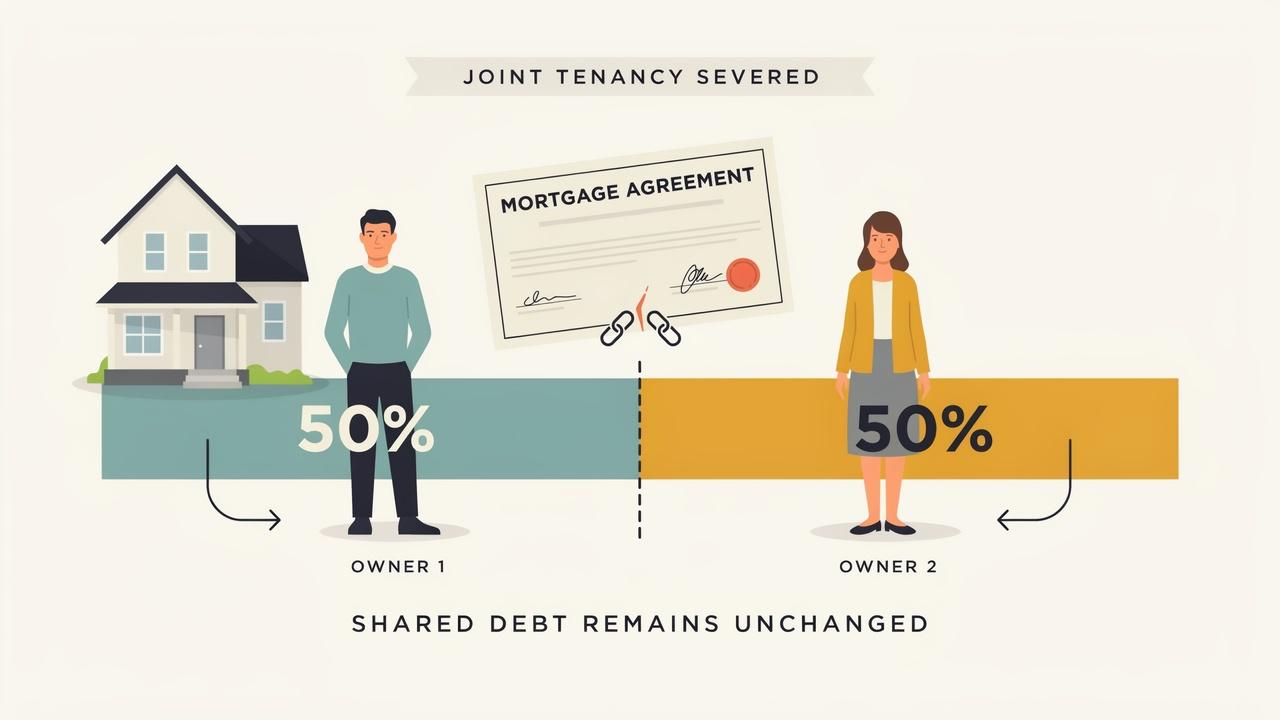
Severance changes who inherits, not who owes the loan.
Both owners still share the mortgage debt. Your monthly payments stay the same.
But there are two points to watch. Some loans include a due-on-sale clause, so a transfer to an outsider could affect the loan. A lien on one owner's share can also complicate title. It helps to check your loan terms or ask your lender before you sever.
The Problem of Secret Severance
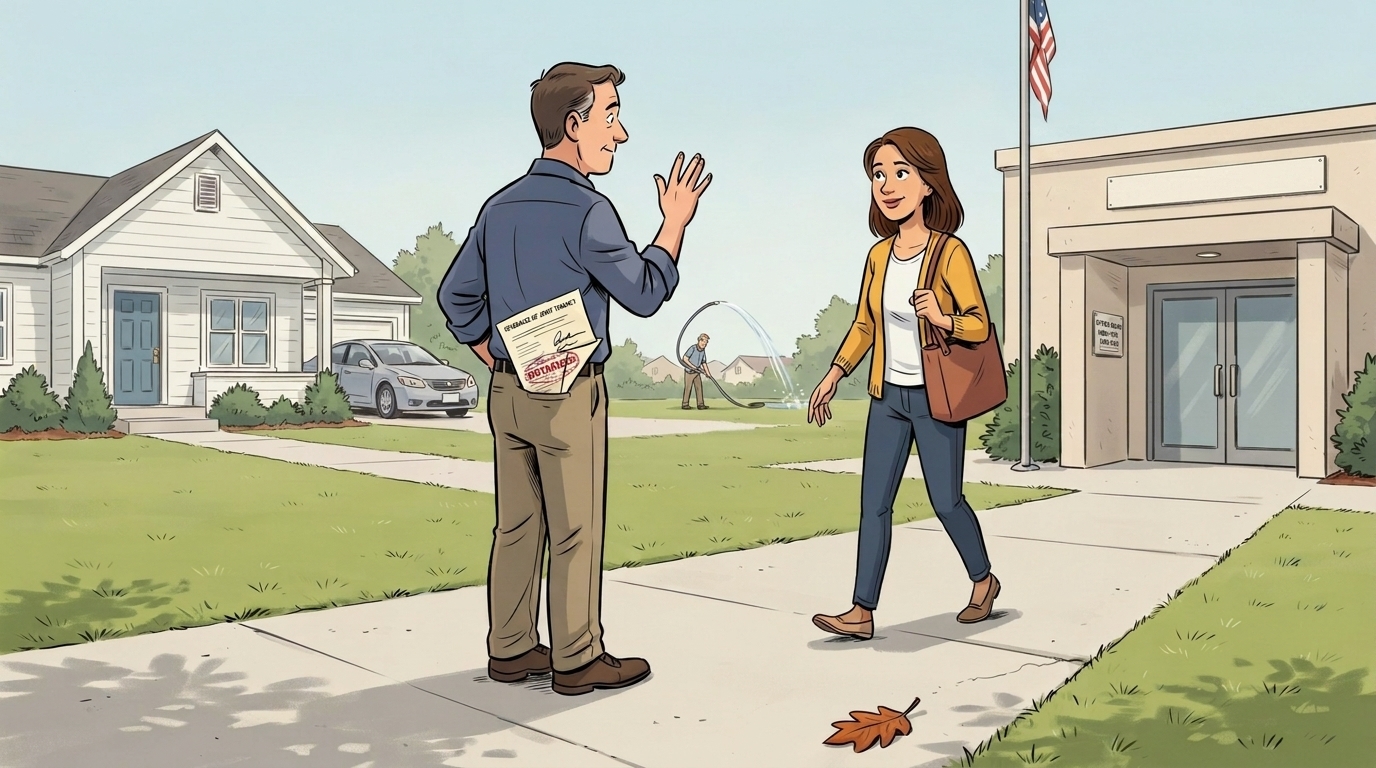
One joint tenant can sever without telling the other. This has always been legal, but it creates a fairness risk. In a secret severance, an owner hides the severing document.
If they die first, their heirs produce it and claim half. If they live, they suppress it and take the whole property. The Harvard Law School H2O casebook flags this as the biggest problem in severance.
To fix this surprise, several states now tie severance to recording.
In California, an unrecorded severance does not end the other owner's survivorship, with a narrow deathbed exception (Civil Code section 683.2). New York uses the same idea, so the severing deed must be recorded before the owner's death (Real Property Law section 240-c). Minnesota makes recording one of four valid ways to sever (Minnesota Statutes section 500.19).
The common thread is simple: record the document, or the severance may not hold.
Severance of Fixtures and What Stays in a Sale

Fixtures cause many arguments during a home sale. The trouble is knowing which items are part of the property and which the seller can take. Two points make this clear:
The Legal Test for a Fixture
Courts do not guess. They apply a set test, often taught with the word MARIA.
It covers five factors:
- Method of attachment: How firmly the item is fixed to the property.
- Adaptation: Whether the item was made to fit that property, like a pool cover.
- Relationship of the parties: Disputes favor the buyer over the seller and the tenant over the landlord.
- Intention: What the person meant when they attached it. This is often the most important factor.
- Agreement: What the contract says. If it states an item stays or goes, that wording usually wins.
This test shows up across property law sources, from real estate exam guides to legal textbooks. It gives buyers and sellers a clear way to settle what counts as a fixture.
What This Means for Buyers and Sellers
The purchase agreement should list which items stay and which the seller keeps. When the contract stays silent on an item, disputes often follow.
Buyers may expect a chandelier or built-in shelves to stay with the home. Sellers may plan to take them.
Clear wording in the contract stops these fights before closing. Sellers should list what they plan to remove, and buyers should read the fixture terms closely.
Severance of Land Rights and Mineral Estates
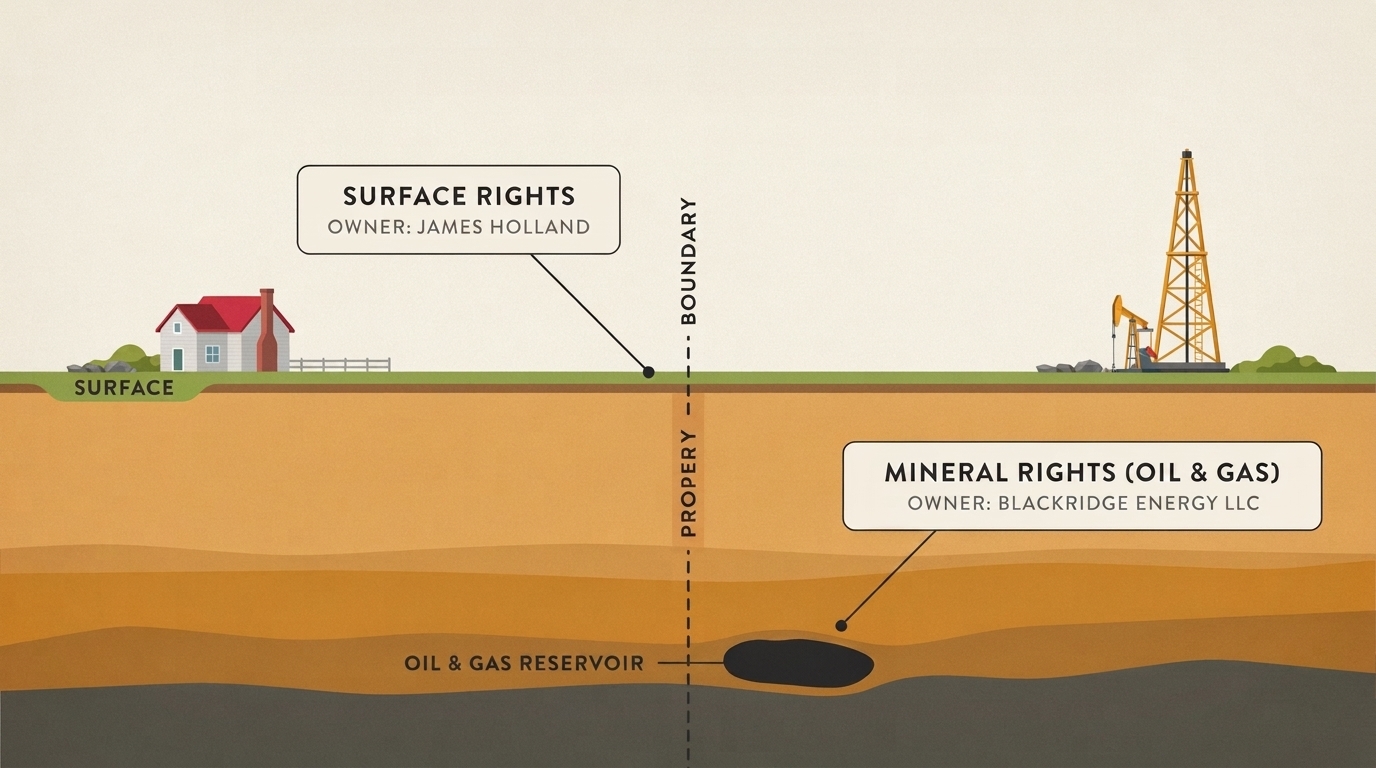
Severance can also split land into separate estates. A common case is dividing surface rights from mineral rights. An owner may sell the surface but keep the oil and gas below.
This is done through the deed, which spells out what the seller keeps. The result is a split estate, where one party owns the top and another owns the minerals.
The mineral owner often holds access rights to reach those minerals, which can limit what the surface owner controls.
Words That Often Get Confused With Severance
Severalty and deed severance are the two terms people mix up most with severance. They sound close but mean different things. Getting them wrong can lead to costly mistakes.
Severance vs. Severalty
These words look alike but differ in meaning. Severance is the act of separating a property interest. Severalty means one person or one legal entity owns the property alone.
A property held in severalty has no co-owner at all. For example, a single person who buys a home by themselves holds it in severalty. So there is no joint tenancy or tenancy in common to sever in the first place.
Deed Severance vs. Severance of Property Rights
Deed severance changes the ownership form. It usually turns a joint tenancy into a tenancy in common.
Severance of property rights is different. It changes the status of a fixture, turning real property back into personal property.One deals with how the title is held. The other deals with what counts as part of the land.
You may also see deed phrases like "as tenants in common" or "in equal shares," which are called words of severance, since they show intent to hold separate shares.
Conclusion
Severance touches real money and real rights. It decides who inherits a share when a co-owner dies. It can change a property's title and affect a mortgage or loan. Removing fixtures can lower a home's appraised value and stall financing.
So know the rules before you sign, sell, or remove anything. One severing act can shift ownership for good. That one habit can save you money and stress later.
Found this helpful? Share it with someone who needs it, and drop your questions in the comments below.
Frequently Asked Questions
Can a severance of joint tenancy be reversed?
Yes, but not on your own. Once severed into a tenancy in common, all owners must agree in writing to restore the joint tenancy and survivorship.
Are there tax effects when you sever a joint tenancy?
There can be. Gifting your share may count as a taxable gift, and a later sale can trigger capital gains, so ask a tax professional first.
What should I do if I receive a notice of severance?
Stay calm. You still own your share and owe the same mortgage. But update your will, since your share no longer passes automatically to the other owner.
Can creditors force a severance of joint tenancy?
Sometimes. If one owner has unpaid debts, a creditor's lien or a forced sale can sever the joint tenancy without the other owner choosing it.
Does a will sever a joint tenancy?
Usually not on its own. Survivorship passes the share at death before a will takes effect, so the joint tenancy must be severed while the owner is alive.