

You just saw a house you love. Then someone mentions it sits inside a deed-restricted community, and now you have questions.
What does that even mean? Can you paint your fence red? Can you park your work van in the driveway?
I get why this feels confusing. Rules attached to a house you don't own yet can feel like a hidden catch.
In this guide, I'll walk you through what a deed-restricted community is, how the restrictive covenants and CC&Rs actually work, and how to find deed restrictions on a property before you sign anything.
I've looked into real estate records, title reports, and covenant rules so you get facts you can trust, not guesses.
What Is a Deed Restricted Community?
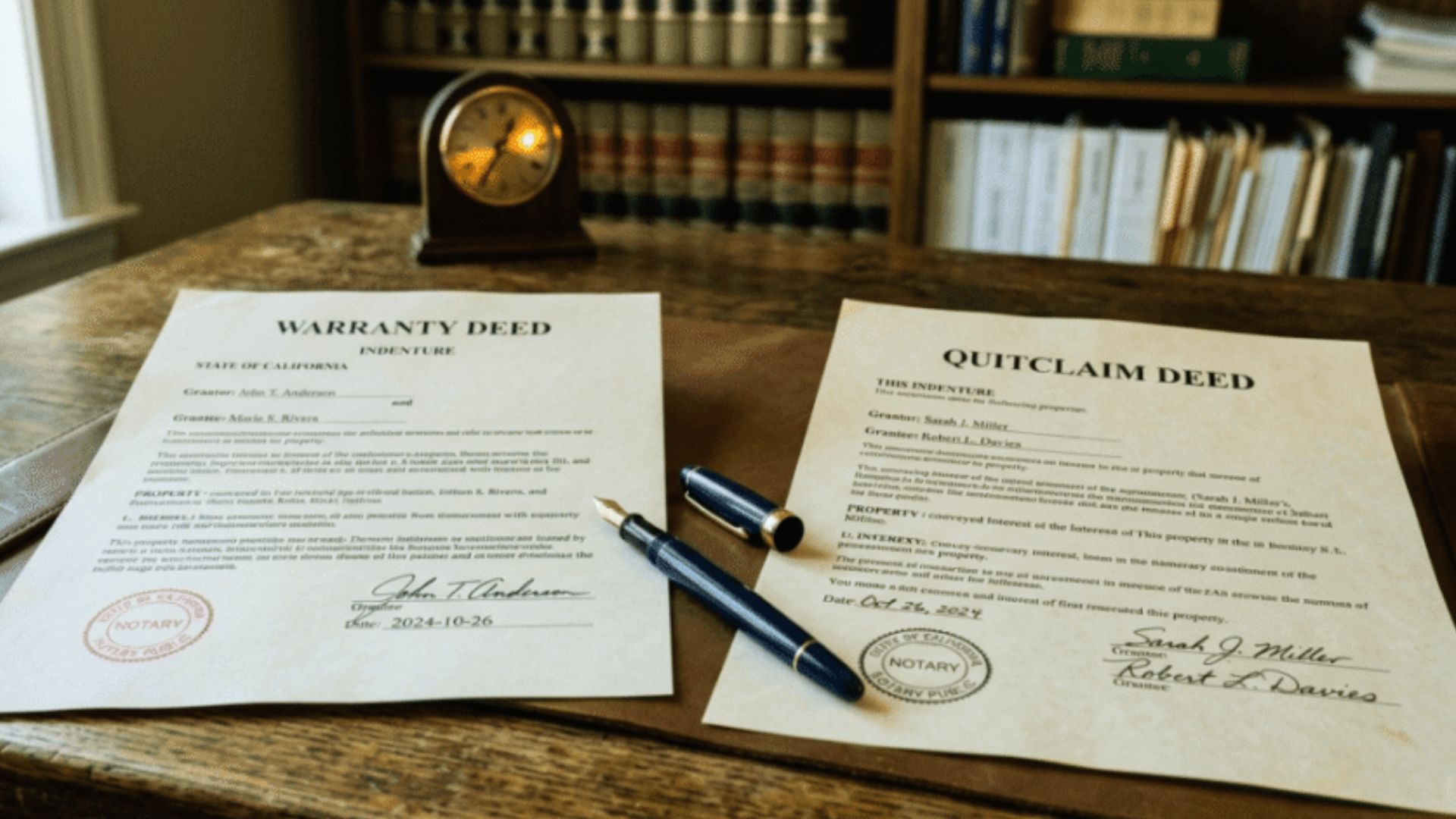
A deed-restricted community is a neighborhood where specific rules are attached directly to the property deed.
These rules, called restrictive covenants, control things like home appearance, land use, and sometimes paint colors.
They don't just apply to you. They stay attached to the property and pass down to whoever buys it next, even with no active homeowners association running things day to day.
You still own the land and the home itself. The deed restrictions don't change who holds title. They just limit how you're allowed to use what you own.
Some communities also use an architectural review board to approve exterior changes before work begins. It helps to know that step exists before you plan any renovation.
Deed Restricted Community vs HOA
People often mix these up, but they're not the same thing. Deed restrictions are the actual rules. An HOA is the group that often enforces them.
| Factor | Deed Restrictions | HOA |
| What it is | Legal rules recorded on the deed | An organization that manages a community |
| Who enforces it | HOA, a developer, or a neighbor through legal action | The HOA board and its property management |
| Can it exist alone? | Yes, without any HOA at all | Yes, even with few formal deed restrictions |
| Fees involved | No fees on their own | Usually comes with monthly or yearly dues |
A community can have deed restrictions without ever forming an HOA. In that case, enforcement often falls to individual neighbors willing to take legal action.
On the flip side, an HOA can exist mainly to manage amenities and collect dues, with only light deed restrictions in place. The two often overlap, but one doesn't require the other.
Common Features of a Deed Restricted Community

Every deed-restricted community has its own list, but most cover the same basic ground.
- Property appearance: Paint colors, roof types, and exterior materials often require prior approval.
- Landscaping: Lawns, trees, and general yard upkeep usually follow set standards.
- Renovations and additions: Major exterior changes typically need sign-off before work starts.
- Parking: RVs, boats, and work trucks are commonly restricted or banned from driveways and streets.
- Fences, sheds, and outbuildings: Height, material, and placement are usually spelled out in the covenant.
- Pets: Some communities cap the breed, size, or total number of animals per household.
- Rentals: Short-term rentals are limited or prohibited in many communities; owner-occupancy may be required first.
- Yard signs: For-sale and political signs are often restricted in size or banned outright.
- Soliciting: Door-to-door sales may be restricted or require a permit.
- Common areas: Pools, parks, and clubhouses come with their own separate usage rules.
Running a business out of the home is restricted in some communities, particularly those that receive customer foot traffic.
For example, one community may only allow neutral exterior paint colors, while another may prohibit RV parking or require approval before adding a fence. Because every community writes its own rules, restrictions vary from one neighborhood to the next.
How Do Deed Restrictions Work?
Deed restrictions work by being recorded with the county alongside the property deed, so they become part of the public record tied to that land.
When you buy a home in the community, the restrictions transfer to you automatically. You don't sign a separate agreement to accept them. They already exist as part of the deed.
In practice, this means the title company will include recorded covenants in the documents you receive before closing. By the time you sign, you're expected to have reviewed them, which is why reading the full CC&Rs yourself, rather than relying on a verbal summary, matters.
Enforcement usually falls to a homeowners association, if one exists. In some cases, a neighboring property owner can take legal action instead.
Homeowners are expected to follow the recorded rules just like any other property law, whether or not they read them closely at closing. Not knowing about a covenant doesn't excuse breaking it.
Pros and Cons of Living in a Deed Restricted Community
Living with deed restrictions comes with real trade-offs, so it helps to see both sides clearly.
Pros:
The same rules that feel restrictive on move-in day are often what keeps the neighborhood looking the way it did when you fell in love with it.
- Helps maintain a consistent look across the neighborhood
- May help protect long-term property values, consistent upkeep standards limit the kind of visible neglect that tends to drag down comparable sales nearby
- Makes community expectations clear before you make changes
- Often includes access to shared amenities
Cons:
That same structure means less say over your own property.
- Limits some property changes and renovations
- Approval may be needed before starting improvements
- You must follow community rules even if you disagree
- Violations can lead to fines or other enforcement steps
At the end of the day, it comes down to how much structure you want in exchange for consistency.
What Happens If You Violate a Deed Restriction?

If you break a deed restriction, the process usually starts small. You'll likely get a written warning notice explaining the violation and asking you to fix it within a set time.
Ignore that, and you could face fines that add up the longer the issue continues.
In serious or repeated cases, the HOA or an affected neighbor can take legal action. That can lead to a court order forcing you to correct the problem, sometimes at your own cost.
The easiest way out is simple: fix the violation as soon as you're notified.
Painting over an unapproved color or removing an unauthorized fence usually closes the case before it gets expensive.
How to Find Deed Restrictions on a Property
You don't have to guess. A few quick checks will tell you exactly what rules apply before you buy.
- Review the property deed itself for recorded restrictions
- Check recorded covenants and restrictions, sometimes called CC&Rs
- Ask the seller or real estate agent directly
- Contact the HOA or community association, if one exists
- Review the title report and closing documents before you sign
- Search county property records online or in person
A title company can usually pull the recorded covenants for you as part of a standard title search. That's often the fastest way to see the full list in writing, instead of relying on a summary from the seller.
Who a Deed Restricted Community Fits Best
A deed-restricted community isn't for everyone, but it fits certain buyers really well.
- Families: kids benefit from quiet streets and consistent neighborhood standards.
- First-time homebuyers: clear rules make it easier to learn homeownership without guessing what's acceptable.
- Retirees: lower maintenance expectations and shared amenities often appeal here.
- Buyers who value consistency: if mismatched paint jobs or overgrown yards bother you, this fits well.
- Buyers who want shared amenities: pools, parks, and clubhouses often come standard.
The right fit comes down to whether the rules support your long-term plans for the property.
Before buying, compare the restrictions with how you expect to use the home in the future, including any rental plans or renovation ideas. Also check how consistently the rules are actually enforced, since two communities with similar restrictions can run very differently day to day.
Can Deed Restrictions Be Changed or Removed?
Yes, deed restrictions can sometimes be changed or removed, but it's rarely quick or simple.
Most changes require approval from a set share of homeowners in the community, sometimes as high as two-thirds or more, depending on the original covenant language.
In some cases, a legal procedure through the court is needed, especially if the restriction is outdated or no longer enforceable.
Restrictions can also expire on their own if the original document included a time limit. If a rule was written unclearly or conflicts with current law, a judge may rule it unenforceable.
None of this happens overnight, so check the current status before assuming a restriction still applies.
Quick Tips Before You Buy
A few checks now can save you a headache after closing.
- Ask for a full copy of the CC&Rs before closing, not just a summary. Read every page yourself.
- Check HOA meeting minutes from the past year for rule changes, disputes, or upcoming special assessments.
- Ask directly about any pending fines or violations tied to the home, since some can transfer to the new owner.
- Confirm the rental rules match your future plans. Some communities cap short-term rentals or require you to live there full time first.
- Talk to a current neighbor about how strict enforcement really is day to day, since rules on paper don't always match how they're enforced.
Final Thoughts
Buying in a deed-restricted community doesn't have to feel overwhelming. The key is understanding how the rules align with your lifestyle, plans, and expectations before making a purchase.
Some buyers appreciate the consistency and shared standards, while others prefer more freedom over their property.
By asking the right questions and reviewing the community's restrictions carefully, you can make a confident, informed decision.
Frequently Asked Questions
Is a deed-restricted community the same as a gated community?
No. A gated community is about access and security, while a deed-restricted community is about legal rules tied to the property itself. A neighborhood can be one, both, or neither.
Do you own the land in a deed-restricted community?
Yes. Deed restrictions limit how you use the property, but they don't change who owns it. You hold full title to the land and home, just like any other property.
Do deed restrictions apply to renters, not just the homeowner?
Yes, since the homeowner is responsible for making sure tenants follow the same rules, even if the renter never signed anything.
Can deed restrictions block solar panels?
In some states, yes, but many states now have solar access laws that override HOA or covenant limits on panel installation.
Is a deed restriction the same as zoning?
No, zoning is a government rule that applies to an entire area, while a deed restriction is a private rule tied to one property's deed.
What happens to deed restrictions if the HOA dissolves?
The recorded restrictions can still legally apply even without an active HOA, though enforcement usually becomes harder without an organized group behind it.