
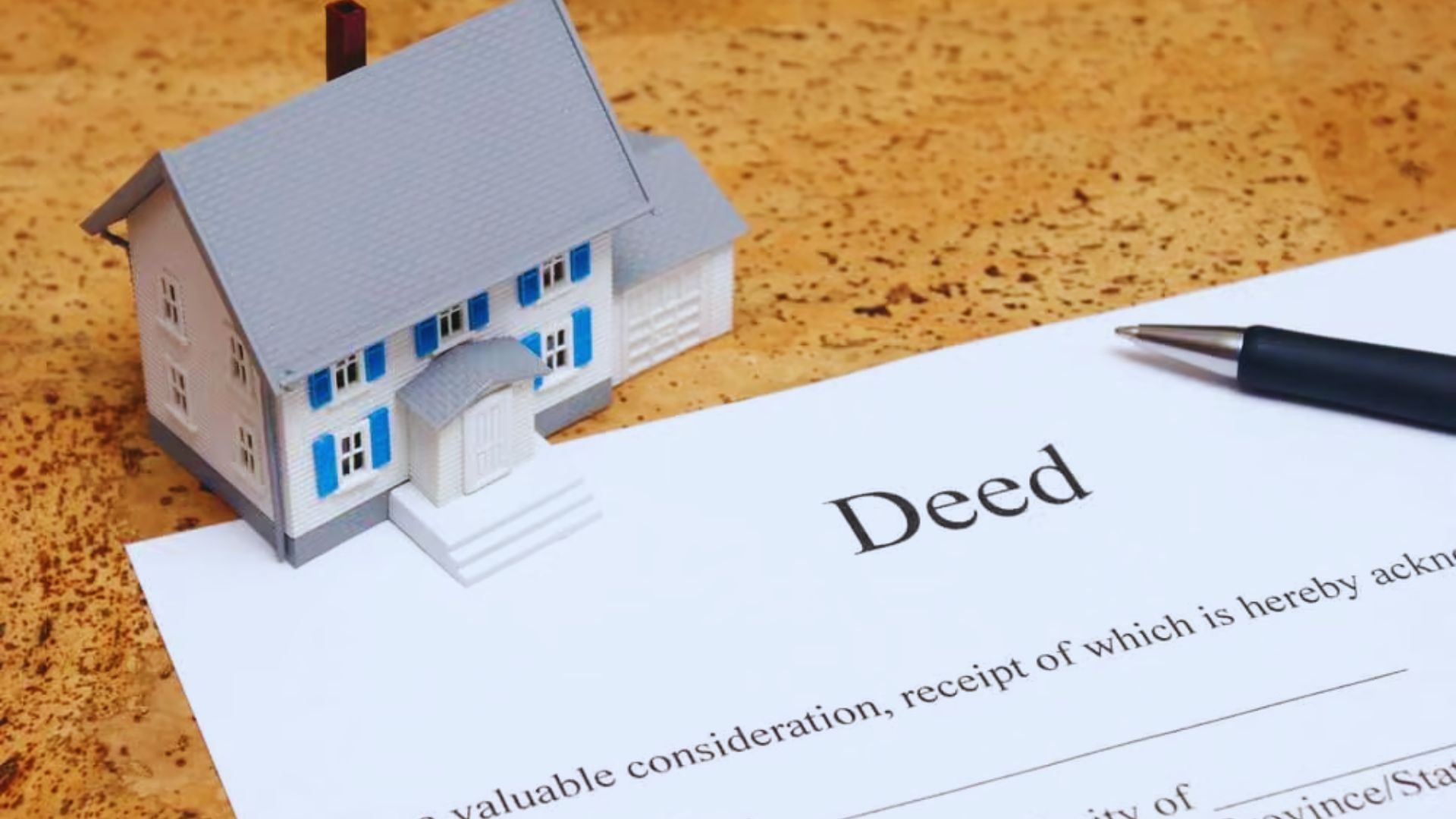
To remove a name from a property deed, you must prepare a new deed, have it signed and notarized, then record it with your county recorder's office.
The change is not official until it is recorded. This guide covers every step of that process, which deed to use, what it costs, and when to get legal help.
Removing a name from a deed sounds simple. But it is not always that easy. I have seen people make costly mistakes just because they skipped one step or used the wrong document.
A common and costly mistake is removing a name from the deed during divorce without addressing the mortgage. If the lender later treats that change as triggering the due-on-sale clause, they can demand the full loan balance immediately.
We will cover how the process works, which deed to use, what documents you need, and when to get legal help.
Whether it is a divorce, a death, or a property transfer, you will find the right answer here.
What Does Removing a Name From a Deed Mean?

A name cannot simply be crossed off an old deed. A new deed must be prepared and recorded to make the change official. Changing property ownership on paper involves more than most people expect.
A property deed is a legal document that shows who owns a piece of real estate.
It includes the names of the current owners, a description of the property, and the signatures needed to make it official. When a name is on a deed, that person has legal ownership rights to the property.
People remove names from deeds for many reasons. Divorce is one of the most common.
Others include the death of a co-owner, estate planning, or transferring property to a business. Sometimes a name needs to be removed after a legal name change or a family agreement.
How to Remove a Name From a Deed: Step-by-Step

The process follows a clear path, but each step matters.
Step1: Review the Current Deed and Ownership Type
Start by getting a copy of your current deed. You can usually find it at your county recorder of deeds office or online through the county website.
Check the names listed and the type of ownership, such as joint tenancy, tenancy in common, or community property. This affects how the transfer works and which documents you will need.
Step2: Choose the Correct Type of Deed
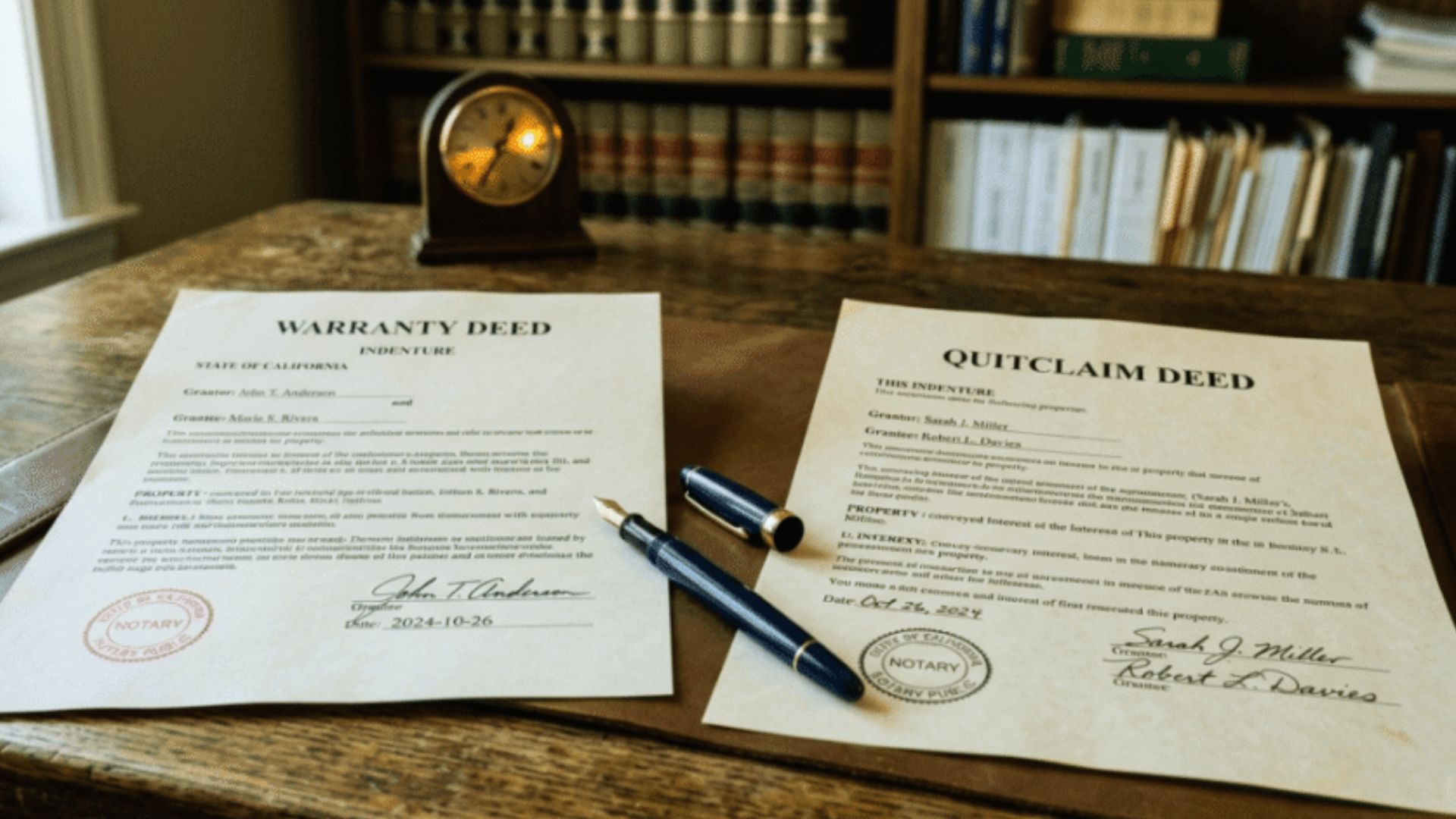
Different situations call for different deed types. A quitclaim deed works well for transfers between family members or after a divorce because it transfers ownership quickly without title guarantees.
A warranty deed offers more legal protection for the person receiving the property. The full breakdown of each deed type is in the section below.
Step3: Prepare the New Deed
Once you know which deed to use, prepare a new one. It should include the full legal names of all parties, including the grantor (the person giving up their interest) and the grantee (the person receiving it).
It also needs the property description from the original deed and a clear statement of the transfer. Many counties have specific formatting requirements, so check local rules before drafting anything.
Step4: Obtain Required Signatures and Consent
The person being removed from the deed usually needs to sign. If they refuse or cannot be reached, you may need a court order.
Both parties should review the deed carefully before signing.
Step5: Notarize and Record the Deed
After signing, the deed must be notarized by a notary public. Then take it to your county recorder of deeds office or the appropriate circuit court to be officially recorded.
Many states also require a land instrument intake sheet or similar transfer tax form to be filed along with the deed.
Recording makes the transfer part of the public record, and the change is not legally complete until that step is done. Most counties process deed recordings within a few days to a few weeks, depending on workload.
Step6: Update Tax and Property Records
Once the deed is recorded, update the property tax records with your county assessor. If the property is in a homeowners association, notify them as well.
Skipping this step can lead to tax bills going to the wrong person or insurance coverage gaps.
Legal Requirements for Removing a Name From a Deed

Rules vary by state, but some basics apply almost everywhere.
Ownership and Consent Requirements
In most cases, the person whose name is being removed must agree to the transfer and sign the new deed, and all co-owners are typically required to participate. However, several legal mechanisms can override this requirement.
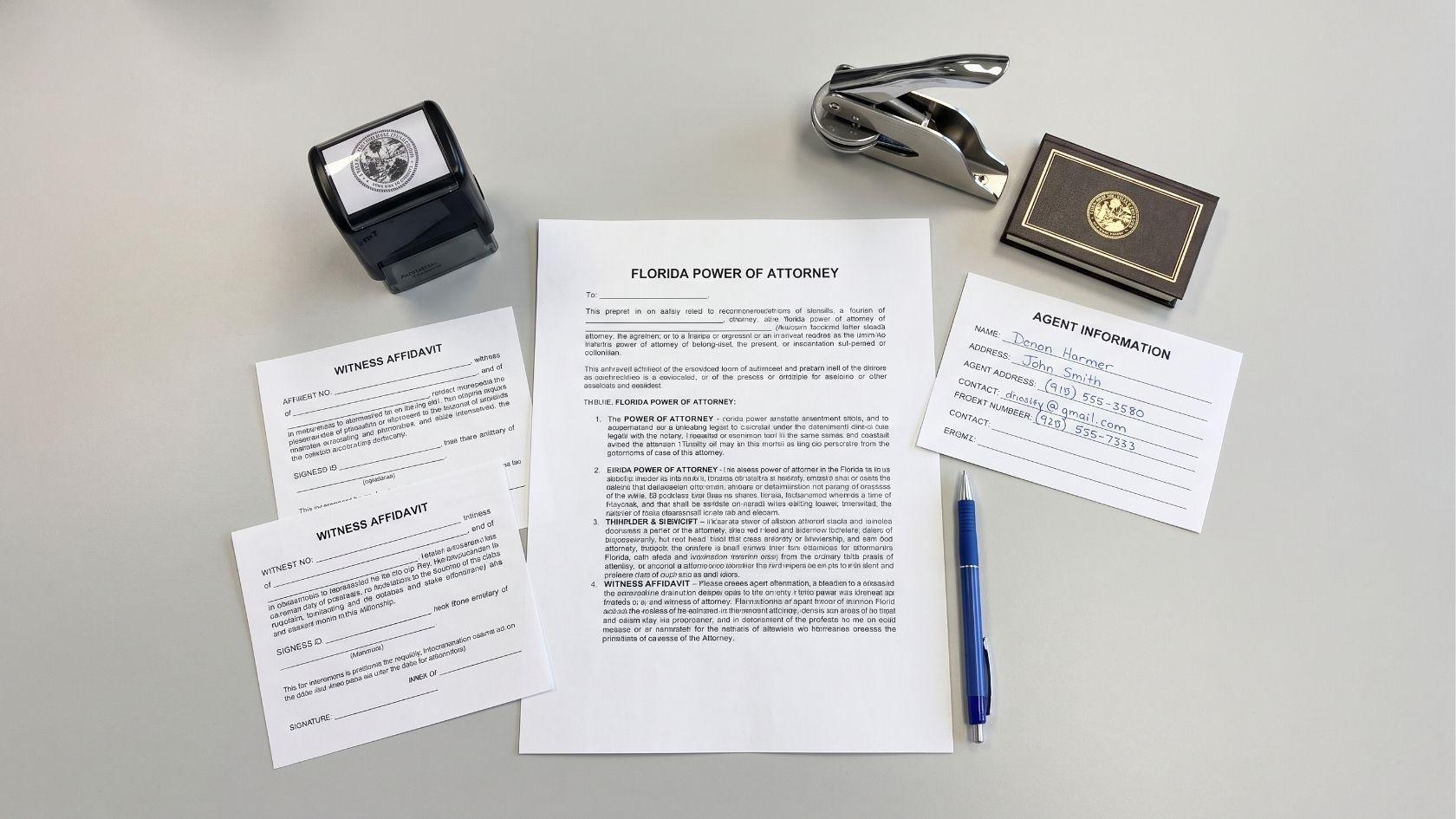
A court order issued in a divorce proceeding can authorize the transfer without the other spouse's signature. A properly executed power of attorney allows an authorized agent to sign on behalf of an incapacitated or unavailable owner.
In probate, an executor or administrator can transfer a deceased owner's interest without any surviving co-owner's consent. Transfers through a trust are governed by the trust document, not by the individual beneficiaries.
State laws also vary, and some permit partition actions or other court-supervised transfers when co-owners cannot agree. Transfers completed without meeting applicable consent requirements can be challenged in court.
If the property is jointly owned, all owners typically need to be involved. Transfers made without proper consent can be challenged in court.
State-Specific Recording Rules
Each state has its own rules for how deeds must be prepared and recorded. Some require specific language in the deed. Others require a cover sheet or additional forms.
For example, California requires a Preliminary Change of Ownership Report. Florida requires two witnesses in addition to a notary. Always check the rules for the state where the property is located before preparing anything.
Community Property States
If you live in one of the nine community property states, the rules for removing a spouse's name differ from other states.
Those states are Arizona, California, Idaho, Louisiana, Nevada, New Mexico, Texas, Washington, and Wisconsin. Alaska is an opt-in state, meaning spouses may elect community property treatment through a written agreement.
In community property states, property acquired during a marriage is generally owned equally by both spouses by default, and removing one spouse from the deed usually requires both to sign. However, rules vary within this group.
California requires a Preliminary Change of Ownership Report alongside the deed. Texas requires that homestead property transfers involving spouses be executed on a specific form and comply with additional homestead statutes.
Some states recognize separate property exceptions for gifts or inheritances received during the marriage. Because the rules are not uniform across these states, consult a real estate attorney in your specific state before preparing any deed.
Required Documents and Filing Fees
Document and fee requirements vary by state and county. See the cost breakdown below for specifics.
Witness and Notary Requirements
Almost every state requires a notary public signature on a deed. Some states also require one or two witnesses.
If these requirements are not met, the county may reject the deed or the transfer may not be legally valid.
Which Type of Deed Should You Use?

The right deed depends on what kind of transfer you are making and how much protection you need.
| Deed Type | Title Guarantee | Best For | Risk Level |
| Quitclaim Deed | None | Family transfers, divorce | Higher for recipient |
| Special Warranty Deed | Partial (during grantor's ownership only) | Commercial transfers | Medium |
| Warranty Deed | Full | Sales to strangers, buyers needing protection | Lowest for recipient |
| Transfer on Death Deed | N/A | Estate planning, avoiding probate | Low (where available) |
Choosing the Right Deed for Your Situation
For transfers between family members or after a divorce, a quitclaim deed is usually the right choice.
For transfers involving money or parties who do not have an established relationship, a warranty deed provides stronger protection.
For estate planning where you want to skip probate, ask about a transfer on death deed. When in doubt, talk to a real estate attorney or a title company before deciding.
When You Can Remove a Name Without the Owner's Consent

There are situations where a court can step in and authorize the change.
Divorce or Court-Ordered Property Transfers
When a court issues a divorce decree that awards property to one spouse, that ruling can be used to remove the other person's name from the deed.
The spouse receiving the property prepares a new deed based on the court order and records it with the county.
This is typically the most straightforward court-authorized transfer, and it should always be handled alongside the divorce settlement agreement to make sure the mortgage is addressed at the same time.
Probate and Inherited Property
When a property owner dies, their interest in the property usually goes through probate. The court determines who inherits the property.
Once the estate is settled, the new owner's name is added to the deed through a transfer on death deed or an executor's deed.
If the deceased was a joint tenant, the surviving owner can typically skip probate by filing an affidavit of survivorship with the county recorder, along with a certified copy of the death certificate.
This document states that the co-owner has died and that the survivor is now the sole owner. If the property was held as tenancy in common, the deceased owner's share goes through probate and passes according to their will or state law.
Fraud, Errors, or Title Corrections
If a name was added to a deed by mistake or through fraud, a court can order a correction. The legal process used in most states is called a quiet title action.
This involves filing a lawsuit asking the court to officially confirm who the legal owner is and clear any competing claims. A judge then issues an order that settles the title.
Other Court-Approved Circumstances
In some cases, a partition action can force a co-owner out if the parties cannot agree on what to do with the property.
Courts can also approve transfers in cases involving guardianship, bankruptcy, or tax liens.
Common Reasons to Remove a Name From a Deed

Life changes often bring property changes with them.
Divorce or Separation
Divorce is one of the most common reasons a name gets removed from a deed. One spouse usually keeps the home while the other signs a new deed to release their ownership rights.
This should always be done alongside your divorce settlement agreement to make sure both the deed and mortgage are addressed at the same time.
If you are in a community property state, both spouses likely need to sign even if only one name appears on the deed.
Marriage or Legal Name Change
If your name changes after marriage, you may want to update the deed to reflect your new legal name.
This usually involves recording a new deed with the updated name along with a copy of the marriage certificate or court order showing the name change.
For a simple name update with no ownership change, some counties allow a scrivener's affidavit instead of a full new deed. Check with your local recorder's office to confirm which option applies.
Estate Planning and Gifting Property
Some people remove their own names from deeds as part of estate planning. They may give the property to a child or other family member while still alive to avoid probate later.
There are real tax risks here. If the property has gone up in value, the person receiving it takes on your original cost basis, not the current market value. That means they could owe capital gains tax on the full appreciation when they eventually sell.
Transferring through inheritance instead often allows a stepped-up basis, which can eliminate that tax. Talk to a tax professional before giving any real estate.
Transferring Property to a Trust or LLC
Property is often transferred into a living trust or business entity for legal or financial reasons.
The individual's name comes off the deed, and the trust or LLC becomes the new owner. This is a common step in asset protection planning and does not require selling the property.
Removing a Deceased Owner
When a co-owner dies, their name must be removed from the deed. The method depends on how the property was titled. Joint tenancy allows the surviving owner to file an affidavit of survivorship with the county recorder, along with a certified copy of the death certificate.
If the property was held as tenancy in common, the deceased owner's share does not automatically pass to the survivor.
It goes through probate and is distributed according to the will or state intestacy law.
Does Removing a Name From a Deed Affect the Mortgage?

Changing a deed does not automatically change a mortgage. The mortgage is a separate contract between the borrower and the lender. If you remove someone from the deed but they are still on the mortgage, they remain responsible for the loan payments.
There is another risk that most people miss. Many mortgages include a due-on-sale clause, which gives the lender the right to demand the full loan balance immediately if ownership of the property changes without their approval.
Removing a name from a deed may trigger this clause, though enforcement is not automatic.
Under the Garn-St. Germain Depository Institutions Act of 1982, lenders cannot invoke the due-on-sale clause in certain situations, including transfers to a spouse or children following the borrower's death, transfers incident to divorce or legal separation, and transfers into an inter vivos trust where the borrower remains a beneficiary.
Outside these protected transfers, enforcement depends on the specific loan agreement and lender policy. Always review your mortgage documents and contact your lender before recording any deed change.
Always contact your lender before making any deed change to confirm whether their approval is required.
To remove someone from a mortgage, the remaining owner usually needs to refinance the loan in their name only.
The lender must approve this, and the borrower must qualify on their own. In some cases, lenders will consider a loan assumption instead of a full refinance, which is worth asking about.
Risks of Removing a Name From a Deed Without Legal Help

Doing this without professional guidance can create problems you may not see coming.
Incorrectly Prepared or Invalid Deeds
A deed with the wrong legal description, missing language, or formatting errors may be rejected by the county recorder. Worse, it could be recorded but still be invalid.
This creates confusion about who actually owns the property and can stall any future sale or refinancing.
Title Defects and Future Sale or Refinancing Problems
Title defects damage the chain of title, which is the full ownership history of the property. A title company will review that chain when you go to sell or refinance. If a past transfer was done incorrectly, the deal can fall apart.
Fixing title problems after the fact is more expensive and time-consuming than doing it right the first time.
Transfer Tax and Capital Gains Considerations
Some transfers trigger transfer taxes. Others may create a taxable event for capital gains purposes.
If you give property to a family member without understanding the tax rules, you could create a large and unexpected tax bill.
How Much Does It Cost to Remove a Name From a Deed?

Costs vary considerably depending on the complexity of the transfer, the state, and the county.
The figures below reflect general national ranges as of 2024 and may differ significantly in high-cost markets such as New York, California, or Massachusetts, where attorney rates and recording fees tend to run higher.
| Cost Type | Typical Range | Notes |
| Attorney fees | $150 to $500+ | Higher for disputes or court orders; some offer flat fees |
| Title company fees | $100 to $400 | May include deed prep and recording coordination |
| Recording fees | $15 to $100 | Varies by county; some charge per page |
| Transfer taxes | Varies | Often exempt for spousal or trust transfers |
| Online deed services | $50 to $200 | Lower cost but no legal review |
Attorney Fees
If you hire a real estate attorney, expect to pay roughly $150 to $500 or more for a straightforward deed transfer in most markets.
In major metropolitan areas or states with higher legal costs, fees for the same service can exceed $1,000.
Complex situations involving disputes, court orders, or title defects will cost more regardless of location. Many attorneys charge a flat fee for simple deed preparation, which makes budgeting easier.
Title Company Fees
A title company can prepare and record a deed in many states without an attorney. Fees typically run between $100 and $400 for a basic transfer.
This is a cost-effective option for simple, uncontested transfers between parties who are on good terms.
Recording Fees
The county recorder of deeds charges a fee to record the new deed in the public record.
These fees are typically between $15 and $100 depending on the county. Some charge per page, so a longer deed costs more to record.
Transfer Taxes and Other Government Charges
Some states and counties charge a transfer tax when property changes hands. This can be a flat fee or a percentage of the property value.
Certain transfers, like those between spouses or to a trust, may be exempt. Check local rules to find out what applies to your situation.
Online Deed Preparation Services
Online deed preparation services can generate a basic deed for $50 to $200. They are best suited for simple, uncontested family transfers where the title is clean and all parties are cooperating.
They do not provide legal advice or review your specific situation, so use them with caution in anything involving a dispute, a deceased owner, or a clouded title.
Tips for Removing a Name From a Deed Successfully
A few smart steps can save you a lot of trouble down the road.
- Do not assume the rules are the same in every location. Each state has its own deed requirements, and individual counties may add filing rules on top of that. Always check your county recorder of deeds website before preparing any documents.
- Keep certified copies of the recorded deed, the death certificate if applicable, and all supporting documents. Store them in a safe place. You may need them when selling the property, applying for a loan, or handling an estate.
- If you face an unexpected complication, such as a co-owner who is unresponsive, a prior deed with errors, or a title that has not been updated after a death, stop and get legal guidance before recording anything. Errors that make it into the public record are harder and more expensive to fix than those caught beforehand.
Conclusion
Removing a name from a deed is a legal process with real consequences if done incorrectly. The type of deed you use matters.
The way the property is currently titled determines which documents are required. Federal law limits when a lender can enforce a due-on-sale clause, but not all transfers are protected.
And in community property states, the rules add another layer that is easy to get wrong.
Start by pulling your current deed from the county recorder's website to confirm ownership type and vesting language. Then use this guide to identify which path applies to your situation before preparing any paperwork.
Frequently Asked Questions
Can a name be removed from a deed without selling the property?
Yes. You can transfer ownership through a new deed without selling. The property stays in place while only the ownership record changes.
Does removing a name from a deed affect homeowner's insurance?
It can. Notify your insurance provider after any deed change. The policy may need to be rewritten in the new owner's name. If the person removed was the named insured, coverage could lapse without an update.
How long does it take to remove a name from a deed?
Most transfers are processed within a few days to a few weeks, depending on your county's recording office workload and whether the documents are prepared the first time correctly.
Can you remove a name from a deed if the person is incapacitated?
A court-appointed guardian or power of attorney holder may be able to act on their behalf. Legal approval is typically required first.
What is a quiet title action?
A quiet title action is a court proceeding used to resolve disputes about who legally owns a property. It is the standard remedy when a name was added to a deed by fraud or mistake and the other party will not cooperate in correcting it.
What is a due-on-sale clause?
A due-on-sale clause is a provision in most mortgages that lets the lender demand full repayment of the loan if ownership of the property changes. Removing a name from a deed can trigger this clause. Always check with your lender before recording any deed change.