
You’re transferring property, and two terms keep showing up: quitclaim deed and warranty deed. Maybe you’re adding your spouse to a title. Maybe you’re buying your first home and your lender keeps mentioning the deed type.
Here’s the short version. These two deeds don’t change what property you’re getting. They change what the seller is promising you about it. Get that wrong, and you could end up owning a title problem you never saw coming.
I’ll walk you through what each deed actually does, what happens when something goes wrong, and how a grant deed fits into all of this too.
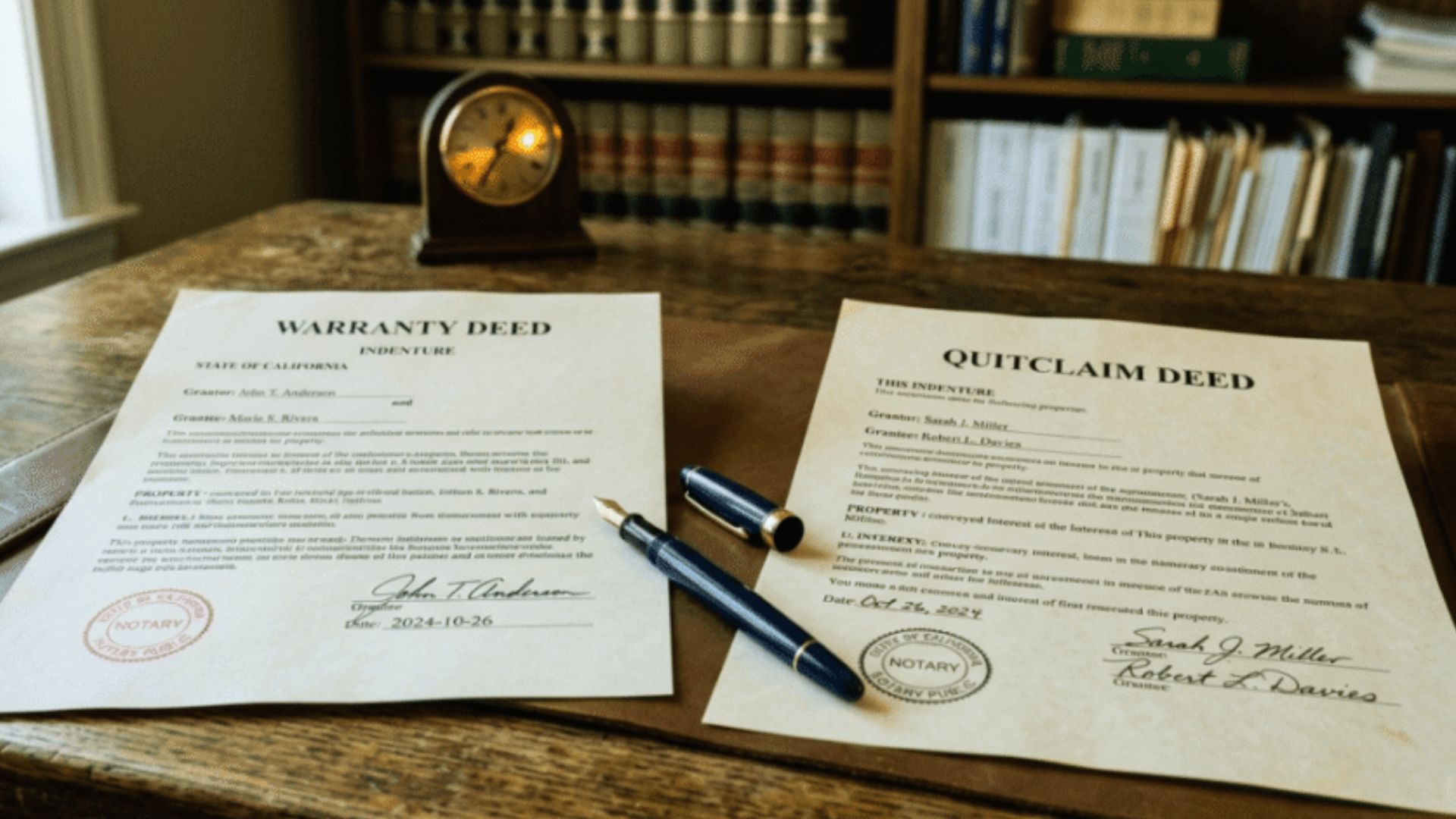
Quitclaim Deed vs Warranty Deed: What’s the Difference
A warranty deed transfers ownership and makes a promise along with it. The seller is telling you the title is clear and that they actually have the right to sell you the property.
A quitclaim deed skips that promise entirely. It just transfers whatever interest the seller currently holds, whether that’s full ownership, a partial share, or in some cases, nothing at all.
The person giving up the property is called the grantor. The person receiving it is the grantee. These terms apply to both deed types, so if someone asks you who is the grantor on a quitclaim deed, it’s simply whoever is signing away their interest, not necessarily whoever holds clear title to it.
That last part matters more than people think. With a warranty deed, the grantor is telling you they hold clean title.
With a quitclaim deed, the grantor could be someone with a shaky claim, a partial share, or even no legal interest at all, and the deed still works. You just get whatever they actually have.
How These Deeds Differ in What They Promise

The property itself doesn’t change based on which deed you use. What changes is the guarantee attached to it.
A warranty deed carries a covenant of title. That’s a legal promise the title is free of liens, competing claims, or hidden defects, unless the seller specifically discloses otherwise. Break that promise, and the seller is on the hook.
A quitclaim deed carries no covenant at all. There’s nothing to break because nothing was promised in the first place.
You’ll sometimes see “general warranty deed” and “special warranty deed” mentioned too. A general warranty deed promises the title is clean going all the way back through the property’s history. A special warranty deed only covers the seller’s own period of ownership. Both are still stronger promises than a quitclaim deed makes.
That scope difference matters in older properties with long ownership histories.
A general warranty deed covers a chain of title that might stretch back decades.
A special warranty deed leaves anything before the current seller’s ownership unguaranteed, so a lien filed by an owner from fifteen years ago would fall outside its protection.
What Happens When Something Goes Wrong With Each Deed
This is where the two deeds really pull apart, and it’s the part most guides skip over.
Say a lien shows up two years after closing, one the seller never disclosed. If you bought with a warranty deed, you have a real legal claim. The seller promised a clean title, that promise was broken, and you can pursue them for the cost of fixing it.
If you received the property through a quitclaim deed, you’re mostly stuck. Not because the law is unfair to you, but because there was never a promise to break. The grantor never claimed the title was clean. They handed over whatever interest they had, no more and no less, and that’s exactly what you got.
This is why title insurance still matters even with a warranty deed. The deed gives you legal recourse against the seller, but chasing that recourse costs time and money. Title insurance covers the financial hit directly.
And even when you win a legal claim against the seller, collecting on that judgment is a separate problem, especially if the seller has moved, sold other assets, or disputes the amount owed.
Grant Deed vs Quitclaim Deed vs Warranty Deed: When to Use Each

Two questions decide which deed fits your situation. Is money changing hands, and do you already know and trust the other party?
Use a warranty deed when you’re buying a home from someone you don’t personally know, especially if a mortgage lender is involved. Lenders typically require one because the title guarantee is what makes the property safe to use as collateral for the loan.
Use a quitclaim deed when the transfer happens between people who already trust each other. Adding a spouse to a title, settling a divorce, moving property into a living trust, or fixing a misspelled name on an old deed are all classic cases.
You might also come across a grant deed, which sits in between the two. A grant deed promises the seller hasn’t already sold the property to someone else and that it’s free of undisclosed liens from their own period of ownership, but it doesn’t go as far back as a general warranty deed does.
California, for example, uses grant deeds as the standard deed type for real estate transfers under Civil Code § 1092, so if the property is there, a grant deed is the norm, not a workaround. Other states default to warranty deeds. Check what’s standard where the property is located before assuming one type or the other.
Bottom Line
A warranty deed protects you with a real promise. A quitclaim deed doesn’t, and a grant deed lands somewhere in the middle.
The right one depends on whether you’re buying from a stranger or transferring property to someone you already trust.
In a traditional sale with a lender involved, a warranty deed is the standard, and usually required. For transfers between family members, spouses, or into a trust, a quitclaim deed does the job without the extra overhead.
Match the deed to the situation, and you avoid taking on a title problem that isn’t actually yours to fix.
Frequently Asked Questions
Who is the grantor on a quitclaim deed?
The grantor is whoever is signing away their interest in the property, regardless of how much interest they actually hold. They could own the property outright, hold a partial share, or in rare cases have no valid claim at all. The deed still transfers whatever that interest turns out to be.
Is a grant deed the same as a quitclaim deed?
No. A grant deed includes limited promises about the title, like confirming the seller hasn’t already transferred the property elsewhere. A quitclaim deed makes no promises at all. A grant deed sits between a quitclaim and a full warranty deed in terms of protection.
Which is better, a warranty deed or a quitclaim deed?
Neither is better across the board. A warranty deed protects you with a real promise about the title, which matters when money and strangers are involved. A quitclaim deed skips that protection, which is fine when the transfer stays between people who already trust each other.
What are the downsides of using a quitclaim deed?
You get no guarantee the title is clean, and no legal claim against the grantor if a problem surfaces later, since they never promised anything in the first place. That’s acceptable when you know the property’s history and trust the other party. It becomes a real risk when you don’t. A title search before closing can catch most issues a quitclaim deed won’t protect you from.