If you are staring at a property deed right now, wondering why something that sounds so simple costs so much, you are not alone.
Transferring a deed feels like it should be quick paperwork, but the fees can catch people off guard.
I have worked through deed transfers with clients who were shocked to learn that a "simple" transfer came with recording fees, notary charges, and legal costs stacked on top of each other.
This article breaks down how much a lawyer charges to transfer a deed, what that fee actually covers, and where extra costs might sneak in.
By the end, you will know what to expect, how to compare quotes, and how to avoid paying more than you need to.
How Much Does a Lawyer Charge to Transfer a Deed?

Most lawyers charge between $150 and $500 for a straightforward deed transfer, though some charge more for complicated cases involving multiple owners or unclear title history.
Costs vary depending on your state, the county you live in, and how much work the transfer actually requires.
Some lawyers offer a flat fee for standard transfers, while others bill by the hour, which can run anywhere from $150 to $400 per hour.
A flat fee is usually better if your situation is simple, since you know the total cost upfront.
Hourly billing tends to make more sense for cases that involve extra legal review, like resolving a title dispute or handling an estate transfer.
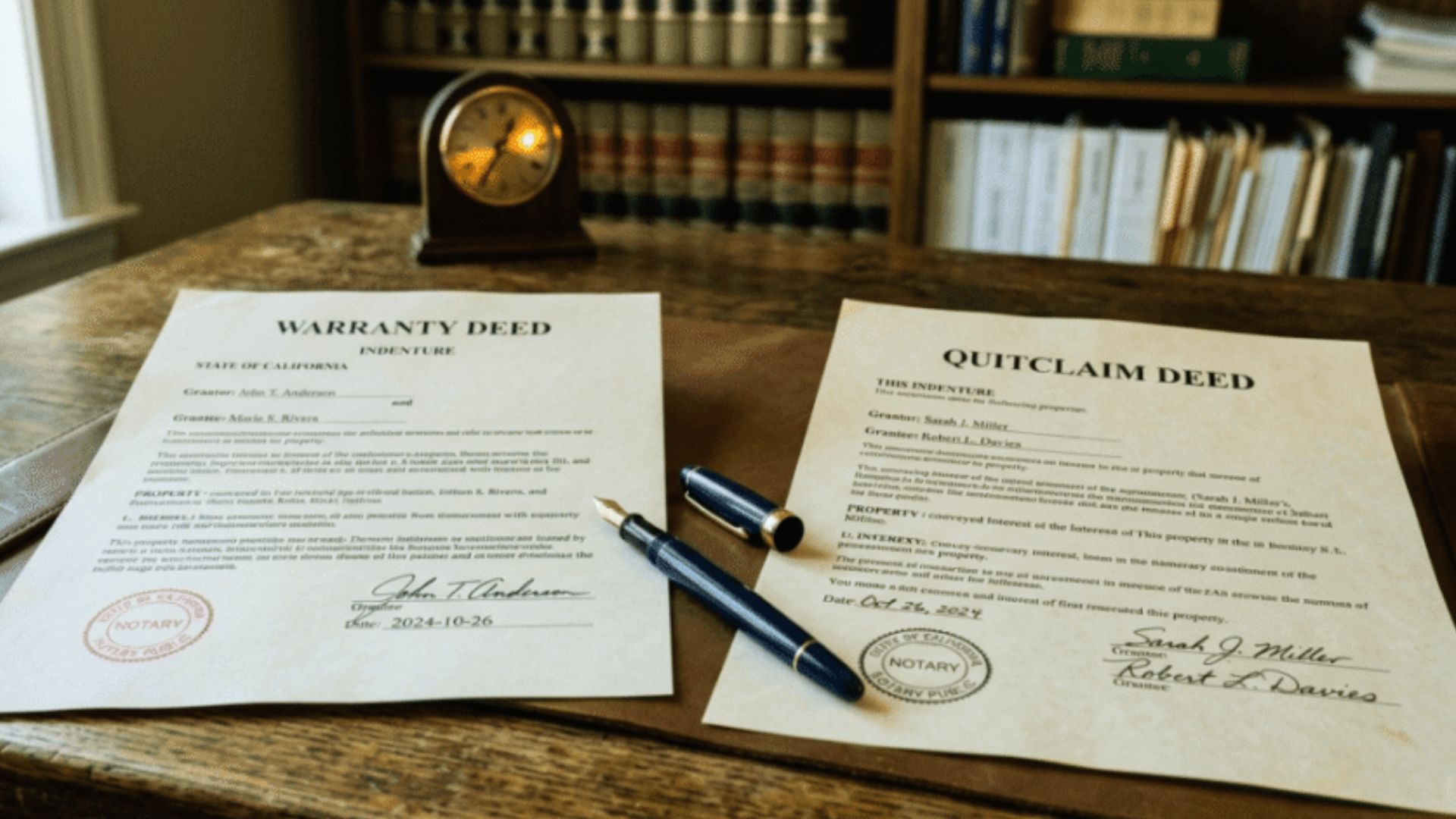
For reference, one real estate law firm in Maine lists a flat rate of $375 to prepare and record a quitclaim or warranty deed, not including county recording fees or transfer taxes.
That kind of published pricing is a useful benchmark when comparing quotes in your area.
What Is Included in a Lawyer's Deed Transfer Fee?

When a lawyer quotes you a price, that number usually covers preparing the new deed, checking current ownership records, offering legal guidance on the right type of deed to use, and helping get the document properly recorded with the county recorder or clerk.
Some lawyers also review the property for existing liens or ownership issues as part of that fee.
A thorough attorney will also confirm that the legal description on the deed matches the county records exactly, since even a small error in the property description can cause a rejection at the recording office.
It helps to ask directly what is bundled into the price so you are not surprised later.
A good lawyer will walk you through this before you agree to anything, and if they cannot explain it clearly, that is usually a sign to look elsewhere.
What Other Costs Are Involved in Transferring a Deed?
The lawyer's fee is rarely the only cost on the table.
County Recording and Filing Fees
Every county charges a fee to officially record the new deed with the county recorder or clerk, usually somewhere between $25 and $150 depending on where you live.
Notary Fees
Deeds need to be notarized before they can be recorded. In-office notary fees are usually small, often under $25, but a mobile notary can run $75 to $150.
Some states also require two witnesses in addition to the notary.
Title Search Fees
A title search checks for any liens, unpaid taxes, or ownership disputes tied to the property. This can cost anywhere from $75 to $200.
Transfer Taxes and Government Fees
Many states and counties charge a transfer tax based on the property value. This is often the biggest hidden cost people overlook.
In Florida, for example, the rate runs $0.70 per $100 of value, while New York City can charge up to 2.625 percent.
HOA and Condo Transfer Fees
If the property is part of a homeowners association or condominium, you may also need an estoppel certificate confirming dues are current.
This fee typically runs $100 to $450 and is easy to overlook until closing day.
What Factors Affect the Cost of Transferring a Deed?
A few key details decide whether your bill lands on the low or high end.
Type of Deed
A quitclaim deed is usually cheaper and simpler than a warranty deed, which requires more legal review.
Some states also allow a Transfer-on-Death deed or Lady Bird deed, which can be a cost-effective option for estate planning purposes since they let property pass directly to a named person without going through probate.
Property Value
Higher property values often mean higher transfer taxes and, sometimes, higher legal fees.
State and County Requirements
Some states have extra steps, forms, or taxes that others do not, which directly affects the final cost.
Number of Owners
More owners on a deed usually means more paperwork and more time, which can raise the fee.
Title Issues or Existing Liens
If there is a lien or a dispute tied to the property, expect additional legal work and cost.
In cases where a mortgage is still on the property, the lender may also need to be notified, since most loans include a due-on-sale clause that gives the bank the right to call the loan if ownership changes without approval.
Complexity of the Transfer
A transfer between spouses is usually simple. A transfer involving an estate, trust, or business entity is not.
How Much Does It Cost to Transfer a Deed Without a Lawyer?

Skipping the lawyer does not mean skipping every fee.Doing it yourself typically costs between $50 and $250, depending on your county.
You will still need to pay for the blank deed form, notary services, and county recording fees. Some counties also charge a small transfer tax even for DIY filings.
The savings come from skipping legal fees, not from avoiding every cost tied to the process.
Keep in mind that the county recorder's office can reject a deed for something as minor as an incorrect legal description or a missing formatting requirement, which means you may end up paying to file it twice.
Is It Cheaper to Transfer a Deed Yourself or Hire a Lawyer?
The right choice depends on how simple or messy your situation is.
Cost of a DIY Deed Transfer
Expect to pay mostly for filing and notary costs, usually under $250 total.
Cost of Hiring a Lawyer
A lawyer typically adds $150 to $500 or more, depending on the complexity of the transfer.
When Hiring a Lawyer May Be Worth the Cost
If there are multiple owners, a title issue, or an inheritance involved, a lawyer can prevent costly mistakes that end up far more expensive than their fee.
One missed detail, such as failing to get lender consent on a property with an active mortgage, can trigger a due-on-sale clause and create a much larger financial problem.
How Much Does It Cost to Add or Remove Someone From a Deed?
This is one of the most common reasons people contact a lawyer.
| Scenario | Typical Cost | Key Details |
| Add Someone to a Deed | $150 to $400 | Cost depends on the state and type of deed used |
| Remove Someone From a Deed | $200 to $600 | Can be more involved if it requires their signature or a court order |
| Add or Remove a Spouse | Usually lower than standard rates | Many states offer a simplified process for spouses. An Affidavit of Survivorship may also be needed if a co-owner has passed away and the surviving spouse needs to confirm sole ownership |
| Transfer Between Family Members | Usually affordable | Transfer taxes may still apply depending on your state. Gifts above the annual IRS exclusion limit may require filing Form 709. Seniors should know that transferring property within five years of applying for Medicaid can trigger a look-back review that affects eligibility |
How Can You Reduce the Cost of Transferring a Deed?
A few smart moves can lower your total bill.
- Ask about flat-fee services instead of hourly billing when your case is simple
- Compare quotes from at least two or three lawyers before choosing one
- Ask upfront about any additional fees not included in the base price, including HOA transfer fees if the property is in a planned community
- Prepare your documents in advance, including the property's legal description and current owner information, to save on legal time
When Should You Hire a Lawyer to Transfer a Deed?
Some situations are worth the extra cost.
Multiple Owners or Ownership Changes
More owners means more room for errors, which a lawyer can help avoid.
Marriage or Divorce
These transfers often involve legal details that affect future ownership rights.
Inheritance or Estate Transfers
Estate transfers usually involve extra legal steps, especially if there is no clear will.
A lawyer can also advise on whether a Transfer-on-Death deed or Lady Bird deed could have simplified the process before it reached this stage.
Gifts or Trust Transfers
Gift and trust transfers often carry tax implications, including gift tax rules and capital gains basis considerations, that a lawyer can help you understand.
Liens, Title Problems, or Disputes
If there is a lien or an ownership dispute, legal help is almost always worth it.
What Questions Should You Ask a Lawyer About Deed Transfer Costs?

The right questions can save you from surprise charges later.Ask for the total price upfront, whether it is a flat fee or hourly rate, and exactly what services are included.
Ask if there are any additional costs, such as recording fees, title searches, or HOA estoppel fees, that are not part of the quoted price.
Ask whether the property carries a mortgage and if lender consent is needed.
Finally, ask how long the process will take, since some transfers move faster than others depending on the county.
What Are Common Deed Transfer Mistakes That Can Increase Costs?
Small errors can turn a simple transfer into an expensive one.
- Using the wrong type of deed for your situation
- Entering incorrect names or property details, including an imprecise legal description, on the document
- Missing required notary steps or witness requirements before filing
- Failing to pay recording or transfer fees on time
- Recording the wrong version of the deed by mistake
Conclusion
Transferring a deed does not have to feel confusing once you know what you are actually paying for.
Whether you handle it yourself or hire a lawyer, understanding how much a lawyer charges to transfer a deed helps you plan ahead and avoid surprise fees.
From recording costs to gift tax rules, the details matter more than most people expect.
Take a moment to compare quotes, ask the right questions, and get clarity on any lender or HOA requirements before you move forward.
If this guide helped clear things up, share it with someone who might be dealing with the same questions, or drop a comment below telling us what worked for you.
Frequently Asked Questions
Can a title company transfer a deed instead of a lawyer?
Yes, many title companies handle deed transfers, though they may not offer the same legal advice a lawyer provides for complex cases.
How long does a deed transfer usually take?
Most transfers take one to four weeks, depending on your county's recording process and how quickly documents are submitted.
Do I need a lawyer to transfer a deed to a family member?
Not always, but a lawyer can help avoid mistakes, especially if the transfer involves tax implications or multiple owners.
What happens if a deed is recorded incorrectly?
An incorrectly recorded deed can create ownership disputes later and often requires filing a corrective deed to fix.
Can I transfer a deed online without a lawyer?
Some states allow online filing for simple transfers, but you will still need notarization and payment of applicable recording fees.