You see "benchmark price" in a listing report and wonder what it actually means. Is it the average? The median? Something else entirely?
The benchmark real estate definition covers more than one number: it's a calculated reference point, not a simple price tag.
Boards use it to strip out the noise from unusual sales, so you're comparing like with like.
That distinction matters more than it looks. Confuse a benchmark with an average, and your read on the market shifts.
Get that one distinction right, and every price report you read afterward makes a lot more sense.
What is a Benchmark in Real Estate?
A benchmark in real estate is a reference point that helps people measure and compare properties or market conditions. It is a data point used to evaluate property prices, values, or investment returns, drawn from recorded sales, market reports, and industry data.
Think of it like a ruler for the property market. Without one, there would be no reliable way to know if a price is fair, too high, or too low.
For example, if the median sale price of three-bedroom homes in a suburb is $450,000, that figure becomes the benchmark. The median is preferred over the average because extreme sales do not pull it off course. A seller listing at $500,000 can justify the premium with evidence. A buyer offering $420,000 knows they are going below the market standard.
Benchmarks bring consistency to every transaction, a buyer and seller working from the same reference point can negotiate on substance rather than competing guesses about what the market is doing.
What Do Real Estate Benchmarks Include?
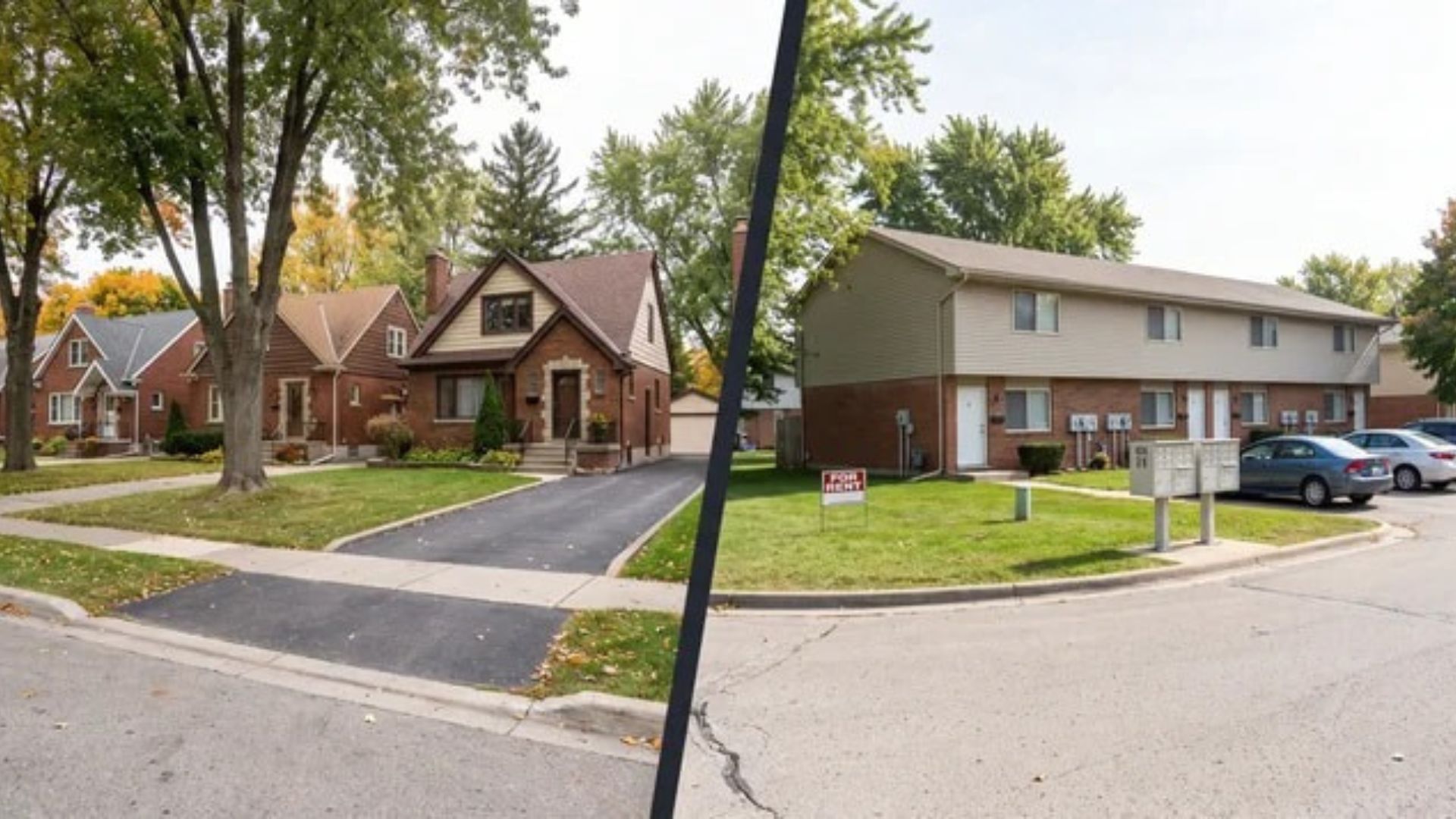
Real estate benchmarks fall into two practical categories:One is built from sale prices. The other is built from investment returns.
That split answers the core of what is a benchmark in real estate. Everything below breaks down how each type gets calculated:
Market Benchmarks
Market benchmarks are built from recorded sales in a specific area and property type. The three figures that show up most often are median sale price, price per square foot, and average days on market, each measuring a different dimension of what the market is doing.
Average days on market is particularly useful as a demand signal. When that figure falls below 14 days in a given area, properties are moving faster than supply can meet. When it climbs above 60, buyers have leverage. The benchmark tells you which environment you're operating in before you make a move.
Boards like CREB don't report a simple median. They calculate a benchmark price through mix-adjustment.
Mix-adjustment strips out the effect of unusual sales, a run of luxury listings, for example, so the number reflects a typical home, not whatever happened to sell.
That's why benchmark price and median price can move apart in the same month. If you're asking what is a benchmark in real estate in practical terms, this adjusted figure is it.
Investment Benchmarks
Investment benchmarks judge a property by what it earns, not what it sold for.
Cap rate measures annual net operating income against purchase price. A property bought for $500,000 generating $30,000 in annual NOI has a 6% cap rate.
That number tells you the return before financing enters the picture; useful for comparing properties on a level playing field regardless of how each one is funded.
Rental yield does something similar but strips the calculation down to gross rent versus property value. It's quicker to run and common in residential markets, but it doesn't account for expenses.
IRR goes further than either. It accounts for the timing of every cash flow across the full hold period; rent collected, expenses paid, and the eventual sale price, all discounted back to what that money is worth today.
A property with a strong cap rate but a poor resale can still post a weak IRR, because IRR weighs what you walk away with at the end, not just what you earn each year.
An investor asking what is a benchmark in real estate usually means one of these three, not the sale price at all.
What a Real Estate Benchmark Is Not
People confuse a real estate benchmark with three things: a simple average, an appraisal, and a surveying marker. Answering what is a benchmark in real estate also means ruling out what it isn't.
- Not a plain average or median price: mix-adjustment, covered above, sets a benchmark apart from either one.
- Not an appraisal: an appraisal assigns a value to one specific property on one specific date, while a benchmark reflects typical conditions across an entire market segment
- Not a single comparable sale: one recent sale next door tells you about that house, not the broader trend.
- Not a surveying benchmark: that term refers to a fixed elevation marker used in land surveys, with nothing to do with real estate pricing.
The appraisal distinction is the one worth sitting with.
An appraisal is backward-looking and property-specific. It tells you what one house is worth on one date.
A benchmark is forward-looking and market-wide. It tells you what a typical property in that category tends to fetch.
Using an appraisal where a benchmark is needed, or vice versa, produces analysis that sounds precise but answers the wrong question.
Why Real Estate Benchmarks Matter

Benchmarks give buyers, sellers, and investors a fair standard to judge a price or return against.
A buyer seeing a detached home listed at $680,000 in a suburb where the benchmark price is $615,000 knows they're being asked to pay a 10% premium. That's not automatically a dealbreaker, the property might justify it, but the benchmark tells them the question worth asking.
A seller pricing at $650,000 in that same suburb can defend the number with benchmark data rather than a gut feel. If comparable homes have cleared $640,000 recently, the ask is grounded. If the benchmark is $590,000, the price needs a story.
For investors, the same logic applies to returns. A cap rate that looks strong in isolation might be below the local average for the asset type, meaning the property is priced at a premium the income doesn't support.
Benchmarks are area- and property-type specific. A condo benchmark in one neighborhood won't tell you anything useful about a detached house across town. Apply the wrong one and the comparison falls apart, the number might look precise, but it's measuring the wrong thing.
Wrapping Up
So that's the benchmark in plain terms: a calculated reference point, not a raw average.
Market benchmarks track sale prices. Investment benchmarks track returns. Neither one is an appraisal, and neither comes from a single sale, they're patterns across many transactions, which is what makes them reliable.
Once that clicks, price reports stop feeling like guesswork. You'll spot a typical home value versus a skewed number right away.
Next time you compare properties, check which benchmark fits your area and type first. Got a number that doesn't add up? Drop your question below.
Frequently Asked Questions
What is an example of a benchmark in real estate?
A common example is a benchmark price, published monthly by real estate boards to represent a typical home in an area. It's adjusted for property type and size, so it stays comparable even as the mix of homes sold changes.
What makes a property a benchmark?
A single property isn't a benchmark on its own. A benchmark is a calculated reference point representing typical conditions across many properties. A property joins that calculation when its sale data gets included in the pool for its type and location.
How is a benchmark calculated?
Real estate boards use a two-step process. First, they identify the features that most affect value, size, age, location, amenities. Then they weight current sales data to produce a typical home value, not a plain average.
Is Benchmark Real Estate a company or a market term?
Both. "Benchmark" is a general market term for a pricing reference point. But Benchmark Real Estate is also a company name in property acquisition and development, unrelated to the market-data meaning.