

Transferring a property title to a family member sounds simple until you are standing at the county recorder's office with the wrong form.
The legal requirements, tax rules, and mortgage complications have more moving parts than most people expect, and getting one piece wrong can delay the transfer by months or trigger a lender's due-on-sale clause you never saw coming.
The problems almost always start before anyone picks up a pen.
Today, I'll walk you through every step, cost, and decision point that matters so the process goes smoothly the first time.
What Does Transferring a Property Title Mean?
A lot of people use "title" and "deed" like they mean the same thing. They do not. A title is a legal concept that means you have the recognized right to own, use, and sell a property.
A deed is the physical document that actually moves that right from one person to another.
When you transfer a property title to a family member, what you are really doing is signing a new deed and recording it with your local county office.
That makes the transfer official in the eyes of the law. Now, this can happen two ways. You can do it during your lifetime, where ownership shifts while you are still around.
Or it can happen after death, through a will, a trust, or a transfer-on-death deed. Which path makes more sense depends entirely on your situation, and this guide covers both.
Step-by-Step Process to Transfer a Property Title

The process is more straightforward than most people expect as long as you follow each step in the right order.
Step 1: Choose the Right Deed Type for Your Situation
Start by deciding which deed fits your situation. If you are gifting the property with no payment, use a gift deed.
If you want a fast, simple transfer and you know the title is clean, a quitclaim deed works well. If staying in the home matters to you, consider a life estate deed.
Getting this decision right from the start saves you from redoing paperwork later.
Step 2: Draft the Deed With the Correct Legal Information
The deed must include the full legal names of both the grantor and grantee, the property's legal description exactly as it appears in public records, and the parcel ID number.
Do not rely on the street address alone, it is not enough legally. You can use templates from your county recorder's office or hire a real estate attorney to draft it accurately.
Step 3: Sign the Deed in Front of a Notary Public
Once the deed is drafted, both parties typically need to sign it in front of a licensed notary public. Some states also require one or two witnesses to be present at signing.
Do not sign ahead of time and bring it in later the notary needs to witness the actual signing. This step is what makes the deed legally valid.
Step 4: File the Deed With Your County Recorder's Office
Take the notarized deed to your local county recorder's office along with a change-of-ownership form and the required filing fee.
Some counties also accept filings by mail or online. Once recorded, the transfer becomes part of the official public record.
Keep a certified copy for yourself after recording you will likely need it in the future.
How Long Does the Transfer Take?
The actual recording usually happens within one to four weeks after you submit the paperwork, depending on your county's workload.
Drafting and notarizing the deed beforehand can take a few days to a couple of weeks if you are working with an attorney.
If everything is prepared correctly the first time, the whole process from start to finish typically wraps up in two to four weeks.
Types of Deeds Used in Family Property Transfers
Picking the wrong deed type does not just slow things down it can create legal problems that follow the property for years.
Comparison Table: Deed Type at a Glance
| Deed Type | Best Use Case | Pros | Cons |
| Quitclaim Deed | Quick family transfers with known title history | Fast, simple, low cost | No title guarantees |
| Gift Deed | Transferring property with no payment involved | Clean for gifting, legally clear | May trigger gift tax filing |
| Warranty Deed | Transfer with full title guarantee | Strong legal protection for recipient | More complex to draft, typically requires attorney |
| Life Estate Deed | Aging owner wants to stay while passing ownership | Avoids probate, retains living rights | Harder to reverse later |
| Living Trust | Avoiding probate with more complex estate needs | Private, flexible, no probate | Higher setup cost |
Quitclaim Deed: When to Use It and When Not To
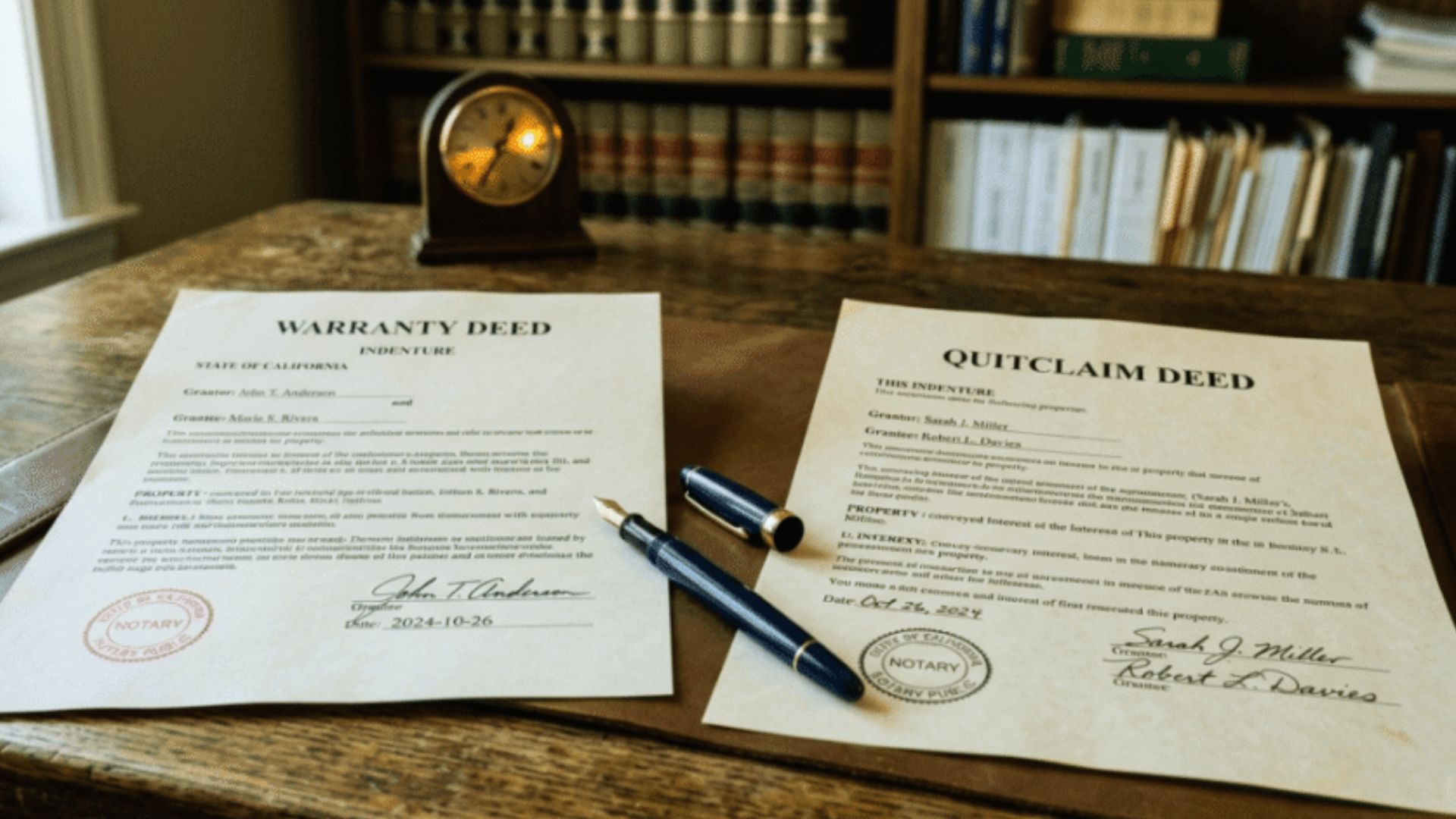
A quitclaim deed transfers whatever ownership the grantor has no guarantees attached. It is fast and simple, which makes it popular for family transfers.
But if there is any lien or title dispute hiding in the property's history, the person receiving it has no legal protection.
Use it when you know the property well and trust the history. Skip it when there is any doubt about the title.
Here is what that means in practice:
If a contractor placed a lien on the property two owners ago and it was never resolved, that lien transfers with the deed. The new owner inherits the debt and the legal obligation to clear it, with no recourse against the person who signed the deed over to them.
A title search before using a quitclaim deed costs between $75 and $200 and removes most of that risk. It is a small investment for a transfer where no title guarantees are attached.
Gift Deed: Best for No-Money Transfers
A gift deed is used when no money changes hands. The deed must state clearly that the transfer is voluntary and made out of love and affection that specific language matters legally.
Because the property is treated as a gift, you may need to file IRS Form 709 if the value exceeds the annual exclusion limit.
It is a clean option for straightforward family gifting situations.
Life Estate Deed: Keep Rights While Passing Ownership
A life estate deed lets you transfer ownership to a family member while keeping the right to live in and use the property for the rest of your life.
Once you pass away, full ownership automatically goes to the family member named in the deed no probate needed.
It is a smart option for aging parents who want to pass the home without losing their place in it.
The harder-to-reverse part matters more than it sounds. Once a life estate deed is recorded, you cannot sell or refinance the property without the beneficiary's written consent, even though you still live there.
If the relationship changes or circumstances shift, unwinding the arrangement requires the beneficiary to deed the remainder interest back to you, which means another deed, another recording, and their full cooperation.
Living Trust: The Alternative That Avoids Probate Entirely
A living trust is not a deed, but it is worth knowing about. You transfer the property into a trust, name yourself as trustee while alive, and name your family member as the beneficiary.
When you pass, the property transfers to them privately and without going through probate court. It costs more to set up than a simple deed, typically $1,000 to $3,000 with an attorney but it eliminates probate court entirely, which in some states can take six months to two years and consume 3% to 7% of the estate's value in fees.
Warranty Deed: When You Need to Guarantee the Title
A warranty deed goes further than a quitclaim deed. Instead of simply passing along whatever ownership the grantor has, a warranty deed includes a legal guarantee that the title is clean; no hidden liens, no competing claims, no undisclosed encumbrances.
If a problem with the title surfaces later, the grantor is legally on the hook for it.
There are two versions: a general warranty deed, which covers the entire history of the property, and a special warranty deed, which only covers the period the current owner held it.
For family transfers where the recipient wants full legal protection — or where the property has changed hands several times before — a warranty deed provides coverage that a quitclaim deed simply does not. The tradeoff is that it takes more work to draft correctly and typically requires an attorney to prepare.
How Much Does a Deed Transfer to Family Cost?

The total cost surprises most people not because it is expensive, but because there are more line items than they expected.
Attorney Fees
Hiring a real estate attorney to handle the deed transfer typically costs between $500 and $1,500. The price depends on your state, the complexity of the transfer, and whether any title issues need resolving first.
You do not always need an attorney for a simple family transfer, but if there is a mortgage involved or any ownership dispute, having one is worth the cost.
Notary Fees
Notary fees are the smallest cost in this process. Most notaries charge between $10 and $50 per signature depending on your state.
Many banks and credit unions offer free notary services to their account holders, so check there first. Mobile notaries who travel to your location charge a bit more, usually between $75 and $150 for the visit.
County Recording and Filing Fees
Recording the deed at your county office typically costs between $25 and $250.
The fee is usually based on the number of pages in the document, though some counties charge a flat rate per filing.
Call your local recorder's office ahead of time to confirm the exact amount. Showing up without the correct fee can delay your filing that same day.
Transfer Taxes (Where Applicable)
Some states charge a transfer tax when property changes hands, even between family members. The rate varies, some states use a flat fee while others calculate it as a percentage of the property value.
Texas, for example, charges no state-level transfer tax at all. California imposes a documentary transfer tax at the county level, typically around $1.10 per $1,000 of property value, though some counties add their own surcharge on top of that.
Many states offer exemptions for close family transfers, but you cannot assume yours does. Always verify your state's specific rules before completing the transfer to avoid an unexpected bill.
What Is the Best Way to Transfer Property to a Family?
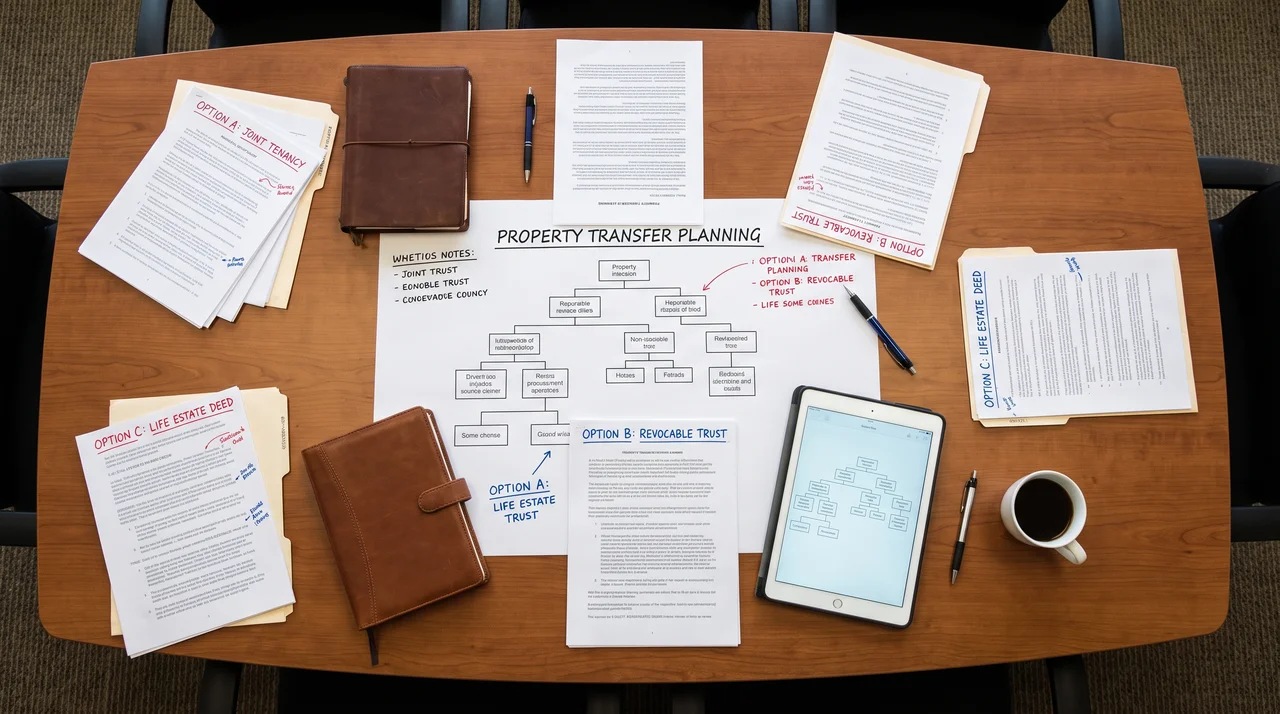
There is no single right answer here, the best method depends entirely on what you are trying to accomplish.
If You Want the Fastest, Simplest Transfer: Quitclaim Deed
A quitclaim deed is your quickest option. You draft it, notarize it, and file it. The whole thing can be done in a matter of days.
It works best when the property is paid off, the title history is clean, and both parties trust each other completely.
If speed matters more than legal guarantees, this is the most practical choice for most family situations.
If No Money Is Exchanging Hands: Gift Deed
Gifting property outright calls for a deed that makes the transaction's intent explicit from the start.
It documents that the transfer is voluntary, no payment is involved, and it is being made out of goodwill. This matters if the transfer is ever questioned later.
Just remember that gifting property above the annual exclusion limit may require filing a gift tax return with the IRS.
If You Want to Retain the Right to Live in the Home: Life Estate Deed
For owners who want to plan ahead without giving up their home today, a life estate deed threads that needle.
The family member becomes the owner on paper but cannot sell or mortgage the home without your consent while you are alive.
It is a practical middle ground for parents who want to plan ahead without giving up their home today.
If Avoiding Probate Is the Priority: Living Trust
A living trust keeps the property completely out of probate court. You place the home into the trust, remain in control of it while alive, and your family member receives it automatically when you pass no court process, no delays, no public record.
It costs more to set up than a deed transfer, but for families who want a smooth, private handover, it is the most reliable long-term option.
How to Transfer Property to a Family Member Tax-Free

The tax side of property transfers trips people up more than any other part mostly because the rules sound scarier than they actually are.
The Annual Gift Tax Exclusion Explained
Every year, the IRS lets you gift up to $19,000 per person without any paperwork. That number comes from the IRS's current annual exclusion, and it does go up over time, so check the latest figure before you rely on it.
This is called the annual gift tax exclusion. If a property is worth more than that and most are, it does not automatically mean you owe tax.
It just means the excess amount counts against your lifetime exemption. Most straightforward family transfers do not result in any actual tax bill.
The Lifetime Exemption: Why Most People Owe No Gift Tax
On top of the annual exclusion, the IRS gives every person a lifetime gift and estate tax exemption. For 2025, the IRS has that figure set at $13.99 million, and it's adjusted for inflation most years, so it's worth confirming the current number before you file.
So even if you gift a home worth $400,000, you are simply reducing your lifetime exemption by the taxable portion.
Unless your total lifetime gifts exceed that threshold, you will not write a check to the IRS. You do need to file Form 709 to report it, but filing is not the same as owing.
Capital Gains Tax: Step-Up in Basis vs. Carryover Basis
This is the part most people do not see coming. When you gift a property during your lifetime, the recipient inherits your original cost basis.
So if you bought the home for $100,000 and it is now worth $400,000, your family member could owe capital gains tax on that $300,000 gain if they sell.
But if they inherit the property after your death instead, they get a stepped-up basis equal to the home's value at the time of your passing.
That difference can mean tens of thousands of dollars in tax savings, which is why timing a transfer matters more than most people realize.
Medicaid Eligibility and the 5-Year Look-Back Rule
If there is any chance the current owner may need Medicaid-funded nursing home care within the next five years, transferring property to a family member right now could be a serious problem.
Medicaid looks back five years at any asset transfers made below market value. If it finds one, it can delay or deny benefits for a calculated period of time.
This rule catches a lot of families off guard, especially when the transfer seemed like simple estate planning. Talk to an elder law attorney before making any transfer if Medicaid is even a remote possibility.
What Happens If the Property Has a Mortgage?

Most of the deed work is between you and your family member, but once a mortgage is in the picture, the lender becomes a third party with real leverage over what you can do.
Most mortgage contracts include a due-on-sale clause, which gives the lender the right to demand full repayment of the loan the moment ownership changes hands.
In practice, lenders rarely enforce this for close family transfers, particularly between parents and children or spouses. But banking on that is a risk you do not want to take.
The safest move is to call your lender before filing any deed. Some will approve the transfer without issue. Others may require the new owner to qualify for the existing loan or refinance it altogether.
Either way, knowing where your lender stands before you record anything saves you from a very stressful situation later.
State-Specific Rules You Should Know
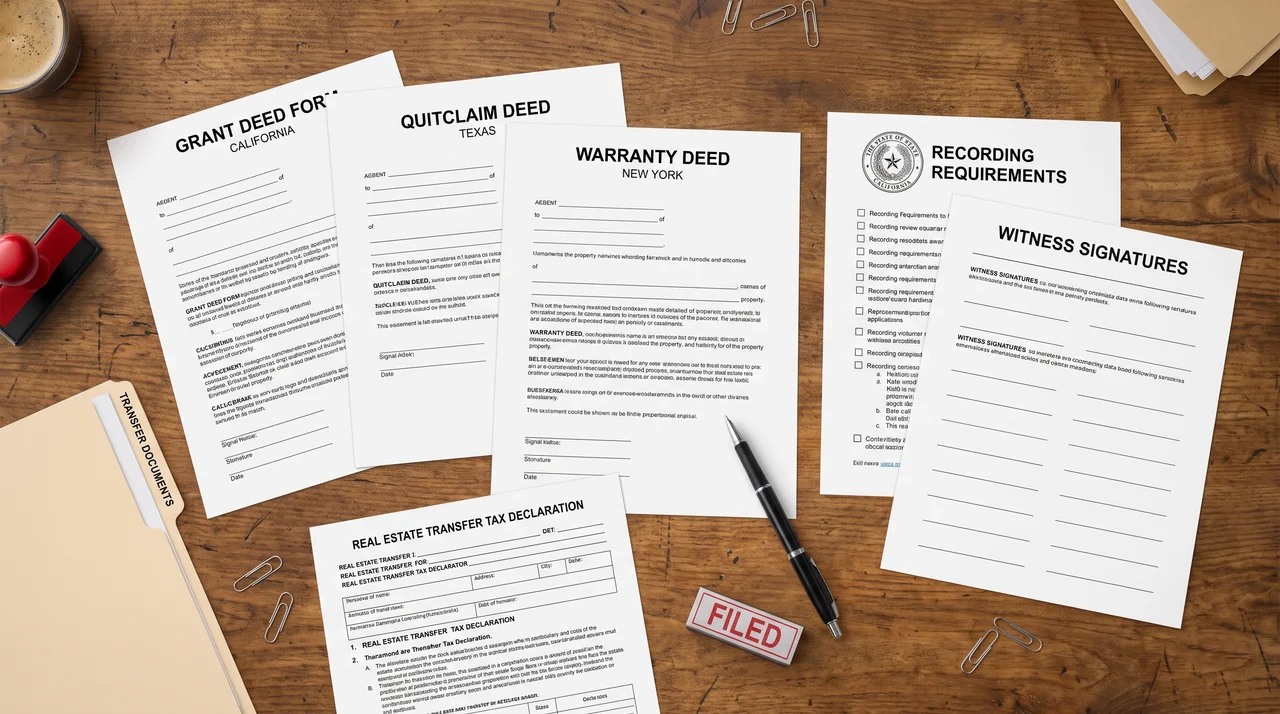
What works in one state can get your deed rejected in another, the differences are more significant than most people expect.
Witness Requirements Vary by State
Most states only require notarization to make a deed legally valid. But some states go further. Florida, for example, requires two witnesses in addition to a notary public under its state recording law.
Georgia has similar requirements under its own statutes. If you sign a deed without the required witnesses, the county recorder can reject it outright.
Transfer Taxes and Recording Fees Differ
Some states charge no transfer tax at all. Others calculate it as a percentage of the property's sale price or assessed value.
Pennsylvania is one example. Its Department of Revenue sets the realty transfer tax at 2% of the property value, though transfers between certain family members may qualify for an exemption.
States With Specific Deed Forms (Florida, Texas, and PA)
Florida requires deed transfers to include the preparer's name and address on the document itself, which many people forget.
Texas does not use a standard statewide deed form, so the legal description and formatting requirements need to match your specific county's expectations.
Pennsylvania requires a Statement of Value form to accompany most deed transfers, even between family members.
Each of these states has its own quirks, and missing one small requirement can send your paperwork back to square one.
The Baseline
Transferring a property title to a family member is one of those things that looks simple on the surface but has enough legal, tax, and financial layers underneath to catch even careful people off guard.
The right deed type, the correct paperwork, the mortgage conversation with your lender, the gift tax rules each piece matters, and getting one wrong can create problems that take months to fix.
The good news is that with the right information and a little preparation, most family transfers go smoothly.
Frequently Asked Questions
Can I Add a Family Member to My Property Title Without Transferring Full Ownership?
Yes. You can add someone to the deed while keeping your own ownership share. This makes both parties co-owners without a full title transfer.
Does Transferring Property to a Family Member Affect My Credit Score?
No. A property title transfer has no direct impact on your credit score since no borrowing or repayment activity is involved in the process.
Can a Family Member Refuse a Property Transfer?
Yes. A grantee has the right to decline the transfer. Ownership cannot be forced on someone without their knowledge or consent.
Is a Lawyer Required to Notarize a Deed?
No. Any licensed notary public can notarize a deed. A lawyer is not required unless your state has specific legal filing requirements beyond notarization.
What Happens if the Deed Is Filed With an Error in the Legal Description?
The county recorder may reject it or record it incorrectly. You would need to file a corrective deed to fix the error officially.