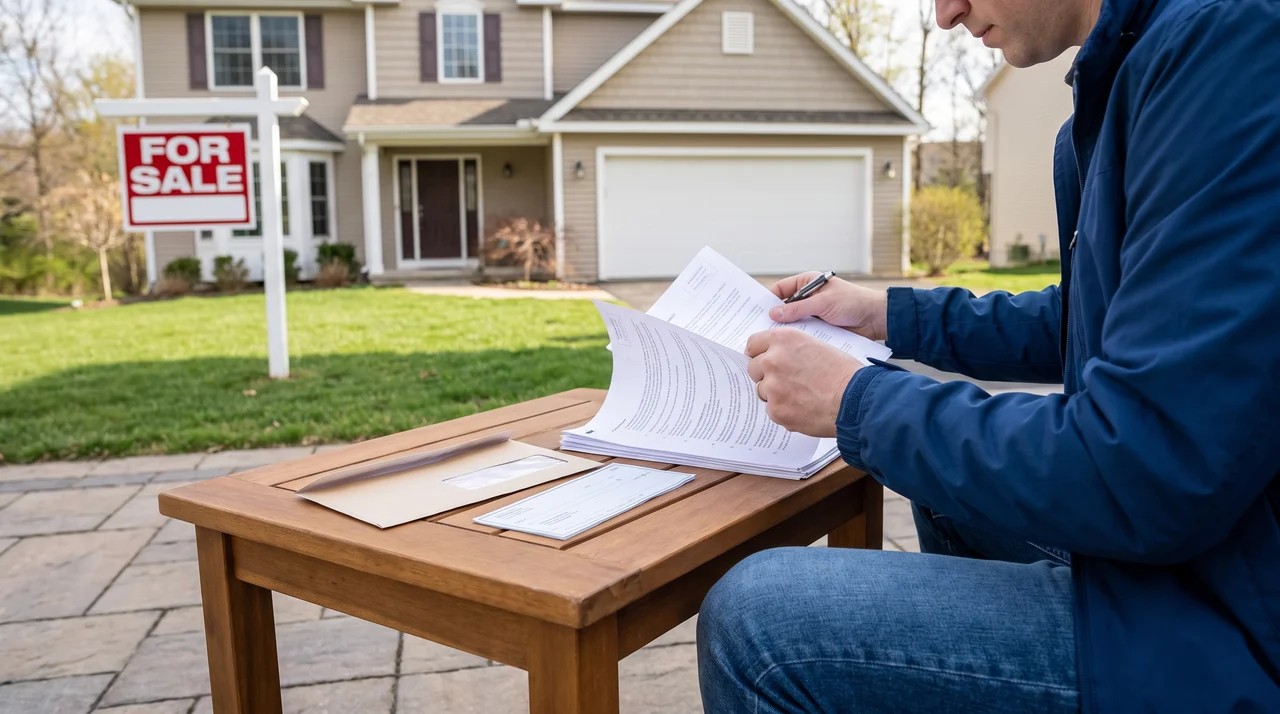


You filed for bankruptcy. Now you're staring at your credit report wondering if homeownership is still on the table.
I get this question a lot, and the short answer is yes. So, can you buy a house after bankruptcy? You can, but your timeline depends on which type you filed and which loan program you choose.
In this guide, I'll walk you through the waiting periods for Chapter 7 and Chapter 13. I'll break down the rules for FHA, VA, USDA, and conventional loans and show you what lenders check before they say yes.
I'll also cover the seasoning period lenders use to decide when you're ready, plus what changes if your bankruptcy was discharged versus dismissed.
By the end, you'll know your realistic timeline and what to do right now to speed it up.
Can You Buy a House After Bankruptcy?

Yes, you can buy a house after bankruptcy. It happens every day. Bankruptcy stays on your credit report for years, but it does not lock you out of homeownership forever.
Lenders look past the bankruptcy itself once you clear the waiting period tied to your loan type, sometimes called the seasoning period.
What matters most after that point is your current financial picture. Lenders check your credit score, your income stability, and your debt-to-income ratio, along with how you've handled money since your discharge.
A bankruptcy from five years ago carries less weight than one from last year, especially if your payment history since then looks clean.
How Bankruptcy Affects Your Mortgage Eligibility
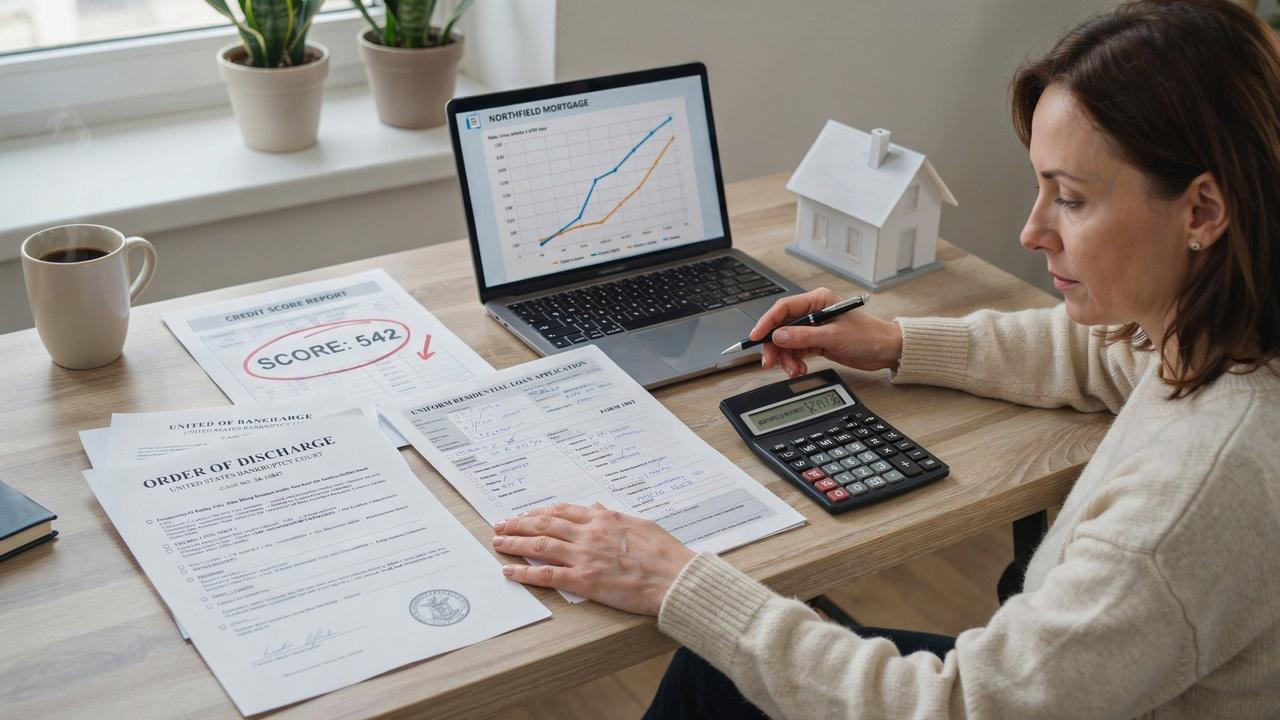
Bankruptcy drops your credit score fast, sometimes by 100 points or more. A Chapter 7 filing stays on your credit report for up to 10 years. Chapter 13 stays for up to 7 years. That mark alone does not disqualify you, but it does shape your borrowing costs.
Lenders may charge a higher interest rate or ask for a larger down payment to offset the added risk. Put down less than 20% on a conventional loan, and you'll also pay private mortgage insurance.
This is part of why waiting periods exist. Lenders want proof you can manage money responsibly before handing you a 30-year loan. It also helps to know the difference between a discharge and a dismissal.
A discharge wipes out your debt through the court. A dismissal closes the case without erasing it, and lenders weigh that difference closely.
Chapter 7 vs. Chapter 13 Bankruptcy
The type of bankruptcy you file affects how long you'll need to wait before buying a house. Here's a quick comparison of the two.
| Feature | Chapter 7 Bankruptcy | Chapter 13 Bankruptcy |
| How It Works | Eliminates eligible debts by liquidating non-exempt assets. | Reorganizes debt into a court-approved repayment plan. |
| Credit Report Impact | Remains on your credit report for up to 10 years. | Remains on your credit report for up to 7 years. |
| Typical Timeline | Usually completed in 4 to 6 months. | Typically lasts 3 to 5 years until the repayment plan is completed. |
| Effect on Buying a Home | Most borrowers wait 2 to 4 years after discharge, depending on the loan program. | Some government-backed loans may be available after 12 months of on-time payments with court approval, while conventional loans generally require a longer wait. |
Chapter 13 may let you qualify for certain mortgage programs sooner, while Chapter 7 generally means a longer wait before you can buy a house.
How Long After Bankruptcy Can You Buy a House?

Your bankruptcy waiting period usually starts on your discharge date, not your filing date. That gap matters, since a Chapter 7 case can take months to close. FHA and VA loans need two years. USDA asks for three.
Conventional loans want four. Chapter 13 works differently. Some buyers qualify just 12 months into their repayment plan, if they've paid on time and got court or trustee approval.
Some lenders will also shorten the wait for documented hardships like illness or job loss.
Lenders call this an extenuating circumstance, and it can cut a Chapter 7 FHA wait down to as little as 12 months in some cases. Know your loan type first. It changes everything else.
If your bankruptcy was dismissed instead of discharged, qualifying for a mortgage may take longer. Many lenders treat a dismissal differently because the debts were not legally eliminated.
Depending on the loan program, the waiting period may begin from the dismissal date or require additional time before you become eligible.
Mortgage Options After Bankruptcy
After meeting the required waiting period, you may qualify for different mortgage programs based on your financial situation.
| Loan Type | Typical Waiting Period | Best For |
| Conventional | 2 to 4 years | Buyers with stronger credit |
| FHA | 1 to 2 years | Buyers rebuilding credit |
| VA | 1 to 2 years* | Eligible military borrowers |
| USDA | 1 to 3 years | Eligible rural homebuyers |
Some VA loans may be available sooner after Chapter 13, with court approval.
Government-backed loans generally offer more flexible qualification rules than conventional loans after bankruptcy. FHA allows a down payment as low as 3.5%, and VA loans often require no down payment at all for eligible borrowers.
Conventional loans typically follow guidelines established by Fannie Mae and Freddie Mac, although individual lenders may set stricter requirements.
What Lenders Look for Before Approving Your Mortgage

Once your waiting period ends, lenders look at your full financial picture, not just your bankruptcy history. Your credit score needs to fit your loan program, often 580 and up for FHA.
They check income stability, so a steady job history matters more than a high salary alone. Your debt-to-income ratio shows how much of your monthly income already goes toward debt payments.
Lenders also want to see cash reserves, meaning savings left over after closing costs. A larger down payment can offset a weaker credit profile.
After a bankruptcy, underwriters often review applications more carefully. Some lenders also apply additional requirements, known as overlays, beyond standard loan guidelines
Documents You'll Need When Applying
Lenders ask for paperwork that proves your bankruptcy is behind you and your finances are stable now. These documents help lenders verify that your bankruptcy case is complete and that you can comfortably manage a new mortgage.
- Bankruptcy discharge or dismissal papers: this shows the court has closed your case.
- Letter of explanation: a short note describing what led to the bankruptcy.
- Tax returns and pay stubs: proof of steady, current income.
- W-2s, 1099s, and bank statements: a full picture of where your money comes from.
- Government issued ID and asset documentation: standard identity and asset verification.
How to Improve Your Chances

Rebuilding starts with paying every bill on time, every month, without exception. A secured credit card is a solid first step, since it lets you build history with small, manageable payments.
Reduce any outstanding debt you carry, since a lower balance improves your debt-to-income ratio and keeps your credit utilization ratio in a healthy range. Start saving for a down payment early, even small amounts add up over a waiting period.
Avoid opening new credit cards or loans right before you apply, since new inquiries can lower your score at the wrong time. If your numbers still fall short, a co-signer can sometimes help you qualify. Compare rates from a few different lenders instead of settling for the first offer you get.
Get a mortgage preapproval before you start house hunting. It shows sellers you're a serious buyer because the lender has already reviewed your financial documents. Preapproval also carries more weight than a simple prequalification.
Common Mistakes to Avoid
A few missteps can slow down or derail your application after bankruptcy.
- Applying before the waiting period ends: lenders will deny or delay your file.
- Missing payments after bankruptcy: even one late payment hurts your rebuild.
- Taking on new debt: a car loan or new credit card raises your debt to income ratio.
- Changing jobs before closing: lenders recheck your employment right before funding.
- Ignoring your credit report: small errors on your report can cost you months.
Avoid these five mistakes and your path back to homeownership gets a lot smoother.
Conclusion
Many people assume bankruptcy means homeownership is no longer possible, but that isn't true.
The wait feels long when you're in it, but every on-time payment moves you closer.
If you're asking yourself Can you buy a house after bankruptcy, the answer is yes, and your timeline is shorter than you think once you know your loan program's rules.
Start rebuilding your credit today, even in small ways. Drop a comment below with your situation. I read every one, and I'm happy to point you in the right direction.
Frequently asked Questions
Can I buy a house after filing for bankruptcy more than once?
Yes, but multiple filings usually mean longer waiting periods and stricter lender scrutiny, especially if the second filing came within a few years of the first.
Does bankruptcy still affect my mortgage application even after it drops off my credit report?
Some mortgage applications ask directly if you've ever filed for bankruptcy, so you may need to disclose it even years after it's gone from your credit report.
If my spouse buys the house alone, does my bankruptcy still matter?
Lenders typically only evaluate the credit and finances of the person on the loan, so your spouse can often qualify solo if their credit and income meet the requirements.
Do refinance waiting periods after bankruptcy work the same as purchase waiting periods?
Refinance waiting periods generally mirror purchase waiting periods for the same loan type, though some lenders apply slightly different rules for rate-and-term versus cash-out refinances.