Managing someone's finances or health decisions is a big responsibility. If you are not legally authorized to act, banks, hospitals, and courts may refuse to recognize your decisions.
Knowing how to get power of attorney in Florida is the first step toward protecting yourself and the people you care about.
This article walks you through the types, steps, signing rules, and common mistakes to avoid. You will learn what forms to use, who qualifies as an agent, and how to keep the document valid.
Whether your goal is financial planning, Medicaid planning, or medical preparedness, this guide covers it all.
Many attorneys and legal professionals recommend setting up a POA early, and with the right information, the process is straightforward.
What Is a Power of Attorney in Florida?
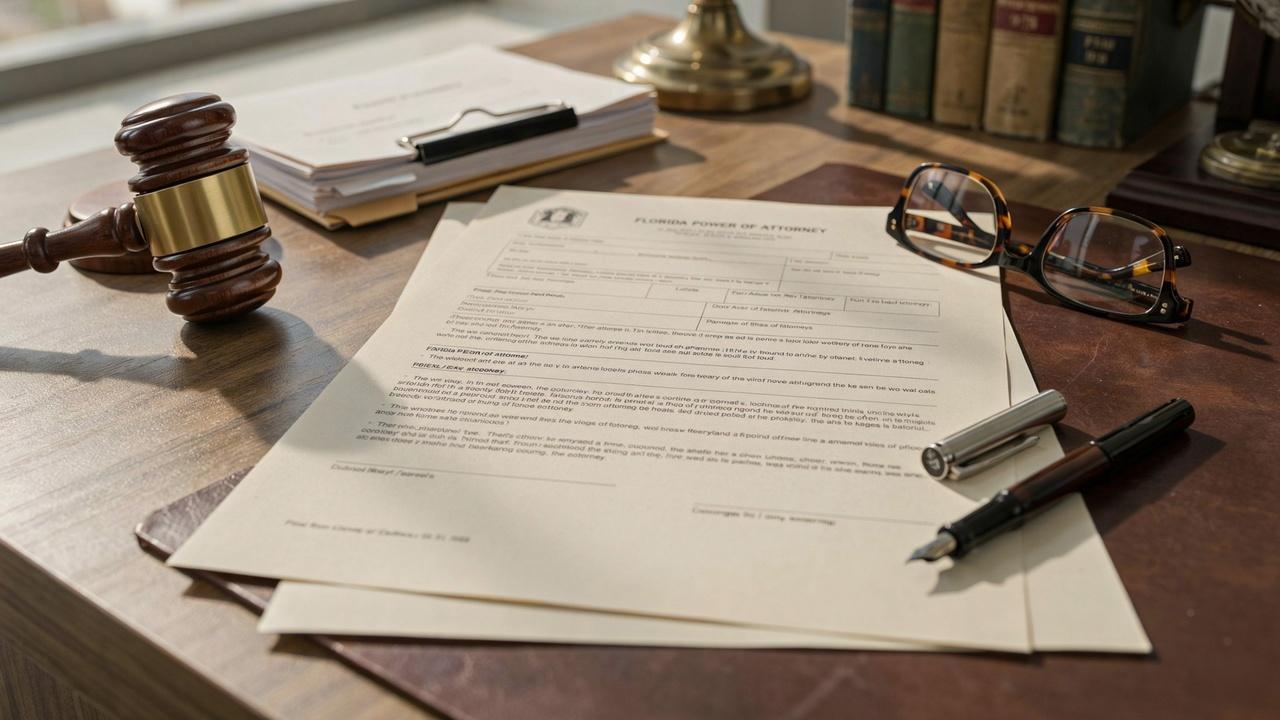
A power of attorney is a legal document that gives one person the authority to act on behalf of another in financial, medical, or personal matters.
In Florida, this document is governed by the Florida Power of Attorney Act under Chapter 709 of the Florida Statutes, which sets strict rules for how a POA must be created, signed, and used.
The person granting authority is called the principal, and the person receiving it is called the agent or attorney-in-fact. Life does not always go as planned.
An illness, long trip, or sudden incapacity can leave your affairs unmanaged and your family without legal authority to help.
Without a POA, they may have to go through a slow and costly court process. Any Florida resident who is at least 18 years old and mentally competent can create one, but it must be done before incapacity sets in.
A POA is also one of the most important documents in a broader estate planning strategy.
It works alongside your will, advance directives, and health care surrogate designation to make sure your wishes are carried out if you cannot speak for yourself.
How to Get Power of Attorney in Florida

Getting a power of attorney in Florida does not have to be complicated, but it does require following specific steps in the correct order to make the document legally valid.
Determine the Powers You Need to Grant
Start by deciding what authority your agent will have. Do you need someone to manage your bank accounts? Handle real estate? Make medical decisions?
You can make the POA broad or limit it to specific tasks. Being clear about the powers you want to grant helps avoid confusion later.
Choose Someone to Act as Your Agent
Pick someone you trust completely. This person will have legal authority to act in your name. Choose someone who is responsible, available, and willing to follow your wishes.
Many people choose a spouse, adult child, or close friend. You can also name a backup agent in case your first choice is unavailable.
For complex financial or Medicaid planning situations, some people choose a professional fiduciary instead of a family member.
You can also name co-agents in the document. If you do, make sure the POA states clearly whether they must act together or can each act independently.
Complete a Florida Power of Attorney Form
Florida requires a specific form that meets state legal standards. You can get forms from a licensed Florida attorney, a legal document service, or the Florida Bar's website.
The form must clearly identify the principal, the agent or attorney-in-fact, and the powers being granted. Using an outdated or incorrect form can make the entire document invalid.
Meet Florida Signing Requirements
Florida law is strict about how a POA must be signed. Under Florida Statutes Section 709.2105, the principal must sign the document in the presence of two adult witnesses and a notary public.
All parties must be present at the same time. The witnesses cannot be the agent or the notary. This step is non-negotiable. Skipping it or getting it wrong makes the document legally worthless.
File or Share the Completed Document
Once signed and notarized, you do not need to file a POA with any government office in most cases. However, if the POA involves real estate, you may need to record it with the county clerk's office. Make sure your agent has a copy.
Share it with banks, doctors, or other institutions that will need to recognize it. Under Florida Statutes Section 709.2120, banks must accept or reject a valid POA within four business days.
Types of Power of Attorney in Florida

Florida recognizes several types of POA, and choosing the right one depends on your situation and what you need the agent to handle.
Durable Power of Attorney Explained
A durable POA stays in effect even if the principal becomes mentally incapacitated. This is the most commonly used type in Florida.
It takes effect as soon as it is signed and remains valid unless the principal revokes it or passes away. It is often used for long-term planning, including estate planning and Medicaid planning.
Note that Florida law eliminated springing powers of attorney after October 2011. That means your POA is active the moment it is signed, not at some future event.
If you want to delay access, you can choose to hold the document yourself until it is needed.
Limited Power of Attorney Explained
A limited POA gives the agent or attorney-in-fact authority for a specific task or time period.
For example, you might give someone the power to sell your car while you are out of the country. Once the task is done or the time expires, the POA ends automatically.
Medical Power of Attorney Explained
In Florida, this is often called a health care surrogate designation. It gives your agent the authority to make medical decisions on your behalf if you are unable to do so yourself.
Doctors and hospitals will look to this person for guidance on your care. This document is part of a broader set of advance directives that can also include a living will.
Financial Power of Attorney Explained
A financial POA allows your agent to handle money matters. This includes managing bank accounts, paying bills, filing taxes, handling investments, and dealing with real estate.
It can be broad or limited depending on what you include in the document.
If you ever need Medicaid to help cover nursing home or home health care costs, your agent will need a financial POA that specifically authorizes that kind of planning.
Choosing the Best Type for Your Needs
Think about your goals. If you want ongoing protection in case of a health event, a durable POA makes the most sense. For a one-time task, a limited POA works better.
For medical planning, a health care surrogate form is the right tool. Many people create both a durable financial POA and a health care surrogate at the same time as part of a complete estate planning package.
Choosing the Right Power of Attorney Option
A POA is not the only legal tool for planning ahead. Knowing how it compares to other legal arrangements helps you make the right choice for your situation.
| Comparison | Power of Attorney (POA) | Other Legal Option | Best Choice When |
| Power of Attorney vs. Guardianship | Created voluntarily by a competent person before incapacity. Allows an agent to manage specific financial or legal matters without court involvement. | Guardianship is established by a court after a person becomes incapacitated. It is more expensive, takes longer, and limits the person's legal rights. | A POA is usually the better choice when someone still has the capacity to plan ahead. |
| Power of Attorney vs. Living Will | Authorizes an agent to make decisions on your behalf if the document grants that authority. | A living will (advance directive) records your medical treatment preferences and speaks directly to healthcare providers. | Many people use both documents together because they serve different purposes. |
| Power of Attorney vs. Health Care Surrogate | A general or financial POA does not automatically include healthcare decision-making unless specifically authorized. | A Health Care Surrogate Designation allows someone to make medical decisions for you if you cannot do so yourself. | Use a Health Care Surrogate Designation for healthcare decisions and a financial POA for financial matters when needed. |
Who Can Be a Power of Attorney Agent?

Not everyone is suited to be an agent, and Florida law sets some basic standards. Choosing the right person matters as much as completing the paperwork correctly.
Requirements for Choosing an Agent
Your agent or attorney-in-fact must be at least 18 years old and mentally competent. Florida law does not require your agent to be a Florida resident, but it is helpful.
They should be someone who understands legal and financial matters, or at least someone willing to seek help from professionals when needed.
If no family member fits that description, a professional fiduciary can serve in that role.
Duties and Responsibilities of an Agent
An agent in Florida has a fiduciary duty to act in the principal's best interest. They must keep accurate records of all transactions.
They cannot use the principal's money or assets for personal gain. They must follow the instructions in the POA document and make decisions the principal would likely approve of.
Rights and Limits of a Power of Attorney Agent
An agent can only do what the POA document allows. They cannot change the principal's will, give gifts to themselves unless the POA specifically allows it, or act after the principal has died.
Their authority ends when the principal revokes the POA, when the document expires, or when the principal passes away.
Common Florida Power of Attorney Mistakes
Even small mistakes in a POA can make it unenforceable. Here are the most common problems people run into and how to avoid them.
Selecting an Unreliable Agent
Choosing the wrong person is the most costly mistake. Some people choose an agent out of convenience rather than trust.
An unreliable or dishonest agent can misuse their authority and cause serious financial or personal harm.
Remember, your agent has a fiduciary duty to act in your interest, and violations can lead to civil or even criminal consequences.
Take time to choose someone who has good judgment and your best interests at heart.
Using an Incorrect or Old Form
Florida updated its POA laws in 2011. Any form created before that date may not be valid under current law. Equally important, post-2011 forms require certain powers to be individually initiated to be valid.
If your document does not have initials next to specific provisions, like the authority to create trusts or change beneficiary designations, those powers are unenforceable even if they appear in the text.
Using a generic or out-of-state form is also a problem. Always use a form that meets current Florida legal requirements.
Granting Too Much Authority
Some principals sign a broad POA without understanding the full scope of what they are giving away.
If your agent has unlimited financial authority, they can legally make decisions you never intended.
Be specific about what powers you are granting and consider limiting authority where it makes sense.
Forgetting to Update the Document
Life changes. Marriages end, trusted friends move away, or financial situations shift. If your agent is no longer the right person, or if your needs have changed, update your POA.
A document that does not reflect your current situation may not protect you the way you intended.
Failing to Follow Florida Rules
Florida has strict requirements for signing, witnessing, and notarizing a POA. Skipping any step makes the document invalid.
Banks, hospitals, and courts may refuse to honor a POA that does not meet state standards. Always follow the rules exactly.
Tips for Creating a Valid Power of Attorney
Following the steps correctly is important, but a few extra habits can make your POA much more effective and reduce problems later.
- Review every power before signing. Read carefully and consult a Florida attorney if any language is unclear.
- Talk to your agent before handing over the document. Make sure they understand the role and are willing to take it seriously.
- Store the original in a secure location. Give certified copies to your agent, doctor, and any relevant financial institutions.
- Update your POA after major life changes. Divorce, death of your agent, or big financial shifts are all reasons to revise it.
- Never treat a POA as a one-time task. A document that made sense five years ago may no longer reflect your current wishes.
Conclusion
Getting a power of attorney in Florida does not have to feel overwhelming. With the right information, you can protect yourself and your loved ones before a crisis strikes.
Choose a trustworthy agent, use the correct Florida forms, and follow Florida's signing requirements so your document remains legally effective. That is really all it takes to put a solid plan in place.
If this guide helped you, feel free to share it with someone who might need it or leave a comment below. Taking this step now can save your family a great deal of stress later.
Frequently Asked Questions
Can a power of attorney be used immediately after signing in Florida?
Yes, a durable POA typically takes effect right after signing unless the document states it only begins under specific conditions. Florida eliminated springing POAs in 2011, so there is no option to have it activated only upon incapacity.
Can I have more than one agent on a Florida power of attorney?
Yes, Florida allows co-agents, but the document must specify whether they act together or independently.
Does a Florida power of attorney expire automatically?
No, most do not expire unless a termination date is written into the document or the principal revokes it.
Can a power of attorney be revoked in Florida?
Yes, a principal can revoke a POA at any time by signing a written revocation and notifying the agent and relevant institutions.
Do Florida banks have to accept a power of attorney?
Generally yes, but banks may request their own review. Under Florida Statutes Section 709.2120, they must accept or reject a valid POA within four business days. They can face liability for unreasonably refusing a valid document.