

Does a warranty deed prove ownership? It is a common question for homebuyers, heirs, and anyone reviewing old property records.
A warranty deed is one of the strongest documents used in real estate, and a properly recorded one is solid evidence that property changed hands.
But it records a transfer and the seller’s promises about the title. It cannot show what was wrong with the property’s history before that transfer happened.
This guide explains what a warranty deed proves, where its protection ends, how it differs from property title, and which additional records confirm ownership.
Disclaimer: This article explains how warranty deeds and title records generally work and is not legal advice. Deed covenants, recording rules, and the time limits for suing a seller vary by state, so talk to a local real estate attorney before acting on a title or ownership question.
Short Answer: What a Warranty Deed Proves
Many buyers assume that once they sign a warranty deed, ownership is settled for good, but a warranty deed is a promise and a transfer record, not an ironclad guarantee.
Yes, a properly executed warranty deed is strong legal evidence that ownership was transferred from the seller to the buyer.
However, it does not guarantee that no ownership disputes or title defects exist.
A warranty deed confirms that the grantor (seller) transferred their ownership interest to the grantee (buyer) while making legally enforceable promises about the property’s title.
When the deed is signed, notarized, delivered, and recorded with the appropriate county office, it creates an official public record of the transfer.
Even so, ownership questions can still arise if earlier title defects, forged documents, undisclosed liens, or competing ownership claims exist.
If one of those problems surfaces, the buyer may have legal remedies under the warranties provided in the deed, but the deed itself does not automatically resolve every dispute.
What Is a Warranty Deed?
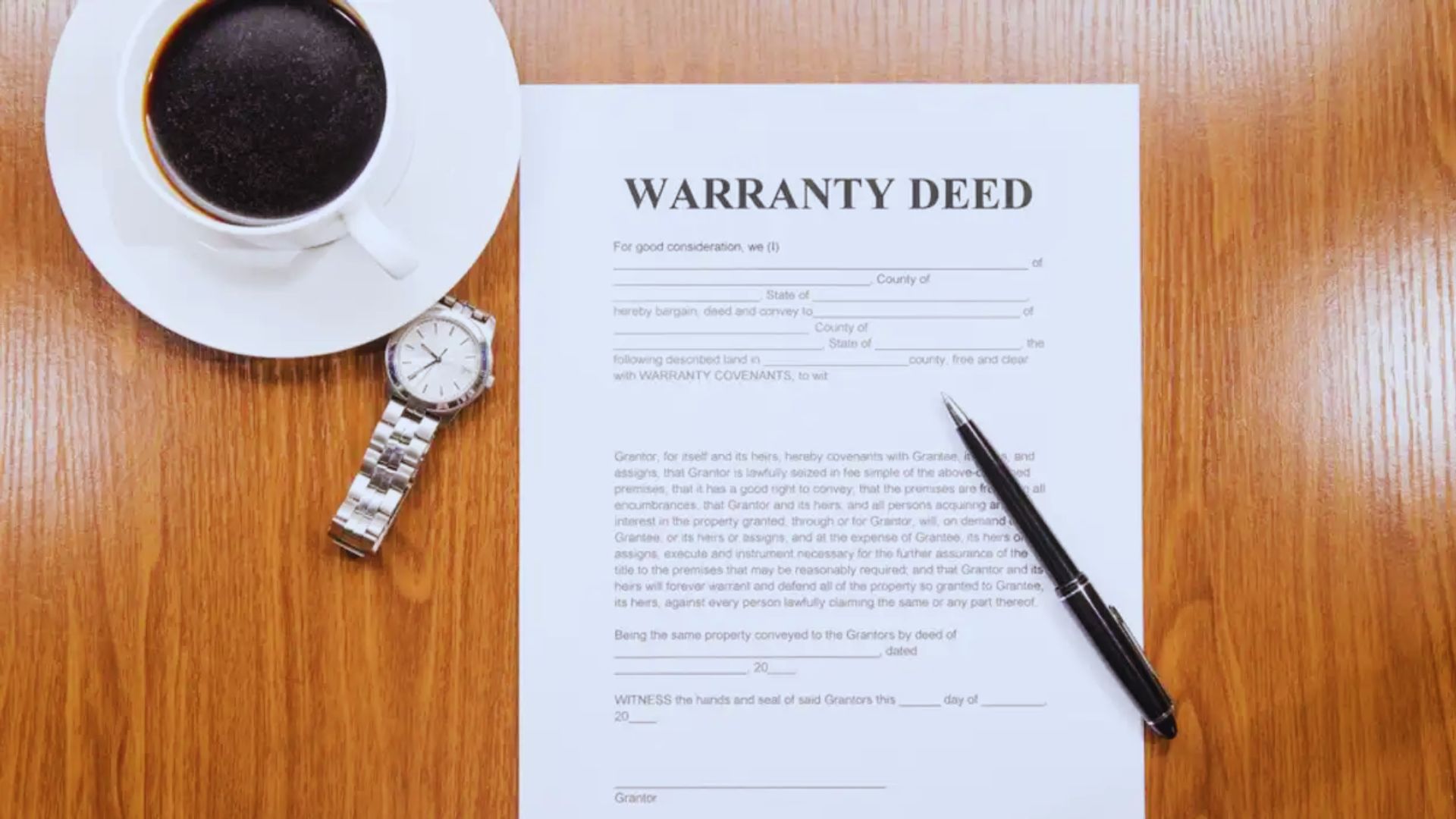
A warranty deed is one of the strongest legal documents used to transfer real estate because it includes specific guarantees about ownership and title.
The document transfers ownership from the grantor to the grantee while assuring the buyer that the seller legally owns the property and has the authority to transfer it.
A warranty deed can contain several covenants, or legal promises, that define the seller’s responsibility.
A full warranty deed can include up to six covenants:
- Covenant of seisin: The seller actually owns the property being transferred.
- Covenant of right to convey: The seller has the legal authority to transfer it.
- Covenant against encumbrances: No undisclosed liens, easements, or other claims burden the property.
- Covenant of quiet enjoyment: No one with a superior claim will disturb the buyer’s possession.
- Covenant of warranty: The seller will defend the buyer’s title against lawful claims.
- Covenant of further assurances: The seller will sign any additional documents needed to perfect the buyer’s title.
If a covered defect appears, the buyer’s usual remedy is a lawsuit against the seller for damages. That remedy is only as good as the seller’s ability to pay, which is one reason buyers also carry title insurance. Which covenants apply, and how long a buyer has to sue, varies by state and by the wording of the deed.
Once the deed is properly signed, delivered, notarized, and recorded, the seller’s ownership interest legally passes to the new owner. For a closer look at this process, see how awarranty deed transfers ownership.
Most warranty deeds also include important information such as the legal property description, names of both parties, consideration paid for the property, and the grantor’s notarized signature.
Recording the deed with the county recorder or land records office helps establish the public ownership record.
The level of protection depends on the type of warranty deed used:
- General warranty deed: Protects the buyer against title defects throughout the property’s entire ownership history.
- Special warranty deed: Protects only against title issues that arose while the current seller owned the property.
- Statutory warranty deed: A short-form version of the general warranty deed used in some states. State law supplies the covenants by reference instead of the deed spelling out each one.
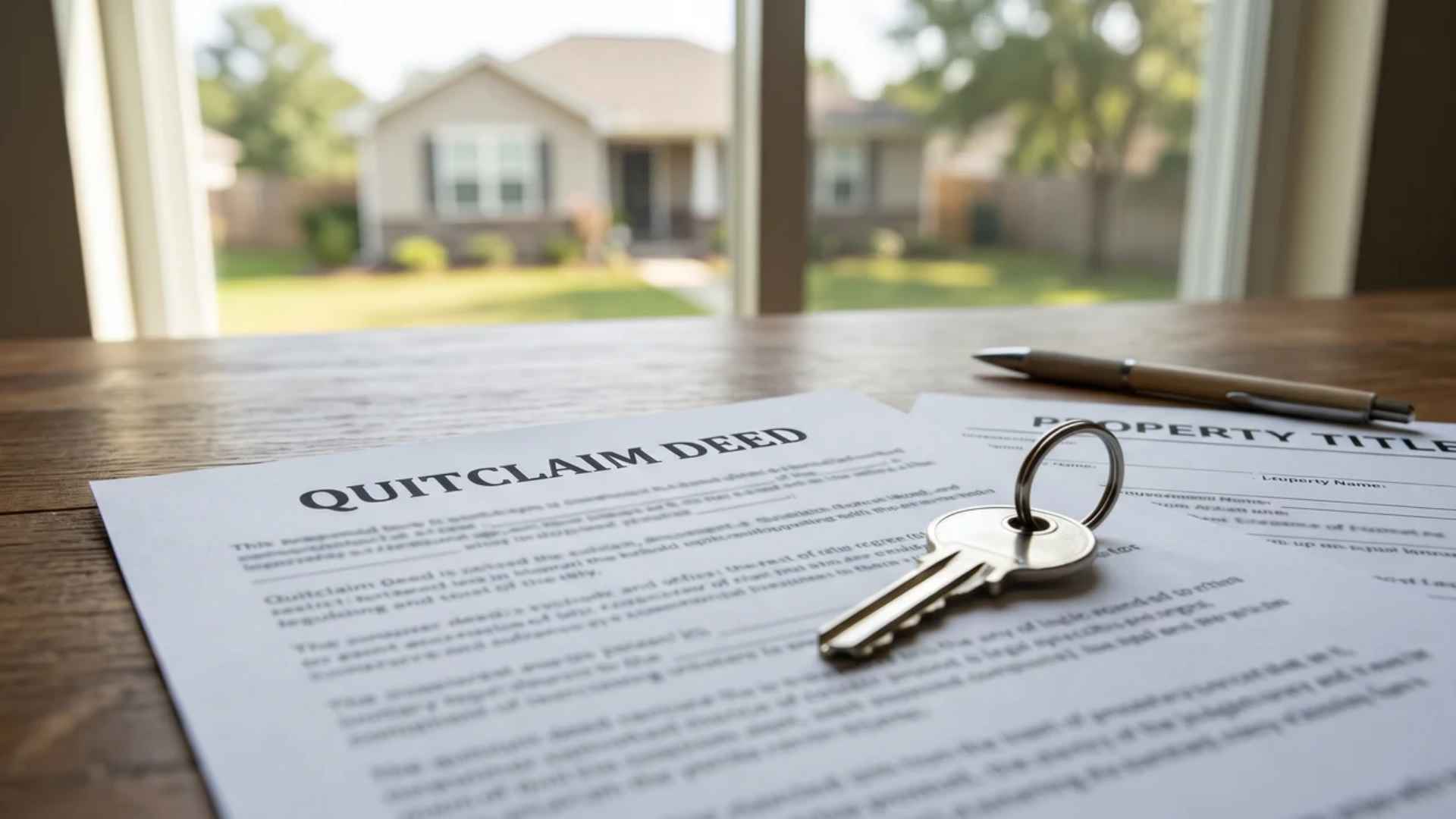
Other deed types offer far less. A quitclaim deed passes along whatever interest the grantor has, if any, with no promises about the title.
A bargain and sale deed implies the grantor holds title but gives no protection against defects. Only a warranty deed gives the buyer a claim against the seller if a covered title problem later emerges.
Warranty Deed vs. Property Title
Although people often use these terms interchangeably, a warranty deed and property title are not the same thing.
A warranty deed is the legal document that transfers ownership from one party to another.
It provides written evidence of the transfer and contains the seller’s legal warranties regarding the property’s title.
Property title, however, refers to the legal ownership rights themselves.
It is not a physical document but the collection of legal rights established through deeds, public records, court decisions, and other recorded documents affecting the property.
In simple terms, the deed transfers ownership, while the title represents the ownership rights that transfer.
|
Warranty Deed |
Property Title |
|
Physical legal document |
Legal ownership right |
|
Transfers ownership interest |
Represents ownership itself |
|
Recorded with the county |
Verified through title records |
|
Includes seller warranties |
Reflects the property’s legal history |
|
Signed by grantor |
Confirmed through title search and public records |
A warranty deed only functions as usable proof once it moves from a private agreement between two parties into the public record.
Recording it with the county recorder is the step that does this; it’s what allows a title company, a future buyer, or a court to verify the transfer independently, rather than relying on the buyer and seller’s word alone.
An unrecorded deed can still be legally valid between the parties, but it won’t stand up as proof against a competing claim from someone who had no way of knowing the transfer happened.
Because title reflects the property’s complete legal history, a recorded warranty deed alone cannot always identify earlier ownership problems.
That is why buyers typically obtain both a title search and title insurance during a real estate transaction.
When a Warranty Deed Is Not Enough

The deed records what the seller handed over and promised. It cannot show what was already wrong with the property’s history before that moment.
Problems such as an unrecorded deed, forged or fraudulent documents, existing liens, unpaid property taxes, easements, or other title defects can still create ownership disputes.
Likewise, survey errors, boundary encroachments, and unresolved probate or inheritance matters may complicate ownership even after a warranty deed has been recorded.
In these situations, courts typically examine the complete chain of title and other supporting legal records instead of relying solely on the warranty deed to determine rightful ownership.
If you discover any of these issues after closing, the appropriate next step is to consult areal estate attorney who can review the title history, identify the source of the problem, and advise on the best path to resolution, whether through a corrective deed, a court action, or a title insurance claim.
What Actually Proves Ownership and How to Check It
The key question is not whether you have a warranty deed, but whether the public record supports the ownership shown on that deed.
A title search brings those records together and can reveal liens, easements, judgments, or breaks in the chain of title before they become a larger problem.
- Recorded deed: Once recorded with the county recorder or clerk’s office, the deed becomes part of the official public record, documenting the property’s legal transfer.
- Title report: A title report examines public records to identify the chain of ownership, existing liens, easements, judgments, or other issues affecting the property.
- Title insurance: Protects buyers and lenders against covered title defects that were unknown at purchase. An owner’s policy is typically paid for once at closing and stays in force as long as you or your heirs own the property.
- County land records: These records preserve the property’s legal history, including deeds, mortgages, easements, releases, and other recorded filings.
- Affidavit of title: During many real estate transactions, sellers sign this sworn statement confirming they are unaware of undisclosed ownership issues or liens.
- Property tax records: Tax records alone do not establish ownership, but they can support other documentation by showing who has consistently paid taxes on the property.
Begin by checking the most recently recorded deed through the county recorder or county clerk’s office.
Many jurisdictions now offer online property record searches that allow you to confirm ownership and review recorded documents without visiting the office.
Next, review the property’s chain of title. Look for a continuous sequence of recorded transfers from prior owners to the current owner. Missing deeds, inconsistent names, incorrect legal descriptions, or unresolved liens can signal a title problem that needs further review.
Finally, obtain a professional title search before completing a real estate transaction. A title company or real estate attorney can identify outstanding liens, easements, judgments, or other title defects.
Title insurance, bought at closing, then protects you if a covered claim surfaces later, including one the search missed.
Final Thoughts
So, does a warranty deed prove ownership? In most situations, yes. A properly executed and recorded warranty deed provides strong legal evidence that ownership transferred from the seller to the buyer, along with important legal protections regarding the property’s title.
However, a warranty deed is not absolute proof that every ownership issue has been resolved. Fraud, recording mistakes, undisclosed liens, probate disputes, or earlier title defects can still affect ownership even after a valid transfer.
For the strongest protection, pair your warranty deed with a professional title search, title insurance, and a review of the county land records. Together they confirm what the deed says, check it against the public record, and give you coverage if a covered defect surfaces later.
Frequently Asked Questions
Can a warranty deed be transferred into a trust without a new sale?
Yes. Property owners commonly transfer real estate into a revocable or irrevocable trust by signing and recording a new deed, even when no money changes hands.
Does a warranty deed protect against future liens placed after the sale?
No. A warranty deed protects against covered title defects that existed before or at the time ownership transferred. Liens or claims created after the sale become the new owner’s responsibility.
What document shows proof of ownership of a home?
No single document proves ownership on its own. A recorded warranty deed, combined with a clean title search and typically title insurance, together form the standard proof lenders, buyers, and courts rely on to confirm clear ownership.
Does a warranty deed prove ownership in every state?
The core function of transferring ownership with the seller’s legal guarantees applies nationwide, though recording requirements and specific protections vary by state. The underlying limits of a warranty deed, such as not covering pre-existing defects, apply everywhere.