Buying or selling property in Texas often means running into paperwork that sounds more complicated than it is.
A special warranty deed is one of those terms that shows up during closing, and it can leave buyers and sellers with more questions than answers.
This article explains what a special warranty deed is, how it works under Texas law, and why it matters for your transaction. You will learn how it compares to other deed types, what protections it offers, and what to check before signing.
After reviewing hundreds of Texas closing documents, we know how much confusion this one form can cause, so this guide keeps things simple and direct.
Understanding Special Warranty Deed

A special warranty deed is a legal document used to transfer property from a seller (the grantor) to a buyer (the grantee). It includes a promise, but that promise is limited.
Lawyers often call this promise the warranty of title. With a special warranty deed, that warranty only covers the time the seller owned the property.
The seller only guarantees that they did not create any title problems during the time they owned the property. They do not promise anything about what happened before they owned it.
This is the main difference between a special warranty deed and other deed types used in Texas real estate.
In simple terms, the seller is saying:"I did not cause any issues with this title while it was mine, but I cannot speak for what happened before that."
This deed type is common in commercial deals, foreclosure sales, and situations where the seller wants limited liability. It is legally valid in Texas as long as it meets the state's requirements for deeds, which we cover later in this article.
How Does a Special Warranty Deed Work in Texas?
In Texas, a special warranty deed works like most other deeds when it comes to transferring ownership. The seller signs the document, it gets notarized, and then it is filed with the county clerk's office where the property sits.
What makes this deed different is the scope of the seller's promise. Texas Property Code Section 5.023 outlines the general framework for warranty deeds, including limited ones like this. The deed must clearly state that the warranty only applies to the period the grantor held title.
This means the seller is only responsible for title defects they created during their ownership.
Here is a simple example. Say a company owned a piece of land for five years before selling it to a buyer using a special warranty deed.
If a title issue turns up from something that happened 20 years earlier, before the company ever owned the property, the buyer cannot hold that seller responsible. The buyer would need to look at title insurance or previous owners instead.
This is why title insurance often comes paired with a special warranty deed. It covers the gap that the deed itself does not.
When Is a Special Warranty Deed Used?
Special warranty deeds show up most often in these situations:
- Commercial real estate transactions:Businesses selling office buildings, retail spaces, or land often prefer this deed because it limits their exposure to old title problems.
- Bank and foreclosure sales: Lenders who take back a property through foreclosure usually did not live there or know its full history, so they use a special warranty deed to protect themselves.
- Trust and estate transfers: When property moves out of a trust or estate, the person handling the transfer may not know everything about the property's past.
- Corporate-to-individual sales: When a company sells property it acquired through a merger or bulk purchase, it may not have full details on the older chain of title.
Homeowners selling their own house directly to another homeowner usually use a general warranty deed instead, since they can vouch for the property's full history.
Special Warranty Deed vs. General Warranty Deed vs. Quitclaim Deed
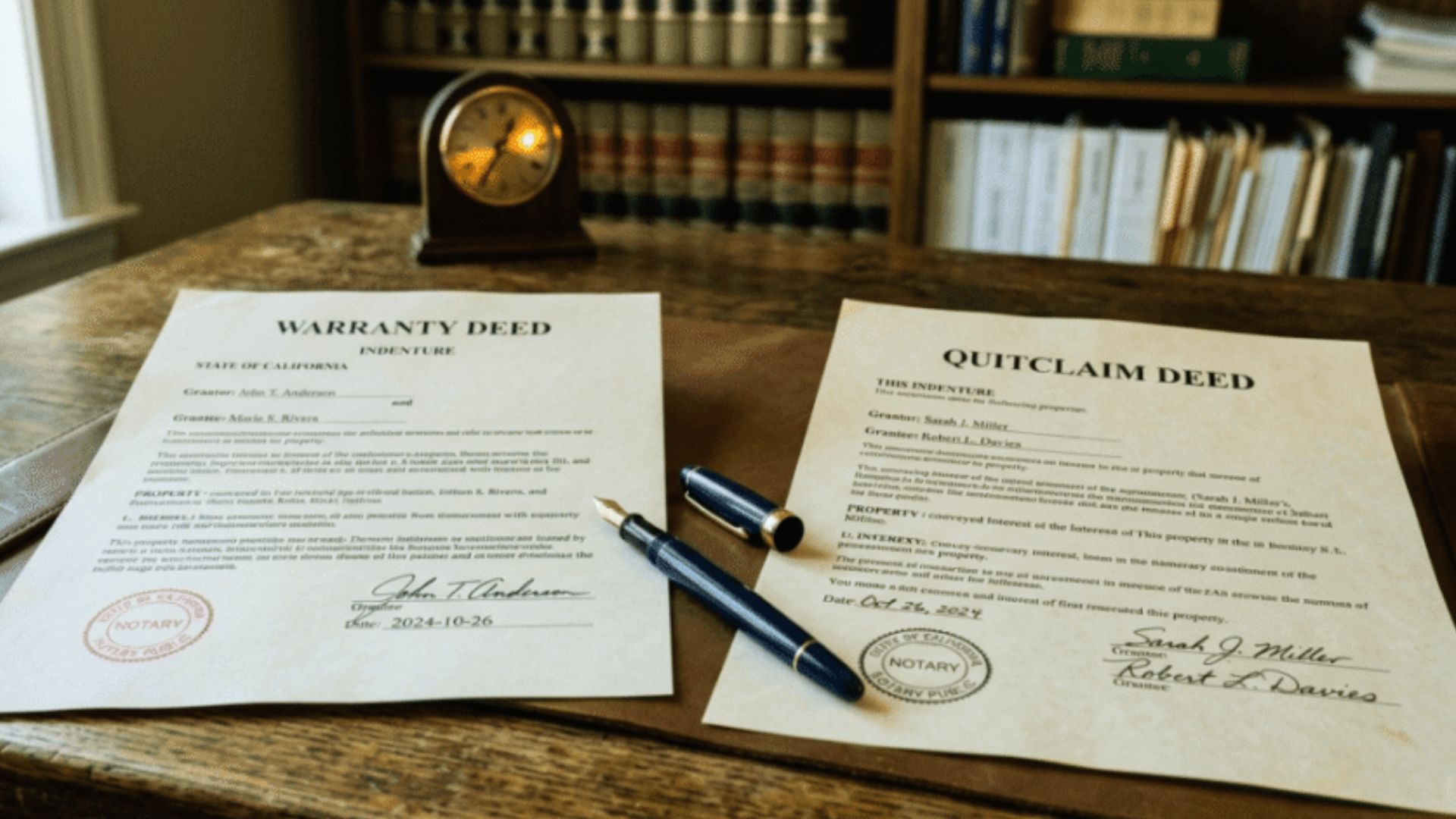
Texas buyers and sellers often confuse these three deed types. Here is a side-by-side look at how they compare.
| Feature | Special Warranty Deed | General Warranty Deed | Quitclaim Deed |
| Seller's promise | Covers only the seller's period of ownership | Covers the entire history of the title | No promise about title at all |
| Common use | Commercial sales, foreclosures, trusts | Standard home sales between owners | Family transfers, divorce settlements |
| Buyer protection | Moderate | Highest | Lowest |
| Requires title search | Often paired with title insurance | Usually paired with title insurance | Rarely used with title insurance |
| Risk level for buyer | Medium | Low | High |
A general warranty deed gives the buyer the strongest protection because the seller stands behind the property's full title history. A quitclaim deed gives the least protection since the seller makes no promises at all, they are simply transferring whatever interest they may have.
What Does a Special Warranty Deed Protect Against?
A special warranty deed offers real protection, but only for a limited window of time, leaving buyers exposed to risks from earlier in the property's history.
Encumbrances Created During the Seller's Ownership
This deed protects the buyer from title problems that happened while the current seller owned the property, including liens the seller placed on the property, debts the seller failed to pay that attached to the title, any legal claims the seller created during their ownership, and unauthorized transfers or sales the seller may have attempted.
These claims are examples of encumbrances, such as liens or other recorded interests that affect the property's title.
The Coverage Gap Before the Seller's Ownership
It does not protect against problems that existed before the seller took ownership. If a previous owner from years earlier had an unresolved lien or a family member with a legal claim to the property, this deed will not cover that.
That is a real gap, and buyers should treat it seriously rather than assume it is covered, since it can leave them financially exposed to older, unresolved title issues.
What Should Buyers Check Before Accepting a Special Warranty Deed?

If you are buying property with this type of deed, do not skip these steps.
Get a full title search: Since the seller only vouches for their own ownership period, you need a title company to check the property's full history for problems.
Buy title insurance: This fills the gap the deed leaves open. Most Texas title companies offer an owner's policy that protects you against issues that predate the seller's ownership.
Ask why this deed type is being used: Sometimes it is standard for the type of sale, like a foreclosure. Other times it may be a sign the seller wants to limit their own liability more than usual. It helps to ask directly.
Review the property's chain of title: Look at who owned the property before, and for how long. Gaps or fast turnovers can be a red flag worth asking about.
Talk to a real estate attorney if the deal is commercial or unusual: Legal review costs less than dealing with a title dispute after closing.
What Should Sellers Know Before Using a Special Warranty Deed?

Sellers benefit from this deed because it limits how much responsibility they take on. Here is what matters most.
You are still responsible for anything that happened during your ownership. If you took out a loan against the property or allowed a contractor's lien to sit unpaid, that liability follows you even with a special warranty deed.
Buyers may ask for a lower price or request title insurance as a condition of the sale. Since this deed gives less protection than a general warranty deed, some buyers factor that into their offer or negotiate other terms.
Disclose known issues honestly. Texas law requires sellers to disclose known property defects in most residential transactions using the Seller's Disclosure Notice, regardless of which deed type is used. A limited deed does not remove this separate disclosure duty.
Work with a title company or attorney to draft the deed correctly. Small wording errors can create big problems later, especially around how the limited warranty is phrased.
Texas Requirements for a Special Warranty Deed
For a special warranty deed to hold up legally in Texas, it needs to meet several requirements:
- It must be in writing, verbal agreements to transfer property are not valid in Texas.
- It must identify the grantor and grantee clearly, including full legal names.
- It must include a legal description of the property, not just a street address. This usually comes from the county's plat records or a prior deed.
- It must state the limited warranty language showing the promise only covers the grantor's period of ownership.
- It must be signed by the grantor and acknowledged before a notary public.
- It must be filed with the county clerk in the county where the property is located, to become part of the public record.
Missing any of these steps can create problems with the deed's validity or make it harder to enforce later.
Pros and Cons of a Special Warranty Deed
Pros
This deed type offers real benefits, especially for sellers and certain types of transactions.
- Limits the seller's legal exposure to only their period of ownership
- Speeds up transactions where full title history research would slow things down
- Works well for commercial deals, bank sales, and trust transfers
- Still legally binding and enforceable in Texas courts
Cons
There are trade-offs buyers need to think through before agreeing to this deed type.
- Offers less protection than a general warranty deed
- Leaves gaps in coverage for title issues that predate the seller
- May require buyers to spend more on title insurance
- Can raise questions about why a seller chose limited liability over full protection
Common Mistakes to Avoid
Buyers and sellers both make avoidable errors with this deed type. Watch out for these.
- Assuming the deed covers the property's entire history when it only covers the current seller's ownership period
- Skipping title insurance because the deed sounds like enough protection on its own
- Not reviewing the legal property description carefully, which can cause boundary or ownership disputes later
- Using a special warranty deed for a standard home sale when a general warranty deed would serve the buyer better
- Forgetting to file the deed with the county clerk, which can delay the transfer becoming official
- Ignoring red flags in the chain of title, such as unexplained gaps or multiple fast resales
Expert Tips for Buyers and Sellers
A few practical habits make this process smoother for everyone involved.
- Always pair a special warranty deed with an owner's title insurance policy for real protection
- Ask your title company to run a full title search, not just a quick check, before closing
- Sellers should keep records of any loans, liens, or legal actions during their ownership period in case questions come up later
- Buyers should compare the property's sale history against public records to spot patterns worth asking about
- Work with a Texas-licensed real estate attorney for commercial deals, since the stakes and risks are usually higher
- Read the deed's warranty language line by line rather than skimming, since the specific wording determines what protection you actually have
Conclusion
A special warranty deed gives limited protection, covering only the time the seller owned the property.
That makes it a solid fit for commercial sales, foreclosures, and trust transfers, but it also means buyers need to do extra homework before closing. Pair it with title insurance, review the chain of title, and ask questions if something feels off.
Understanding a special warranty deed now can save you from costly surprises later. If this guide helped clear things up, share it with someone heading into a Texas closing soon, or leave a comment with your own questions below.
Frequently Asked Questions
Can a special warranty deed be challenged in court?
Yes. Like any deed, it can be challenged if there are signs of fraud, improper signing, or a defective legal description. Courts review these cases based on Texas property law and the deed's exact wording.
Does a special warranty deed transfer ownership immediately?
Ownership transfers once the deed is signed, notarized, and delivered to the buyer. Filing with the county clerk makes the transfer public record but is not what legally completes the transfer itself.
Can you refinance a property that was transferred with a special warranty deed?
Yes. Lenders typically care more about clear title and insurance coverage than the deed type. A title search and insurance policy usually satisfy refinancing requirements.
Is a special warranty deed reversible?
Not on its own. Reversing a transfer requires a new deed, a court order, or mutual agreement between both parties to sign new paperwork undoing the transaction.
Do special warranty deeds cost more to prepare than other deeds?
Not usually. Preparation costs are similar across deed types. Most of the added expense for buyers comes from title insurance, not the deed itself.