Understanding what a warranty deed actually does is easy to overlook at closing, when buyers are focused on signing paperwork rather than what each document legally means.
A warranty deed does transfer ownership, but only when the right steps happen in the right order.
This article breaks it all down. You will learn what a warranty deed is, when ownership officially moves to you, what the seller is legally promising, and which mistakes can put your ownership at risk.
By the time you finish reading, you will know exactly what to look for at closing and how to fully protect your rights.
How Ownership Actually Transfers

Yes. In many states, ownership transfers once the deed is properly signed, delivered, and accepted.
In many states, ownership transfers once the deed is properly signed, delivered, and accepted, not simply because it is later recorded at the county recorder's office.
Recording the deed usually does not create the transfer. Instead, it provides public notice of the ownership change and helps protect the buyer against future claims.
What Is a Warranty Deed?

A warranty deed is a legal document used to transfer property from a seller to a buyer. Its main job is to prove ownership is being passed along cleanly and legally.
In residential real estate, it is one of the most common deed types used. Many residential home sales use a general warranty deed because it provides strong title protection for buyers and lenders
The seller makes four legal promises: they own the property, have the right to sell it, and know of no hidden liens or claims.
They also agree to cover any title problems that existed before the sale even if those issues go back decades. That promise is what makes a warranty deed different from other types of deeds.
If the seller breaks any of those promises, the buyer may have legal remedies. For example, if a previously undisclosed lien appears after closing, the buyer can sue the seller for damages.
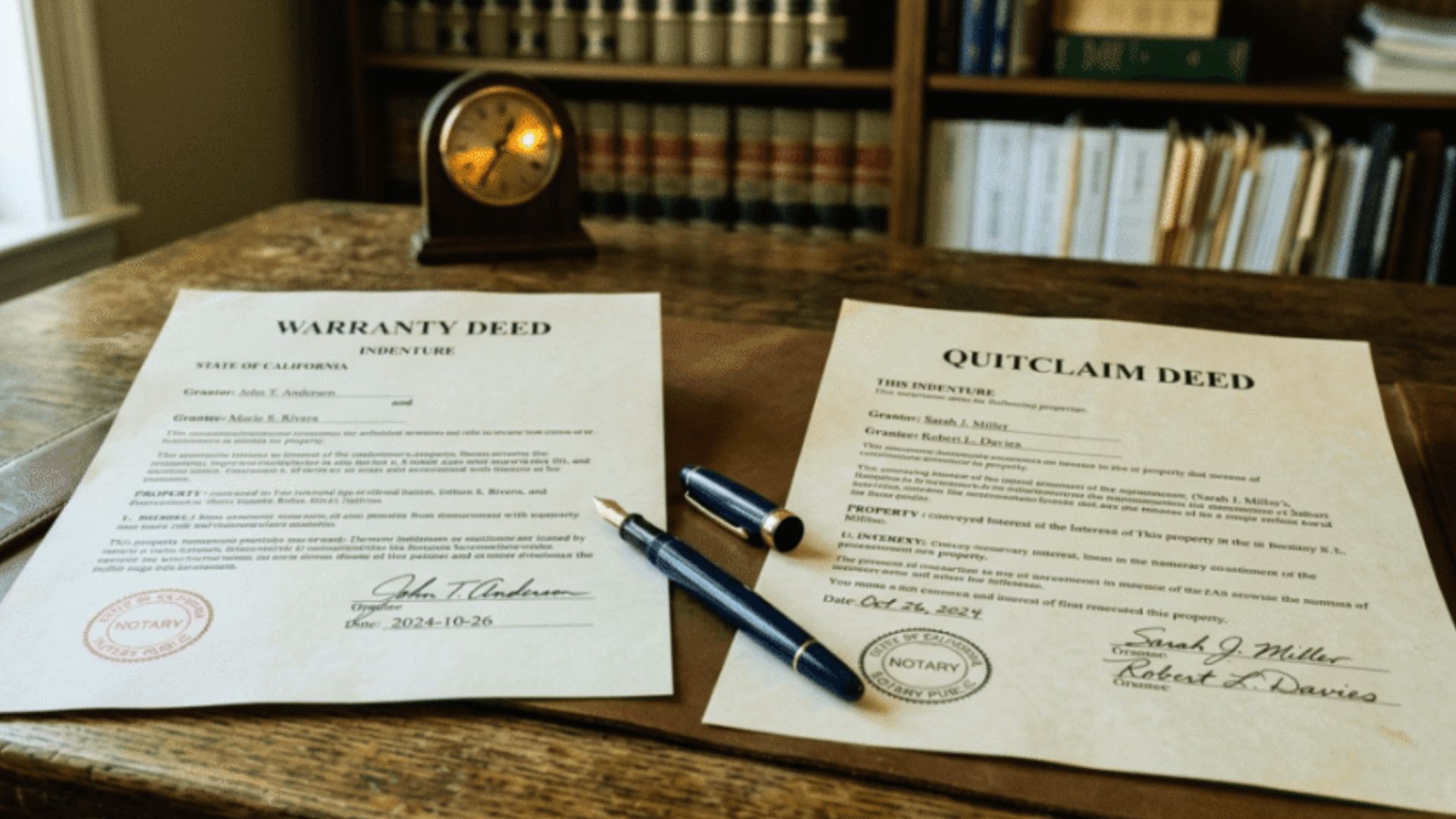
Warranty Deed vs Other Common Deeds: Quick Comparison
Not all property deeds offer the same level of buyer protection. Here's how a general warranty deed compares with two other common deed types.
| Feature | General Warranty Deed | Special Warranty Deed | Quitclaim Deed |
| Transfers ownership | Yes | Yes | Yes |
| Protects buyer | Highest | Limited | Almost none |
| Covers previous owners | Yes | No | No |
| Common use | Home sales | Commercial deals | Family transfers |
For most home purchases, a general warranty deed provides the strongest protection because it offers the broadest guarantees about the property's title.
How Does a Warranty Deed Work?

A warranty deed transfers ownership through several legal steps. Each step helps ensure the transfer is valid and protects both the buyer and seller from future disputes.
Buyer and Seller Agree to the Sale
This is where everything starts. The buyer and seller agree on price and terms, then sign a purchase agreement, but that's not the deed itself.
It's a commitment to complete the sale, binding both sides to the contract, while the actual deed comes later.
Many buyers confuse the purchase agreement with the transfer of ownership, but they're two separate documents serving two separate purposes.
A Title Search Verifies Ownership
Before the deed is prepared, a title company or attorney searches the property's history. They look for unpaid taxes, liens, old claims, or ownership gaps.
This protects the buyer from inheriting someone else's problems. The title search is a key part of the process.
If something is found, it must be resolved before the sale can close. Skipping this step is one of the biggest mistakes a buyer can make.
The Warranty Deed Is Prepared
Once the title is clear, a real estate attorney or title company drafts the deed. It includes the names of both parties, a legal description of the property, and the seller's warranties.
Every detail must be accurate because errors in the legal description or names can cause problems during recording or in future sales.
A buyer should always review the draft deed line by line before signing anything at closing.
The Seller Signs the Deed
The seller signs the deed in front of a notary, who verifies their identity and witnesses the signature.
Some states also require additional witnesses. This step is what makes the deed legally valid — without the seller's proper signature, it can't transfer ownership at all.
Once signed, the deed is handed to the buyer directly or held by the title company until closing is complete.
The Buyer Receives the Deed at Closing
At closing, the buyer receives the signed deed, the delivery step that, combined with acceptance, legally completes the transfer.
Acceptance is usually shown by taking possession of it. Closing is the meeting where all final documents are signed, money changes hands, and the deed is handed over.
This is the moment legal ownership transfers even though the deed has not yet been recorded at the county office.
The Deed Gets Recorded
After closing, the title company typically files the deed at the county recorder's office on the buyer's behalf.
This step places the transfer in the public record so future buyers or creditors can see who owns the property.
Always confirm the deed has been recorded soon after closing.
Do You Need to Record a Warranty Deed?

Recording is not always legally required, but skipping it can create unnecessary risks. Without a public record, proving ownership during a future sale, refinance, or legal dispute can become much more difficult.
Recording also protects you against a specific risk: someone else filing a competing claim on the same property, such as a lien, a second sale, or a creditor's judgment.
Whoever records first usually wins in a dispute, regardless of who bought the property first. Rules on how quickly you must record vary by state and county, so ask your title company for their typical turnaround time.
Most buyers never think about this step until something goes wrong, and by then it is often too late to fix cheaply.
Is a Warranty Deed Proof of Ownership?

Most buyers assume a signed deed means they are fully protected. That is mostly true, but not completely. A recorded warranty deed is strong legal evidence of ownership.
Courts, lenders, and government agencies all recognize it. When you need to sell, refinance, or settle an estate, the recorded deed is what proves the property is yours. But in rare cases, ownership can still be challenged.
Fraud, forgery, recording errors, and old hidden claims can all create problems after closing. That is why understanding what your deed covers and does not cover matters more than most buyers realize.
For example: Maria receives a properly signed and delivered warranty deed at closing. In many states, she becomes the legal owner at that point, even if the deed is recorded a few days later. Recording then creates a public record of her ownership.
Common Mistakes Buyers Make
Here are the most common mistakes buyers make when receiving a warranty deed.
- Thinking signing the deed is enough: You also need delivery, acceptance, and recording.
- Skipping the title search: It finds problems before they become your problems.
- Confusing a deed with a title: A deed is a document. A title is legal ownership. Not the same.
- Waiting to record the deed: Record right after closing. Do not wait.
- Assuming all warranty deeds are equal: General warranty deeds offer more protection than special ones.
- Skipping title insurance: Surprises happen. Title insurance covers you when they do.
- Ignoring exceptions in the deed: They limit your protection. Always read them.
Conclusion
A warranty deed does transfer ownership, but only when it's signed, delivered, accepted, and recorded correctly.
Knowing what each of those steps means protects you from the confusion that catches many buyers off guard at closing.
Before leaving the closing table, confirm who will record your warranty deed and ask for a copy once it's been filed. Taking that simple step can help protect your ownership rights.
Frequently Asked Questions
Can a Warranty Deed be Reversed After it is Recorded?
Yes, but only through legal action, a new deed, or a court order, and both parties must agree.
What Happens if the Seller Passes Away Before the Deed is Recorded?
The transfer is still valid as long as the deed was properly signed and delivered before the seller passed away.
Is a Warranty Deed the Same in Every State?
No, requirements for notarization, witnesses, and recording vary by state, so always check local rules.
Can a Warranty Deed be used for Commercial Property?
Yes, a warranty deed can transfer commercial property, but the process is more complex than a residential sale.