

If you have ever wondered how big brands protect their ideas, you are in the right place.
This guide draws on well-known court cases to break down intellectual property disputes in plain, practical language, covering why these disputes matter, how they shape entire industries, and the common mistakes people make.
By the end, you will understand how IP battles work and how to better safeguard your ideas and creative assets.
What Are Intellectual Property Disputes?
Intellectual property disputes are legal disagreements over the ownership or unauthorized use of creative works, inventions, trademarks, patents, copyrights, or trade secrets.
These disputes often end up in court, but many get settled outside of it through negotiation or mediation.
Understanding the basics helps you see why big brands fight so hard to protect what they own.
Why Intellectual Property Disputes Matter
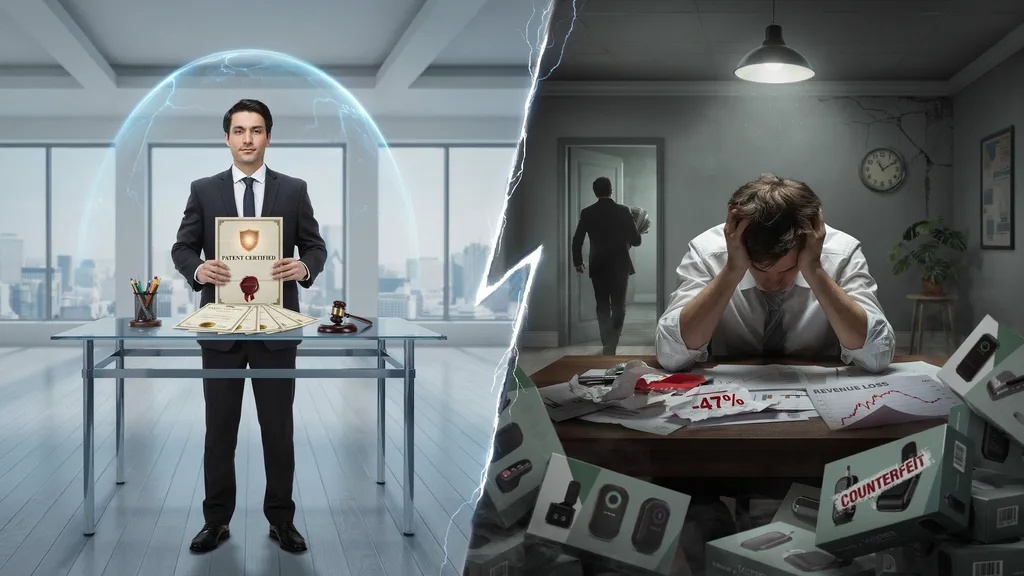
These cases affect businesses, creators, and the laws that protect them. When a business loses control over its own ideas, it can lose money, customers, and trust, and creators face similar risks when their work gets copied or misused.
These disputes also shape the rules going forward. Court rulings from major disputes often become the standard for future cases, since judges look at past decisions to guide new ones, meaning one famous case can quietly change the rules for an entire industry.
7 Famous Intellectual Property Disputes and Their Outcomes
These well-known legal battles show how IP law plays out in the real world.
Apple vs. Samsung: Smartphone Design Patent Dispute
| Aspect | Details |
| Parties | Apple and Samsung |
| Issue | Samsung's phone designs allegedly copied the iPhone's look and feel |
| Duration | Several years, across multiple countries |
| Outcome | Samsung paid Apple a large settlement |
| Lesson | Design patents are protected seriously and worth defending |
This case reached the U.S. Supreme Court, which ruled in 2016 that design patent damages can be based on a specific infringing component rather than a company's entire profits, changing how such cases are calculated.
After a retrial on damages, a California jury awarded Apple roughly $539 million in 2018, and the two companies reached a confidential settlement shortly after.
Sources: U.S. Supreme Court opinion, Samsung Electronics Co. v. Apple Inc.; Mintz Intellectual Property Viewpoints summary
Google vs. Oracle: Software Copyright Dispute
| Aspect | Details |
| Parties | Google and Oracle |
| Issue | Oracle claimed Google copied parts of its Java code to build Android |
| Duration | Over a decade, reaching the Supreme Court |
| Outcome | Ruled in Google's favor under fair use rules |
| Lesson | Fair use can apply even to large-scale software reuse |
In its April 2021 decision, the Supreme Court held that Google's copying of the Java API's declaring code was a fair use as a matter of law.
Without ruling on whether that code was copyrightable at all.
Legal analysts consider this the most significant fair use ruling for software in decades, since it gives developers more room to reuse interface code when building compatible programs.
Sources: U.S. Supreme Court opinion, Google LLC v. Oracle America, Inc.; U.S. Copyright Office fair use case summary
Apple Corps vs. Apple Inc.: Trademark Dispute Over the Apple Name
| Aspect | Details |
| Parties | Apple Corps (The Beatles' label) and Apple Inc. |
| Issue | Conflict over use of the Apple name and logo |
| Duration | Multiple rounds of settlement across several decades |
| Outcome | Settled more than once, with Apple Inc. eventually acquiring rights to the name |
| Lesson | Trademark conflicts between similarly named brands can stretch on for years |
The dispute began in 1978 and was settled three separate times, in 1981, 1991, and finally 2007.
Under the last agreement, Apple Inc. took ownership of all trademarks related to the Apple name and logo and licensed some of them back to Apple Corps.
This cleared the way for Beatles songs to be sold on iTunes.
Source: Apple Inc. and The Beatles' Apple Corps Ltd. Enter into New Agreement, Apple Newsroom
Nike vs. MSCHF: Trademark and Brand Protection Dispute
| Aspect | Details |
| Parties | Nike and MSCHF |
| Issue | MSCHF modified sneakers using Nike's branding without approval |
| Duration | Resolved fairly quickly through the courts |
| Outcome | Court sided with Nike, and the shoes were pulled from sale |
| Lesson | Brands actively defend their trademarks even against art or novelty projects |
A federal judge granted Nike a temporary restraining order within days of filing suit, finding a likelihood of consumer confusion over the modified sneakers' origin.
The two sides settled about two weeks later, with MSCHF agreeing to a voluntary recall and buyback of the shoes.
Source: Nike ends lawsuit over Lil Nas X "Satan Shoes," which will be recalled, NBC News
Coca-Cola vs. Pepsi: Trademark and Advertising Battles
| Aspect | Details |
| Parties | Coca-Cola and Pepsi |
| Issue | Ongoing clashes over ads, packaging, and branding claims |
| Duration | Decades of rivalry |
| Outcome | Mostly settled through advertising rules rather than major court rulings |
| Lesson | Trademark protection extends beyond logos into advertising and packaging |
Most disputes between the two companies have been handled through advertising industry self-regulation and trademark opposition proceedings rather than headline-grabbing lawsuits.
The rivalry still shows how far trademark protection reaches, covering not just logos but bottle shapes, taglines, and comparative ad claims.
Source: U.S. Patent and Trademark Office, Trademark Basics
Marvin Gaye Estate vs. Robin Thicke and Pharrell Williams
| Aspect | Details |
| Parties | Marvin Gaye's estate and musicians Robin Thicke and Pharrell Williams |
| Issue | Gaye's family claimed the 2013 hit "Blurred Lines" copied the feel of Gaye's 1977 song "Got to Give It Up" |
| Duration | More than five years, including a federal appeal |
| Outcome | A jury sided with the Gaye estate in 2015; a federal appeals court upheld the verdict, ending in a final judgment of nearly $5 million |
| Lesson | Copyright protection can extend to a song's overall feel or groove, not just its melody or lyrics |
A federal jury found in 2015 that "Blurred Lines" infringed the copyright in "Got to Give It Up," even though the two songs used different melodies, lyrics, and structures.
The Ninth Circuit Court of Appeals upheld the verdict in 2018, and many entertainment lawyers have since warned that the ruling could make songwriters more cautious about drawing on another artist's style.
Sources: Robin Thicke, Pharrell Williams to pay $5 million to Marvin Gaye estate for 'Blurred Lines,' NBC News and Appeals court sides with Marvin Gaye's family in Blurred Lines legal battle, CBC News)
Common Lessons From Famous Intellectual Property Disputes
Although these cases involve different industries, they share similar lessons:
- Register intellectual property early to establish clear legal ownership.
- Document ownership thoroughly, including dates and records of creation.
- Monitor for unauthorized use so problems get caught early rather than after years of infringement.
- Understand licensing agreements fully before entering into them.
They also show that protecting intellectual property is important for businesses of every size, not just global brands.
Major Types of Intellectual Property Disputes
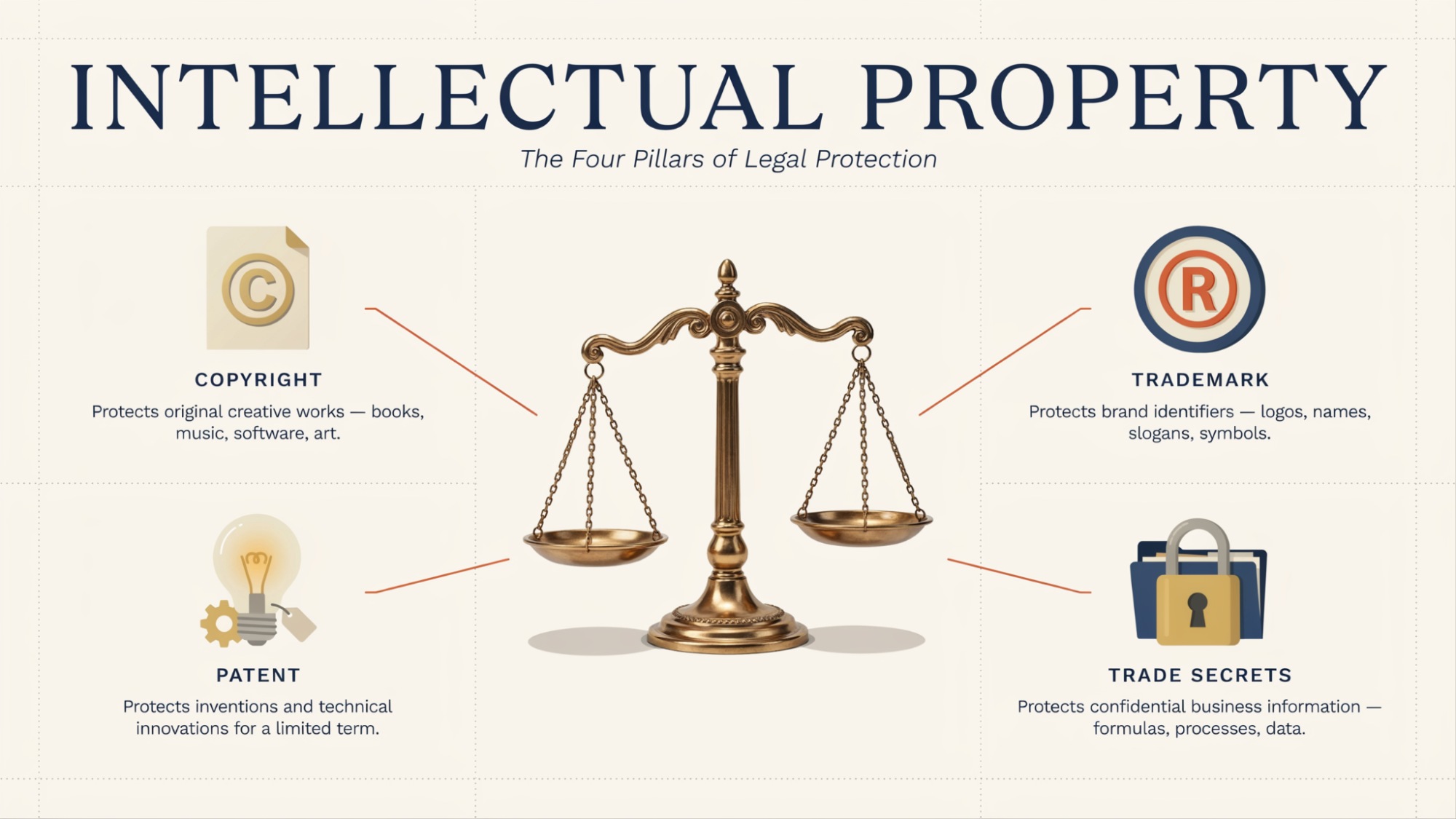
Intellectual disputes usually fall into four main categories.
- Copyright infringement disputes: These involve someone using creative work, like music, writing, or art, without permission. Copyright protects original works the moment they are created, and infringement claims often center on unauthorized copying or distribution.
- Trademark infringement disputes: These happen when a brand name, logo, or slogan gets used without permission, which can confuse customers about who made a product. Companies protect trademarks to keep their brand identity clear.
- Patent infringement disputes: These involve inventions or unique processes being copied without approval, often in technology or manufacturing. Patents give inventors the right to control how their creation is used.
- Trade secret misappropriation disputes: These come up when confidential business information gets stolen or leaked, including formulas, processes, or client lists. Companies rely on secrecy agreements to prevent this kind of misuse.
How Intellectual Property Disputes Are Resolved

Not every dispute ends up in a courtroom.
- Negotiation and settlement agreements: Many disputes get resolved through direct conversations between the two parties, saving time and money compared to a lawsuit. Settlements often include a payment or a change in how the work is used.
- Mediation and alternative dispute resolution: Mediation brings in a neutral third party to help both sides reach an agreement. It is usually faster and less expensive than going to court, and many companies prefer this option to avoid public legal battles.
- Filing an intellectual property lawsuit: When other options fail, a formal lawsuit may be the only path left. This involves presenting evidence in front of a judge, and lawsuits can take months or even years to resolve.
- Possible legal remedies for IP violations: Courts can order the losing party to pay damages, stop using the disputed material, or in some cases issue an injunction to block further use. The remedy depends on the type of violation and how serious it is.
How Famous Intellectual Property Disputes Changed Industries
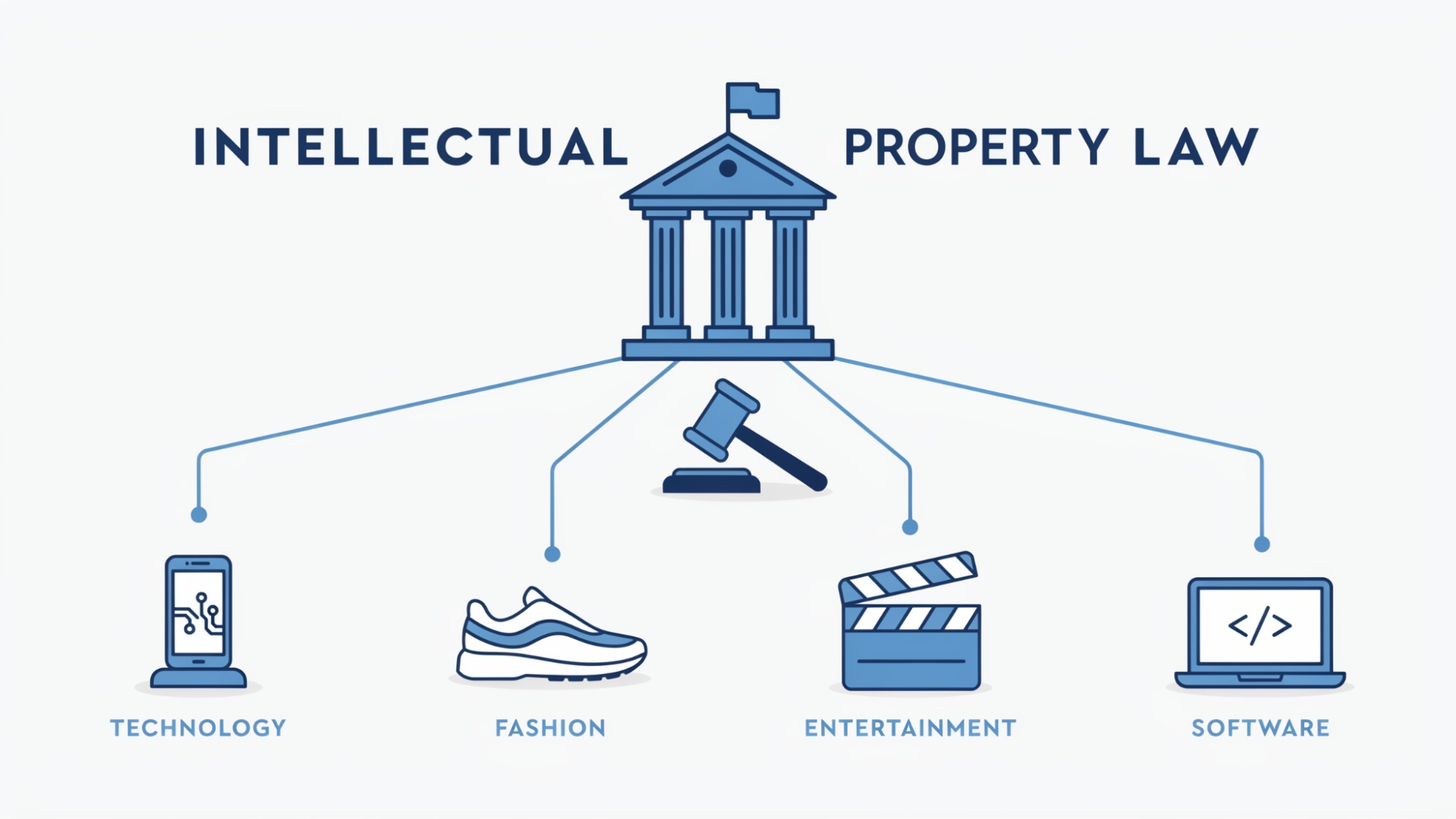
Landmark intellectual property disputes have influenced how businesses develop products, protect brands, and encourage innovation across industries.
Impact on technology and innovation: Cases like Google vs. Oracle changed how software companies approach coding and licensing. Tech companies now pay closer attention to how they build products, pushing the industry toward clearer coding practices.
Impact on branding and creative industries: Cases involving Nike and Apple Corps show how seriously companies protect their brand identity. Creative industries now watch trademarks and copyrights more closely, making brand protection a bigger part of business planning.
Tips to Avoid Intellectual Property Disputes
A few simple habits can protect your work before problems start.
- Register your work early to establish legal ownership.
- Use written agreements when licensing or sharing intellectual property.
- Monitor how your brand and creative work are used online.
- Keep records showing when and how your work was created.
- Consult an intellectual property attorney before using protected material.
Common Mistakes That Lead to Intellectual Property Disputes
Small oversights often turn into big legal problems.
- Using someone else's work without permission.
- Delaying or skipping intellectual property registration.
- Ignoring licensing terms and agreements.
- Assuming online content is free to use.
- Failing to act when intellectual property is infringed.
Conclusion
These famous disputes show how much work goes into protecting an idea. Trademarks, copyrights, and patents carry real legal and financial weight, not just paperwork.
Anyone who creates original work, big or small, benefits from taking steps to secure it early.
Understanding how these disputes unfold can help creators and companies protect their ideas before problems start.
Frequently Asked Questions
What counts as an intellectual property dispute?
It happens when someone believes their copyright, trademark, patent, or trade secret was used without permission. This can lead to negotiation, mediation, or a lawsuit.
How long do intellectual property lawsuits usually take?
Most cases take months, but complex ones can stretch for years. It depends on the evidence and how many appeals are involved.
Can small businesses protect their intellectual property too?
Yes, small businesses can register trademarks, copyrights, and patents just like large companies. Early registration gives strong legal protection.
What is the difference between a trademark and a copyright?
A trademark protects brand names, logos, and slogans. A copyright protects creative works like writing, music, or art.
How can I avoid an intellectual property dispute?
Register your work early and use clear licensing agreements. Always ask permission before using someone else's protected material.