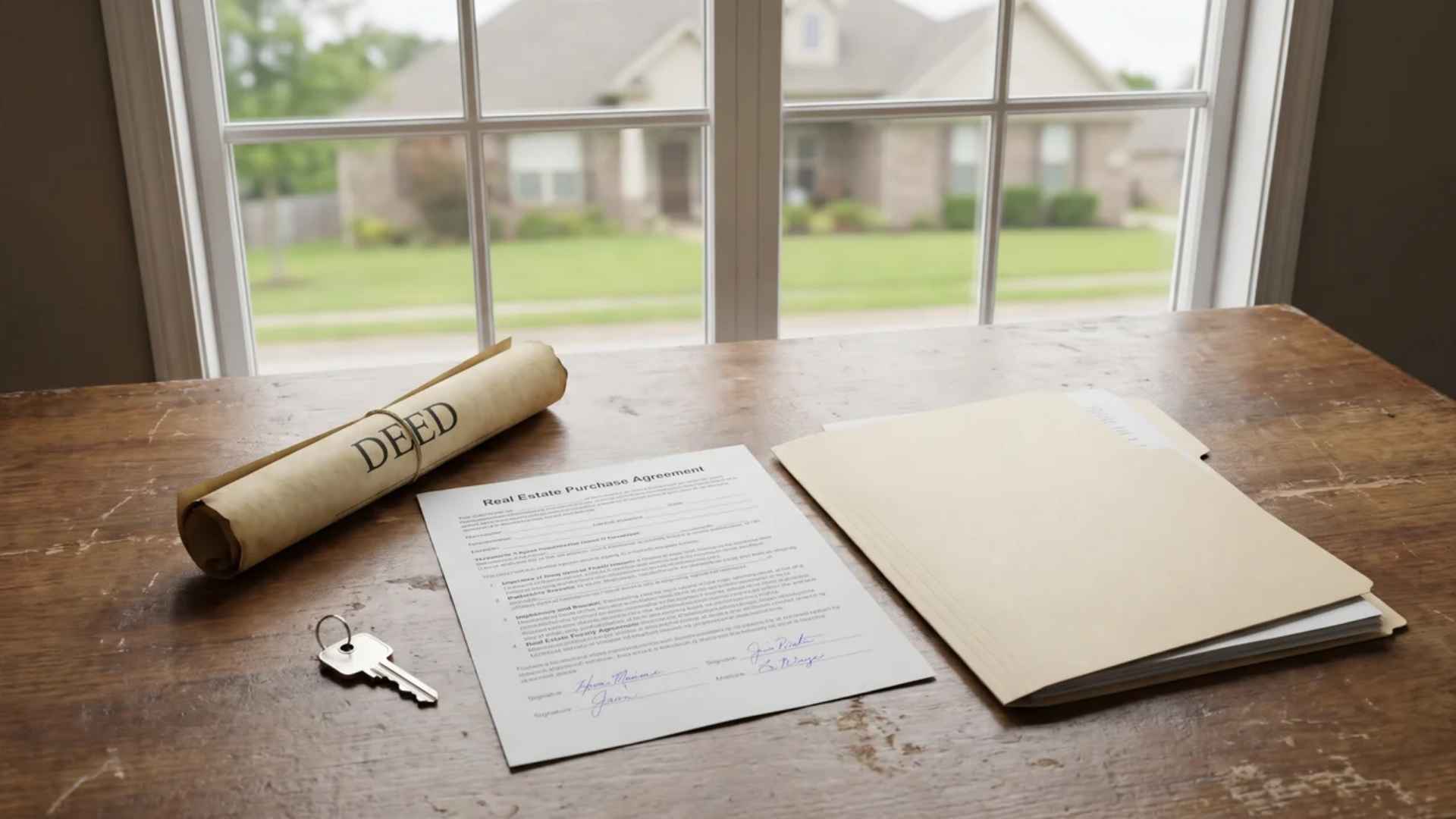


A real estate dispute can turn a simple property disagreement into a costly legal problem. A boundary misunderstanding, a broken sales agreement, or a disagreement between co-owners can all threaten your rights if left unresolved.
The tricky part is knowing when a disagreement becomes a legal matter and which steps can actually resolve it.
The real challenge is that a seemingly minor disagreement can have consequences for your property’s value, future sale, or legal ownership. Knowing where the law draws the line helps you separate everyday friction from conflicts that require formal action.
Disclaimer:This article provides general information about real estate disputes in the United States and is not legal advice. Property laws, filing deadlines, and dispute resolution procedures vary by state. Consult a qualified real estate attorney for guidance specific to your situation.
What Is a Real Estate Dispute?
A real estate dispute is a legal disagreement over property ownership, boundaries, contracts, or land use. It happens between two or more parties who each have a legal stake in the outcome.
Not every disagreement rises to that level. A dispute becomes actionable once one party can point to a documented breach, real harm, or a competing legal claim.
A neighbor who parks too close to your fence is annoying. A neighbor whose fence is built two feet onto your land, confirmed by a survey, is a dispute. The difference is proof, not just frustration.
What Types of Disputes Fall Under Real Estate Law?

Real estate disputes fall into a handful of recognized categories. Knowing which one fits your situation tells you how serious it is and what kind of help you’ll need.
Some of these overlap. A construction defect, for example, can also become a breach of contract claim if it violates what was promised in writing.
1. Breach of Contract
This is the most common cause of real estate lawsuits. It happens when a buyer, seller, landlord, or contractor fails to meet the terms they agreed to.
In a home sale, this often shows up around closing. A seller might miss the deadline, back out after accepting an offer, or fail to disclose a known defect like a cracked foundation.
Earnest money disputes fall here too. If a deal collapses, both sides often disagree about who’s entitled to keep that deposit.
2. Boundary and Encroachment
These disputes happen between neighbors over where one property ends and another begins. A fence built in the wrong spot is the classic example.
I’ve seen this come down to a ten-year-old survey that nobody double-checked before building. Shared driveways cause the same problem when neither side has a clear written agreement.
Adverse possession is the sharper version of this. If someone uses a strip of your land openly for long enough, state law may eventually treat it as theirs.
3. Title and Ownership
These disputes center on who legally owns a property. A clouded title, an unresolved lien, or a missing heir can all throw ownership into question.
This matters most when you’re trying to sell. A buyer’s lender won’t close on a property with an ownership question still open.
4. Co-Owner and Inheritance
These conflicts come up between siblings, family members, or business partners who jointly own a property. One person wants to sell, another wants to keep it, and nobody can agree.
When no agreement is possible, a court-ordered partition action forces a resolution. It either divides the property or orders a sale and splits the proceeds.
5. Landlord-Tenant
These are the most familiar property disputes to most people. Unpaid rent, delayed repairs, and evictions all fall under this category.
Lease language does most of the work here. A lease that spells out maintenance responsibilities and notice periods prevents a lot of these from escalating.
6. Construction and Defect
These disputes involve faulty workmanship, design errors, or costs that ran far past what was quoted. A contractor who cuts corners on waterproofing, for example, can cause damage that doesn’t show up for a year.
7. Zoning and Land-Use
These disputes happen when a property use breaks a local ordinance or building code. Adding an unpermitted structure or running a business out of a residential zone are common triggers.
A violation can mean fines, a stop-work order, or in some cases a forced removal of the structure. It can also complicate a future sale if the issue surfaces during a title search or permit review.
What a Real Estate Dispute Is Not

Not every property disagreement qualifies as a legal dispute. Some friction is just part of living near other people.
Noise complaints, disagreements about landscaping, or a neighbor’s taste in paint color usually don’t meet the threshold. There’s no documented harm and no legal claim behind them.
Criminal property matters, like vandalism or trespassing, run through a different system entirely. Those go through criminal law, not civil disputes.
HOA violations sit in a gray area. Most are governance issues handled through the HOA’s own process, unless the violation escalates into an actual breach claim.
Why Understanding Dispute Type Matters for Resolution
Most advice treats every real estate dispute the same way: gather documents, try to talk it out, then get a lawyer if that fails. That’s a fine starting point, but it misses something important.
The right path depends heavily on what kind of dispute you’re actually in.
A title or ownership issue usually needs a real estate attorney or title company from the start. These problems involve public records and legal filings that you can’t resolve through a conversation.
A boundary dispute often starts somewhere simpler. A fresh survey plus a direct conversation with your neighbor solves more of these than people expect.
Co-owner conflicts sit in between. Mediation works when both sides are still willing to talk. When they’re not, a partition action becomes the only way to force a resolution. Here’s what that looks like in practice:
- Title or ownership issue: start with an attorney or title company
- Boundary disagreement: start with a survey and direct conversation
- Co-owner conflict: try mediation first, consider a partition action if that stalls
- Contract or disclosure breach: review the contract’s dispute clauses, then negotiate or send a demand letter
- Landlord-tenant conflict: check your lease terms and local tenant protections before escalating
Matching the dispute to the path above saves most people real time and money; a survey and a conversation can resolve a boundary issue in a week, while a lawyer-first approach on the same issue can run months and several thousand dollars before it’s even clear a lawsuit is warranted.
Jumping straight to a lawyer when a phone call and a survey would’ve done it is a common and expensive mistake.
If informal steps don’t resolve things, mediation or arbitration is usually faster and cheaper than going to court. Litigation stays the last resort, reserved for disputes that genuinely can’t be settled any other way.
The Bottom Line
A real estate dispute doesn’t always need to end in court. In many cases, clear documentation, open communication, and the right professional guidance can resolve the problem before legal costs start adding up.
The key is to understand your rights, recognize the type of conflict you’re facing, and act before the situation becomes harder to manage.
Delaying action can weaken your position, especially when deadlines or property records are involved. If you’re dealing with one, review your documents and consult a qualified real estate attorney when needed to protect your interests.
Frequently Asked Questions
What are some examples of property disputes?
Common examples include boundary disagreements over fence placement or a shared driveway, breach of contract claims after a buyer or seller misses closing terms, title disputes involving liens or missing heirs, landlord-tenant conflicts over rent or repairs, and construction defect claims tied to faulty work.
What disputes arise between a buyer and seller?
Buyer-seller disputes usually involve a breach of the purchase agreement. This can mean a missed closing deadline, failure to disclose a known defect, a disagreement over earnest money, or one side refusing to complete the sale. These can lead to claims for damages or forcing the sale through.
What are the four types of boundary disputes?
The four common types are survey discrepancies from outdated or conflicting measurements, fence or structure encroachments onto a neighbor’s lot, disagreements over shared driveways or easements, and adverse possession claims, where long-term use of land creates a competing ownership claim.
Can a real estate dispute be resolved without going to court?
Yes, most are. Gathering documentation, checking your contract for dispute clauses, and trying direct negotiation resolve a lot of these on their own. Mediation or arbitration offers a faster, cheaper option when talking it out isn’t enough. Litigation stays the backup, not the first move.