

This article is for general information only and is not tax or legal advice. Tax rules change and your situation may differ, so talk to a licensed CPA or tax attorney before you list your property.
A tax deed property has a way of looking like the deal of a lifetime, and that first impression is exactly what draws so many buyers in.
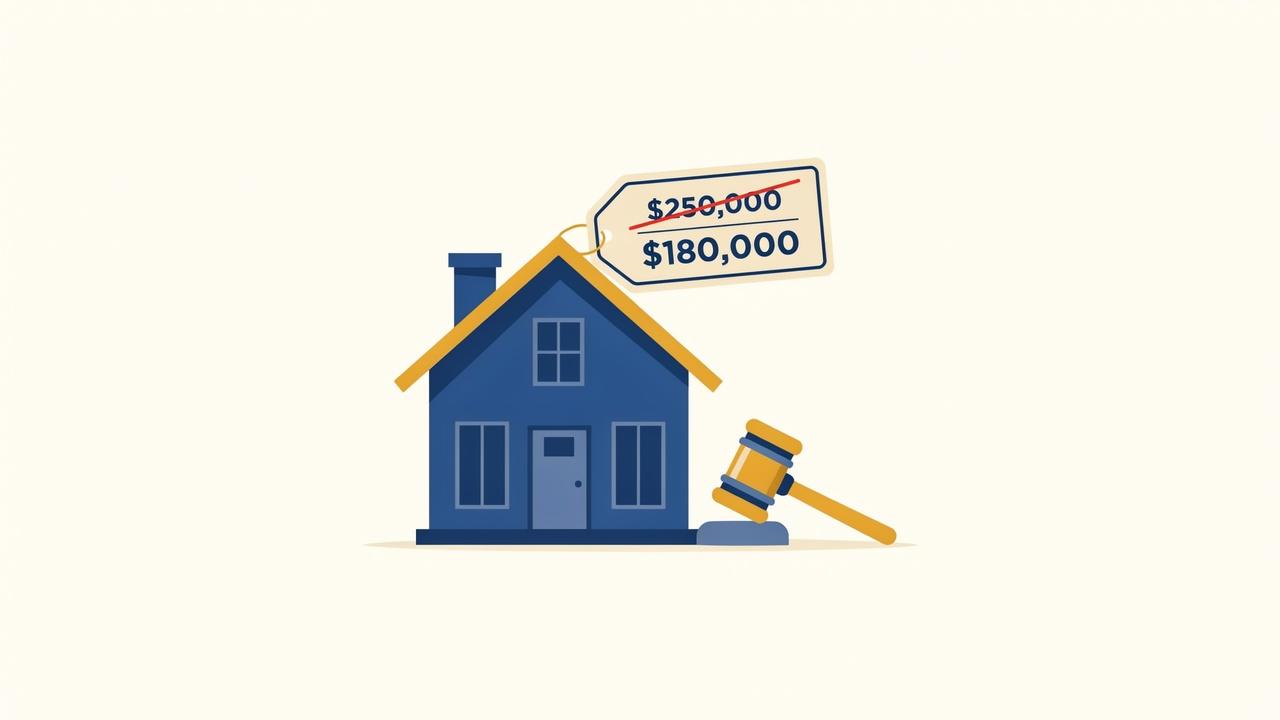
A home valued at $180,000 might cross the auction block for just $60,000. The price gap is hard to ignore, the bidding moves fast, and the whole process looks straightforward from the outside.
But the winning bid is almost never the final number. Surviving liens, murky titles, and extended redemption windows can quietly turn a promising purchase into a financial headache.
Most buyers only discover this after the money is already gone. This guide breaks down the real risks in plain language so you know what you are walking into before you ever raise your hand.
What Tax Deed Properties Are and Why They Look Cheap
A tax deed hands full ownership of a property to a new buyer when the original owner stops paying property taxes.
The county steps in, forecloses on the home, and sells it at a public auction where the highest bidder walks away with the deed. Final prices often land 40% to 70% below market value, which is what keeps investors coming back. You are buying the actual real estate, not a debt instrument.
The road to auction takes time. Most counties require an owner to be delinquent on taxes for one to three years before a property becomes eligible for sale.
The county then works through a required notice process:
- Sends written notices to the owner by mail
- Posts a notice directly on the property
- Publishes an announcement in the local newspaper
Only once those steps are complete does the home go up for auction. The county establishes a minimum bid that typically covers the unpaid taxes, accrued interest, penalties, and administrative fees.
Here is something many first-time buyers do not realize going in. When your winning bid exceeds the total taxes owed, that difference is known as surplus or excess proceeds.
That money does not stay with the county, and it does not circle back to you. It is almost always paid out to the former owner or other lienholders. According to the National Tax Lien Association, over one million properties fall into tax delinquency each year, so the pool is large.
Tax Deed vs Tax Lien: Why the Difference Decides Your Risk

These two terms get used interchangeably all the time, but they describe completely different investments. Confusing them can cost you a great deal of money.
Here is the plain difference:
| Feature | Tax Deed | Tax Lien |
| What you buy | The property itself | A certificate for the unpaid tax debt |
| Do you own the home? | Yes, after the sale | No, you are just a creditor |
| How you profit | Sell, rent, or flip the home | Earn interest when the owner pays |
| Typical cost | $20,000 to $200,000 | $500 to $10,000 |
| Main risk | Title defects and repairs | Owner never pays, slow returns |
With a tax deed, you own the property outright after the sale, though redemption rules and title issues still apply. With a tax lien, you are purchasing a certificate that earns interest, often 12% to 18% depending on the state. You do not gain ownership of the home unless you later go through foreclosure.
Know which one your county sells before you bid.
The Legal Risks Hiding Behind a Cheap Winning Bid

A low price can hide serious legal exposure, and that exposure is usually legal rather than structural.
These four risks trip up buyers most often:
- A cloudy title that is not truly yours
- Liens that survive the sale
- A former owner who challenges the sale
- Title insurance you cannot get
Any one of these can drain your profit or cost you the property entirely. Read through each one carefully before you bid, because a single misstep can turn a bargain into a loss you did not see coming.
Your Title Is Cloudy, Not Clean
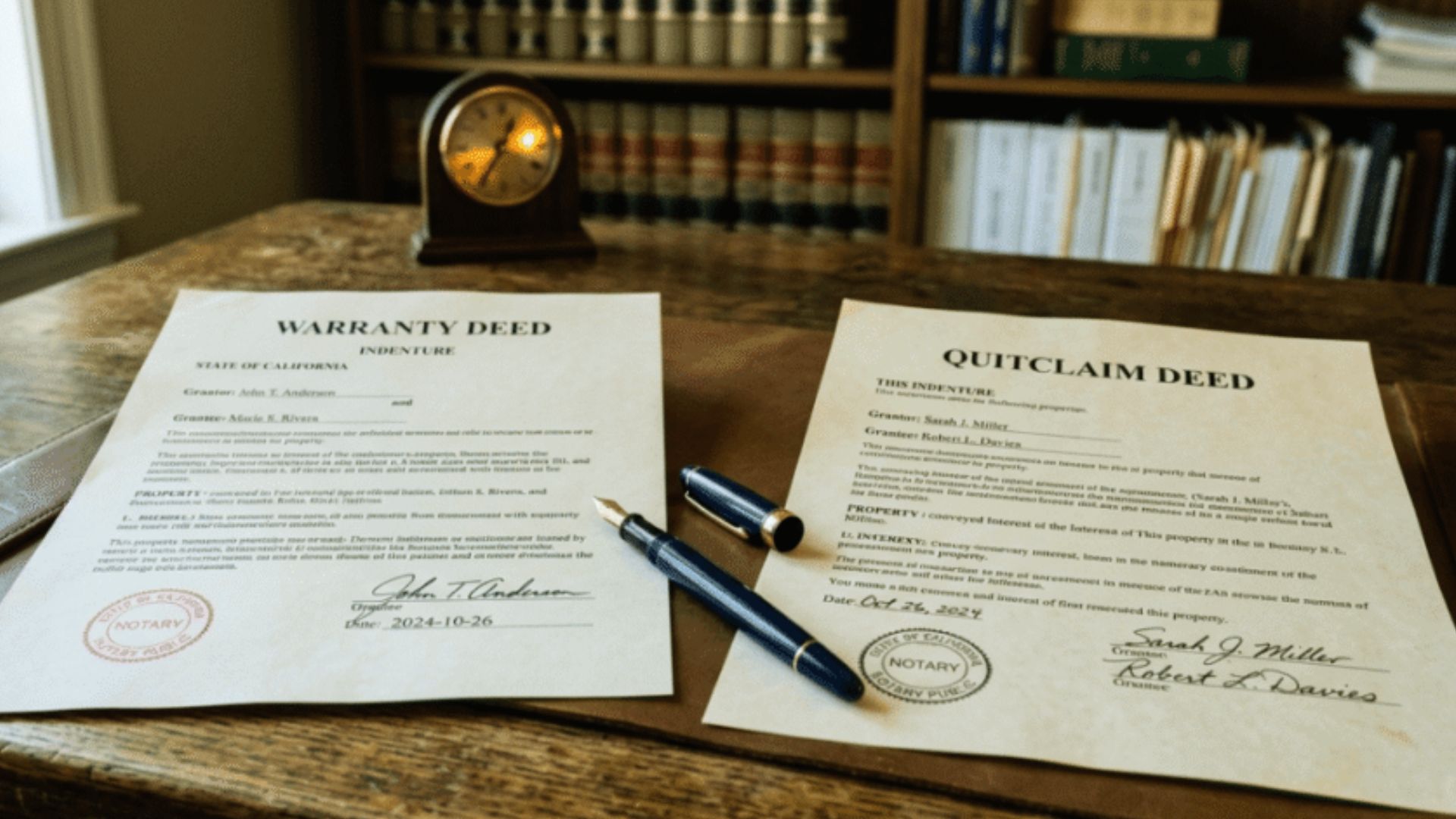
Winning the auction gives you a tax deed, not a warranty deed.
A warranty deed promises clean ownership, but a tax deed does not. It is closer to a quitclaim deed. The county passes on whatever rights it had, with no promise the title is clear.
Old claims and record errors can still cloud the title. To fix this, most buyers file a quiet title action. This is a court case that clears the claims. It costs money and takes months, but you need it before you can sell to most buyers.
Liens That Survive the Sale
A tax deed sale usually wipes out the existing mortgage, since the property tax lien holds a senior position. That part works in your favor, but not every lien disappears along with it. Some obligations stay attached to the property and transfer directly to you.
Watch for these survivors:
- IRS federal tax liens, which also carry a 120-day right to redeem under Internal Revenue Code Section 7425
- Municipal and code enforcement liens for nuisance and lot clearing
- Some HOA and condo association liens
You could win a home at a sharp discount and still inherit thousands of dollars in old debt. This is among the most expensive traps in tax deed investing, so run a thorough lien check before you ever bid.
The Former Owner Can Fight Back
The old owner may challenge the sale in court, and their main argument is bad notice. If the county failed to serve them correctly, a judge can reverse the sale.This can happen even after you take the keys.
The risk grows with estates, out-of-state owners, and homes with messy title history. In many states, an owner has years to bring this kind of challenge.
So the risk does not fully end on auction day, and you should factor that exposure into your plan.
Title Insurance May Be Off the Table
Title companies are careful with tax deed homes. Many will not issue title insurance until you clear the title.You do this with a quiet title lawsuit or by waiting out the statutory period.
Without a policy, most buyers cannot get a loan on the home. That makes selling or refinancing very hard until the title is clean. For most exit plans, a clean title is the step that unlocks everything else.
Redemption Periods: When You Win but Still Don't Own It

A redemption period is the window of time after a tax deed sale during which the former owner can legally reclaim the property.This single rule reshapes both your risk exposure and your working timeline.
Some states transfer full ownership at the gavel, while others allow the original owner to come back for years.
Understanding your state's rules before you bid is what keeps you from locking up capital you cannot use.
How Redemption Periods Work State by State
The rules vary considerably from one state to the next, and a strategy that works well in one market may fall apart in another. Some states have no post-sale redemption at all, while others extend it for several years.
The table below shows a few common examples:
| State | Redemption after sale | What owner pays to redeem |
| California | None | Not applicable |
| Georgia | 1 year | 20% flat penalty |
| Texas (non-homestead) | 180 days | 25% penalty |
| Texas (homestead) | Up to 2 years | 25% to 50% penalty |
| Tennessee | Up to 2 years | Bid plus interest |
Texas and Georgia are called redeemable deed states. You get the deed, but the owner still has a set window to buy it back.While that window is open, you cannot safely use, sell, or renovate the home.
Always confirm your state's rules before placing a bid.
What Redemption Costs You Even When You Get Paid Back
If the owner redeems, you get your bid back plus interest or a penalty.
In Georgia that penalty is a flat 20%. That return sounds good until you look at the full picture.
You do not get back the money you already spent while you held the home. Insurance, property taxes, upkeep, and early legal fees are gone. In a slow redemption, you can spend more than the penalty pays you and still lose the property.
The Money Traps Beyond the Auction Price

The winning bid is the starting point, not the finish line. Title work, ongoing taxes, carrying costs, and repairs all add to your total investment. Some of these are predictable, and others will not reveal themselves until you are already committed.
The sections below break down where the real money goes.
Title Clearing and Legal Fees
Title work on a tax deed property is not optional. A quiet title action runs about $2,500 to $7,500 and takes four to eight months.
A title certification is a faster and less expensive alternative, often running $800 to $2,500. But it does not always clear every defect on record.
Some title companies still require a full quiet title action before they will write a policy. For that reason,many buyers go through the court process even when it costs more upfront.
Back Taxes, Assessments, and Holding Costs
Winning does not end your tax bill. You now owe current-year taxes and any special assessments.
A special assessment is an extra charge a city adds for things like new sidewalks, sewers, or lighting, and it can carry over to you.
You also pay to hold the home each month. On a $100,000 home, property taxes alone can run $1,000 to $3,000 a year. Vacant property insurance can cost two to four times a normal policy.
A rough monthly hold can hit $600 to $800, so a two-year redemption can cost $15,000 or more before you fix or sell anything.
Property Condition and Repairs
You usually cannot inspect the inside before you bid, so you buy the home as-is.
Many tax deed homes sat empty for years and picked up damage along the way. Common problems include stolen wiring, roof leaks, mold, and code violations.
A $50,000 "deal" stops looking good when repairs cost $40,000.
Always budget extra for surprises you cannot see from the street. A quick drive-by tells you almost nothing about what waits inside.
A Simple Cost Example
Say you win a Florida home with a market value of $185,000.
The table below shows how the real numbers add up:
| Item | Amount |
| Winning bid | $75,000 |
| Quiet title and legal fees | $6,000 |
| Repairs | $39,000 |
| Holding costs (12 months) | $9,000 |
| Total invested | $129,000 |
| Sale price | $185,000 |
| Profit before agent fees and closing costs | $56,000 |
That looks promising on paper. But if the owner redeems, if repair costs run over budget, or if the property sells for less than expected, that margin shrinks fast. Run the numbers honestly before you bid, not after.
Risks of Buying Tax Deed Properties in Florida

Florida is a busy tax deed state with its own rules under Florida Statutes Chapter 197. The state draws heavy investor interest, but its process differs from redeemable deed states in key ways.
Liens, timelines, and occupancy rules all function a little differently here. If Florida is where you plan to bid, learn the local risks before you do.
Which Liens Survive a Florida Tax Deed Sale
Florida eliminates certain liens at the point of a tax deed sale, but others remain attached to the property.
Several types of claims can survive and become your responsibility:
- IRS federal tax liens, plus the same 120-day federal redemption window
- Municipal liens for code enforcement, nuisance, and lot clearing
- Some HOA and condo association liens
You can walk away from an auction with what seemed like a bargain and still owe thousands in inherited fines and assessments.
Lien enforcement is particularly aggressive in Miami-Dade and Palm Beach counties, which makes thorough research even more critical in those markets.
Florida's Redemption and Title Insurance Timeline
Florida works a little differently from redeemable deed states. Here, the owner can redeem right up until the sale happens. After that, the deal is usually final, and there is no post-sale redemption window.
But your title is still not clean at that point. Most title companies wait about four years, the statutory period to challenge a tax deed, before they insure the home. A quiet title action is the faster path to a clear, sellable title.
Occupied Properties and Eviction in Florida
A tax deed does not give you instant possession. The old owner or a tenant may still live there, and you cannot just change the locks.
Removing them takes the right court action:
- File for ejectment to remove a former owner
- File for eviction to remove a tenant
These are two different court actions, and both take time. The process can run weeks or months and cost real money. Plan for this delay before you bid.
How to Protect Yourself Before You Place a Bid
Thorough research is your most reliable protection at any auction, and it costs a fraction of what one bad deal will.
The three steps below help you sidestep the most expensive mistakes. Each one is straightforward, but skipping even one of them can wipe out your return entirely. Work them into your routine before every sale.
Research Title and Liens Before the Auction
Do your homework before you bid, not after. Check county records for the owner, past sales, and recorded liens. Order a preliminary title report, often $150 to $350.
Look for IRS, municipal, and HOA liens that could survive.
Remember that the IRS liens index is under the owner's name, not the address, so ask for a name-based search. This small cost can save you tens of thousands on one bad deal.
Set a Maximum Bid and Hold the Line
Auction fever is real, and people often bid past their limit. Set your top number before the sale using a simple rule.
Take 70% of market value, then subtract repairs, title costs, and holding costs.
Write that number down and keep it in front of you. If bidding passes it, walk away. Another auction always comes, and no single property is worth breaking your math.
Bring in a Real Estate Attorney Early
A real estate attorney is worth the fee here.They review the title, check that notice was proper, and explain your state's redemption rules. They also guide the quiet title process and catch county deadlines.
For buyers and legal advisors, early counsel prevents costly errors. It is far cheaper than fixing a broken deal later. One missed deadline can cost more than the lawyer ever will.
What Happens After You Win: Your Real Timeline and Exit Options
Plan for eight to eighteen months from auction to resale. First you pay, record the deed, and secure the home. Next comes title work, often a quiet title case that runs several months. Then you handle repairs and list the property.
Your exit choices come down to three:
- Sell as-is for a fast return, but accept a lower price
- Fix and flip for more profit, but take on repair and market risk
- Hold it as a rental for steady income, but become a landlord with ongoing duties
Match your plan to your cash and your timeline before you bid. The right exit depends on how long you can wait and how much work you want.
Conclusion
A low winning bid is never the whole story. The real cost lives in title work, surviving liens, and redemption periods that can drag on for years.
Keep one rule in mind: do the research before you bid, never after. That discipline will protect your capital more reliably than any hot deal ever will.
Found this helpful? Share it with a fellow investor, and drop a comment below with your own tax deed questions.
Frequently Asked Questions
Can I get a loan to buy a tax deed property at auction?
No. Most auctions require cash or certified funds within a day or two. You can refinance later, but only after your title is clean and insurable.
Can I buy a tax deed property in a state where I don't live?
Yes. Many counties now allow online bidding from anywhere in the country. That said, out-of-state purchases make inspections and title research harder, so lean on local professionals.
How do I find tax deed auctions near me?
Start with your county tax collector or treasurer's website. They post upcoming sale dates and property lists well in advance. Platforms like Bid4Assets and RealAuction also aggregate auctions across many counties in one place.
Do I owe capital gains tax when I sell a tax deed property?
Yes, if you sell for more than your total cost basis. Properties held for under a year are taxed at the short-term rate, which is higher, so factor that into your profit projections.