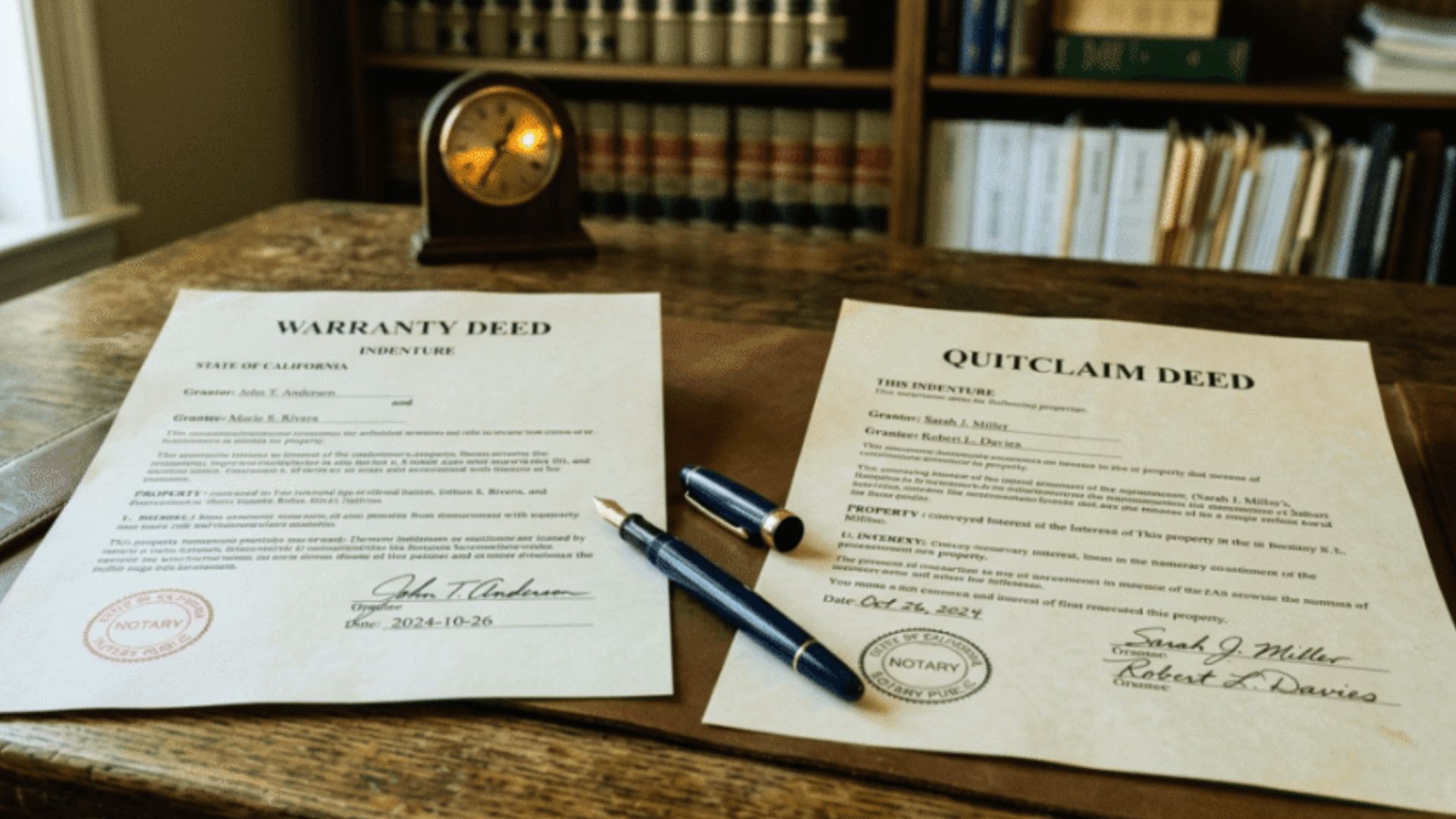
People sign their property deed without fully understanding what that dense block of text near the bottom actually means. That text is not filler.
It is one of the most legally important pieces of information tied to your property, and getting it wrong can delay a sale, void a transfer, or create a boundary dispute that costs thousands to fix.
After working through hundreds of real estate documents, one thing becomes clear, confusion around this single term causes more closing headaches than almost anything else.
What Is a Legal Description of Property?
A legal description is the official written statement that identifies a parcel of land using fixed boundaries and measurements. It's the only form of property identification accepted on deeds and other legal documents.
Two features set it apart from the address you write on mail. It anchors to the land itself, and it doesn't change.
How It Differs from a Street Address
A street address tells people how to find your home. It points to a building. But addresses are administrative and can change overnight. Cities renumber streets.
Postal zones get reorganized. A legal description works differently. It describes the land itself using fixed reference points like iron pins, physical monuments, or a recorded plat map.
That is why a street address is never accepted on a property deed.
Why Legal Descriptions Are Permanent
A licensed land surveyor measures the boundaries of a parcel of land, researches historical records, and produces a precise written statement that gets recorded with the county recorder.
In most states, only a licensed land surveyor is legally permitted to draft an original legal description for conveyancing purposes. From that point, it becomes part of the permanent public record.
The description follows the land through every sale, every mortgage, and every ownership transfer. It forms part of the chain of title, the full history of who owned the land and when.
Courts rely on it because it was officially recorded and does not shift with administrative changes.
The Types of Legal Property Descriptions
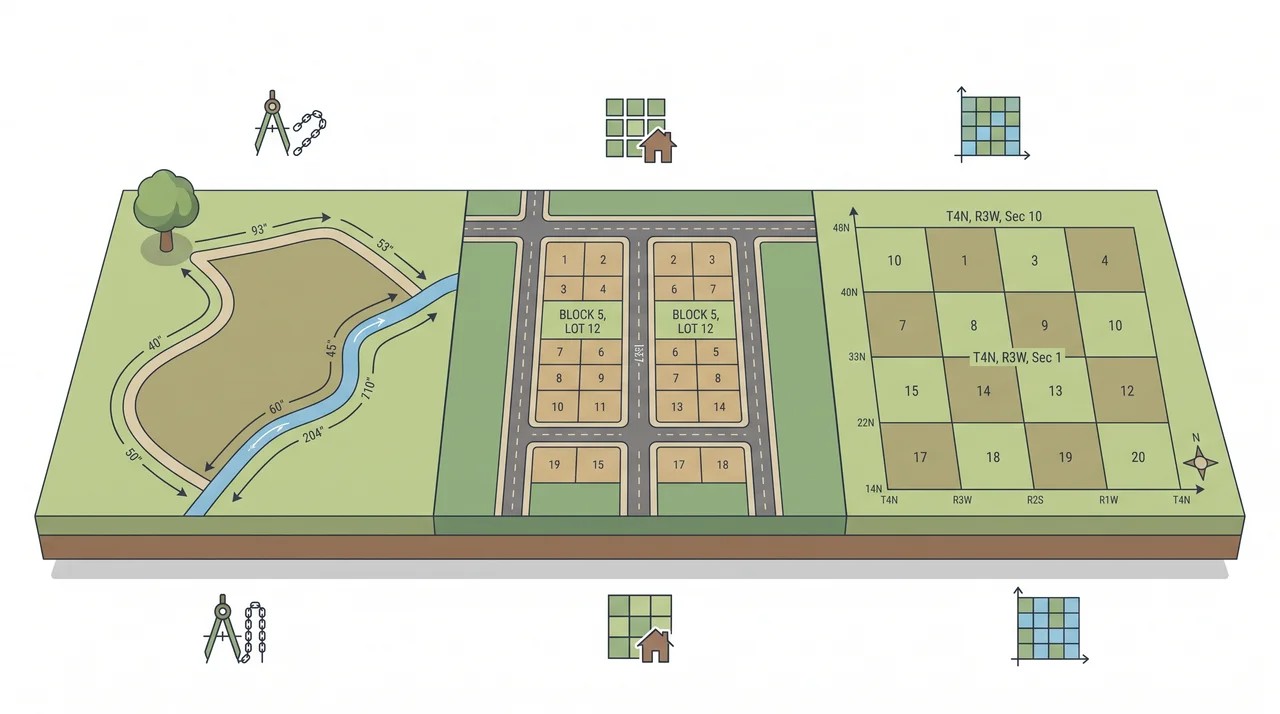
Not every property is described the same way the method used depends on where the land is and how it was originally surveyed.
1. Metes and Bounds
This is the oldest type of legal description still in use today.It traces the outer edges of a property using a series of directions and distances.
A licensed land surveyor starts at a fixed point called the point of beginning and moves around the perimeter using compass directions and linear measurements until returning to the start.
Physical markers like iron pins, stone monuments, or tree lines are often referenced along the way. This method is common in the original thirteen states and works well for irregularly shaped parcels of land.
2. Lot and Block (Plat System)
This system is the most common one you will find in suburban neighborhoods and planned communities.
When a developer divides a large piece of land into smaller parcels, a licensed land surveyor maps the entire subdivision and files a plat map with the county recorder.
Each individual parcel gets assigned a lot number and a block number within that recorded plat.
A typical lot and block description reads something like: Lot 6, Block 4, Sunrise Valley Subdivision. That reference points directly to the recorded plat map on file, which shows the exact boundaries of every parcel in the subdivision.
3. Public Land Survey System (PLSS)
The Public Land Survey System was created by the federal government in 1785 to divide and distribute land across the expanding country.
It uses agrid-based approach built on two fixed reference lines, a principal meridian running north to south and a baseline running east to west.
Land is divided into townships, each measuring six miles by six miles. Each township is then divided into 36 sections, with each section covering one square mile or 640 acres.
A typical PLSS description reads:the Northwest Quarter of the Northeast Quarter of Section 33, Township 5 North, Range 2 West.
This system is widely used across Midwest and Western states where land was surveyed before settlement began.
Where to Find the Legal Description of Your Property
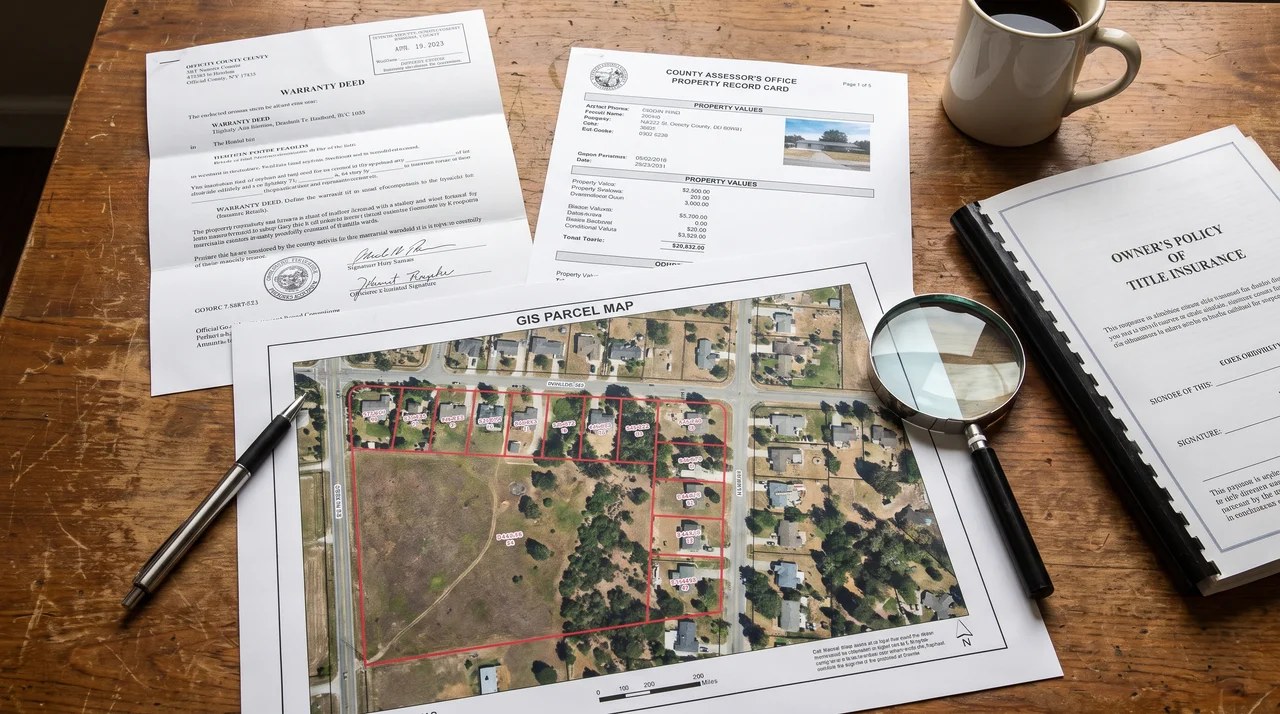
Finding your legal description takes less than five minutes once you know exactly where to look.
On Your Property Deed
Your deed is the first place to check. The legal description sits in its own section, separate from the names, sale price, and street address.
Look toward the bottom of the deed or on an attached exhibit page. You're looking for a block of text with lot numbers, boundary measurements, or township and range coordinates.
Lost your copy? You can request a certified one from the county recorder's office where the property sits, usually for a small fee.
County Assessor or GIS Website
Most county assessor offices now offer free online property records, including the legal description. Search by your name, address, or parcel number.
Many counties also run an interactive GIS map. You click a parcel and view its recorded details, including boundaries and the legal description.
This is one of the fastest free methods, and it works without contacting anyone directly.
Property Tax Records
Your property tax bill and the county's property record card often list the description too. It's usually an abbreviated version rather than the full text.
Treat it as a quick reference, not a substitute for the recorded deed.
Title Insurance Policy
If you bought title insurance at closing, your policy carries the description as verified at that time. Look in Schedule A, which lists the insured property and its full legal description.
This version is reliable because a professional already checked it against the recorded deed before the policy issued.
What Happens If a Legal Description Contains an Error
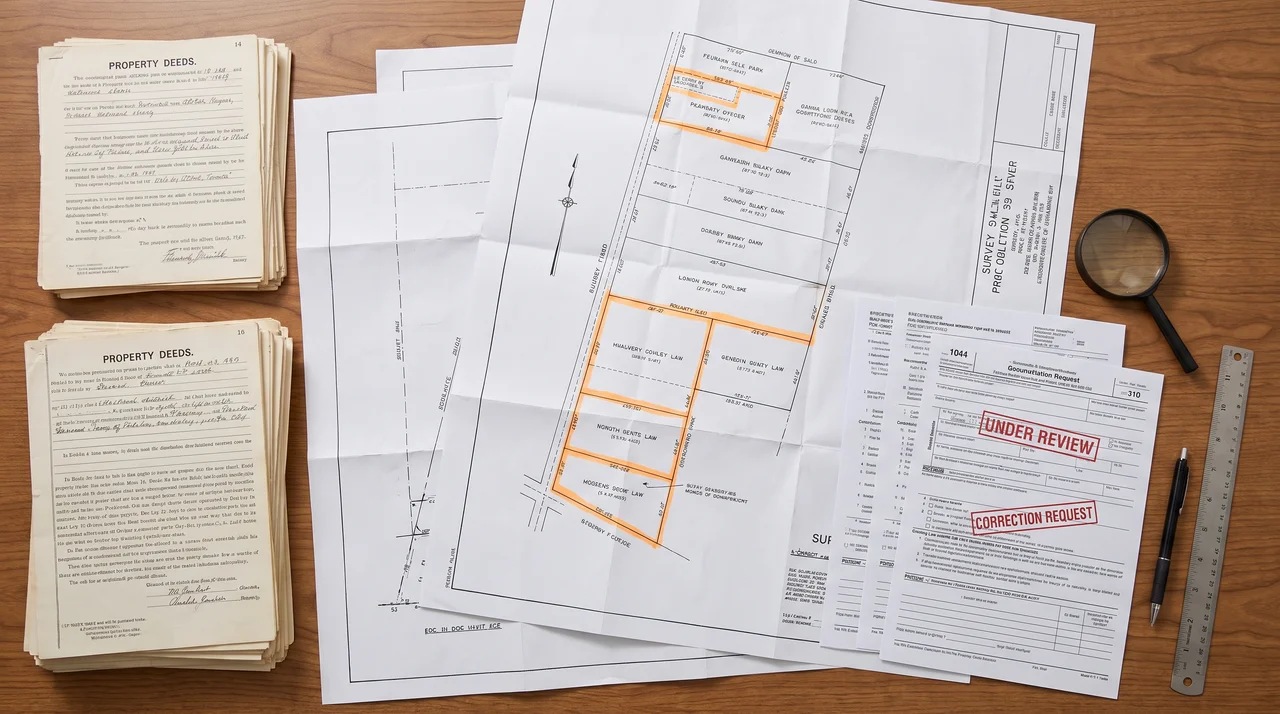
Two questions most homeowners never think about until they become a serious problem at closing, during a refinance, or in a boundary dispute with a neighbor.
How Errors Get Into Legal Descriptions
Most mistakes trace back to copying, typing, or recording. The table below shows the common ones and when they usually come to light.
| Error Type | How It Happens | When It Typically Surfaces |
| Transcription error | Description copied incorrectly from one deed to the next | Next sale or refinance |
| Transposed lot numbers | Digits switched in lot or block numbers during recording | Title search or new survey |
| Measurement typo | A boundary dimension contains a typographical error | Boundary dispute with neighbor |
| Chain-of-title break | Error repeated across multiple deeds over time | Often decades later |
The pattern is clear: the longer an error sits unnoticed, the more paperwork it takes to unwind.
What Happens When an Error Is Found
An error can't be crossed out and fixed by hand. A formal process is required, and the right one depends on how serious the mistake is.
| Correction Method | When It Applies |
| Correction deed | Minor errors in a recent deed where all parties can sign |
| Affidavit filed with court | Error requires a sworn statement to establish the correct facts of record |
| Title insurance claim | Error is covered by an existing policy; the insurer resolves it |
| Full re-survey | Serious errors affecting the chain of title or placing boundaries in dispute |
The safest step is to compare your legal description across three sources, your deed, your title insurance policy, and your county assessor records before any transaction is finalized. Catching a mismatch before closing is far less costly than correcting it afterward.
The Bottom Line
A legal description of property isn't fine print. It's the official record that proves your ownership, supports every transaction tied to your land, and holds up when a boundary is questioned.
The three systems; metes and bounds, lot and block, and the PLSS grid, all do the same job in different terrain. And your description lives in more than one place: your deed, your county's records, and your title policy.
Pull those documents and confirm they match. A description that agrees across all three is one less thing standing between you and a clean sale, refinance, or transfer.
Frequently Asked Questions
What Is an Example of a Legal Description of a Property?
A lot and block example reads: Lot 6, Block 4, Sunrise Valley Subdivision, Plat Book 12, Page 30. A PLSS example reads: the Northwest Quarter of Section 33, Township 5 North, Range 2 West. Each points to recorded records that fix the exact boundaries.
How Do I Get the Legal Description of a Property?
Start with the deed you received at closing, where the description appears in its own section. No deed on hand? Request a certified copy from the county recorder, or search your county assessor or GIS website free by address or parcel number.
What Do I Put for Property Description?
Most forms want the legal description copied word for word from your deed. Never substitute your mailing address or a general location. If the form allows an abbreviated version, use the one shown on your tax record or title policy.
How to Find the Legal Description of Property in Illinois?
Illinois uses the same standard systems as other states. Check your recorded deed first, then search the county recorder or assessor site where the property sits. Cook County and many others offer online property records and GIS maps for free.
What Is a Legal Description in Real Estate?
In real estate, it's the formal written statement that identifies land for deeds, mortgages, and court records. It replaces the street address on legal documents because it fixes exact boundaries to the earth and stays constant through every ownership transfer.