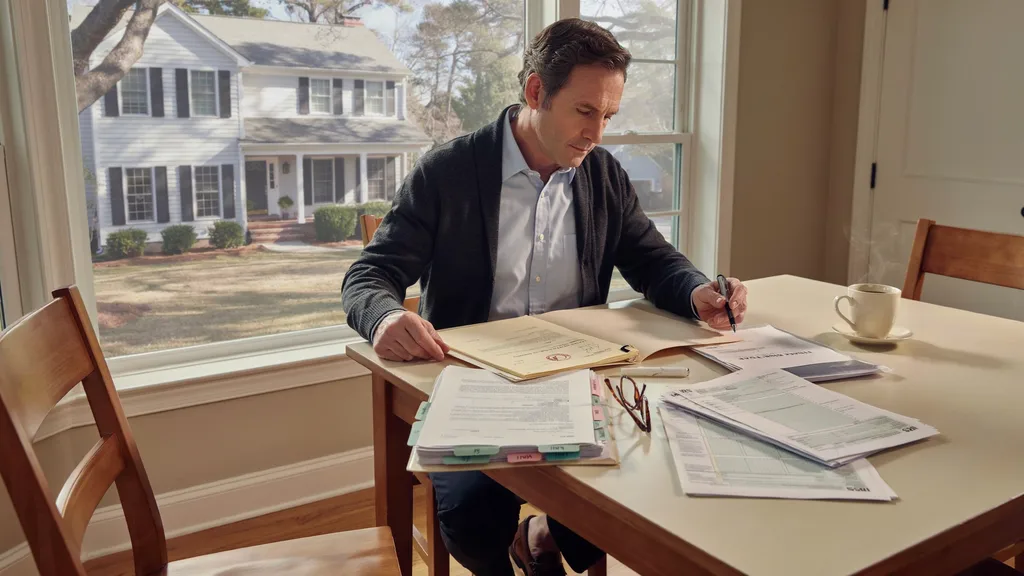


You own a home and you are asking the right question: why should I put my house in a trust?
Most homeowners only think about this after a family member dies and the estate ends up stuck in court for a year.
This guide is written for US homeowners who want a clear, honest answer.
You will find the benefits of putting your house in a trust, a plain comparison of revocable vs irrevocable options, real-world scenarios, Medicaid considerations, and an honest look at when a trust is not worth it.
Estate and trust laws vary by state. Nothing here is legal advice. Consult a licensed estate planning attorney in your state before making decisions.
Let’s get started.
What Does It Mean to Put Your House in a Trust?

When you put your house in a trust, you transfer legal ownership from yourself to a trust entity.
You are the grantor. The trust holds title. The trustee manages it. The beneficiaries receive it according to your written instructions.
In a revocable living trust, you typically serve as both grantor and trustee. You keep full control. You can sell, refinance, or live in the home exactly as before.
What changes is what happens when you die or become incapacitated. Instead of going through probate court, the home passes directly to your named beneficiaries.
Why Should I Put My House in a Trust? (Core Benefits)

Here are the six main reasons homeowners choose to put their house in a trust.
1. Avoiding Probate
Probate is the court-supervised process of settling a deceased person’s estate. In California, statutory probate fees on a $500,000 estate can total around $26,000 combined. In Florida, New York, and Illinois, timelines commonly run 12 to 24 months even for straightforward estates.
Homes in a revocable living trust bypass probate entirely. The successor trustee distributes the property without court involvement, often within weeks.
2. Protecting Assets for Your Family
A trust allows specific distribution conditions.
A parent can require a child to reach a certain age before receiving the property, or protect the home from a beneficiary’s divorce or bankruptcy, depending on trust structure and state law.
3. Estate Planning and Control
A revocable trust also handles incapacity. If you become unable to manage your affairs, the successor trustee steps in immediately, without a court-supervised conservatorship.
This is one of the most overlooked benefits of putting your house in a trust.
4. Potential Tax Benefits
A revocable trust does not reduce estate taxes. An irrevocable trust removes property from the taxable estate. The federal estate tax exemption in 2025 is $13.61 million per individual (IRS Rev. Proc. 2023-34).
However, 17 states and DC have their own estate taxes, some with exemptions as low as $1 million (Oregon and Massachusetts as of 2024).
5. Privacy Protection
A will filed in probate becomes public record. A trust stays private.
Property values, beneficiary names, and transfer details remain confidential.
6. Protection From Creditors (In Limited Cases)
A revocable trust offers no creditor protection. An irrevocable trust may offer protection in certain states, but fraudulent transfer laws can void transfers made while debts existed.
Nevada, South Dakota, and Delaware have the most favorable asset protection trust laws. Always verify with a local attorney.
Revocable vs Irrevocable Trust for a House
Choosing the wrong type is one of the most common planning mistakes, so this comparison matters.
| Feature | Revocable Living Trust | Irrevocable Trust |
| Can you change it? | Yes, anytime | No, or very limited |
| Avoids probate | Yes | Yes |
| Grantor keeps control | Yes | No |
| Creditor protection | No | Possibly, by state |
| Reduces taxable estate | No | Yes |
| Best suited for | Most homeowners | High-value or complex estates |
For most US homeowners, a revocable living trust is the right starting point. An irrevocable trust is a specialized tool that should not be entered into without detailed legal counsel.
Trust vs Will: Which Is Better for Your House?
Both handle what happens to your home after death, but they work very differently.
| Feature | Will | Revocable Living Trust |
| Goes through probate | Yes | No |
| Becomes public record | Yes | No |
| Handles incapacity | No | Yes |
| Can be contested | Yes | Yes, but harder |
| Controls distribution conditions | Limited | Detailed |
| Typical cost (US) | $300–$1,000 | $1,500–$3,500+ |
A will is simpler and cheaper. A trust avoids probate, which in high-cost states often costs more than the trust itself.
Many attorneys recommend both: a trust for major assets and a pour-over will as a backstop.
Putting a House in a Trust Pros and Cons
No estate planning tool is perfect, and a trust is no different.
Pros:
- Bypasses probate, saving time and court fees
- Keeps estate details private
- Allows conditional instructions on property transfer
- Handles incapacity without court involvement
- Revocable trusts can be updated or canceled anytime
Cons:
- Upfront legal costs of $1,500–$3,500 or more
- Deed transfer must be completed or the trust is ineffective
- Refinancing requires lender coordination
- Does not fully replace a will
- Irrevocable trusts significantly limit flexibility
When Putting a House in a Trust Makes Sense (Real Scenarios)
These examples are illustrative. Outcomes depend on individual circumstances and state law.
Scenario 1: Multi-state property. A homeowner in Illinois owned a cabin in Colorado. When she died with only a will, her family opened probate in both states simultaneously. A single revocable trust would have covered both with no probate in either state.
Scenario 2: Conditional inheritance. A Florida father placed his home in a trust preventing his son from selling it for five years after his death. A will alone could not have imposed that post-death restriction.
Scenario 3: Incapacity planning. A woman in her late 60s had a stroke. Her successor trustee stepped in immediately. Without the trust, her family would have faced a court conservatorship taking three to six months and thousands in fees.
Scenario 4: When a trust was not worth it. A single homeowner in Indiana with one $180,000 property was advised a Transfer on Death deed would accomplish the same goal at a fraction of the cost.
Does a Trust Protect Your Home From Nursing Home Costs?
A revocable living trust does not protect your home from Medicaid spend-down. Medicaid counts those assets as yours.
An irrevocable Medicaid Asset Protection Trust (MAPT) may help, but only if created more than five years before applying for Medicaid long-term care benefits.
The five-year look-back period applies federally, and rules vary by state. An elder law attorney should handle this, not a general estate planning attorney.
When You Should Not Put Your House in a Trust
Your state offers a Transfer on Death deed. Over 30 states, including California, Texas, and Colorado, allow TOD deeds.
These transfer property at death without probate, at minimal cost and no ongoing administration.
Your estate qualifies for simplified probate. In 2025, California’s small estate affidavit applies to estates under $184,500 in qualifying assets. Many states have similar thresholds.
You have a simple estate and no family conflict. If the beneficiary is clear and probate in your state is not expensive, a will may be sufficient.
You are not prepared to fund the trust. A trust document with no recorded deed does nothing for probate purposes. Both steps are required.
How to Put Your House in a Trust: Step-by-Step
The process is straightforward when you follow the right order and do not skip the funding step.
- Choose the right trust type. Revocable for most homeowners. Irrevocable for specific tax or protection goals. Get state-specific legal advice first.
- Draft the trust document with an attorney. It names the trustee, successor trustee, beneficiaries, and distribution terms. Generic online templates risk missing state-specific requirements.
- Prepare and record a new deed. The deed must be in the correct format for your state, notarized, and filed with the county recorder. Until recorded, the house is not in the trust.
- Notify your mortgage lender. The Garn-St. Germain Act generally prevents lenders from calling a loan due for a transfer into a revocable trust where you remain trustee. Confirm in writing. Policies vary.
- Update your homeowner’s insurance. List the trust as an additional insured per your insurer’s requirements.
- Review the trust every three to five years and after major life events.
Costs of Putting a House in a Trust (US 2026 Estimates)
Attorney fees have risen slightly in 2026, making it even more important to understand what you are paying for upfront.
|
Service Type |
Estimated Cost |
|
Simple revocable trust (attorney) |
$1,750–$2,750 |
|
Married couple trust package |
$2,500–$4,000 |
|
Complex estate trust |
$4,000–$7,000+ |
|
Online DIY services |
$200–$600 |
|
Deed preparation and recording |
$175–$450 |
For reference: California probate attorney fees on a $600,000 estate run approximately $15,000 by statute, not including executor fees.
In states without statutory fees, probate commonly costs $5,000 to $15,000 or more.
Common Mistakes to Avoid
Not completing the deed transfer. A trust without a recorded deed still goes through probate. Both steps are required.
Not updating after life changes. A trust naming a deceased trustee or estranged beneficiary creates legal complications.
Using a generic template. Trust law is state-specific. What works in Arizona may not be valid in New York.
Assuming creditor protection from an irrevocable trust. Fraudulent transfer laws can undo these protections if debts existed at the time of transfer.
Confusing a revocable trust with Medicaid planning. These are separate legal tools requiring different attorneys. Do not delay funding.
Give your successor trustee a copy of the trust and coordinate life insurance and retirement beneficiary designations to align with your overall plan.
Conclusion
Putting a house in a trust may be worth considering for many US homeowners, depending on estate size, family circumstances, and state law.
For those with significant property value, multi-state assets, or complex family situations, the benefits of avoiding probate, preserving privacy, and planning for incapacity are real.
A revocable living trust works for most situations. An irrevocable trust suits high-value or complex estates. Neither is right for everyone.
A Transfer on Death deed or simplified probate may be sufficient in some states.
Medicaid planning is separate and requires an elder law attorney.
The best next step is a consultation with a licensed estate planning attorney in your state. Are you ready to protect your home for the people who matter most?
Frequently Asked Questions
Does putting my house in a revocable trust affect property taxes?
In most US states, transferring to a revocable living trust where you remain trustee does not trigger reassessment. Rules vary by state, so confirm with a local attorney before proceeding.
Can I still sell or refinance my home after putting it in a trust?
Yes. As trustee of your revocable trust, you retain full authority to sell or refinance. Lenders will typically require a copy of the trust document to verify trustee authority.
Does a living trust protect my home from nursing home or Medicaid costs?
A revocable trust does not protect against Medicaid spend-down. An irrevocable MAPT may help, but only if created more than five years before applying for Medicaid. Consult an elder law attorney.
Is a trust better than a will for passing a house to heirs?
A trust avoids probate, stays private, and handles incapacity, which a will cannot do. A will is cheaper upfront but carries probate costs that often exceed the cost of a trust.
What happens to my mortgage when I transfer my house into a trust?
The Garn-St. Germain Act generally prevents lenders from calling a loan due for a transfer into a revocable living trust where you remain trustee. Notify your lender in writing and get written confirmation before proceeding.