Someone hands you a quitclaim deed and tells you the house is now yours. But does a quitclaim deed really give you ownership? Not always.
Many people assume that signing or receiving this document automatically makes them the legal owner, but the reality depends on the rights the person transferring the property actually has.
A quitclaim deed only transfers whatever ownership interest the grantor legally owns, without guaranteeing clear title or freedom from liens.
In this guide, you'll learn how quitclaim deeds work, when they transfer full or partial ownership, the risks involved, how to confirm your ownership, and when another type of deed may offer better protection.
Quitclaim Deed and Ownership

Yes, a quitclaim deed can give you ownership, but only if the person transferring the property (the grantor) actually owns an interest in it.
A quitclaim deed transfers whatever ownership interest the grantor has at the time of signing without guaranteeing that the title is valid, clear, or free of liens. If the grantor owns the property outright, you generally receive full ownership.
If they own only a partial interest, you receive only that share. If they have no legal interest, the deed transfers nothing.
The key point is that a quitclaim deed is a transfer document, not a title guarantee. Unlike a warranty deed, it does not promise that the grantor has good title or the legal right to transfer the property.
This is why quitclaim deeds are commonly used between people who already trust one another, such as family members or spouses, rather than in traditional home sales.
What Is a Quitclaim Deed?
A quitclaim deed is a legal document that transfers whatever ownership interest the grantor has in a property to the grantee.
It does not guarantee clear title or confirm that the grantor actually owns the property, making it most suitable for transfers between trusted parties.
How a Quitclaim Deed Works
The grantor signs the deed before a notary public, and some states also require one or more witnesses. After it is signed, the deed is typically recorded with the county recorder or clerk's office where the property is located.
Recording places the transfer in the public record and helps establish the grantee's claim to the property.
One reason quitclaim deeds are widely used is their simplicity. They generally do not require a title search or extensive paperwork before the transfer.
However, skipping a title review also means the grantee accepts the property without guarantees about ownership or existing title problems.
What Rights Does a Quitclaim Deed Transfer?
A quitclaim deed transfers only the ownership interest the grantor actually possesses. If the grantor owns the property outright, the grantee generally receives full ownership.
If the grantor owns only a percentage of the property, only that percentage transfers. Existing liens, easements, or other claims against the property usually remain attached after the transfer.
Because the deed transfers only the grantor's current interest, it cannot create ownership rights that did not already exist.
What a Quitclaim Deed Does Not Guarantee
A quitclaim deed does not guarantee that the grantor owns the property, has clear title, or has the legal authority to transfer ownership. It also does not protect the grantee from undisclosed liens, unpaid taxes, ownership disputes, or title defects.
For this reason, quitclaim deeds generally carry more risk than warranty deeds and are best suited for situations where the parties already know and trust each other.
Does a Quitclaim Deed Make You the Legal Owner?

A quitclaim deed can make you the legal owner, but only to the extent of the ownership interest the grantor actually holds.
Signing and recording the deed does not create ownership where none exists. Instead, it transfers the grantor's existing legal interest to the grantee.
Ownership vs. Property Rights
Although the terms are often used interchangeably, ownership and property rights are not always the same.
Ownership refers to holding legal title to the property, while property rights may include only a specific legal interest, such as a partial ownership share, an easement, or a survivorship interest.
A quitclaim deed transfers whichever of these interests the grantor legally owns.
Why the Grantor Must Actually Own an Interest
A quitclaim deed is only as effective as the ownership rights behind it. If the grantor owns the entire property, they can transfer that ownership.
If they own only a portion, only that portion transfers. The deed itself does not verify ownership, it simply transfers whatever legal interest already exists.
Think of it like transferring a membership card. You can only transfer a membership that you actually have. If you never held one, there is nothing to pass on, regardless of what the paperwork says.
What Happens If the Grantor Has No Ownership Interest?
If the grantor has no legal ownership interest in the property, the quitclaim deed transfers nothing. Even after the deed is signed and recorded, the grantee does not gain ownership simply because the document exists.
This is one of the biggest reasons buyers typically avoid using quitclaim deeds for traditional real estate purchases without first verifying the property's title.
Recording the deed can help establish the transfer in public records, but it does not cure title defects or create ownership that the grantor never had. Conducting a title search before accepting a quitclaim deed can help identify these issues before the transfer takes place.
How a Quitclaim Deed Transfers Property
A quitclaim deed transfers the grantor's ownership interest through a straightforward legal process. Although the paperwork is relatively simple, each step must be completed correctly for the transfer to be legally recognized.
Requirements can vary by state, so it is important to follow your local recording rules.
Signing and Notarization Requirements
The grantor must sign the quitclaim deed according to the legal requirements of the state where the property is located. In most states, the signature must be acknowledged before a notary public, while some states also require one or more witnesses.
Missing required signatures, notarization, or other legal formalities can delay recording or even make the deed invalid.
Recording the Deed With the County
After the deed is signed, it should be recorded with the county recorder, register of deeds, or clerk's office where the property is located.
Recording places the transfer in the public record, making it easier to establish the chain of title and helping protect the grantee's interest against later claims.
Although recording fees are usually modest, they vary by county.
When the Ownership Transfer Becomes Effective
In many states, a quitclaim deed becomes effective once it has been properly signed, delivered, and accepted by the grantee.
However, recording the deed is strongly recommended because it provides public notice of the transfer and can help protect the grantee if competing ownership claims arise later.
Since recording laws differ by state, checking local requirements is always advisable.
How to Confirm Ownership After Receiving a Quitclaim Deed
Receiving a quitclaim deed does not automatically mean you have clear ownership because the deed does not guarantee a clear title.
To verify your ownership interest, consider the following steps:
- Confirm that the signed deed has been properly recorded with the appropriate county office so the transfer becomes part of the public land records.
- Review your county's property records to ensure your name appears as the current owner or co-owner and to identify any recorded liens, easements, or other interests affecting the property.
- Obtain a professional title search to uncover potential ownership gaps, unpaid liens, boundary disputes, or other title defects that a quitclaim deed does not reveal.
- Consider purchasing title insurance if you plan to keep, finance, or sell the property, as it may provide financial protection against certain undiscovered title issues.
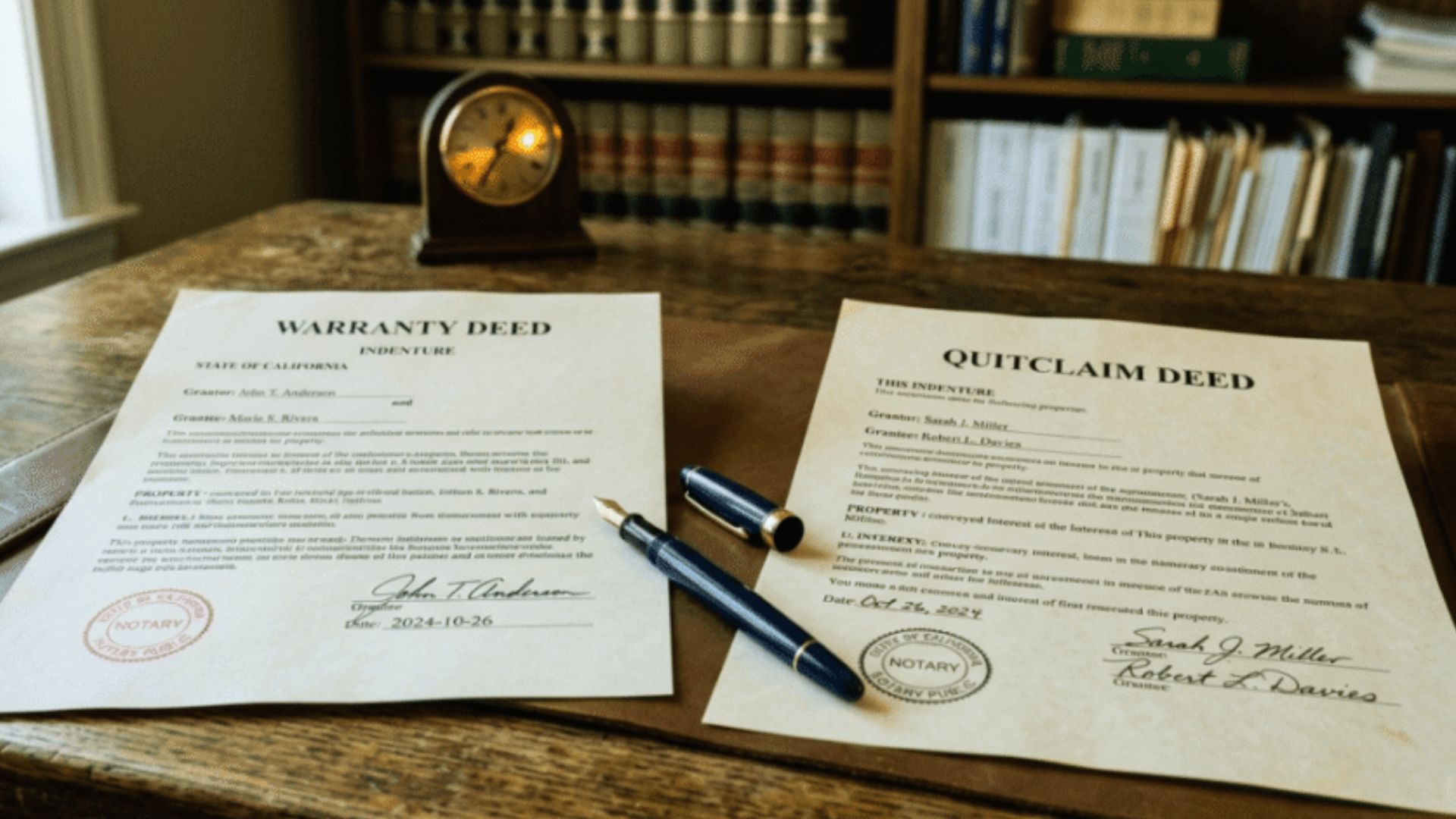
Quitclaim Deed vs. Warranty Deed
Although both documents transfer property, they provide very different levels of protection. Understanding the difference can help you choose the right deed for your situation and avoid unexpected ownership issues later.
| Feature | Quitclaim Deed | Warranty Deed |
| Transfers ownership interest | Yes | Yes |
| Guarantees clear title | No | Yes |
| Protects against title defects | No | Yes |
| Covers undisclosed liens | No | Generally yes, subject to the deed's warranties |
| Common use | Family transfers, divorce, trusts, title corrections | Traditional home sales |
| Risk to the buyer | Higher | Lower |
Key Differences in Ownership Protection
A warranty deed includes covenants of title, legal promises that the grantor owns the property, has the right to transfer it, and will generally defend the grantee against future title claims covered by those warranties.
A quitclaim deed provides none of these covenants. Instead, it transfers only the grantor's existing ownership interest without making any promises about the quality of the title.
Because of this difference, buyers in traditional real estate transactions usually prefer warranty deeds, while quitclaim deeds are more appropriate for transfers where the parties already know and trust each other.
Situations Where a Quitclaim Deed Is Commonly Used
Quitclaim deeds are commonly used when property is transferred without a traditional sale, especially between people who already have an established relationship.
Common situations include:
Transferring property between family members: Parents may transfer property to a child, add a relative to the title, or pass ownership within the family without a formal sale.
Adding or removing a spouse from a deed: Marriage, divorce, or estate planning may require updating the property's ownership without creating a new sale transaction.
Divorce-related property transfers: One spouse may transfer their ownership interest to the other as part of a divorce settlement, although this does not automatically remove either person from the existing mortgage.
Estate planning and living trust transfers: Property owners may transfer real estate into a living trust or an LLC to support estate planning goals and, in some cases, help avoid probate.
Correcting title errors or clerical mistakes: A quitclaim deed can be used to fix issues such as misspelled names, incorrect legal descriptions, or other minor title errors.
Does a Quitclaim Deed Transfer Full Ownership or Partial Ownership?

The ownership you receive through a quitclaim deed depends entirely on the interest the grantor legally owns. It transfers only the rights the grantor has at the time of the transfer.
Sole Ownership
If the grantor is the sole legal owner of the property, a quitclaim deed generally transfers their entire ownership interest to the grantee.
However, the transfer remains subject to any existing liens, mortgages, easements, unpaid property taxes, or other recorded interests affecting the property.
The deed does not guarantee that the title is free of these issues.
Joint Ownership
If the property is jointly owned, one owner can transfer only their own ownership share through a quitclaim deed.
The ownership interests of the remaining co-owners remain unchanged unless they also sign separate transfer documents.
The grantee simply steps into the grantor's ownership position without changing the other owners' rights.
Fractional Ownership
If the grantor owns only a portion of the property, such as an inherited share with siblings or other co-owners, the quitclaim deed transfers only that fractional interest.
The grantee does not receive ownership of the entire property and becomes a co-owner alongside the remaining owners according to the existing ownership structure.
Are There Tax Implications of a Quitclaim Deed?
A quitclaim deed can have tax consequences, although the deed itself does not automatically create a tax bill. The exact outcome depends on the reason for the transfer, whether money changes hands, and the laws in your state.
If property is transferred as a gift, federal gift tax rules may apply in certain situations. Some states or local governments also impose transfer taxes or recording fees when a deed is filed.
In addition, transferring ownership may affect future property tax assessments or exemptions, depending on state and local laws.
Because tax rules vary, it is often wise to speak with a tax professional or real estate attorney before transferring valuable property through a quitclaim deed.
Common Mistakes to Avoid
Avoiding common mistakes can help prevent legal and financial issues during a property transfer. Keep these points in mind before using or accepting a quitclaim deed.
Skipping a title search: A quitclaim deed does not reveal liens, unpaid taxes, easements, or ownership disputes. Checking the property's title beforehand can help you avoid unexpected problems.
Assuming the deed guarantees ownership: A quitclaim deed transfers only the grantor's existing interest. It does not guarantee that the grantor actually owns the property or has clear title.
Failing to record the deed: Recording creates a public record of the transfer and can help protect your ownership interest against future claims.
Ignoring mortgage terms: If the property has an existing mortgage, review the loan agreement before transferring ownership because certain loans may contain a due-on-sale clause.
Using a quitclaim deed in the wrong situation: Quitclaim deeds are generally best for transfers between trusted parties. They are usually not the preferred choice for purchasing property from someone you do not know.
Overlooking state-specific requirements: States may have different rules regarding witnesses, notarization, formatting, and recording. Failing to follow these requirements could delay or invalidate the transfer.
Practical Tips Before Accepting a Quitclaim Deed
A few simple steps before accepting a quitclaim deed can help protect your interests. These practical tips can help you avoid unexpected ownership problems.
- Verify the grantor's ownership by reviewing county property records before accepting the transfer.
- Ask whether the property has any existing mortgages, liens, unpaid taxes, or legal claims that could affect your ownership.
- Consider ordering a professional title search, especially if the transfer involves someone outside your immediate family.
- If the property's ownership history is complex, consult a qualified real estate attorney before signing any documents.
- Keep copies of the signed and recorded deed, along with any related paperwork, for future tax filings, refinancing, or property sales.
Conclusion
So, does a quitclaim deed give you ownership? Yes, but only to the extent that the grantor actually owns a legal interest in the property.
A quitclaim deed can transfer full ownership, partial ownership, or no ownership at all, depending on the grantor's rights.
Because it offers no guarantees about title quality, it is important to verify ownership, review public records, and understand any existing liens or mortgages before accepting the transfer.
If the property has multiple owners, title concerns, or legal complications, consulting a qualified real estate attorney can help protect your interests before you sign.
Frequently Asked Questions
Does a quitclaim deed override a will?
No. A quitclaim deed transfers ownership during the grantor's lifetime. Once a valid transfer is completed, the property generally no longer passes through the grantor's will because they no longer own that interest.
Does a quitclaim deed transfer ownership immediately?
In many states, ownership generally transfers once the deed has been properly signed, delivered, and accepted. Recording the deed is still strongly recommended because it creates a public record and helps protect the grantee's ownership interest.
Can a quitclaim deed be reversed after it is signed?
Generally, a completed quitclaim deed cannot simply be canceled. Reversing the transfer usually requires the grantee to sign a new deed returning the property or a court order if fraud, forgery, or another legal issue is involved.
Do you need a lawyer to file a quitclaim deed?
A lawyer is not usually required to prepare or record a quitclaim deed. However, legal guidance can be valuable if the property has title issues, multiple owners, or complicated ownership history.
How much does it cost to file a quitclaim deed?
Recording costs vary by state and county. In most cases, you will pay a recording fee and may also incur notary fees or applicable transfer taxes, depending on local requirements.