If you and your spouse need to change how a property title is held, an interspousal transfer deed can make that process simple.
This legal document lets married couples move ownership of real estate between each other without triggering extra taxes or complicated paperwork.
This article explains what an interspousal transfer deed is, how it works, when to use one, and how it compares to other deed types. You will also learn about tax rules, common mistakes, and state specific requirements.
Based on common property law practices, this guide gives you clear, practical steps you can trust.
What Is an Interspousal Transfer Deed?

An interspousal transfer deed is a legal document that transfers property ownership from one spouse to another.
This deed changes how title is held, often adding or removing a spouse's name from a property. It is commonly used during marriage, refinancing, or estate planning. In some areas, this document is also called a quitclaim deed, though the two are not always identical.
Unlike other deeds, it is designed specifically for transfers between married partners and often qualifies for certain tax exemptions.
How Does an Interspousal Transfer Deed Work?
The deed transfers legal ownership once it is signed, notarized, and recorded with the county.
Step-by-Step Process for Transferring Property
First, the current owner, known as the grantor, fills out the deed with property details and both spouses' names. The spouse receiving ownership is called the grantee.
Next, both parties sign the document in front of a notary public. Then the deed gets filed with the local county recorder's office, officially updating the property title.
What Happens After the Deed is Signed and Recorded
Once recorded, the county updates its public records to reflect the new ownership. The receiving spouse becomes a legal owner.
It is smart to keep a copy of the recorded deed for tax and legal purposes going forward.
When Should You Use an Interspousal Transfer Deed?
This deed fits situations where spouses want to add, remove, or update ownership rights.Common reasons include refinancing a mortgage, estate planning, adding a spouse after marriage, or removing a spouse during divorce and division of assets.
It also helps clarify ownership for legal or financial reasons, such as protecting assets or simplifying inheritance later.
Who Can Use an Interspousal Transfer Deed?
Only legally married spouses can use this specific type of deed.
To be eligible, both parties must be legally married at the time of transfer, and some states extend this option to registered domestic partners as well, so it's worth checking local rules before filing, since requirements can vary by location.
Beyond the marital relationship requirement, the property itself must already be owned by one or both spouses before the transfer takes place.
The deed cannot be used to bring in property from a third party or an outside seller, since it's designed strictly to move ownership interest between spouses who already hold some stake in the property.
This makes it a useful tool for adjusting how a home is titled, whether that means adding a spouse to the deed, removing one, or changing separate property into jointly held property.
However, it's not a substitute for a standard purchase or sale transaction involving someone outside the marriage, and couples should confirm their state's specific eligibility rules before moving forward with the filing process.
Information Required on an Interspousal Transfer Deed
Accurate details on the deed prevent delays or legal issues later. The deed typically needs the names of both spouses (the grantor and grantee), a full legal description of the property, the county where it is located, the current owner's information, and a notary public acknowledgment.
It should also include the property's assessor's parcel number (APN), the date of transfer, and a statement confirming the transfer is between spouses, since this often qualifies the deed for exemptions from transfer taxes and property tax reassessment.
Some states also require a Preliminary Change of Ownership Report or similar form to be filed alongside the deed. Missing or incorrect details can cause the county recorder's office to reject the filing, leading to delays and potentially extra fees to correct and resubmit the paperwork.
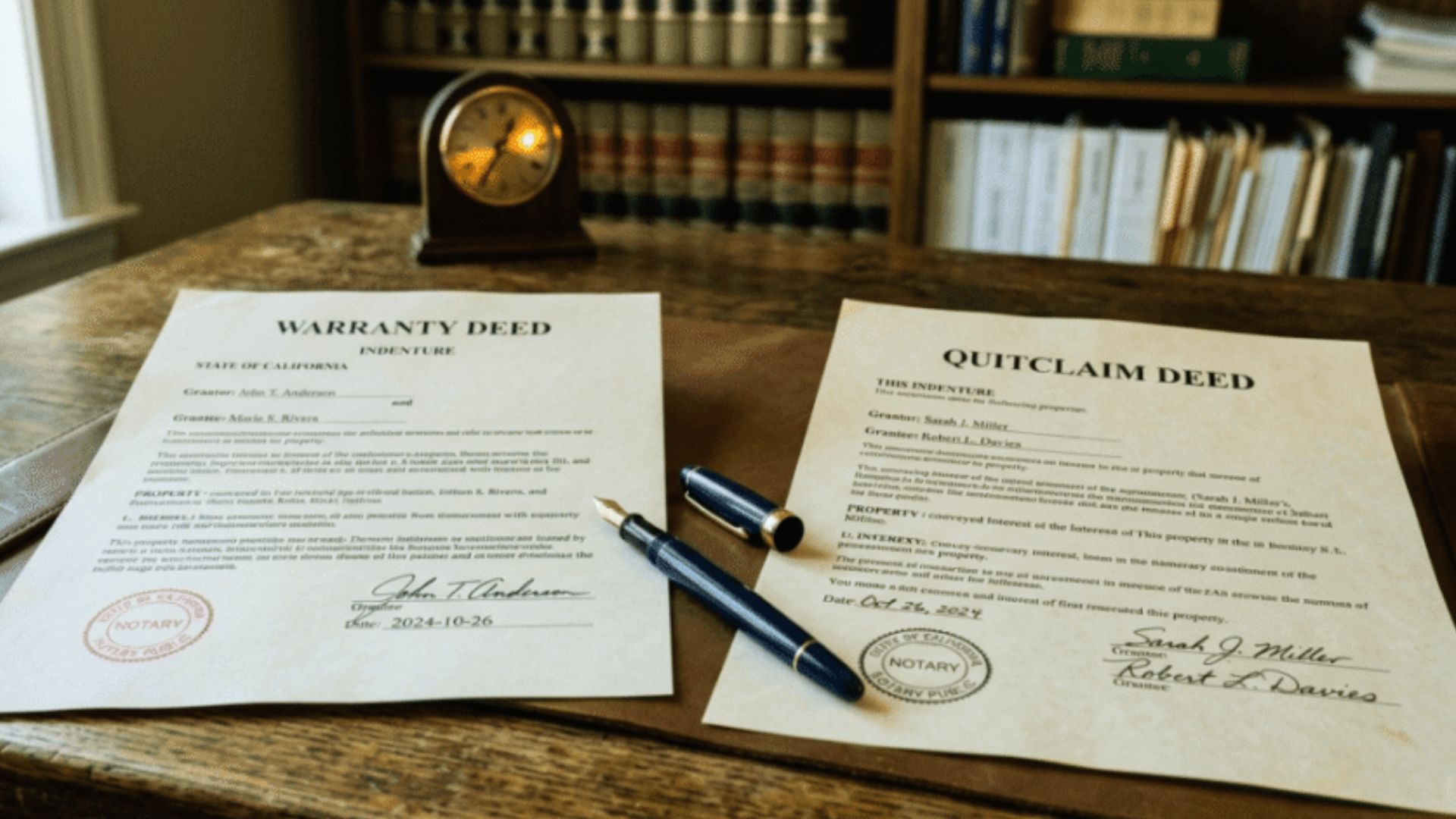
Interspousal Transfer Deed vs. Quitclaim Deed vs. Grant Deed: A Comparison
| Feature | Interspousal Transfer Deed | Quitclaim Deed | Grant Deed |
| Who Can Use It | Legally married spouses only | Anyone (spouses or non-spouses) | Anyone (typically unrelated parties) |
| Ownership Warranties | Usually none, relies on marital trust | None – transfers whatever interest the owner has | Guarantees property hasn't been sold to anyone else and is free of undisclosed liens |
| Tax Benefits | Often exempt from transfer taxes and reassessment | No special tax benefits | No special tax benefits |
| Liability After Transfer | Usually removes the transferring spouse's liability | Transferring spouse may still be liable for existing liens, taxes, or debts | Grantor liable only for issues disclosed or warranted |
| Best Use Case | Refinancing, estate planning, or adjusting ownership between spouses | Transfers between non-spouses or when tax exemptions aren't a concern | Sales between unrelated parties needing full legal protection |
| Legal Protection Level | Moderate – relies on trust between spouses | Lowest – no guarantees on title condition | Highest – full warranties included |
Tax Implications of an Interspousal Transfer Deed

Understanding tax rules helps you avoid surprise costs after filing.
Many states exempt interspousal transfers from property tax reassessment, which means the property's tax basis usually stays the same and helps avoid a sudden increase in property taxes.
Transfers between spouses are also typically exempt from gift tax and documentary transfer tax, since no money changes hands in most cases. Capital gains tax may still apply later when the property is sold, so keeping accurate records of the original purchase price matters.
Benefits of Using an Interspousal Transfer Deed
This deed offers a straightforward way to manage property ownership within a marriage.
- Quicker and Simpler Process: Since it's designed specifically for married couples, this deed involves less paperwork and fewer complications than many other types of property transfers.
- Often Required for Refinancing: Lenders frequently request an interspousal transfer deed when refinancing a home, especially to move the property into one spouse's name for loan qualification purposes.
- Supports Estate Planning: Clarifying ownership through this deed helps lay the groundwork before creating a will or trust, making future estate planning smoother.
- No Gift Tax Concerns: Because the transfer happens between spouses, it typically isn't subject to gift tax, unlike transfers to other family members.
- Preserves Property Tax Benefits: In many states, transfers between spouses don't trigger a property tax reassessment, helping keep existing tax rates intact.
- Strengthens Legal Clarity: Having clear, recorded documentation of ownership can help prevent disputes or confusion down the line, particularly during divorce or after a spouse's death.
Potential Risks and Limitations
While useful, this deed is not the right choice in every situation.
- Not Ideal During Divorce – If a couple is going through a divorce, other legal documents are often better suited to fairly address the division of assets, since an interspousal transfer deed isn't designed to resolve contested property disputes.
- Impact on Liability for Debts – Adding a spouse to the title can affect liability for existing liens, taxes, or debts tied to the property, meaning both spouses may become responsible for obligations they didn't originally take on.
- Doesn't Remove Original Owner's Liability – Even after transferring an interest in the property, the original owner may still remain liable for an existing mortgage unless the loan is formally refinanced or assumed.
- Possible Impact on Separate Property Status – Transferring property into joint ownership can convert separate property into community or marital property in some states, which may affect asset division in the future.
- Doesn't Replace Estate Planning Documents – This deed alone doesn't address broader estate planning needs, so relying on it as a substitute for a will or trust can leave gaps in how assets are ultimately distributed.
- Review Before Signing Is Essential – Because of these potential effects, it's wise to carefully review how the deed impacts liability, taxes, and ownership rights before finalizing the transfer.
How to File an Interspousal Transfer Deed Correctly
Filing correctly protects both spouses and keeps the property record accurate.
The process starts with preparing the deed and supporting documents, which means gathering the property's legal description, the current deed, and identification for both the grantor and grantee, then carefully filling out the form and reviewing it before signing.
Once the deed is signed and notarized, the next step is recording it with the appropriate county office, submitting it to the county recorder's office where the property is located and paying any required filing fees to complete the process.
Can You Prepare an Interspousal Transfer Deed Without a Lawyer?
Yes, but legal guidance can help prevent costly mistakes.Many couples complete an interspousal transfer deed on their own using state-approved templates, especially when the transfer is straightforward and both parties are in full agreement.
This DIY route typically involves filling out the correct form, having it notarized, and recording it with the county recorder's office.
However, consulting a real estate or estate planning attorney is helpful for complex property situations, such as properties with multiple owners, outstanding liens, or high-value assets where mistakes could have significant financial consequences.
An attorney can also help ensure the deed properly reflects your intentions, especially if it affects estate planning, tax implications, or future ownership rights.
Common Mistakes to Avoid When Filing an Interspousal Transfer Deed
Small errors can delay or invalidate the entire filing process.
- A mismatched or incomplete description can cause the county recorder's office to reject the deed entirely.
- Without a notary public's signature and seal, the deed has no legal standing and cannot be recorded.
- Signing the deed is not enough. It must be filed with the county recorder's office to take legal effect.
- State requirements change over time, so double check that you are using the current approved template.
Expert Tips for a Smooth Interspousal Property Transfer
A few simple steps can make the entire process much easier.
- Property tax and transfer tax exemptions vary, so check local requirements before filing.
- Having records on hand protects both spouses if questions come up later.
- A title company can verify ownership records and catch issues before they become problems.
- Changing ownership can affect loan terms, so talk to your lender before making the update.
Conclusion
An interspousal transfer deed makes it easier for married couples to manage property ownership without unnecessary complications or extra costs. Whether you are refinancing, planning your estate, or updating a title, this deed offers a clear path forward.
Take time to review your state's rules and keep your paperwork organized for future reference.
If this guide helped clarify how an interspousal transfer deed works, share it with someone who might need it, or leave a comment with your questions below.
Frequently Asked Questions
Does an interspousal transfer deed affect mortgage responsibility?
No, the deed changes title ownership only. It does not remove or add anyone from mortgage loan obligations or payment responsibility.
Can an interspousal transfer deed be reversed later?
Yes, spouses can file another deed later to change ownership again, following the same signing and recording steps.
Is an interspousal transfer deed valid after divorce?
It can still be used during divorce proceedings, but other legal documents may be required depending on the settlement terms.
Does this deed require a title search?
Typically no, since it transfers property between spouses who already hold ownership, unlike sales to outside buyers.
Can this deed include multiple properties?
Usually no, each property requires its own separate deed and filing with the appropriate county recorder's office.