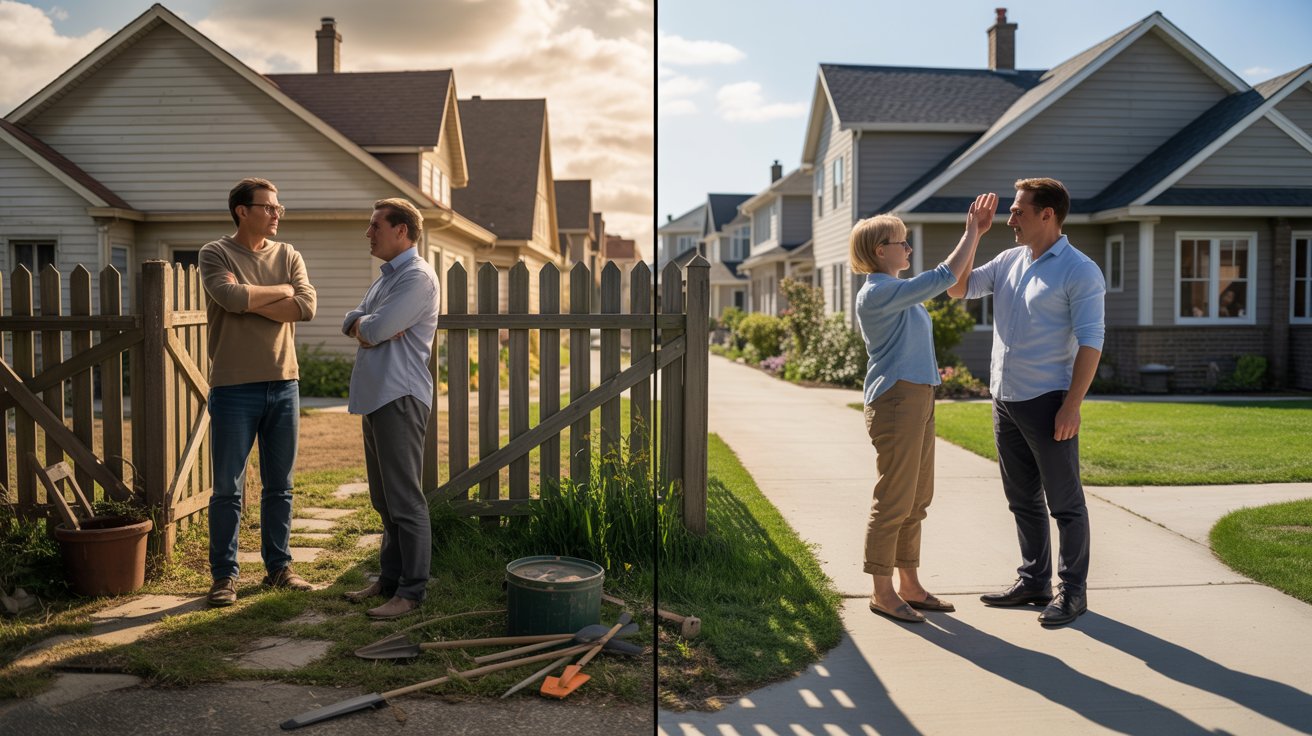
If a neighbor claims your fence, driveway, or yard crosses the property line, you may wonder whether it's too late to challenge it.
Yes, most property line disputes have a statute of limitations, but the deadline depends on your state's laws and the type of claim.
Trespass and encroachment claims often have filing periods of 3 to 5 years, while adverse possession claims may require 5 to 20 years of continuous use.
This guide explains what qualifies as a property line dispute, when the legal clock starts, how deadlines vary by state, and what steps you can take to protect your property rights before time runs out.
What Is a Property Line Dispute?

A property line dispute happens when two neighbors disagree about where one property ends and another begins. It can start small, like a fence built a few feet on the wrong side, or grow into a larger fight over land use or ownership.
These disputes are more common than most people expect. Old surveys, handshake agreements, and shifting fences all blur the line between two properties.
Left alone, a minor disagreement can turn into a costly legal fight, so it helps to understand your rights before tempers flare.
Common Reasons Property Line Disputes Happen

Boundary disputes rarely come out of nowhere. Most trace back to one of the causes below, and recognizing them early can help you avoid a legal fight altogether.
Outdated or Incorrect Surveys
Older property surveys aren't always accurate by today's standards. Many were done decades ago with less precise equipment, and missing markers or shifted landmarks can throw off the record.
If you build a fence or garage using an outdated survey, you could unintentionally cross onto your neighbor's land. Get a new survey before building near a boundary line.
Fence and Structure Encroachments
A fence, shed, driveway, or retaining wall that extends past the legal boundary creates an encroachment.
Most happen by accident, when a homeowner builds off an old marker or assumes an existing fence sits on the correct line.
The issue often surfaces only when a survey is done during a sale or renovation.
Conflicting Property Deeds
Older deeds don't always describe land clearly. Some rely on outdated landmarks or handwritten notes that don't match modern surveying methods, so two neighboring deeds can appear to describe overlapping land.
Sorting this out usually means comparing surveys, title records, and historical documents and in complex cases, a court decides which description controls.
Adverse Possession Claims
Adverse possession lets someone claim ownership of another person's land if they've used it openly, continuously, and without permission for a legally required period.
Requirements and timelines vary by state for example, a neighbor who maintains and treats a strip of your land as their own for years may eventually claim legal rights to it.
Regularly inspecting your boundaries and addressing unauthorized use early is the best defense.
Boundary Changes From Natural Events
Rivers can shift course, erosion can wear away land, and flooding can reshape a property over time.
States generally treat these changes differently depending on how they happen:gradual buildup of land (accretion) or gradual loss of land (erosion) can shift the legal boundary in many states, while a sudden change like a flood cutting a new channel (avulsion) usually does not.
A survey and legal guidance can clarify where you stand after a major environmental change.
Misunderstandings Between Neighbors
Not every dispute starts with bad records. A long-standing fence, a shared garden, or a verbal agreement between previous owners can create the impression that a boundary is correct when it isn't.
These misunderstandings often go unnoticed for years, until someone plans a new fence or addition. Open communication and a current survey prevent most of them.
Is There a Statute of Limitations on Property Line Disputes?

Yes. In most states, you have a limited window to file a legal claim over a boundary issue, and missing it can mean losing your right to fight the dispute in court.
The deadline depends on the type of claim and where the property is located:
| Claim type | Typical range | State example |
| Trespass or encroachment (fence, structure on your land) | 3–5 years | California: 3 years (Cal. Civ. Proc. Code § 338(b)) |
| Adverse possession (with color of title/tax payment) | 3–10 years | California: 5 years (Cal. Civ. Proc. Code § 325). Texas: 3–5 years with color of title (Tex. Civ. Prac. & Rem. Code §§ 16.024, 16.025) |
| Adverse possession (bare possession, no color of title) | 7–20 years | Texas: 10 years (Tex. Civ. Prac. & Rem. Code § 16.026). Florida:7 years (Fla. Stat. § 95.18). New York:10 years (see Cornell Legal Information Institute, "Adverse Possession") |
| Quiet title action | Often follows the underlying property claim's deadline, though some states set separate rules | Varies by state |
These figures are examples, not legal advice statutes get amended, and even neighboring counties can apply them differently.
Confirm the current deadline through your state legislature's website, your local courthouse, or a real estate attorney before relying on any number.
Statute of Limitations vs. Adverse Possession
These two legal concepts are related but serve different purposes. Understanding the difference helps you know whether you're dealing with a filing deadline or a potential ownership claim.
| Statute of Limitations | Adverse Possession |
| Sets the deadline for filing a lawsuit over a property line dispute. | Allows someone to claim legal ownership of land after meeting state-specific legal requirements. |
| Protects courts from hearing very old claims. | Rewards long-term, continuous, open, and unauthorized possession under certain conditions. |
| Usually applies to trespass, encroachment, or boundary disputes. | Applies only when all legal elements required by state law are satisfied. |
| Missing the deadline may prevent you from suing. | Meeting the required possession period may allow the occupant to seek ownership rights. |
| Time limits vary by state and claim type. | Required possession periods typically range from about 5 to 20 years, depending on state law |
When Does the Clock Start?

Depending on state law, the limitation period may begin when the encroachment first occurs, or when the property owner discovers (or reasonably should have discovered) the problem known as the discovery rule.
For example, some states start the clock the day a fence goes up, others start it only once the affected owner learns the fence sits on their land.
Check which approach your state follows, since it can significantly change your actual deadline.
How State Laws Can Differ
Although general rules are similar across the United States, property line dispute deadlines and legal requirements vary considerably by state.
Some states begin the statute of limitations when an encroachment first occurs, while others apply a discovery rule, meaning the clock starts when the owner discovers or reasonably should have discovered the problem.
States also differ on:
- The filing deadline for trespass and encroachment claims.
- The number of years required for adverse possession.
- Whether payment of property taxes is required for an adverse possession claim.
- Whether the color of title is necessary.
- Rules for quiet title actions and available legal remedies.
Because these laws change through legislation and court decisions, always verify your state's current requirements before filing a claim.
Exceptions That Can Pause or Extend the Deadline
Some states allow the statute of limitations to pause or extend in limited situations for instance, if the encroachment was hidden, involved fraud, or couldn't reasonably have been discovered sooner.
A court may also toll the clock if the property owner was legally unable to act, such as being a minor or incapacitated.
These exceptions are uncommon, vary by state, and require clear evidence to invoke. Don't count on one, address a boundary issue as soon as you notice it rather than hoping an exception will apply later.
What Happens If You Wait Too Long?

Once the statute of limitations expires, you typically lose the legal right to sue over the boundary dispute, even if your claim is valid. Courts generally dismiss claims filed after the deadline, leaving you with few remaining options.
Waiting too long may also cost you your legal rights in another way: it makes evidence harder to gather, since witnesses forget details and physical markers change over time.
Filing before the deadline rather than after is the only reliable way to protect your rights.
How to Resolve a Property Line Dispute

Most boundary disputes don't need to end up in court. Work through these steps roughly in order
Get a professional survey: A licensed surveyor pinpoints the exact legal boundary, removing guesswork and giving you solid proof.
Talk to your neighbor directly: Many disputes resolve with a calm conversation. Treat it as a shared problem, not a fight to win.
Review your deed and title records: Your deed, title report, and past surveys often clear up confusion about where the line actually sits.
Put any agreement in writing: If you and your neighbor settle on a boundary, sign a written agreement and record it if your state allows.
Bring in a mediator or attorney if talking doesn't work: A neutral third party can help both sides reach a resolution without going to court.
If direct conversation doesn't resolve things, here's how the formal options compare:
| Method | How it works | Best for |
| Negotiation | Neighbors discuss the issue directly and reach their own agreement | Minor, low-conflict disagreements |
| Mediation | A neutral third party guides the discussion toward a solution | Disputes where communication has broken down |
| Arbitration | An independent arbitrator reviews evidence and issues a binding decision | Faster, lower-cost alternative to court |
| Court litigation | A judge resolves the dispute, including ownership questions | Complex cases involving contested ownership or major encroachments |
Legal Costs and Survey Costs
Many property owners wait to address a boundary dispute because they worry about the expense. In many cases, resolving the issue early is far less expensive than a lawsuit.
Property survey: A licensed boundary survey commonly costs $300 to $1,000, although large or complex properties may cost more.
Attorney consultation: Many real estate attorneys charge $150 to $500 per hour, while some offer flat-fee consultations.
Mediation: Mediation generally costs less than litigation because both parties share the mediator's fees.
Court litigation: If the dispute goes to court, total legal costs can reach several thousand dollars depending on the complexity of the case, expert witnesses, and the length of the proceedings.
Getting a professional survey and attempting negotiation early can often prevent significantly higher legal expenses later.
Common Mistakes to Avoid
Simple mistakes can make a property line dispute more difficult and expensive to resolve. Avoid these common issues to better protect your legal rights.
- Assuming a fence marks the legal boundary, fences are often installed for convenience, not accuracy, only a survey confirms the true line.
- Skipping a professional survey most title insurance policies don't cover physical boundary or encroachment disputes, so a survey is your best evidence.
- Waiting too long to act delays make evidence harder to gather and risk missing your filing deadline entirely.
- Relying on verbal agreements and a handshake deal is easy to dispute later, put any boundary agreement in writing and have both parties sign it.
- If you fail to keep records, store your deed, surveys, photos, and written agreements somewhere safe so you can act quickly if a dispute arises.
Tips to Protect Your Property Rights
Taking a few preventive steps can reduce the risk of future boundary disputes. These practical tips can help protect your property and strengthen your legal position.
Order a survey before you build:Confirm your exact boundary before installing a fence, driveway, or shed near the property line.
Inspect your property regularly:Catching unauthorized use early is the strongest defense against an adverse possession claim.
Document natural changes: If flooding or erosion alters your land, photograph the changes and note the dates in case the boundary is questioned later.
Act on issues as soon as you spot them: Early communication and documentation almost always beat a drawn-out legal fight.
Loop in an attorney when the stakes are high: For anything involving contested ownership or a large encroachment, get advice before the deadline gets close.
Conclusion
Boundary disagreements are stressful, but knowing the statute of limitations on property line disputes puts you in a stronger position.
In short: act early, keep good records, and get a survey before problems grow. Waiting too long can cost you your legal rights, so do not let a small disagreement drag on for years. Talk to your neighbor, check your local laws, and reach out to a real estate attorney if you need guidance.
If this guide helped, share it with a neighbor who might need it too, or leave a comment with your own experience below.
Frequently Asked Questions
Can I still sue my neighbor if the statute of limitations has passed?
Generally no. Once the deadline passes, courts usually won't hear the case, though rare exceptions may apply depending on your state.
Does hiring a lawyer help even for small boundary disputes?
Yes. A lawyer can review your deed, explain your state's deadlines, and help you avoid mistakes that could weaken your case later.
Can a property line dispute affect my home sale?
Yes. Unresolved boundary issues can delay closing, lower your home's value, or scare off buyers until the matter is settled.
Is a handshake agreement about a boundary legally binding?
Usually not. Verbal agreements are hard to enforce, so put any boundary understanding in writing and have both parties sign it.
Do I need a lawyer for every property line dispute?
Not always. Minor disagreements can often be solved through direct talks or mediation, which usually saves time and legal costs.