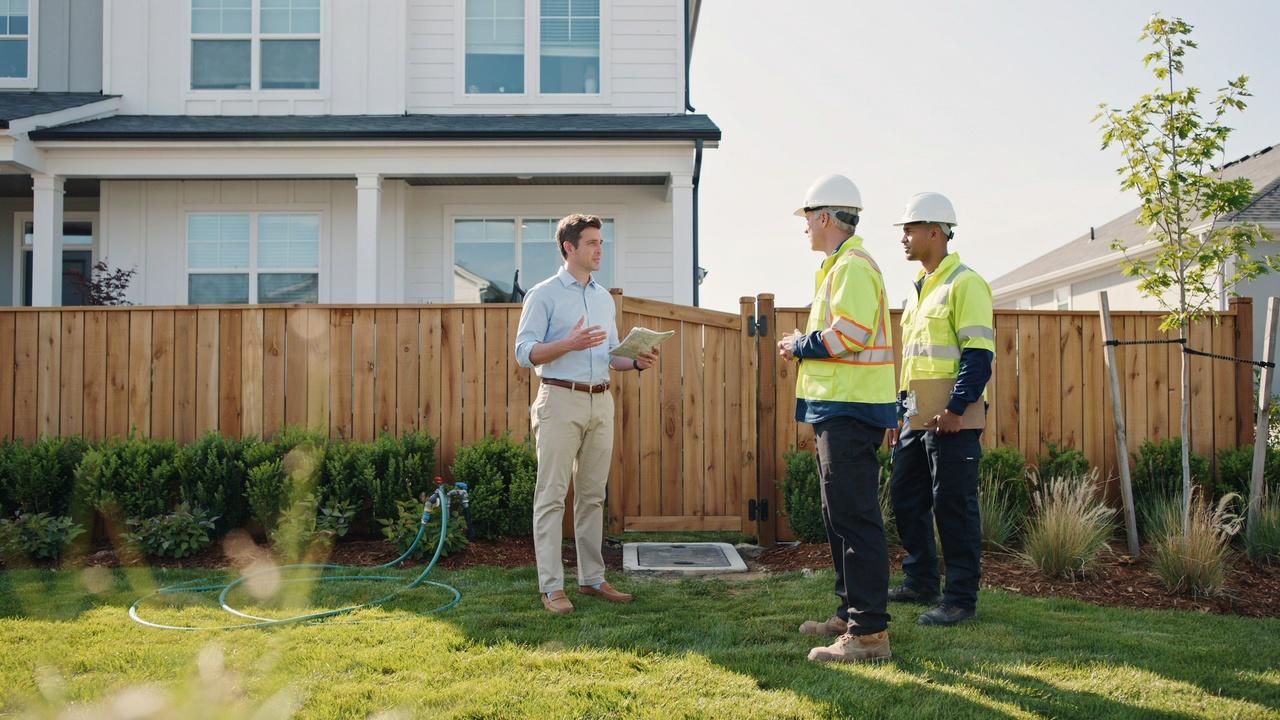
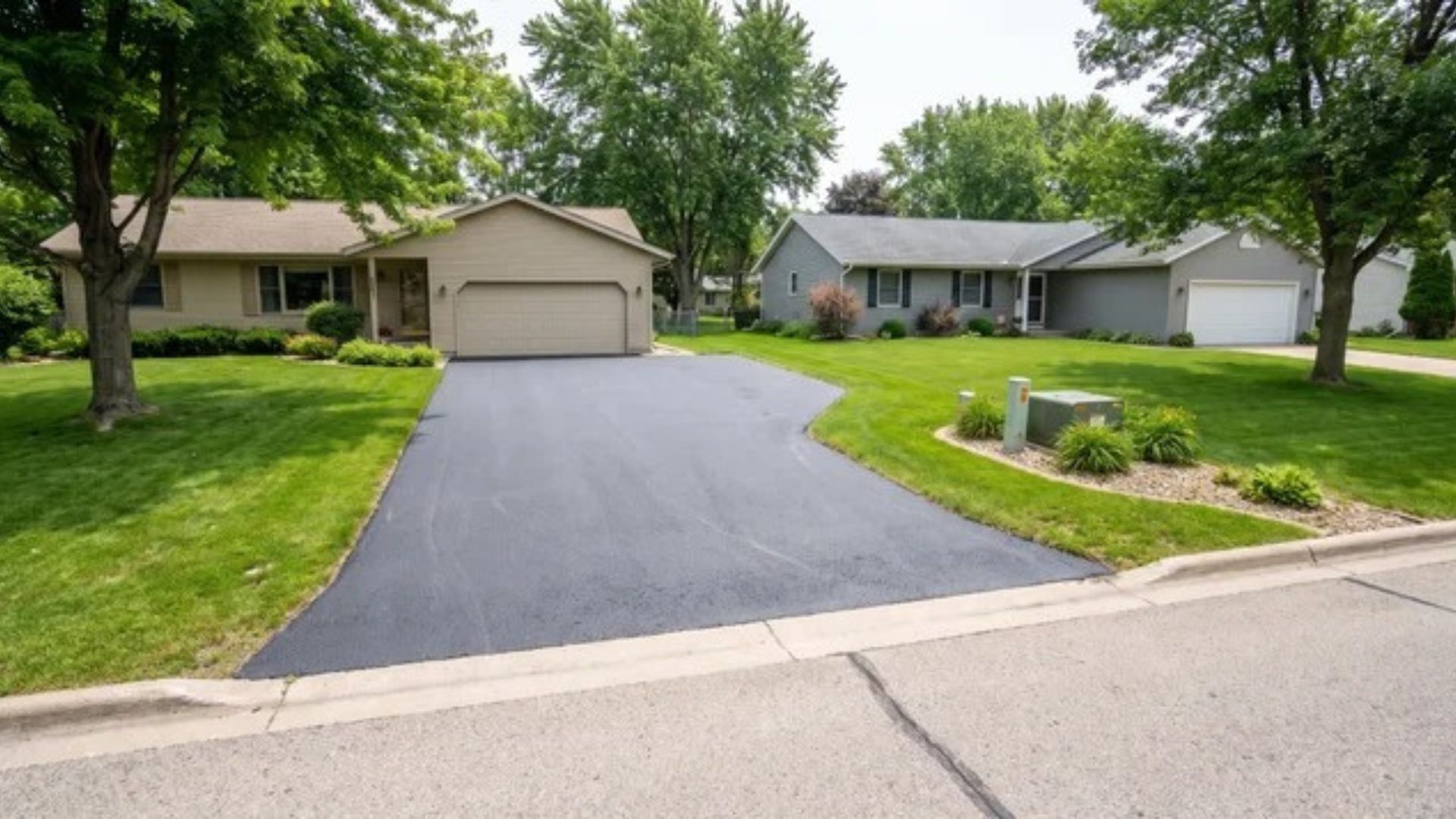
In Pennsylvania, ownership of a tree near your property line follows the trunk, and liability for the damage it causes follows notice, not who technically owns it. That one distinction settles most of the worry that comes with a tree near your fence.
Who owns it? Who pays if it falls? Can you cut the branches that hang over your yard? Pennsylvania tree law mixes state rules, local city rules, and old court cases, so the details matter.
This guide breaks it all down. You will learn who owns a boundary tree, when a neighbor must pay for damage, and what your rights are over roots and limbs. It also covers insurance, permits, and right-of-way trees, with real costs and real cases.
By the end, you will know your rights, your duties, and your next steps.
Disclaimer: This article is for general information only, not legal advice. Pennsylvania tree law varies by municipality and situation, so consult a licensed Pennsylvania attorney or your local code office for advice on your specific case.
What Pennsylvania Law Says About Trees Near a Property Line
Pennsylvania has no single tree law that covers the whole state.
Instead, the rules come from three places: state statutes, local ordinances, and common law built on court rulings.
When a fight starts, courts lean on three ideas. Negligence means failing to act with reasonable care. Trespass means something crossing onto your land, like a branch or root.
Private nuisance means an unfair block on your use of your property, and it usually harms just one neighbor. Facts decide the result, not one fixed rule.
Who Actually Owns a Tree on the Property Line
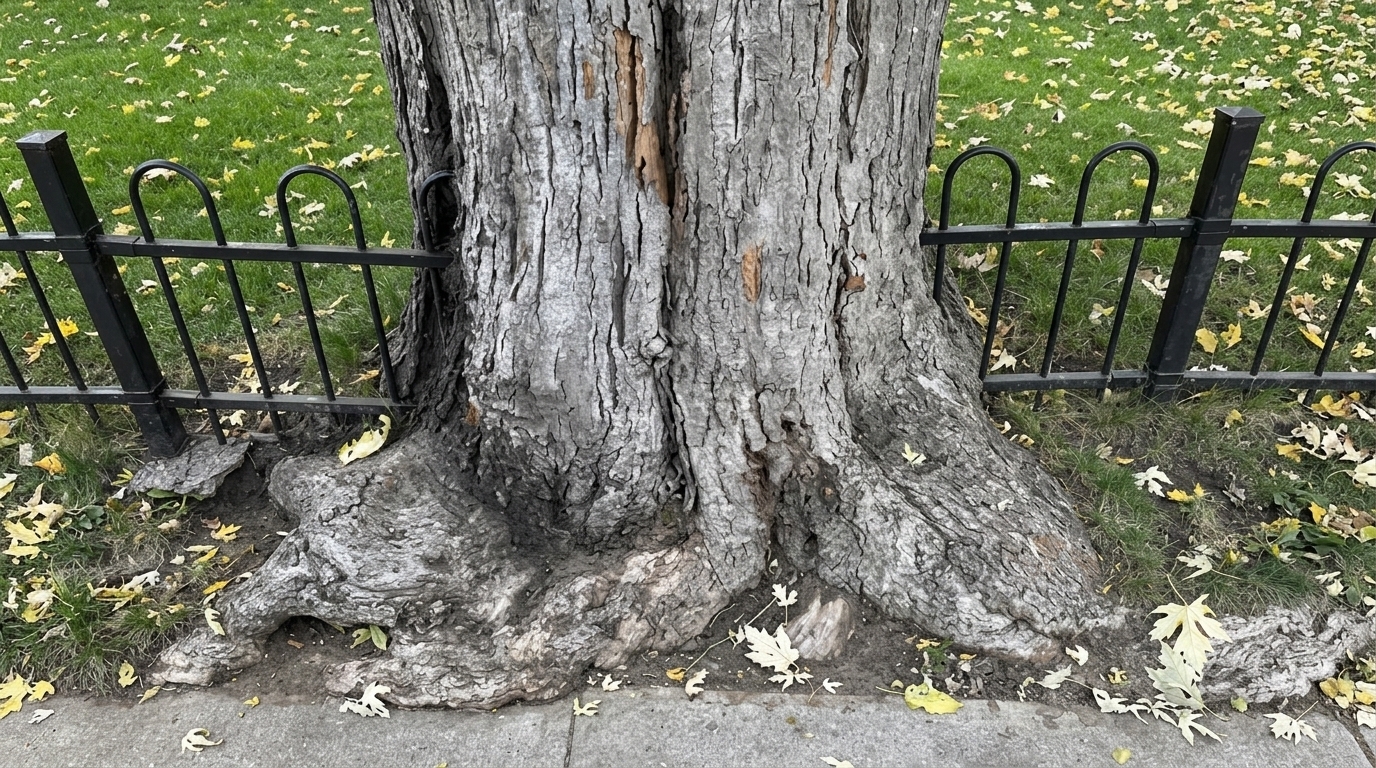
Ownership in Pennsylvania follows the trunk, not the branches or roots. Courts look at where the trunk sits on the ground. That one fact settles who owns the tree and who must care for it.
Here is the rule at a glance:
| Where the trunk sits | Who owns the tree |
| Fully on your side | You |
| Fully on the neighbor's side | Your neighbor |
| Right on the line | Both of you, jointly |
When the Trunk Sits Fully on One Side
If the trunk stands fully on one side of the line, that owner owns the tree. They must maintain it and deal with it when it turns risky. In return, they get the wood, the shade, and the fruit.
Sole ownership means sole duty. If it falls, the real question becomes negligence, not who owned it.
When the Trunk Straddles the Boundary
When the trunk grows right on the line and touches both yards, both neighbors own it together. This is called a boundary tree. Both share the rights and both share the duty.
Neither one can cut it down or remove it without the other's consent. Costs for trimming or removal are usually split.
Put the split in writing: who pays what share, who hires the crew, and how you'll decide if the tree becomes a hazard, so a disagreement later doesn't undo the agreement you have now.
Confirm the Property Line With a Survey First
Many owners think the fence marks the line. That’ss often wrong, since builders often set fences a few feet inside the true boundary to avoid encroaching, and old deeds, informal neighbor agreements, or shifted markers can move the real line further still.
County GIS maps help for a rough look, but they are not proof in a dispute.
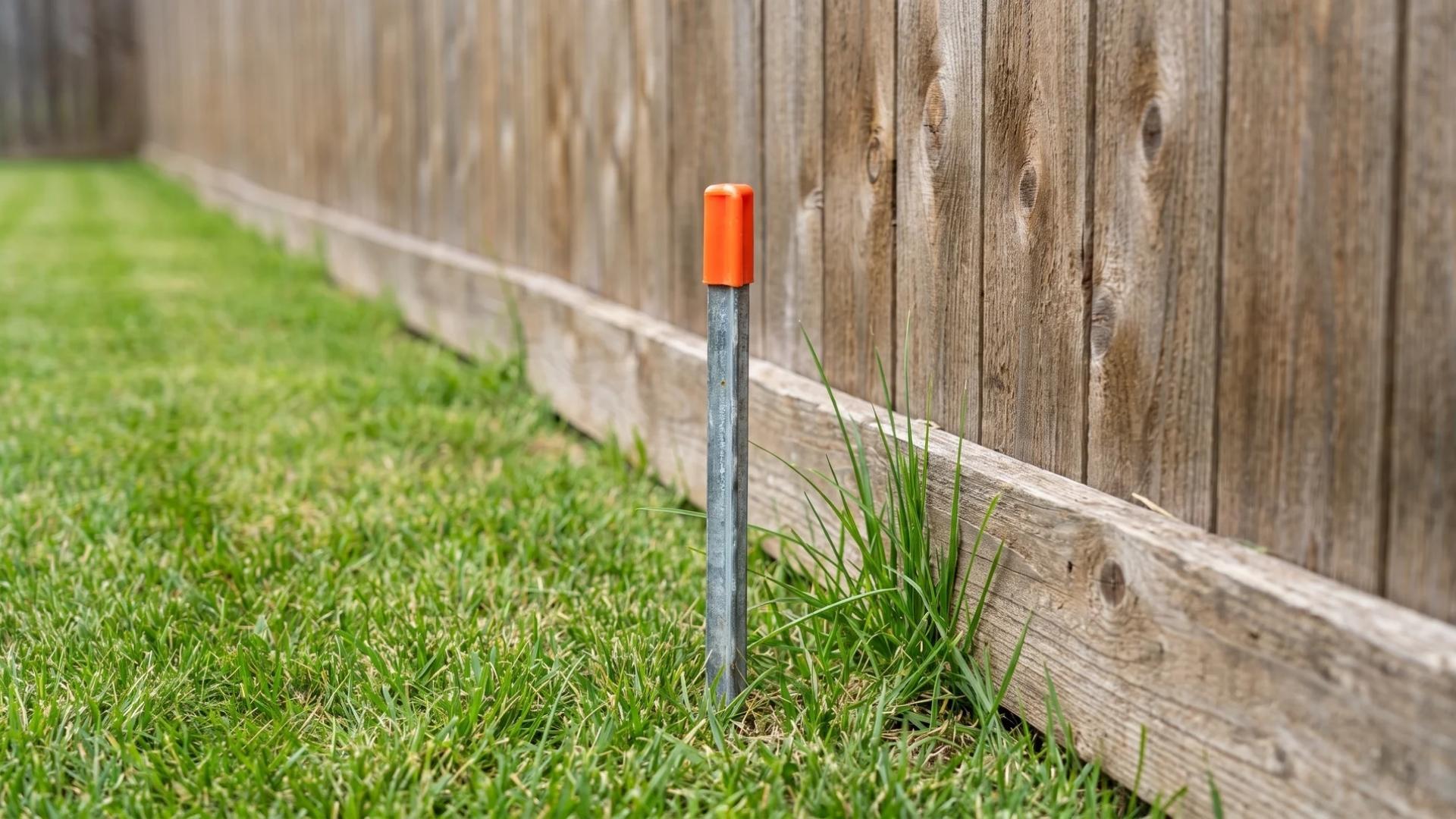
Hire a licensed surveyor to find the real markers, like iron pins or concrete monuments.
A residential boundary survey in Pennsylvania usually runs about $400 to $1,200. It can climb higher on tight city lots with old deeds. A survey settles ownership before you act.
Your Rights Over Overhanging Branches and Encroaching Roots
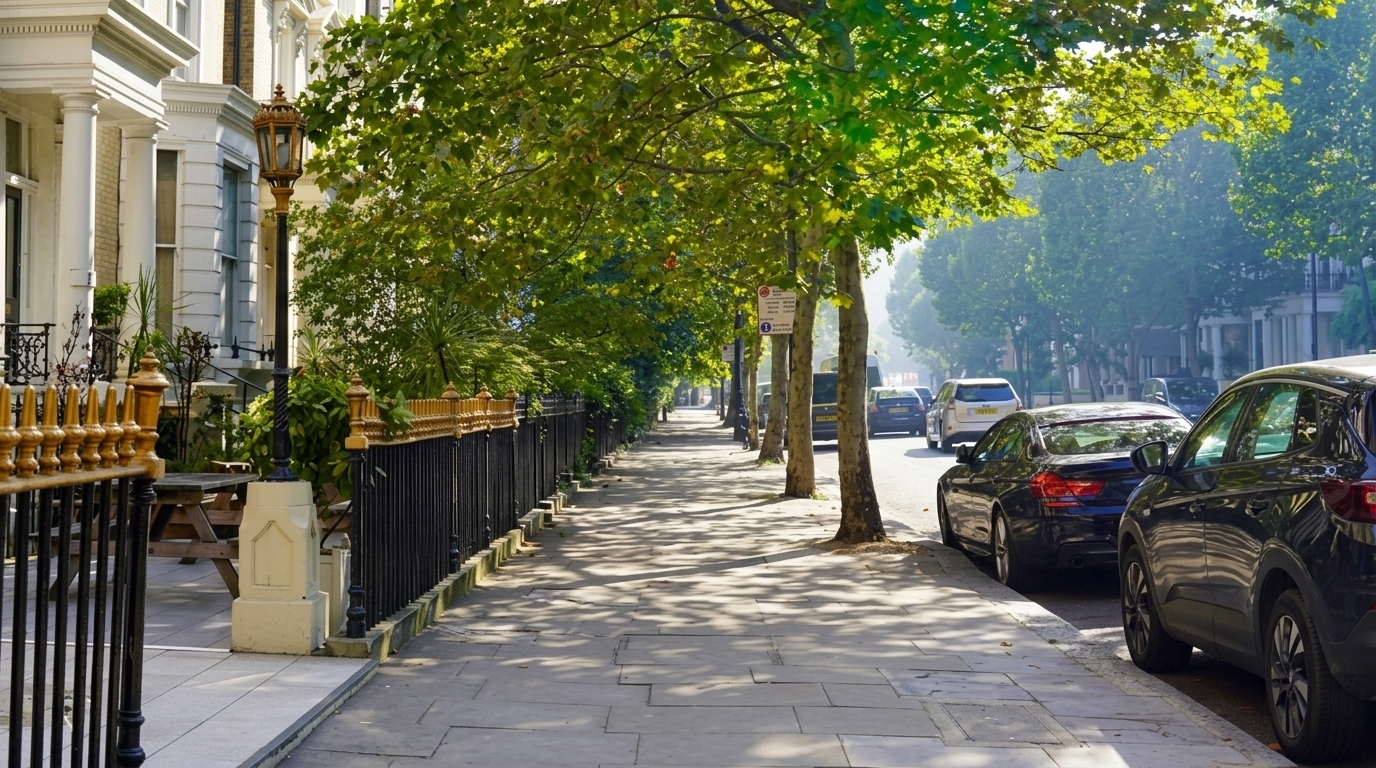
Branches and roots that cross the line are treated as a trespass in Pennsylvania. You get real rights, but those rights have clear limits.
Two named court cases set the rules here, and they favor the invaded neighbor. Cross those limits, though, and the blame can shift onto you.
The Self-Help Rule From Jones v. Wagner
Jones v. Wagner (1993) is the basis of this area of law. The Superior Court held that overhanging branches are a continuing trespass. You do not need to prove any physical damage.
You may trim the branches back to your property line as self-help. The tree owner cannot sue you for cutting limbs that truly hung over your land.
Roots Count Too Under Koresko v. Farley
Roots that cross the line are a trespass as well. The Commonwealth Court confirmed this in Koresko v. Farley (2004).
The court also held that roots cannot earn an easement by prescription, no matter how many years they have grown there. So you may cut encroaching roots at the property line at any time.
Recovering Trimming Costs From the Tree Owner
Jones v. Wagner gave the affected owner a full set of remedies. That includes the right to recover reasonable trimming costs from the tree owner.
But there is a catch. The cost of going to court often runs higher than the trimming itself.
Note too that trespass and property damage claims carry a two-year deadline under 42 Pa. C.S. § 5524. For these reasons, most people treat a lawsuit as a last resort and try to settle first.
The Line You Cannot Cross Without Liability
Your self-help right has firm limits. Trim only up to the property line, and trim with care. If you cut so hard that the tree dies, you may owe the neighbor its value.
Entering their land without consent is trespass. Applying herbicide to kill their tree can bring heavy civil and even criminal exposure. Stay on your side and keep it reasonable.
Who Pays When a Tree Falls and Damages Property?
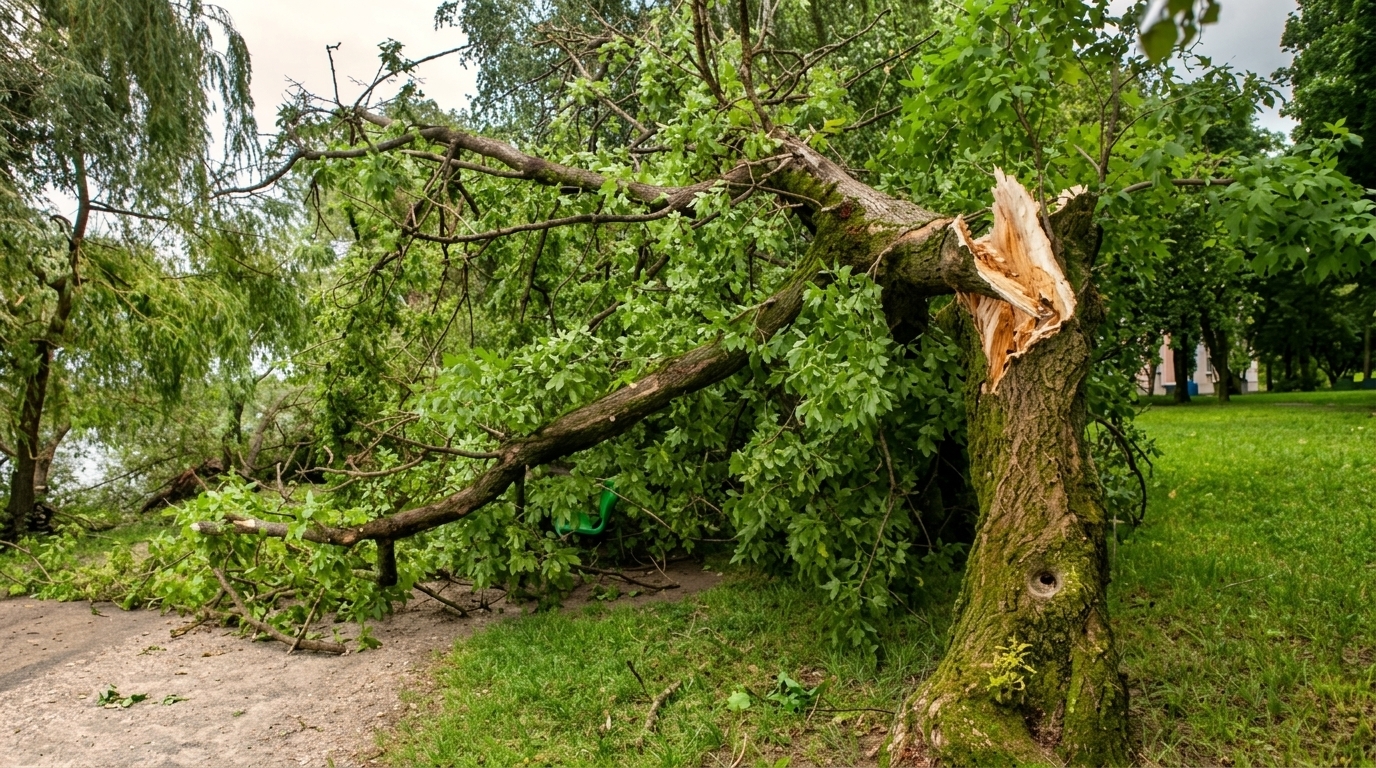
Payment depends on what the neighbor knew, not just whose tree it was. A healthy tree in a storm and a known dead tree lead to very different results. The answer surprises most people.
The Notice Rule That Decides Every Case
The main Pennsylvania case here is Barker v. Brown (1975), decided by the Superior Court. It held that an owner in or near a developed area is liable for a falling tree only if reasonable care would have shown the defect and the risk.
In short, a tree owner pays only with actual or constructive notice of a hazard. Actual notice means they knew the tree was dead or diseased. Constructive notice means the danger was clear enough that a careful owner should have seen it.
That matters because "should have known" is a standard a court has to be convinced of, not assumed.
The warning signs below are what turn constructive notice from an argument into evidence: they are the open, visible conditions a court treats as proof the danger was obvious to anyone who looked.
A dated, written arborist report that documents those signs before the tree falls is usually the strongest single piece of proof a claim can have, because it fixes the condition of the tree in time rather than relying on memory after the fact.
Remember, the same two-year deadline under § 5524 applies to your damage claim, so act fast.
Why a Healthy Tree in a Storm Usually Means No Payout
The law does not impose strict liability for natural conditions on private land. If a sound tree falls in a storm with no warning, the neighbor usually owes nothing. This is the "act of God" defense.
But it fails if the tree had a known, unaddressed defect. When no one is at fault, your own homeowner's insurance carries the loss.
The Higher Duty for City and Suburban Owners
Barker v. Brown set a sliding scale of care. The duty rises with how visible the tree is and how likely harm becomes. A rural woodland owner is held to a lighter standard than a city owner whose tree hangs over a busy road.
In built-up areas, owners are expected to inspect their trees now and then.
A few clear signs can build constructive notice:
- Visible decay or rot on the trunk
- Large dead branches overhead
- Fungus growing at the base
- A lean toward a house or road
- A past limb drop from the same tree
A written report from an ISA-certified arborist is strong proof of that condition.
How Homeowner's Insurance Fits Into Tree Disputes
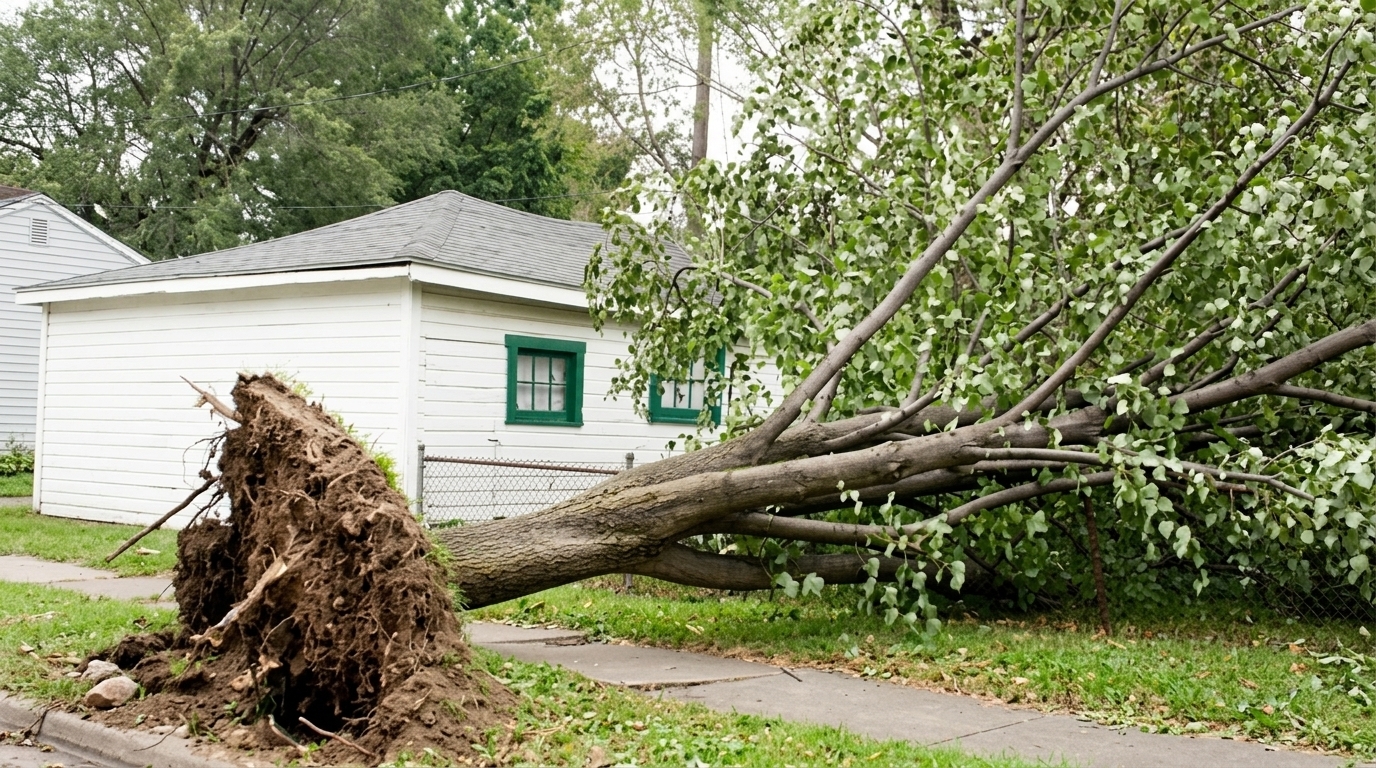
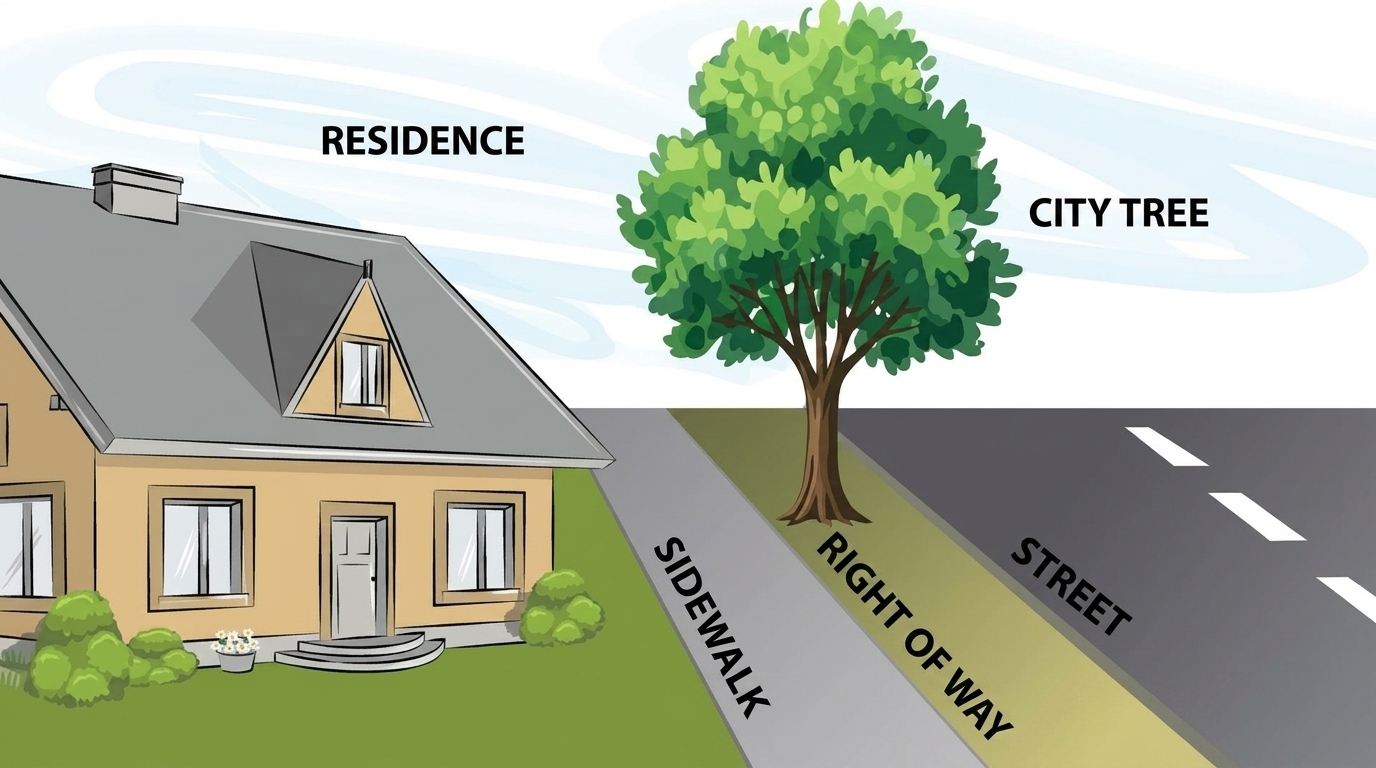
Trees near the road bring shared duties that catch owners off guard. Public land and private land overlap in this strip. The rules there differ from the rules between two private yards, and the surprises usually favor the town.
Who Owns and Controls the Tree
Owners of property along a public street usually own the land to the center of the street. That holds even if the deed only reaches the right-of-way edge. So you often own the tree in that strip.
But the municipality controls what happens to it, often through a Shade Tree Commission. Removal needs the municipality's permission. Utilities may trim trees near their lines, and only the Pennsylvania Public Utility Commission can control how they trim.
Who Is Liable When a Right-of-Way Tree Falls
The public entity must keep its roads safe for travel. If a right-of-way tree falls and it knew or should have known of the hazard, the entity is liable. The abutting owner is usually not on the hook.
One exception exists where an ordinance shifts the maintenance duty onto the owner. This is easier for a home rule municipality, and even then the town stays secondarily liable.
Why Sidewalk Root Damage Falls Back on You
The duty flips when roots lift a sidewalk. By statute, sidewalk upkeep in the right-of-way sits with the adjacent property owner. So if a municipally maintained tree's roots crack or heave your sidewalk, you pay for the repair.
If the raised slab trips someone and they get hurt, you may face the claim.
Rules for Trees in the Public Right of Way
Most tree damage cases end with insurance, not a lawsuit. Your first call after a tree hits your home should be your own carrier, not an attorney.
Fault matters less than you might expect for getting your own claim paid.
What Your Policy Covers When a Tree Hits Your Home
Standard Pennsylvania policies pay for sudden impact damage to a covered structure. That covers your roof, siding, windows, and any inside damage from the hit.
It applies no matter whose yard the tree grew in, and whether it came down from wind, ice, or a weak trunk.
Your insurer pays repairs and limited removal, up to your limits and minus your deductible. Deductibles often run from about $500 to $2,500, so check your policy before you file.
Coverage Gaps for Roots, Removal, and Lawn Damage
Policies leave real gaps you should know. Slow root damage, foundation settling, and heaved driveways are usually excluded, since they are not sudden.
Tree removal carries a sub-limit, often $500 to $1,000 per tree. That removal money commonly applies only if the tree struck a covered structure. A tree that lands on your lawn alone may get no removal coverage.
Subrogation and Getting Your Deductible Back
Subrogation is how negligence still matters for money. If your insurer pays your claim and later proves the neighbor was negligent, it can chase the neighbor's insurer to recover what it paid.
If that works, you may get your deductible back. This is why early proof helps. Keep photos, notices, and arborist reports to support the case.
How Homeowner's Insurance Fits Into Tree Disputes
Most tree damage cases end with insurance, not a lawsuit. Your first call after a tree hits your home should be your own carrier, not an attorney.
Fault matters less than you might expect for getting your own claim paid.
What Your Policy Covers When a Tree Hits Your Home
Standard Pennsylvania policies pay for sudden impact damage to a covered structure. That covers your roof, siding, windows, and any inside damage from the hit.
It applies no matter whose yard the tree grew in, and whether it came down from wind, ice, or a weak trunk.
Your insurer pays repairs and limited removal, up to your limits and minus your deductible. Deductibles often run from about $500 to $2,500, so check your policy before you file.
Coverage Gaps for Roots, Removal, and Lawn Damage
Policies leave real gaps you should know. Slow root damage, foundation settling, and heaved driveways are usually excluded, since they are not sudden.
Tree removal carries a sub-limit, often $500 to $1,000 per tree. That removal money commonly applies only if the tree struck a covered structure. A tree that lands on your lawn alone may get no removal coverage.
Subrogation and Getting Your Deductible Back
Subrogation is how negligence still matters for money. If your insurer pays your claim and later proves the neighbor was negligent, it can chase the neighbor's insurer to recover what it paid.
If that works, you may get your deductible back. This is why early proof helps. Keep photos, notices, and arborist reports to support the case.
Permits and Local Ordinances You Cannot Skip
There is no statewide permit rule for removing a private tree. Cities fill that gap with their own rules, and they vary a lot, sometimes including stricter protection inside conservation, floodplain, or historic districts, where certain species may be protected and replanting can be required.
A quick call to your local code office can save you from a fine before you cut.
How Rules Differ Across Pennsylvania Cities
The differences can be significant.
Philadelphia requires owners to inspect and maintain their trees, needs a permit through Parks & Recreation for street trees, and enforces Property Maintenance Code violations with fines that can run up to $300 plus court costs.
Pittsburgh lets private trees go without a permit but requires one for street-tree work underChapter 487.
Smaller municipalities set their own thresholds and fees, so always confirm your own city's current code before you cut, since the stricter rule wins when state and local rules differ.
Damages a Court May Award for Harming a Tree
Owners can recover money when a trespasser or a careless neighbor destroys their tree. Large trees are hard to replace, so courts use set methods to value them. The method depends on what the tree was for.
Replacement Cost, Property Value, or Timber Value
Courts pick a value method based on the tree's role:
- Landscaping tree: the cost to replace it
- Woodland tree: the drop in your property's value
- Timber tree: the market value of the wood cut
Expert opinions usually prove these figures, since the right method is often a question for the court. A deliberate or careless cut can also trigger enhanced damages under Pennsylvania's timber statute, covered in the FAQ below.
How to Handle a Property Line Tree Dispute Step by Step
Most tree fights settle without a courtroom when you move in the right order. Follow these steps:
- Talk first: A calm conversation solves more disputes than anything else.
- Confirm the line: Get a licensed survey so no one argues over the boundary.
- Document the tree: Photograph it, date every shot, and get a certified ISA arborist report, which usually costs about $150 to $450 for a single tree.
- Send a written notice: If a hazard remains, mail it by certified mail and keep proof of delivery. Name the tree, describe the hazard, ask for action, and date it.
- Check local rules: Call your city about permits before any work.
- Call your insurer: File promptly if damage occurs.
- Consult an attorney: For a court order, speak with a real estate lawyer when talks fail.
Conclusion
Remember one thing above all: in Pennsylvania tree law, ownership follows the trunk, but liability follows notice. A tree owner pays only when they knew, or should have known, about a hazard and did nothing about it.
That single idea settles most disputes before they reach a courtroom. Confirm the property line, document the tree's condition with dated photos, and put real concerns in writing to your neighbor.
If damage already happened, call your insurer first and keep every record: the arborist report, the certified mail receipt, the repair estimate. Good records settle more arguments than any statute does.
Frequently Asked Questions
Does my neighbor need my permission to cut down their own tree near our line?
No, owners can remove or trim their own tree anytime. But they alone pay for any damage it causes to your property.
Can my neighbor make me pay for leaves or acorns that fall from their tree onto my yard?
No. Falling leaves, acorns, and sap are normal. Courts treat them as minor annoyances, not a legal claim, unless the harm is severe.
Who owns the fruit that grows on branches hanging over my side of the line?
The tree owner still owns the fruit. The branch crossing the line gives you trimming rights, not ownership of what grows on it.
What happens if a tree falls on my parked car instead of my house in Pennsylvania?
That falls under your auto policy's comprehensive coverage, not your home policy. Your homeowner's insurance covers the structure, not the vehicle.
Can a homeowners association force me to remove or keep a tree near the line?
Yes, if you signed the HOA rules. Private covenants can add limits beyond city law, so check your deed and HOA documents first.
Who is responsible for a tree in the road right-of-way if it falls?
The abutting owner usually owns the tree, but the municipality controls it. If the tree falls and the municipality knew or should have known it was hazardous, the municipality is liable, not the homeowner, unless a local ordinance shifts that duty onto the owner.
What happens if someone deliberately cuts down my tree?
Pennsylvania's timber statute, 42 Pa. C.S. § 8311, adds steep penalties on top of the tree's value. A deliberate cut can cost three times the market value of the wood, a negligent cut twice that value, and a good-faith mistake the single value plus survey and appraisal costs.