

Choosing the right type of property ownership is one of the most important decisions a buyer makes, yet it's often the one given the least attention during a purchase.
The ownership structure you choose controls your taxes, your rights while you own the property, and what happens to it after you die. Getting it wrong can leave your family with a legal mess, unexpected bills, and months of added stress.
This guide covers every major property ownership type in plain terms, so you can understand exactly what each one means before you sign anything.
What Is Property Ownership?

Property ownership means you have legal rights over a piece of real estate. This includes the right to use it, sell it, rent it, or pass it on to your heirs.
But ownership is not one-size-fits-all. Different structures give different rights and responsibilities. Some allow multiple people to own one property together.
Others protect you from debt collectors or help you avoid probate. The structure you choose affects your taxes, your control, and your future plans.
Knowing how each type works helps you make smarter decisions, whether you are buying your first home or growing a real estate portfolio.
Property Ownership vs Title: What's the Difference?
Property ownership and title are closely related, but they are not the same thing. Ownership refers to the legal rights a person has over a property, such as the right to use it, sell it, lease it, or pass it to heirs.
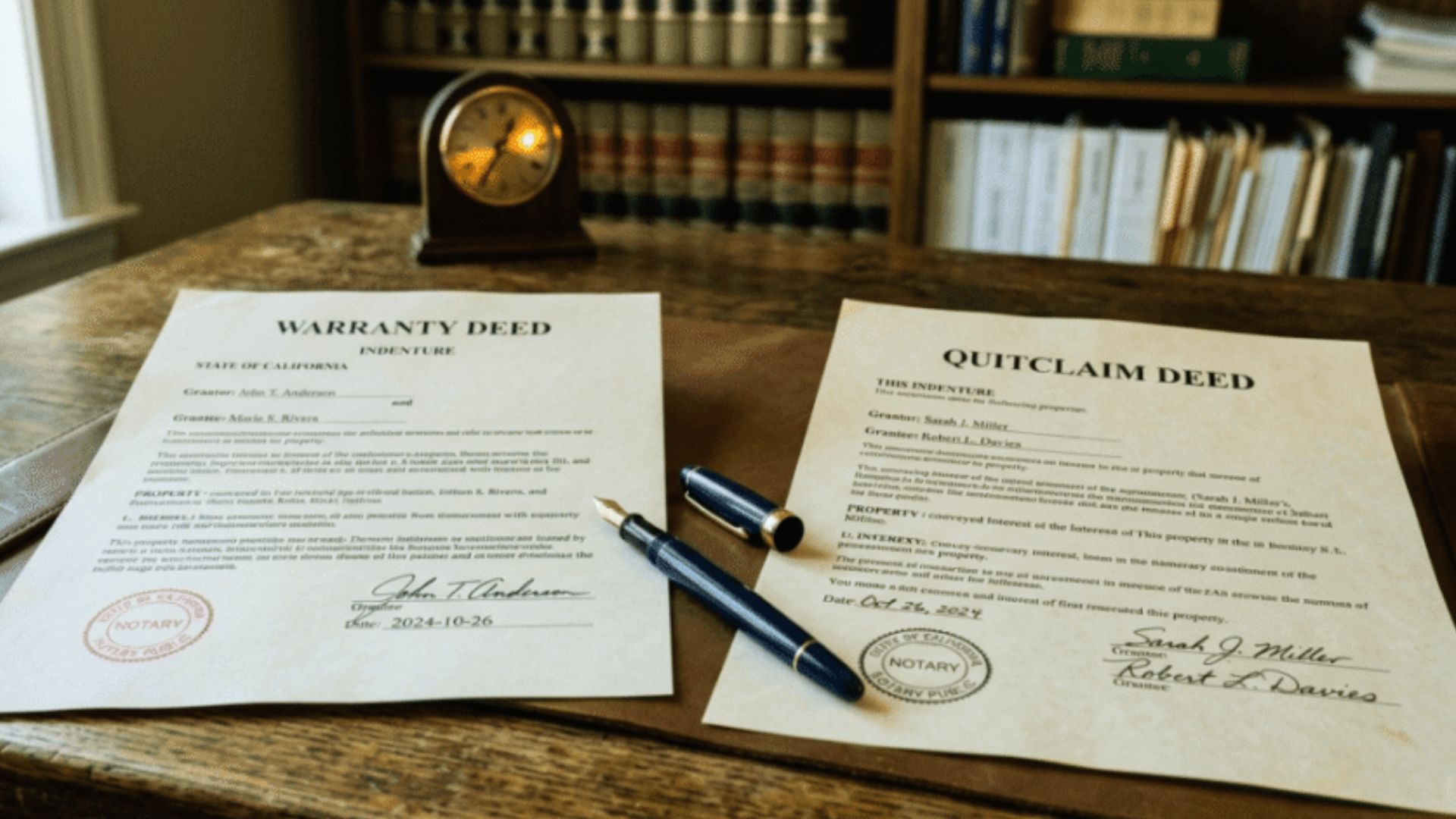
Title is the legal concept that shows those ownership rights exist. It represents the legal interest in the property and is usually transferred through a deed during a real estate transaction.
A person can hold title individually, jointly with others, or through a trust or business entity, depending on the ownership structure they choose.
Understanding the difference between ownership and title helps you better evaluate the various property ownership types explained later in this guide.
13 Different Types of Property Ownership

Here is a breakdown of the most common types, so you can choose the one that works best for you.
1. Fee Simple Ownership
Fee simple ownership is the highest form of private property ownership recognised in the United States. It gives the owner the broadest rights over a property, including the ability to live in it, sell it, lease it, renovate it, or leave it to heirs.
Most single-family homes are owned under a fee simple estate. Although fee simple ownership offers the greatest level of control, it is still subject to local zoning laws, property taxes, and government regulations.
If the property has a mortgage or legal restrictions, those obligations remain attached to the ownership.
Advantages
- Full ownership rights
- Can sell, lease, or transfer freely
- Can pass property to heirs
- Most common ownership structure
Disadvantages
- Subject to property taxes
- Must comply with local zoning laws
- Owner is responsible for all maintenance
- Creditors may pursue the property in some situations
2. Sole Ownership
Sole ownership means one person owns the property completely. You have full control with no need to consult anyone. You can sell, rent, or renovate without getting approval.
This type works best for single buyers who want total decision-making power. It is simple and straightforward.
But if you pass away, the property goes through probate before reaching your heirs, which can be slow and costly.
Example: Emily buys a house on her own. She makes all decisions about selling, refinancing, or renting the property because she is the only owner.
Advantages
Sole ownership gives you the most control of any ownership type. Here is what works in your favor:
- Full control over the property
- Simple to manage and sell
- No need to share decisions with co-owners
- Easy to understand legally
Disadvantages
But going it alone has some real drawbacks. Here is what to watch out for.
- Property must go through probate when you die
- No built-in creditor protection
- No automatic transfer to a surviving partner
- Can be harder for estate planning
3. Joint Tenancy
Joint tenancy generally means two or more people own a property equally, with each owner having an equal share and right of survivorship
The big feature here is the right of survivorship. If one owner dies, their share automatically goes to the other owners.
This skips probate entirely. It is popular with married couples and close family members who want a clean, fast transfer after death.
Advantages
Joint tenancy makes ownership simple and secure for co-owners. Here is what makes it a strong choice.
- Property passes automatically to surviving owners
- Avoids probate
- Simple to set up
- Equal ownership keeps things fair
Disadvantages
However, joint tenancy also comes with some limits. Here is what you need to know before signing.
- All owners must agree to sell or refinance
- One owner can force a sale through a partition lawsuit
- All owners share equal liability
- Difficult to leave your share to someone outside the ownership group
4. Tenancy in Common
Tenancy in common lets two or more people own a property but not necessarily in equal shares. One person might own 60% and another 40%.
Each owner can sell or transfer their share independently. There is no right of survivorship, so your share goes to your heirs and not your co-owners. This works well for friends, business partners, or investors buying together.
Example: Two friends purchase a rental property. One contributes 60% of the purchase price while the other contributes 40%, so they own those percentages.
Advantages
Tenancy in common gives each owner real flexibility. Here is why many investors and partners prefer it.
- Flexible ownership percentages
- Each owner can pass their share to their own heirs
- Easy to add or remove owners over time
- Great for investment partnerships
Disadvantages
Still, this structure has some weak spots. Here is what could cause problems down the road.
- No automatic transfer to co-owners at death
- Shares go through probate
- Disputes can arise over property use or sale
- One owner can force a partition sale
5. Fractional Ownership
Fractional ownership allows several people to purchase and own shares of the same property. Each owner has a legal interest based on their agreed percentage and shares the costs of buying, maintaining, and managing the property.
This arrangement is becoming increasingly popular for vacation homes, luxury properties, and investment real estate.Unlike a timeshare, fractional owners hold an actual ownership interest in the property rather than simply purchasing the right to use it for a certain period.
Ownership rights, maintenance responsibilities, and exit options are usually defined in a written agreement.
Advantages
- Lower purchase cost
- Shared maintenance expenses
- Legal ownership interest
- Suitable for vacation and investment properties
Disadvantages
- Decisions require cooperation
- Selling a share can take time
- Ongoing management agreements
- Potential disagreements between owners
6. Tenancy by the Entirety
This type is available only to married couples. Both spouses own the entire property together and not just a share.
If one spouse dies, the other automatically keeps full ownership. One of the biggest benefits is creditor protection.
If one spouse has debt, creditors generally cannot force the sale of the home. This type is only available in certain states.
Advantages
Tenancy by the entirety offers married couples some of the strongest protections available. Here is what you gain.
- Strong creditor protection for married couples
- Automatic survivorship rights
- Neither spouse can sell without the other's consent
- Avoids probate
Disadvantages
That said, this ownership type does come with restrictions. Here is where it falls short.
- Only available to married couples
- Not recognized in all states
- Both spouses must agree on all decisions
- Divorce ends this type of ownership automatically
7. Community Property
In community property states, most assets including real estate bought during a marriage are owned equally by both spouses.
Currently, nine states follow community property rules, including California, Texas, and Arizona. Some states also allow community property with a right of survivorship
What happens to the property at death depends on the state and whether a will is in place.
Advantages
Community property keeps ownership clear and fair between spouses. Here is what works well with this structure.
- Clear 50/50 ownership between spouses
- Can offer favorable tax treatment when one spouse dies
- Protects both spouses' financial interests
- Simple in states where it applies
Disadvantages
But community property is not without its complications. Here is what to keep in mind.
- Only applies in nine states
- Can complicate divorce proceedings
- Debts of one spouse may affect shared property
- Survivorship rules vary by state
8. Trust Ownership
A trustee holds and manages property placed in a trust according to the trust document, while beneficiaries receive the benefits of the property.
It is one of the most effective options for estate planning. It keeps your affairs private and speeds up the transfer process. Setting up a trust costs more upfront, but it can save your heirs time and money later.
Example: Parents place their home in a revocable living trust so it passes directly to their children without going through probate.
Who Is the Beneficial Owner?
In a trust, the trustee holds legal title to the property and manages it according to the trust document.
The beneficial owner is the person who receives the financial benefits of the property, even though they do not legally hold title.
For example, parents may place a home in a trust, appoint a trustee to manage it, and name their children as the beneficial owners who will eventually receive the property.
Advantages
Trust ownership is one of the smartest ways to protect your property long term. Here is why so many people use it.
- Avoids probate completely
- Keeps property transfer private
- Gives detailed control over how property is passed on
- Can reduce estate taxes in some cases
Disadvantages
Even so, trusts are not perfect for everyone. Here is what to consider before setting one up.
- Costs money and time to set up
- Must be properly funded to work
- Can be complex to manage
- Ongoing administrative responsibilities
9. Condominium Ownership
When you buy a condo, you own your individual unit outright. But the hallways, gym, pool, and parking lots are shared with other owners.
A homeowners association (HOA) manages those shared spaces. You pay monthly HOA fees. Rules vary by building, so it is important to read the HOA agreement before buying.
Advantages
Condo ownership offers a good mix of personal ownership and shared convenience. Here is what you get.
- You own your unit completely
- Shared maintenance costs split among owners
- Amenities like pools and gyms are included
- Good for low-maintenance living
Disadvantages
But condo living also means giving up some freedom. Here is what could bother you over time.
- Monthly HOA fees can be high
- HOA rules may limit what you can do with your unit
- HOA financial problems can affect all owners
- Shared spaces may not always be well-maintained
10. Cooperative (Co-op) Ownership
In a co-op, you do not actually own your apartment. Instead, you buy shares in a corporation that owns the building.
Your shares give you the right to live in a specific unit. Co-ops are common in New York City. The co-op board has a lot of control.
They can approve or reject buyers, set rules, and manage the building.
Advantages
Co-op ownership can be a smart and affordable way to live in a building with shared standards. Here is what stands out:
- Lower purchase price than comparable condos
- Board oversight can maintain building quality
- Strong sense of community
- Shared costs keep individual expenses lower
Disadvantages
However, co-ops come with more restrictions than most other ownership types. Here is what can make them tricky
- Board approval required to buy or sell
- Limited control over your unit
- Harder to get financing
- Resale can be difficult due to board restrictions
11. Corporate or LLC Ownership
When a business owns property through a corporation or LLC, the individual investors are protected from personal liability.
LLCs are popular with real estate investors because they offer flexibility in how profits are taxed. This structure works best for rental properties, commercial real estate, or investment portfolios.
Example: An investor buys three rental homes through an LLC to separate personal assets from business liabilities. An LLC may help protect personal assets from certain business liabilities when properly created and maintained.
Advantages
Corporate and LLC ownership gives investors real protection and flexibility. Here is what makes this structure appealing:
- Personal liability protection for owners
- Flexible tax treatment options
- Easy to bring in multiple investors
- Helps separate personal and business finances
Disadvantages
Still, this setup is not always the right fit. Here is what could make it more trouble than it is worth.
- Costs more to set up and maintain
- Requires ongoing paperwork and compliance
- Harder to get residential mortgage financing
- Transfer of ownership may trigger taxes
12. Life Estate
A life estate splits ownership between two parties. The life tenant has the right to live in and use the property for the rest of their life.
After they die, ownership automatically passes to the remainderman, usually a child or other heir.
This skips probate. But the life tenant cannot sell or refinance without the remainderman's approval.
Advantages
A life estate is a simple and effective way to pass property to the next generation. Here is what works in its favor.
- Avoids probate on transfer
- Life tenant keeps the right to live in the home
- Simple way to pass property to heirs
- Can qualify for Medicaid planning benefits
Disadvantages
But a life estate also ties your hands in some important ways. Here is what to think about before creating one.
- Life tenant cannot sell without the remainderman's consent
- Hard to undo once created
- May affect Medicaid eligibility in some states
- Remainderman's creditors could claim the property
13. Leasehold Estate
A leasehold estate means you have the right to use property for a set period of time but you do not own it.
This is common in long-term land leases, especially in states like Hawaii. You pay rent to the landowner.
Your rights and responsibilities are spelled out in the lease. When the lease ends, you give up those rights unless it is renewed.
Advantages
A leasehold estate can work well if you want long-term access without a full purchase. Here is what makes it a practical option:
- Lower upfront cost than buying outright
- Long-term stability with a strong lease
- Can be used commercially or residentially
- Some leaseholds last 99 years or more
Disadvantages
But not owning the land comes with real limits. Here is what you give up with a leasehold:
- You never own the land
- Property value can drop as lease term ends
- Lender financing can be harder to get
- No equity in the land itself
Table Comparison of Property Ownership Types
The table below compares the most common property ownership types to help you quickly understand their key differences.
| Ownership Type | Owners | Right of Survivorship | Can Sell Share? | Probate | Best For |
| Fee Simple Ownership | 1+ | No | Yes | Yes | Most homeowners |
| Sole Ownership | 1 | No | Yes | Yes | Individual buyers |
| Joint Tenancy | 2+ | Yes | Yes* | No | Couples and family members |
| Tenancy in Common | 2+ | No | Yes | Yes | Friends and investors |
| Fractional Ownership | 2+ | Usually No | Usually Yes | Depends | Vacation homes and investment groups |
| Tenancy by the Entirety | Married couples | Yes | No | No | Married couples |
| Community Property | Married couples | Varies by state | Limited | Varies | Community property states |
| Trust Ownership | Trustee | Depends on trust | Depends | Usually No | Estate planning |
| Condominium Ownership | 1+ | No | Yes | Yes | Condo buyers |
| Cooperative (Co-op) Ownership | Shareholders | No | Limited | Yes | Co-op housing |
| Corporate or LLC Ownership | Business entity | No | Yes | Depends | Rental and investment property |
| Life Estate | 2 | Yes | Limited | No | Estate transfers |
| Leasehold Estate | Tenant | No | No | No | Long-term land leases |
Note: In a joint tenancy, an owner can generally transfer or sell their interest. However, doing so typically severs the joint tenancy for that share and may convert it into a tenancy in common, depending on state law.
For real estate investors and vacation home buyers specifically: an LLC or corporation protects personal assets and offers tax flexibility for investment portfolios, while fractional ownership lets several buyers split the purchase price and upkeep of a vacation property while each holds a genuine legal interest.
Which Property Ownership Type Is Best?

Every situation is different. Here is a simple breakdown to guide you.
Best for Single Homebuyers: Sole ownership is your best bet. You have full control with no strings attached. It is simple, clean, and puts all decisions in your hands.
Best for Married Couples:Joint tenancy or tenancy by the entirety works well here. Both protect the surviving spouse and avoid probate, giving you peace of mind.
Best for Family Members:Joint tenancy keeps things smooth within families. If one person dies, the others keep ownership without court involvement.
Best for Friends Buying Property Together:Tenancy in common gives each person flexibility. You can own different percentages and pass your share to whoever you choose.
Best for Real Estate Investors: An LLC or corporation protects your personal assets. You can bring in partners, manage taxes more efficiently, and keep business separate from personal life.
Best for Vacation Homes:Fractional ownership is often a practical option for vacation homes because several buyers can share the purchase price and ongoing maintenance costs while each owns a legal interest in the property.
Best for Estate Planning:Trust ownership is the strongest option. It avoids probate, stays private, and lets you control exactly how your property is passed on.
Key Factors Before Choosing a Property Ownership Type

Picking the right ownership type is one of the most important financial decisions you will make.
Number of owners: Are you buying alone or with others? This directly affects how decisions are made and how the property is managed.
Ownership rights and responsibilities: Know who controls the property, who pays the bills, and who is responsible if something goes wrong.
Right of survivorship: This tells you what happens to the property when one owner dies. Some types pass it on automatically. Others do not.
Tax implications: The way you own a property can change what you owe at tax time. Some structures save you money. Others cost more than you expect.
State-specific property laws: Not every ownership type is available in every state. Always check your local laws before making a final decision.
Common Mistakes to Avoid When Choosing Property Ownership
Getting this wrong can cost you money, time, and family stress. Here are the biggest mistakes I see people make.
- Choosing the wrong ownership structure: Picking sole ownership when you have a partner, or skipping a trust when your estate is large, can create serious problems down the road.
- Ignoring estate planning:Many people focus only on buying the property. They forget to plan for what happens to it when they are gone.
- Assuming all ownership types include survivorship rights:Only joint tenancy and tenancy by the entirety include this. Tenancy in common does not. Your share goes through probate.
- Overlooking tax implications:Different ownership types are taxed differently. Not thinking this through upfront can lead to a big tax bill later.
- Not creating a co-ownership agreement: If you buy with a friend or partner, put everything in writing. Who pays for repairs? What happens if someone wants to sell? A written agreement prevents fights.
- Failing to review state-specific property laws: Tenancy by the entirety and community property rules vary widely. What works in one state may not be legal in another.
Conclusion
The right type of property ownership depends on your life, your goals, and who you are buying with. There is no single right answer for everyone.
Take your time to weigh the options against your own situation, and if you are still unsure, talk to a real estate attorney before signing anything.
Frequently Asked Questions
Can I change my property ownership type after buying?
Yes, you can change it. But you may need new legal documents, pay transfer taxes, or get lender approval. Talk to a real estate attorney before making any changes.
Does property ownership type affect my credit score?
No, it does not directly affect your credit score. But if a co-owner misses mortgage payments, it can impact everyone on the loan.
Can a non-citizen own property in the United States?
Yes, non-citizens can own property in the US. No federal laws are stopping it. However, tax rules vary by state, so always check local laws first.
What happens to a jointly owned property during a divorce?
The court divides the property between both spouses. Community property states split it 50/50. Other states look at who paid more or who needs the home most.
Which property ownership type avoids probate?
Joint tenancy, tenancy by the entirety, life estates, and property properly held in a trust can help avoid probate, depending on state law and how ownership is structured.