
A living trust can help you manage your assets and decide how they’re distributed after your death, but creating one doesn’t mean every asset is automatically covered.
A pour-over will helps address this gap by directing overlooked property into your trust, keeping your estate plan on track. However, relying on this document alone can lead to unexpected delays and expenses for your loved ones.
Knowing how it fits into your estate plan can help you make informed decisions, reduce potential complications, and ensure your wishes remain central to how your assets are handled.
Disclaimer: This article provides general educational information about estate planning and is not legal advice. Laws governing pour-over wills, probate, and living trusts vary by state. Consult a qualified estate planning attorney about your specific circumstances.
What Is a Pour-Over Will?
A pour-over will’s meaning is simple at its core: it’s a legal document that works alongside a living trust . On its own, it does almost nothing.
Its job is to catch anything you forgot to include in your trust. Think of it as a backstop, not a standalone plan.
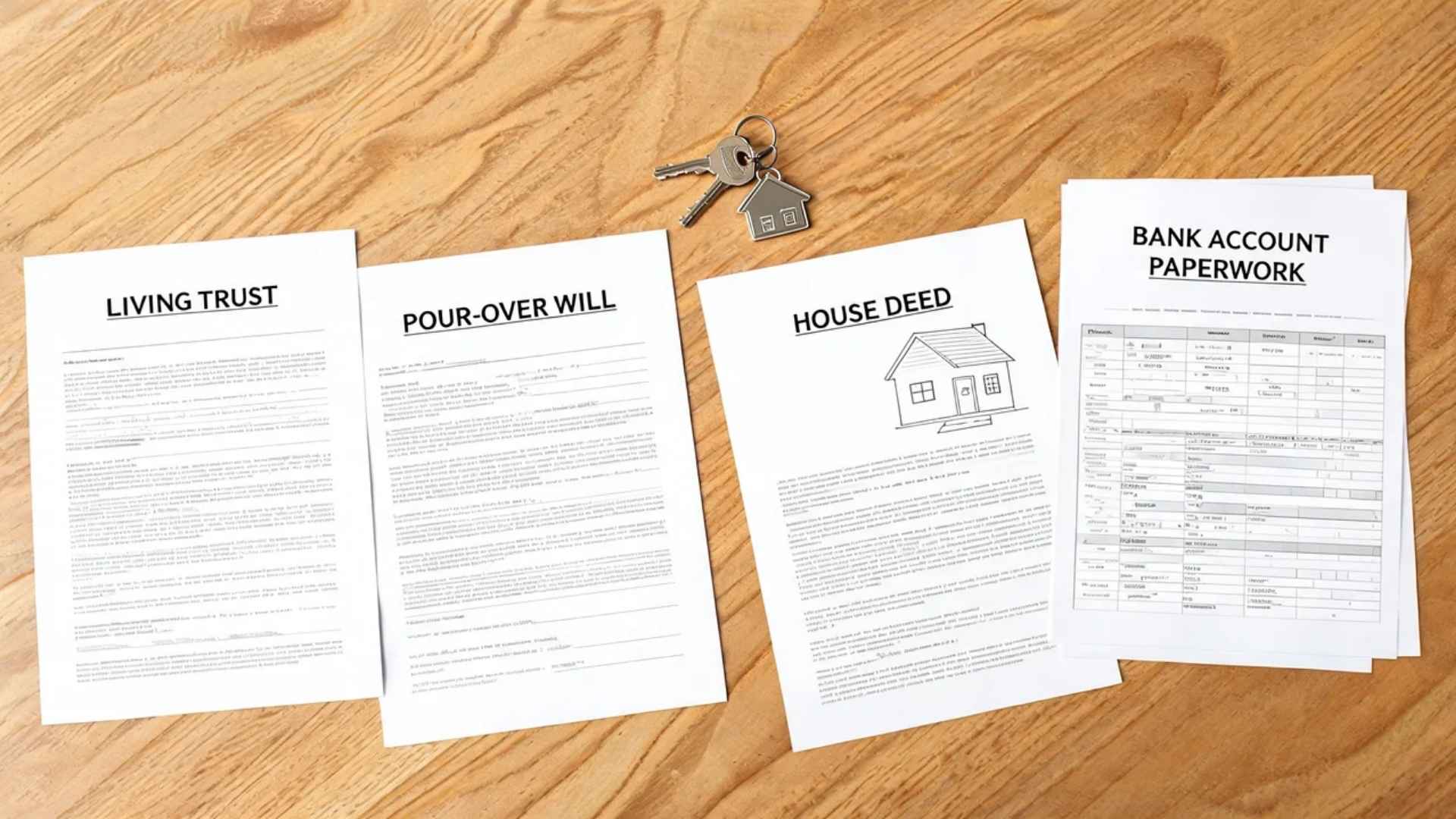
To understand what a pour-over will in a trust actually does, start with the setup: you create a revocable living trust first and, while you’re alive, move your major assets into it.
Your house, your bank accounts, your investments. All of it gets retitled in the trust’s name.
But people forget things. You buy a new car and never retitle it. You open an account and don’t think to add it to the trust.
A pour-over will names your trust as the sole beneficiary. When you die, anything left outside the trust gets “poured over” into it through this will.
Without an existing trust, a pour-over will has nothing to pour into. It only makes sense as part of a pair.
What Does a Pour-Over Will Cover?

A pour-over will isn’t designed to carry your whole estate. It’s designed to catch the leftovers. Here’s what typically falls into that category.
- Property you forgot to retitle when you first set up the trust
- New accounts or assets you acquired close to the end of your life
- Items you meant to add to the trust but never got around to
- Small personal belongings nobody thought to transfer formally
For example, say you buy a vacation condo two years before you pass away and never get around to retitling it in your trust’s name. Under a pour-over will, that condo doesn’t go to whoever state law happens to pick. It goes through probate first, then transfers into your trust, where your existing instructions decide who receives it.
These are the gaps that happen in real life, not because someone did something wrong. People get busy. Paperwork slips.
How much a pour-over will end up covering depends entirely on how well you funded your trust while you were alive.
Retitle almost everything, and the pour-over will barely gets used. Leave a lot outside the trust, and it has to do more work.
Size doesn’t change the outcome, either: a major asset like a second property left out of a trust entirely still gets caught by the pour-over will, but it still has to go through the same legal process first.
What a Pour-Over Will Doesn’t Do
A pour-over will does not avoid probate. I want to be direct about this because it’s the most common misunderstanding. People assume that since the asset is headed to a trust, it skips the court process entirely. It doesn’t.
Probate isn’t based on where an asset ends up. It’s based on how that asset was titled at the moment you died.
- If your car wasn’t in the trust’s name when you passed, it’s treated as part of your individual estate
- The court has to validate the will and officially authorize the transfer before anything moves
- Only after that does the asset get poured into the trust
So the trust doesn’t shortcut the process. It just decides where the asset lands once probate finishes.
A pour-over will is also not a substitute for properly funding your trust .
The whole point of a living trust is to let assets skip probate. If you lean on the pour-over will to catch everything, you’ve defeated that purpose for whatever lands in it.
Many states offer simplified or “small estate” probate procedures for estates under a certain dollar threshold, and that threshold varies by state.
California, for example, currently sets its small estate limit at $208,850 for deaths on or after April 1, 2025, while other states set theirs much lower or higher.
A modest leftover asset may qualify and move through probate faster than a full estate administration would.
Note: Check your state’s probate code or ask your estate attorney whether your situation qualifies.
Since pour-over wills typically only carry a few overlooked items rather than a full estate, that probate process tends to move faster and cost less than a complete estate administration would.
It’s also worth knowing how this differs from a standard will.
| Standard Will | Pour-Over Will | |
|---|---|---|
| Who gets the assets | Named people directly | Your living trust |
| Final distribution | Set in the will itself | Set by the trust’s instructions |
| Probate | Required | Required |
The tradeoff is simple. A pour-over will still means probate delays and court costs for anything it catches, which a fully funded trust avoids.
Why a Pour-Over Will Matters

So if it still goes through probate, why bother having one at all?
Because the alternative is worse. If you die without a pour-over will, and some assets sit outside your trust, state law decides who gets them.
That’s called intestate succession , and it has nothing to do with what you actually wanted. It follows a fixed legal order, usually spouse, then children, then other relatives.
Your actual wishes don’t factor in at all.
A pour-over will stops that from happening. Even if something slipped through the cracks, it still ends up following the instructions you wrote into your trust.
This matters most for people with complicated families. Blended families, estranged relatives, or specific wishes about who gets what.
Without a pour-over will, a forgotten bank account could legally go to someone you never intended. With one, it still follows your plan, just with an extra court step first.
One thing it won’t do is fix a poorly funded trust. If you left large, valuable assets out entirely, the pour-over will still pull them in, but you’ve added real delay and cost that proper funding would have avoided.
Pros and Cons of a Pour-Over Will
Before deciding whether to add one to your estate plan, it helps to see the trade-offs side by side.
| Pros | Cons |
|---|---|
| Catches assets you forgot to retitle, so nothing falls outside your plan entirely | Doesn’t avoid probate for whatever it catches |
| Keeps your trust’s distribution instructions in control, even for leftover property | Adds court delays and legal costs that a fully funded trust would have avoided |
| Blocks intestate succession from taking over if something slips through the cracks | Only works if you already have a living trust in place |
| Works as a built-in backup without requiring you to redo your entire estate plan | Can create a false sense of security that discourages people from properly funding their trust |
Final Thoughts
A pour-over will adds an important layer of protection to a living trust by helping ensure that forgotten or newly acquired assets still follow your estate planning wishes.
However, it works best as a backup rather than a replacement for properly funding your trust. Leaving major assets outside the trust can create avoidable probate delays, expenses, and complications for your loved ones.
The real value lies in combining both documents with regular reviews of your assets and beneficiaries. Consult an estate planning attorney to ensure your plan reflects your wishes.
Frequently Asked Questions
What is the difference between a standard will and a pour-over will?
A standard will sends assets directly to the people you name. A pour-over will has only one beneficiary, your living trust. It transfers whatever you didn’t already move into the trust, then lets the trust’s existing instructions handle where it finally goes.
What is a drawback of a pour-over will?
The biggest drawback is that it doesn’t skip probate. Assets it catches still have to go through court before reaching your trust. That means delays and legal costs, even though the assets eventually follow your trust’s instructions.
What do you put in a pour-over will?
A pour-over will names your living trust as the sole beneficiary and includes a clause that sends any leftover assets there. It also names an executor to manage the process after you die, since someone has to file it with probate court.
Does a pour-over will avoid probate?
No. Probate depends on how an asset was titled when you died, not where it’s ultimately headed. Only assets already properly retitled into your trust while you were alive skip probate completely.