I remember staring at this question in a civics class: what is the supreme law of the land? It sounded like something only a lawyer could answer. It is not.
In this blog, I will give you a clear, simple answer. I will cover the supreme law of the land meaning, where it comes from in the Constitution, what the Supremacy Clause actually does, and how judicial review keeps the whole system honest.
I will also show you how this comes up on the U.S. citizenship test and why it matters to everyday life.
I have broken this down into clear, practical terms so you can understand it without legal jargon.
Let us get into it.
What Does "Supreme Law of the Land" Actually Mean?
One document sits above every other rule in the country.
Think of it as a legal ladder. You have city rules at the bottom. Then state laws. Then federal laws. But at the very top? One document that overrides them all.
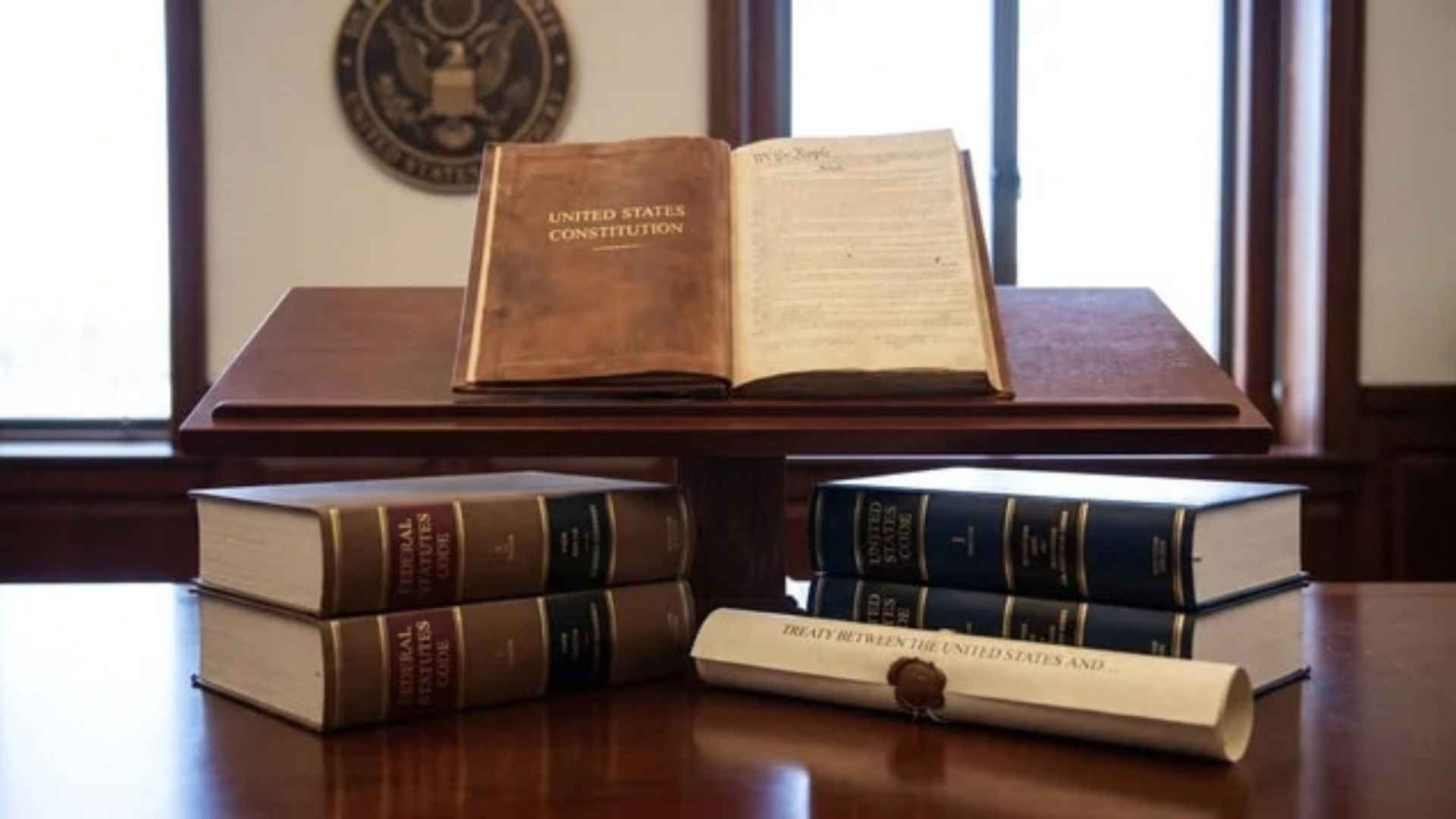
In the United States, that document is the Constitution.
Here is the important part. A law does not automatically disappear just because it conflicts with the Constitution. Courts, especially the Supreme Court of the United States, must declare it unconstitutional first.
So the US Constitution supreme law explanation is this: it is the highest legal authority in the country, and courts are the ones who enforce that authority.
The Legal Hierarchy: How Laws Are Ranked in the U.S.
Not all laws carry the same weight.
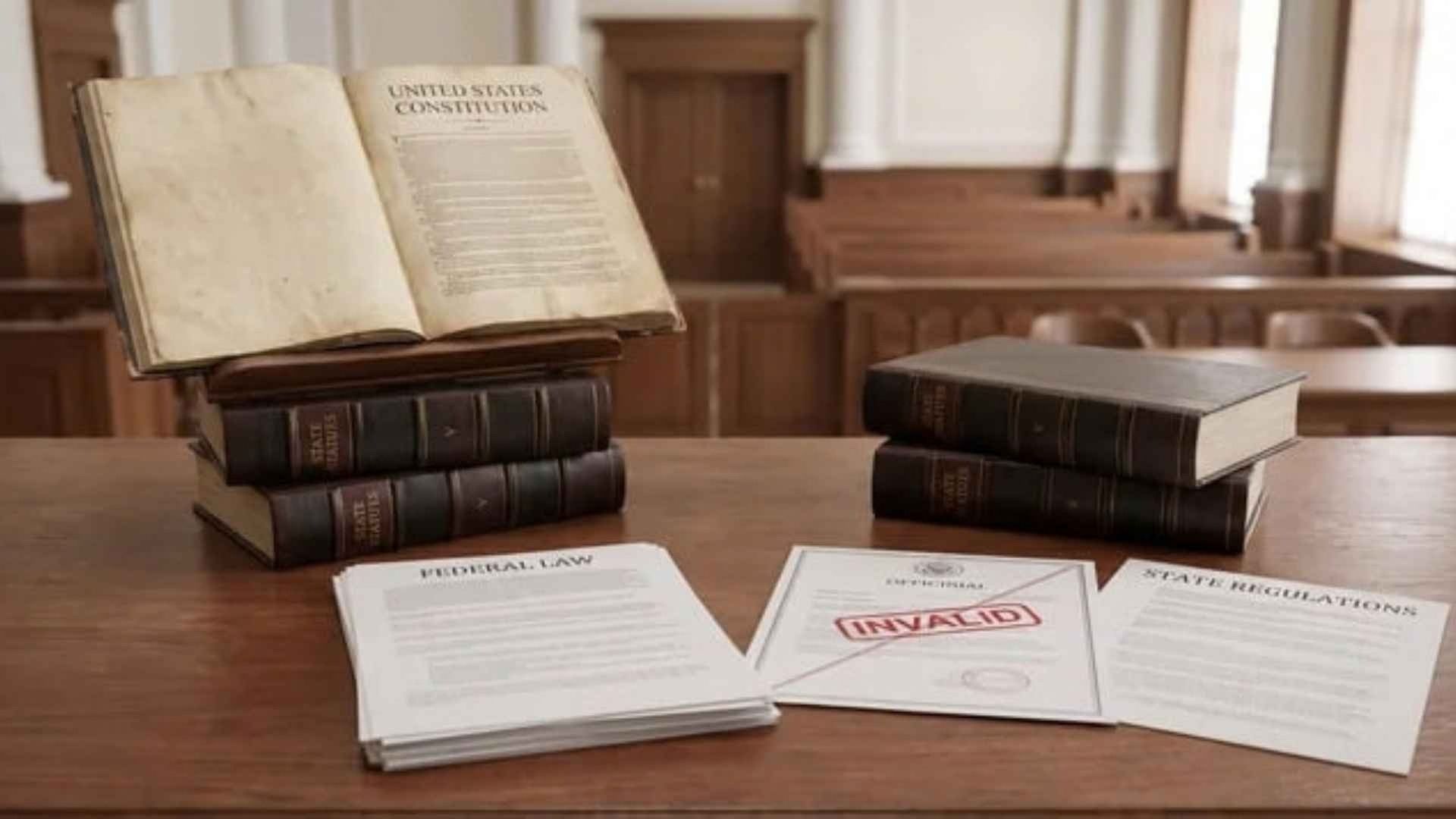
Here is how the legal ladder breaks down from top to bottom:
U.S. Constitution
↓
Federal Laws & Treaties
↓
State Constitutions
↓
State Laws
↓
Local Ordinances
Each level must stay within the boundaries set by the level above it. A city cannot pass an ordinance that breaks state law.
A state cannot pass a law that breaks federal law. And no one, federal, state, or local can pass anything that goes against the Constitution.
Federal law covers a wide range of activities beyond what most people expect, and a strong example of this is federal maritime law, which can apply even to workers standing on dry ground near ports and docks.
If two laws conflict, the law higher in the hierarchy generally prevails, provided it is constitutional.
This structure is what makes the U.S. legal system predictable and consistent across all 50 states. You can read the full text of the Constitution at the National Archives.
Why Is the Constitution the Supreme Law of the Land?
This is the question most blogs skip. They tell you it is the supreme law. They never explain why.
Here are five reasons the Constitution holds this authority:
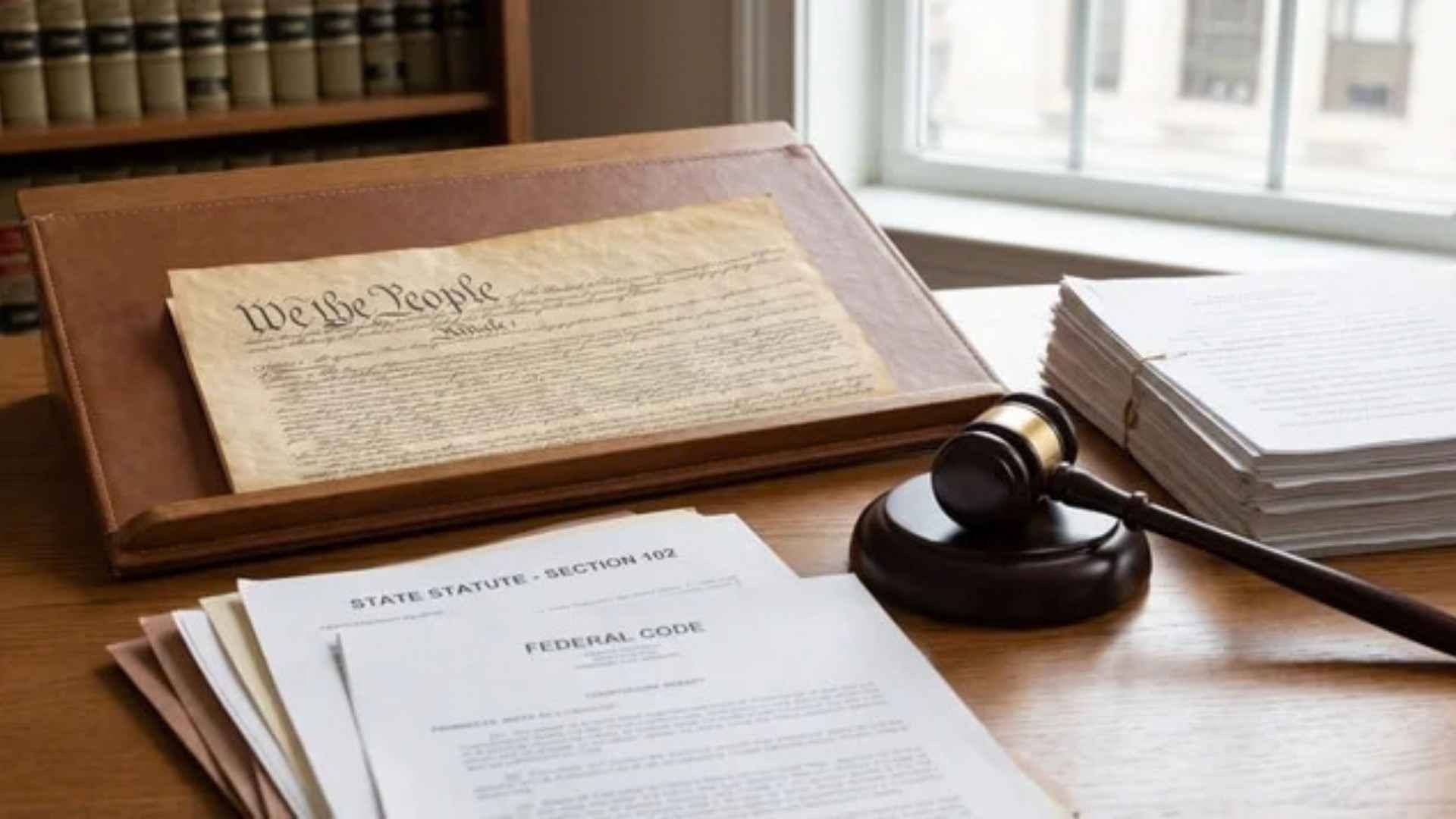
1. It was adopted by the people. The Constitution did not come from a king or a ruling class. It came from the people themselves. The Preamble opens with "We the People" for a reason. That foundation gives it a level of legitimacy no ordinary law can claim.
2. It created the federal government. The Constitution is not just a rulebook. It is the document that brought the federal government into existence. Congress, the President, and the federal courts all owe their legal existence to it. A creation cannot override the document that created it.
3. It limits government power. Every branch of government, including the President and Congress, must operate within the Constitution's boundaries. No elected official is above it. The Constitution was designed to prevent any one person or group from holding unchecked power.
4. It protects constitutional rights. The Constitution, through the Bill of Rights and later amendments, protects individual freedoms. Free speech. Fair trials. Equal protection under the law. These rights cannot be taken away by a simple majority vote in Congress or a state legislature. They are locked in at the highest legal level.
5. Article VI gives it the highest legal authority. The Supremacy Clause in Article VI is the legal backbone of all of this. It explicitly states that the Constitution and federal laws made under it are the supreme law of the land. Every judge in every state is bound by it, no matter what their own state law says.
These five reasons work together. The Constitution is not supreme by accident. It was built to be the foundation everything else rests on.
What Is the Supremacy Clause?
The Supremacy Clause is the specific part of the Constitution that makes it the supreme law of the land.
It lives in Article VI, Clause 2 of the U.S. Constitution. Read Article VI, Clause 2 on Congress.gov.
In plain language, it says the Constitution, federal laws made under it, and treaties signed by the U.S. are the highest law in the country. State laws cannot override them. Local rules cannot ignore them.
Every judge in every state is bound by this, even if their own state law says something different.
The Founders added this on purpose. After the Articles of Confederation failed, they saw what happened when states had too much independence and no shared legal foundation. The Supremacy Clause fixed that.
How the Supremacy Clause Makes the Constitution Supreme
The Supremacy Clause does not just say the Constitution is important. It gives it legal force over everything below it.
Here is a real example. In 1819, the Supreme Court decided McCulloch v. Maryland (National Archives). Maryland tried to tax a federal bank.
The Court said no. Why? Because under the Supremacy Clause, federal authority took priority over state action. This is federal supremacy in practice.
That case set a clear rule: when federal law and state law conflict, federal law wins, as long as federal law is grounded in the Constitution.
This is not about the federal government having unlimited power. It is about maintaining constitutional supremacy as the foundation of the rule of law across all 50 states. Without the Supremacy Clause, you could have states ignoring federal rights entirely.
What Is Judicial Review?
Judicial review is the power of courts to examine a law and decide if it follows the Constitution.
If a law conflicts with the Constitution, courts can declare it unconstitutional. Once that happens, the law loses its legal standing.
This power does not come from a specific line in the Constitution. It was established by the Supreme Court itself in 1803, in a landmark case called Marbury v. Madison (Oyez case summary).
Chief Justice John Marshall argued that it is the Court's job to say what the law is. If a law violates the Constitution, the Court must side with the Constitution. That principle is the core of constitutional authority.
That decision gave the Supreme Court the authority it has today. Judicial review is what makes the supreme law of the land actually enforceable.
What Happens When a Law Conflicts with the Constitution?
Most people know courts can strike down laws. Few people know what that process actually looks like.
Here is how it works, step by step:
Step 1:A law is passed. Congress or a state legislature passes a new law. At this point, the law is active and can be enforced.
Step 2:Someone challenges it in court. A person, group, or government entity argues the law violates the Constitution. This challenge has to work its way through the court system, often starting at a lower federal or state court.
Step 3:Courts compare the law to the Constitution. Judges examine the law closely. They ask: does this law conflict with any part of the Constitution? They look at the text, prior court decisions, and the intent behind the constitutional provision being questioned.
Step 4:If unconstitutional, the law cannot be enforced. If the Supreme Court agrees the law violates the Constitution, it declares it unconstitutional. The law does not disappear from the books, but it has no legal force. Government officials cannot use it, enforce it, or base decisions on it.
This process protects everyone. Even a law passed by a large majority in Congress can be struck down if it crosses a constitutional line. The Constitution is not subject to popular vote.
How This Question Appears on the U.S. Citizenship Test
If you are preparing for the naturalization test, this will come up.
The official USCIS question is:"What is the supreme law of the land?"
The official answer is:"The Constitution."
The U.S. Citizenship and Immigration Services lists this among its 100 official civics questions. It is one of the more direct ones, but knowing the reason behind the answer makes it easier to remember and harder to forget.
What does the supreme law of the land mean in this context? It means the Constitution is the legal ceiling. Nothing sits above it.
Parts of the U.S. Constitution (Simple Guide)
The Constitution has three main parts.
The Preamble is the opening. It starts with "We the People" and lays out the document's purpose.
The Articles are the main body. There are seven. They set up Congress, the President, and the courts. They also explain how federal and state powers work together.
Just as the Articles structured federal power into clear layers, Congress also used that authority to organize physical territory, the legal definition of a section of land being one direct example of how federal law shaped land ownership and property records across the country.
The Amendments are additions made over time. There are 27. The first 10 are the Bill of Rights. These cover free speech, the right to a fair trial, and freedom of religion, among others.
All three parts together form the full meaning of the supreme law of the land. Not just one section. The entire document.
Constitution vs. Bill of Rights vs. Declaration of Independence vs. Articles of Confederation
Many people confuse these four documents. They are related but very different.
| Document | Year | What It Does | Legal Authority |
| U.S. Constitution | 1787 | Creates the federal government and sets the supreme law of the land | Highest — binding law over all government |
| Bill of Rights | 1791 | First 10 amendments to the Constitution protecting individual freedoms | Part of the Constitution, carries the same authority |
| Declaration of Independence | 1776 | Announced separation from Britain and stated founding principles | Not legally binding — a political document, not a law |
| Articles of Confederation | 1781 | First attempt at a national government, replaced by the Constitution | Replaced in 1789 — no longer in effect |
The key distinction: only the Constitution and its amendments are actual law.
The Declaration of Independence is a historic statement of values, not a legal document. The Articles of Confederation were replaced because they gave the federal government too little power and the states too much independence.
Real-Life Examples of the Supreme Law in Action
This is not just a textbook idea.
School segregation: In 1954, the Supreme Court ruled in Brown v. Board of Education (National Archives) that separating Black and white students in public schools violated the Constitution. State laws allowing segregation were declared unconstitutional.
Free speech:A state cannot pass a law that shuts down political speech. The First Amendment is part of the Constitution. It takes priority.
Federal banking:In McCulloch v. Maryland, the Court confirmed that a state cannot tax federal institutions. The Supremacy Clause made the decision clear.
In each case, the Constitution acted as the final word. Courts used judicial review to apply it. That is the system working as designed.
Why This Matters to You as a Citizen
Knowing this is not just for lawyers or civics students.
When you understand the supreme law of the land meaning, you understand your rights have legal protection rooted in constitutional authority.
A local rule cannot strip them away just because someone in power wants it to.
It also helps you follow political debates more clearly.
When people argue about whether a law is constitutional, they are asking one question:does this law follow the supreme law of the land?
That question is at the heart of the rule of law in the United States. It gets asked in courtrooms, in Congress, and in everyday conversations.
Knowing the answer means you can take part, not just watch from the side.
Common Misunderstandings About the Supreme Law of the Land
A few things people often get wrong.
Some think the President is above the law. That is not how it works. The President must also operate within the Constitution. No elected official is exempt.
Some believe that if a majority of people support a law, it cannot be unconstitutional. That is incorrect.
Even popular laws can be struck down through judicial review if they conflict with the Constitution.
Others assume state governments can simply ignore federal law. Under the Supremacy Clause, they cannot. Federal law, when rooted in the Constitution, takes priority.
And some people think the Constitution is frozen and can never change. It can. Amendments are the formal process for that.
But changing it requires broad agreement across the country, which keeps it stable and hard to alter carelessly.
Conclusion
The supreme law of the land is the U.S. Constitution. That is the short answer. But now you know the full picture.
It holds that position for five clear reasons:it was adopted by the people, it created the federal government, it limits government power, it protects individual rights, and Article VI gives it the highest legal authority in the country.
This matters to every person in the United States. Understanding it means understanding your rights.
So here is my question for you: now that you know what the supreme law of the land actually means and why it holds that position, how will you use that knowledge?
Frequently Asked Questions
What is the supreme law of the land meaning in simple terms?
It means the U.S. Constitution is the highest legal authority in the country. No state law, federal law, or government action can legally go against it.
What is the Supremacy Clause and why does it matter?
The Supremacy Clause is found in Article VI of the Constitution. It establishes that the Constitution and federal laws made under it take priority over all state and local laws.
What is judicial review and how does it connect to the supreme law? Judicial review is the power courts have to declare a law unconstitutional. It was established in 1803 through Marbury v. Madison and is how the supreme law gets enforced in practice.
Is the Bill of Rights part of the supreme law of the land? Yes. The Bill of Rights is the first 10 amendments to the Constitution. Since it is part of the Constitution, it carries the same supreme legal authority.
Can a state refuse to follow the Constitution? No. Under the Supremacy Clause, all states are bound by the Constitution. Any state law that directly conflicts with it can be struck down by federal courts through judicial review.
Why is the Constitution the supreme law and not Congress or the President? Because the Constitution created both Congress and the President. A government body cannot override the document that gave it authority in the first place.
What happens if a law violates the Constitution?
It goes through the court system. If the Supreme Court declares it unconstitutional, the law cannot be enforced by any government official, even if it is still technically on the books.
How is the Constitution different from the Declaration of Independence?
The Constitution is binding law that governs how the country operates. The Declaration of Independence is a political statement that announced separation from Britain. It is historically significant but not legally enforceable.