

This guide is general information, not legal or tax advice. Trust rules and tax treatment vary by state and change over time, so talk with an estate planning attorney or tax professional about your own situation.
Ever wondered what you can actually put inside a land trust?
Maybe you own a home, a piece of raw land, or a rental property, and you want to keep your name off public records. Or maybe you just heard the term and want to know if it fits your plans. Either way, you are in the right place.
A land trust is simpler than it sounds, but it only holds one kind of thing: real estate.
This guide walks through what goes inside a land trust, how it works, the main types, and why people use them. It also covers taxes, limits, and how a land trust stacks up against an LLC.
The Assets That Actually Go Inside a Land Trust

A land trust holds real estate and things tied to it.
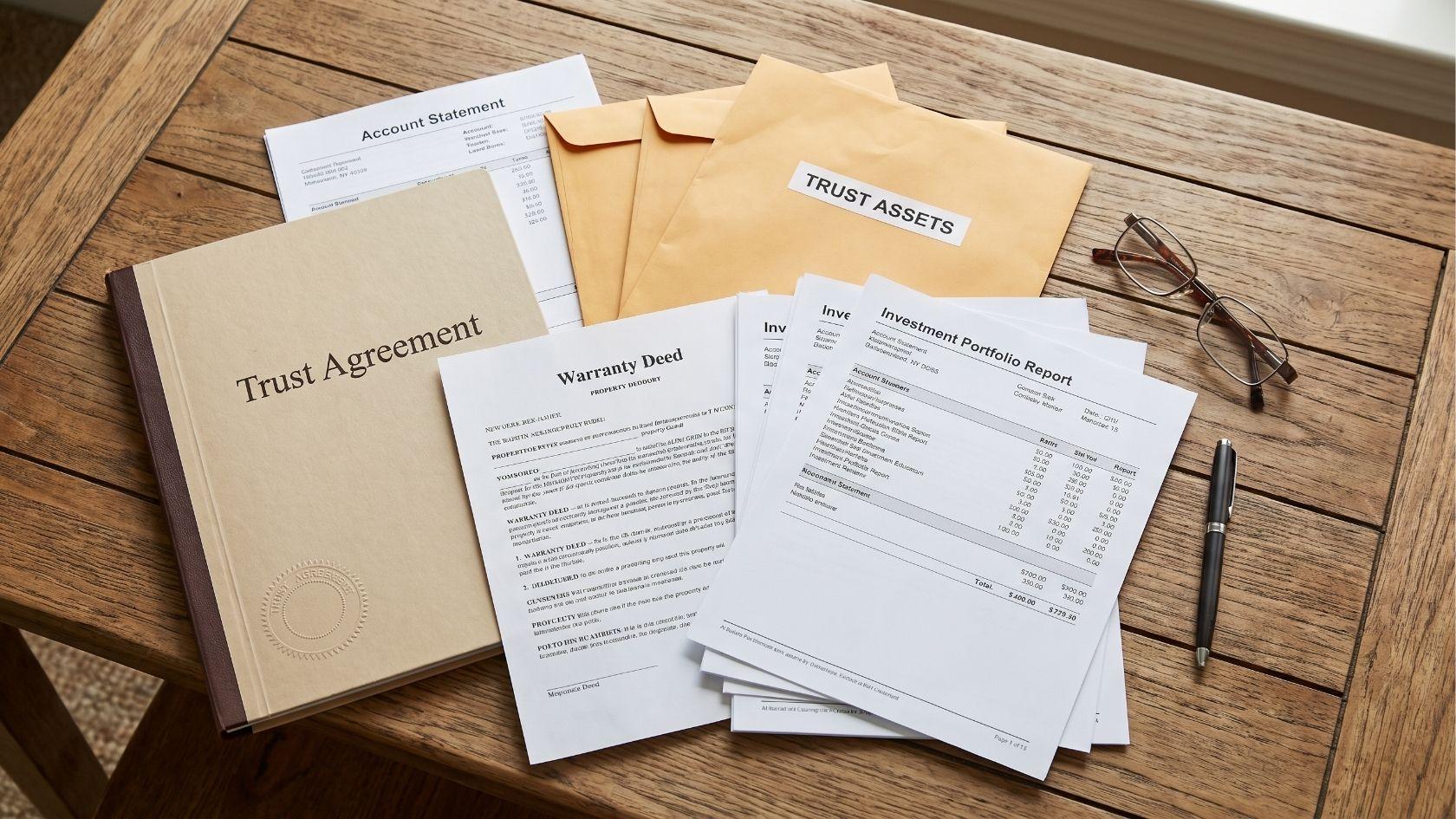
That means physical property like single-family homes, condos, commercial buildings, raw land, and plots. It can also hold property notes, which are papers that show a promise to pay for real estate. Mortgages can go in too.
A land trust does not hold cash, stocks, cars, or other personal items. It is built for real property alone.
Meet the People Who Run Your Land Trust
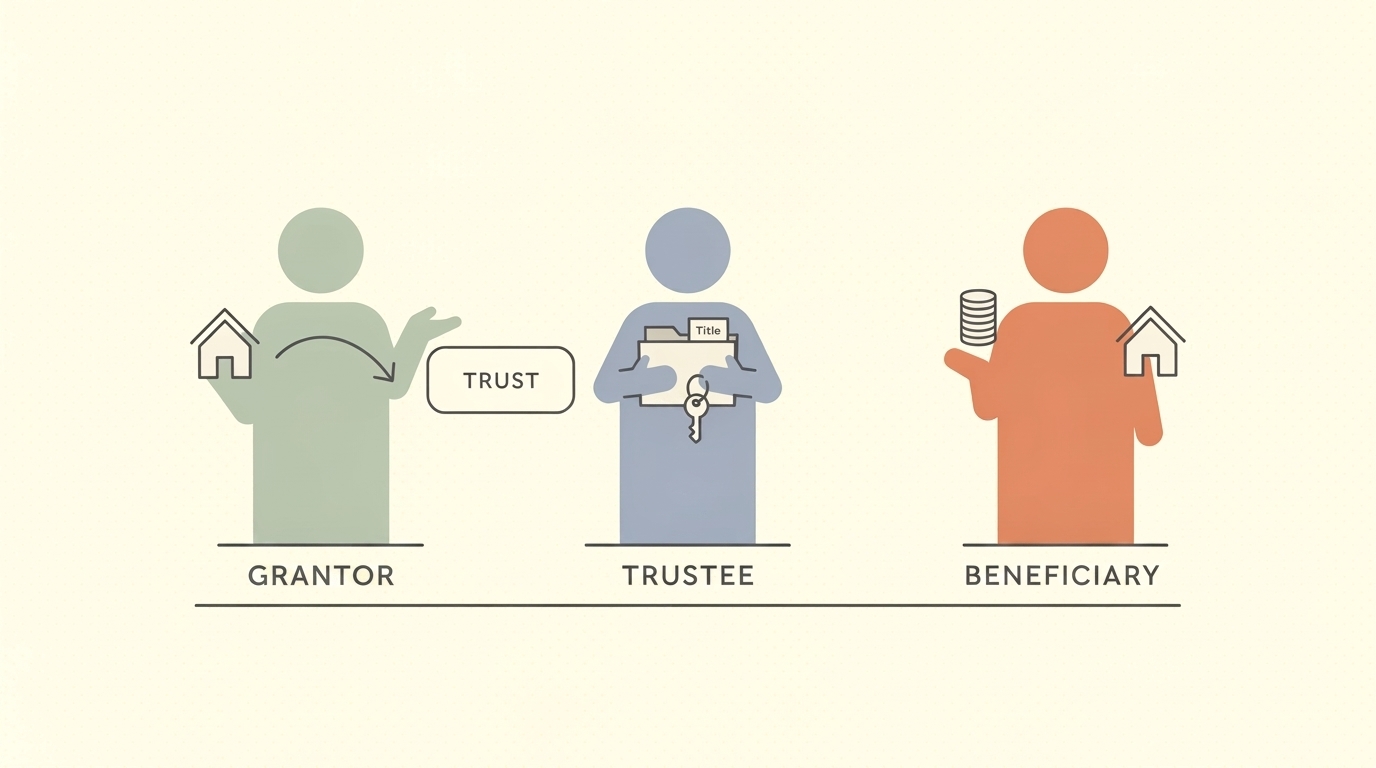
A land trust lets someone else hold the title to your real estate while you stay in charge. It only holds real property and works while you are alive.
You still make every decision. Most land trusts are revocable. You can change the terms, add or remove property, or end the trust anytime.
Three people run it:
- The grantor sets up the trust and moves the property in.
- The trustee holds the title and acts only on the grantor's word.
- The beneficiary keeps control and gets the perks, like rental income.
Often the grantor and beneficiary are the same person.
The Three Main Kinds of Land Trusts and What Each One Holds?

Not every land trust holds assets the same way. Some hold your real estate for privacy. Others hold rights to protect land or keep homes affordable. Here are the three main types people use.
Title-Holding (Illinois) Land Trusts
Setting one up starts with a deed that moves the title from your name to the trustee. Public records then show the trustee, not you.
You keep full control and can rent, sell, or mortgage the property.
These are often called Illinois land trusts. They started in 1800s Chicago, where owners used them to buy land without showing who they were.
Conservation Land Trusts
A conservation land trust holds development rights, not always the full land. The owner signs a conservation easement and gives up the right to build. But they keep the title and can still farm or use the land.
If the whole property is donated, the trust holds the land itself. This is where the tax break comes in. When you give up your development rights, you can claim a deduction equal to how much value the land loses.
Say your land is worth $1 million if built on, but only $600,000 once the easement is in place. That drop of $400,000 becomes your possible deduction.
One note of caution. The IRS scrutinizes these deductions closely and aggressively challenges inflated or syndicated versions in court. Recent law also limits certain partnership deductions, so work with a tax advisor and get a proper appraisal before you claim one.
You can read the rules in IRS Publication 526 and under Internal Revenue Code Section 170(h), which govern charitable and conservation easement deductions.
Community Land Trusts
A community land trust holds the land under a home to keep housing cheap for years. A nonprofit owns the land and leases it to homeowners, often for 99 years. When owners sell, they keep only part of the price gain.
The rest stays with the trust. This helps future low-income families afford a home.
Why Do People Put These Assets in a Land Trust?

People turn to land trusts for real, practical reasons. The benefits often come down to privacy, smoother transfers, and simpler handling of property. Here is what they get out of it:
- Privacy over ownership: The trustee's name shows up on the deed, not yours. This keeps nosy buyers, lawsuit seekers, and the public from knowing what you own or guessing your net worth.
- Skipping probate: Probate is the slow, costly court step that moves property after death. Since the trustee already holds the title, no court needs to step in. You name who gets the property, and your heirs get it faster with less stress and cost.
- Easier transfers: Moving property becomes simpler because you can shift the beneficial interest without a new deed each time. This helps when you want to gift a share or pass property to family without extra recording steps.
- Simpler co-ownership: When several people own one property, a land trust can hold it under one title. Each owner holds a set share, which keeps group ownership tidy and lowers the chance of disputes.
How Taxes Work on Property in a Land Trust?

A land trust does not create a separate tax entity. For a revocable land trust, the IRS treats the beneficiary as the owner. So rental income, mortgage interest, and depreciation all flow onto your personal tax return, not a separate one.
When you sell, the gain is taxed to you at capital gains rates. Holding the property in a land trust does not change that math. It also does not block a 1031 exchange, so you can still roll your gain into a new property to delay the tax, as long as you meet the IRS timing rules.
There is a tax benefit at death too. Property held in a revocable land trust usually gets a stepped-up basis.
That means your heirs take the property at its market value on the day you pass, which can wipe out much of the capital gains tax on years of growth. The IRS explains these rules in Topic No. 409 on capital gains and losses and in the Section 1031 like-kind exchange guidance.
Land Trust vs. LLC: What Is the Difference?
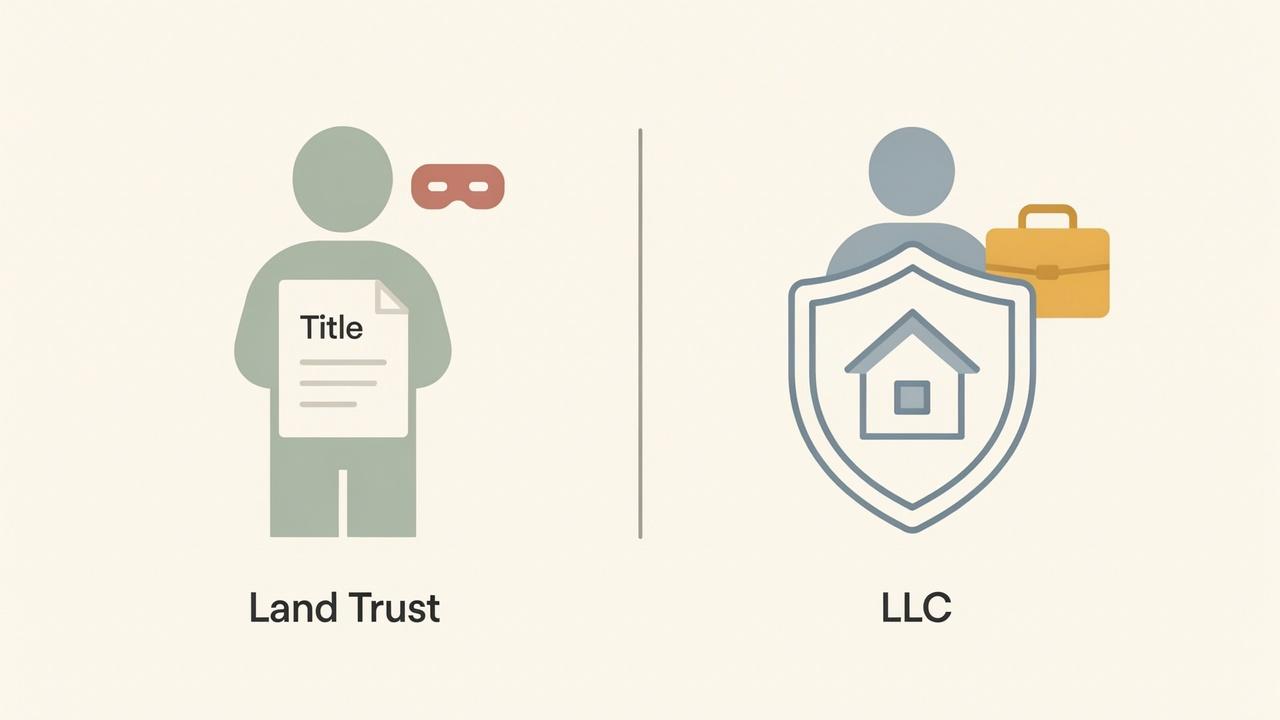
A land trust and an LLC do different jobs. A land trust is mainly a way to hold title and keep your name private. An LLC is a real business that owns the property and shields you from liability.
A land trust does not protect you from lawsuits on its own, since responsibility still points back to the beneficiary. An LLC limits that liability, so a claim against one property usually stays with the LLC and not your personal assets.
Here is a quick side-by-side look:
| Feature | Land Trust | LLC |
| Main purpose | Holds title and keeps your name private | Owns property and runs as a business |
| Liability protection | None on its own | Shields personal assets from claims |
| Privacy | Strong, trustee shows on records | Varies, members may be listed |
| Ongoing rules | Few once set up | Yearly filings and fees |
| Best use | Privacy and easy transfers | Real liability protection |
This is why many investors use both. They put the property in a land trust for privacy, then name an LLC as the beneficiary for protection. Keep in mind an LLC needs yearly filings and fees, while a land trust has fewer rules once it is set up.
What a Land Trust Will Not Do for Your Assets?
A land trust brings privacy and easy transfers, but it has clear limits you should know before you set one up:
- No full creditor protection: On its own, a land trust does not stop creditors. A determined one can still find the trust and go after the property inside it.
- No break on property taxes: The trust does not lower or erase your tax bill. You still owe the same property taxes as before.
- No escape from mortgage duties: Your loan stays your job. Moving property into a trust can even trigger a due-on-sale clause in some loans, so check your terms first.
- No replacement for a full estate plan: A land trust is just one tool. It does not cover wills, other trusts, or the rest of your planning needs.
- Better paired with an LLC: For real liability protection, many owners name an LLC as the beneficiary. This adds the safety a land trust alone cannot give.
Conclusion
A land trust brings privacy, helps your heirs skip probate, and makes transfers easier — but it also has real limits.
It does not shield you from creditors or lower your taxes, which is why many owners pair it with an LLC. That simple fact, that it holds only real estate, shapes every choice you make with it.
Before you set one up, talk to an estate planning attorney about your own needs.
Frequently Asked Questions
How much does it cost to set up a land trust?
Costs vary by state and attorney. You may pay legal fees to draft the papers, plus small county fees to record the deed. Shopping around and asking for a flat rate can help you keep the setup affordable.
Can two or more people be beneficiaries of one land trust?
Yes. A land trust can have several beneficiaries, and each one can hold a set share of the property. Spelling out those shares clearly in the trust document helps avoid disputes later.
What happens to a land trust if the trustee dies?
A successor trustee steps in. The trust names a backup ahead of time, so the property stays safe and in place. This is one reason to name a reliable successor when you first set up the trust.
Can a land trust hold property in more than one state?
It is not ideal. Most experts set up a separate trust in each state, since land trust laws change from state to state. A local attorney can tell you how each state treats these trusts before you file.
Can I name my living trust as the land trust beneficiary?
Yes. Many owners do this to line up privacy, probate savings, and their wider estate plan in one step. It is a common way to connect a land trust to a fuller estate plan.