Quitclaim Deed vs Warranty Deed: Key Differences Explained

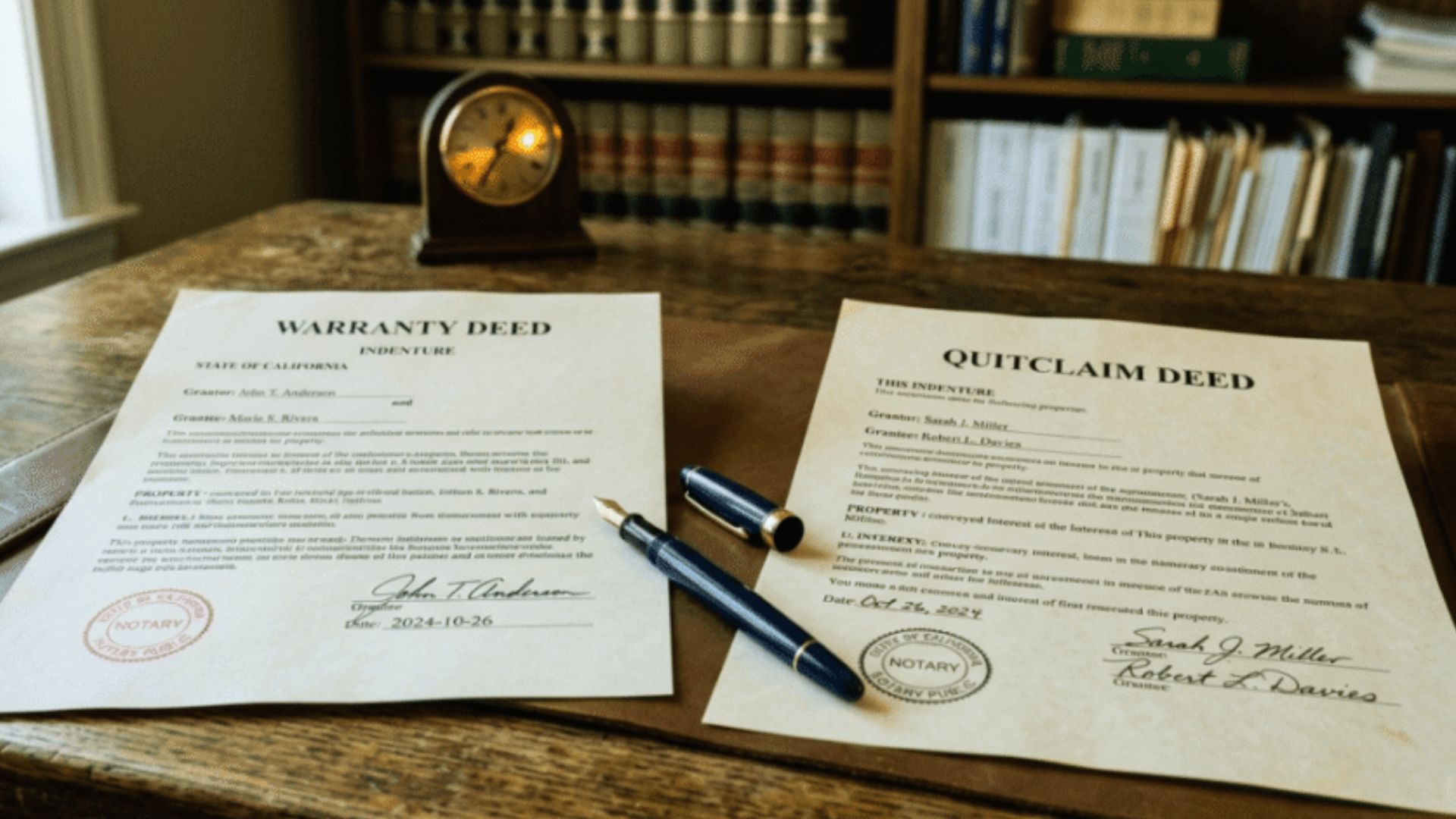
Warranty deed and quitclaim deed documents side by side on law office desk with fountain pen
Table of Content

You need to transfer property, and now two legal terms keep appearing: quitclaim deed and warranty deed. Maybe you're adding a family member to a title, removing an ex-spouse after a divorce, or buying a home for the first time.

Understanding quitclaim deed vs warranty deed is important because each deed provides a different level of ownership protection. Choosing the wrong one could expose you to unexpected title issues, legal disputes, or financial risks.

This guide explains how both deeds work, their key differences, when each is commonly used, and the risks involved so you can confidently choose the right deed before completing a property transfer.

Quitclaim Deed vs Warranty Deed: What's the Difference?

Buyer signing quitclaim deed property transfer contract with house model and keys on desk

A quitclaim deed transfers whatever ownership interest the grantor has without making any promises about the property's title. By contrast, a warranty deed transfers ownership while guaranteeing that the seller has clear legal title and the legal right to convey the property.

The person transferring the property is known as the grantor, while the person receiving ownership is the grantee. These legal terms apply to both types of deeds.

The biggest distinction is the level of protection provided. A quitclaim deed simply conveys the grantor's existing ownership rights, whether those rights are complete, partial, or even nonexistent.

A warranty deed, however, includes legally enforceable warranties that protect the buyer if undisclosed liens, ownership disputes, or title defects later arise. Because of these protections, warranty deeds are the standard choice for most traditional real estate transactions.

Quitclaim Deed vs Warranty Deed Comparison

Although both deeds transfer property ownership, they offer very different levels of legal protection. This comparison highlights the key differences to help you choose the option that best fits your situation.

Comparison Factor Quitclaim Deed Warranty Deed
Ownership Transfer Transfers only the legal interest the grantor currently possesses without confirming that ownership is valid or free of claims. Transfers ownership while confirming that the grantor legally owns the property and has the authority to convey it.
Title Protection and Warranties Provides no warranties or guarantees about the title. The grantee assumes the risk of any title defects or ownership issues. Provides legal assurances that the title is free from undisclosed liens, ownership disputes, and other title defects. The grantor may be legally responsible if covered issues arise later.
Risk to the Grantee Higher risk because the deed offers no ownership warranties, leaving the grantee responsible for resolving title issues. Lower risk because the deed includes legal warranties that protect against many pre-existing ownership claims.
Common Uses Commonly used for transfers between family members, spouses after divorce, or transferring property into a living trust. Commonly used for residential home sales where buyers and mortgage lenders expect stronger title protection.
Grantor's Legal Responsibility The grantor transfers any ownership interest they have without making promises about the quality of the title. The grantor accepts legal responsibility for the warranties in the deed and may have to resolve title issues or compensate the grantee if those warranties are breached.
Preparation and Recording Costs Often less expensive because it typically does not require a title search or extensive title review. Usually more expensive because buyers commonly obtain a title search, title insurance, and additional documentation before recording the transfer.

How a Quitclaim Deed Works

Person signing quitclaim deed property contract with red roof model house and keys on desk

A quitclaim deed transfers only the ownership interest the grantor currently has, without guaranteeing a clear title. It is mainly used between trusted parties for simple property transfers.

  • A quitclaim deed transfers only the ownership interest the grantor legally has at the time of signing, without guaranteeing clear ownership.
  • If the grantor owns the entire property, that interest passes to the grantee. If the grantor owns only a partial interest or no valid interest, the grantee receives only that limited interest.
  • It does not protect the grantee from liens, easements, unpaid property taxes, title defects, or competing ownership claims.
  • Because it provides no title warranties, quitclaim deeds are most commonly used between family members, spouses, or other trusted parties who understand the property's ownership history.
  • Common uses include adding or removing a spouse from a title, transferring property between family members, moving property into or out of a living trust, correcting title errors, and certain estate planning transfers.
  • A quitclaim deed is simple, quick, and generally less expensive than a warranty deed, with fewer closing requirements.
  • Most homebuyers and mortgage lenders prefer a warranty deed because it offers stronger legal protection and guarantees a clearer title.
  • Transferring property with a quitclaim deed does not remove the original borrower's mortgage responsibility unless the lender approves a release or refinancing.

How a Warranty Deed Works

Person signing quitclaim deed property contract with gray model house and house keys

A warranty deed transfers ownership with legal guarantees that the title is clear and the seller has the right to sell. It provides buyers with stronger protection against future title claims.

  • A warranty deed provides the highest level of protection in a property transfer by including legally enforceable guarantees about ownership and title.
  • The grantor confirms they legally own the property, have the authority to transfer it, and that the title is free from undisclosed liens, ownership claims, or other encumbrances unless specifically disclosed.
  • The grantor also promises to defend the grantee against valid title claims covered by the deed's warranties, giving buyers greater confidence in the transfer.
  • While a warranty deed offers legal assurances from the seller, title insurance provides financial protection against certain covered title defects discovered after closing, making both forms of protection valuable.
  • Warranty deeds are the standard choice for most residential real estate transactions because they provide stronger legal protection for buyers and are widely accepted by mortgage lenders.
  • Key benefits include strong protection against covered title defects, greater confidence in ownership, reduced risk of future ownership disputes, and legal remedies if the grantor breaches the deed's warranties.
  • The grantor remains legally responsible for the warranties provided, and certain title issues, such as fraud, forged documents, or unknown heirs, may still require title insurance for additional protection

Real-Life Examples: Quitclaim Deed vs Warranty Deed

Understanding how these deeds are used in real situations can make choosing the right one much easier.

Transferring Property Between Family Members

Parents adding a child to a property's title, siblings transferring inherited property, or relatives gifting real estate commonly use a quitclaim deed because these transfers usually occur between trusted family members rather than as commercial sales.

Correcting a Title Error

Minor recording mistakes, such as a misspelled legal name or an incorrect property description, can often be corrected with a quitclaim deed instead of preparing an entirely new ownership transfer.

Buying or Selling a Home

Most traditional home sales use a warranty deed because buyers expect clear title protection, and mortgage lenders generally require it before approving financing.

Many transactions also close through escrow, where a neutral third party holds the purchase funds and documents until all closing requirements have been satisfied.

Transferring Property Into or Out of a Trust

Property owners often use a quitclaim deed to transfer real estate into a revocable living trust or transfer it back to themselves or beneficiaries during trust administration.

Since ownership usually remains within the same family or estate plan, extensive title warranties are often unnecessary.

Quitclaim Deed vs. Warranty Deed: Pros and Cons

Choosing between a quitclaim deed and a warranty deed depends on the level of legal protection you need.

The table below compares the key advantages and disadvantages of each deed to help you decide which is best for your situation.

Factor Quitclaim Deed Warranty Deed
Pros Quick and simple to prepare and transfer ownership. Provides the highest level of buyer protection.
Usually less expensive than other deed types. Guarantees the grantor legally owns the property and has the right to transfer it.
Commonly used for transfers between family members, spouses, or into trusts. Protects the buyer from undisclosed title defects, liens, and ownership claims.
Ideal for trusted transfers where title guarantees are unnecessary. Commonly required by mortgage lenders in traditional home sales.
Cons Provides no guarantee that the grantor owns the property. Involves more paperwork and legal requirements.
Does not protect against liens, title defects, or ownership disputes. May involve higher costs due to title searches and title insurance.
Not recommended for buying property from an unfamiliar seller. Less suitable for simple family transfers where ownership is already clear.
The grantee accepts all risks related to the property's title. The grantor may remain legally liable if title issues arise after the sale.

Legal and Financial Implications of Choosing the Wrong Deed

Close-up of hands signing home purchase agreement contract with house key during closing

Selecting the wrong deed can create legal and financial problems that may not become apparent until years after the transfer.

Understanding these risks helps protect both the grantor and the grantee from avoidable disputes, unexpected expenses, and delays when selling or refinancing the property.

Title Defects and Ownership Disputes

Accepting a quitclaim deed without understanding its limitations may expose the grantee to existing title issues, including undisclosed liens, unpaid property taxes, easements, boundary disputes, or competing ownership claims.

Because a quitclaim deed provides no ownership warranties, resolving these problems generally becomes the grantee's responsibility.

Future Sale and Financing Challenges

An unclear ownership history can make selling or refinancing the property more difficult. Buyers, lenders, and title companies routinely review the chain of title before completing a transaction.

If unresolved issues appear in the property's records, additional legal work may be required before a sale or loan can proceed.

Potential Liability for the Grantor

A grantor who signs a warranty deed accepts legal responsibility for the warranties included in the deed.

If those warranties are breached because of a covered title defect, the grantor may be required to resolve the issue or compensate the grantee, depending on applicable state law.

Can Either Deed Affect Property Taxes?

Changing the type of deed generally does not change how property taxes are calculated.

However, transferring ownership may trigger reassessment or other tax consequences in some states, depending on the nature of the transfer and local laws.

Certain transfers between spouses, family members, or into a revocable living trust may qualify for exemptions or special tax treatment.

Because these rules vary by state, it is wise to review local regulations or consult a qualified tax professional before completing the transfer.

Common Mistakes to Avoid

Avoiding these common mistakes can help prevent ownership disputes and unnecessary delays duringa property transfer.

Skipping the title search: Even when transferring property between trusted individuals, undisclosed liens or ownership issues may still exist.

Using a quitclaim deed for a home purchase: Saving money upfront may seem appealing, but giving up title warranties can expose the buyer to significant financial risk.

Failing to record the deed: A signed deed that is never recorded can create uncertainty about legal ownership and complicate future sales or refinancing.

Ignoring state-specific requirements: Witness rules, notarization standards, recording forms, and filing procedures vary by state. Following outdated or incorrect requirements can delay the transfer.

Assuming notarization guarantees validity: A notary verifies the identity of the signer but does not confirm that the deed is legally correct or that the transfer complies with state property laws.

Expert Tips Before Signing Any Property Deed

Taking a few extra steps before signing can help protect your ownership rights and reduce the risk of future title problems.

  • Verify that the property's legal description exactly matches the county land records before signing.
  • Purchase title insurance when buying property to protect against covered title claims that may appear after closing.
  • Consult a qualified real estate attorney if the transfer involves significant money, multiple owners, or an uncertain ownership history.
  • Keep copies of both the signed deed and the recorded deed for future sales, refinancing, or estate planning.
  • Review your state's recording, notarization, and witness requirements before filing the deed to avoid unnecessary delays.

Conclusion

Understanding the difference between a quitclaim deed vs warranty deed helps you choose the right option for your property transfer. A quitclaim deed is generally best for transfers between trusted parties, correcting title errors, or moving property into a trust.

A warranty deed offers stronger legal protection and is usually preferred for real estate sales. Before signing any deed, review your state's recording requirements, verify the property's ownership history, and consider a title search and title insurance.

If you're unsure which deed fits your situation, consult a qualified real estate attorney.

Frequently Asked Questions

Can a quitclaim deed be reversed after it is signed and recorded?

Reversing a recorded quitclaim deed is generally not automatic. In most cases, the current owner must voluntarily sign and record a new deed transferring the property back. If there is evidence of fraud, coercion, or a legal defect, a court proceeding may be necessary.

Does a quitclaim deed affect your credit score?

No. A quitclaim deed transfers ownership rights but does not directly affect your credit score because property ownership is not reported to credit bureaus. However, transferring ownership does not remove your responsibility for an existing mortgage unless the lender formally releases you from the loan.

Can you get a mortgage with a quitclaim deed?

Yes. A property previously transferred by quitclaim deed is not automatically ineligible for financing. However, most mortgage lenders require a clear title before approving a loan, and they may request additional documentation or a title search before closing.

Can a quitclaim deed transfer property with a mortgage?

Yes. A quitclaim deed can transfer ownership even if the property has an existing mortgage. However, the mortgage itself usually remains in the original borrower's name unless the lender approves a loan assumption, release, or refinancing.

Transferring ownership alone does not transfer the mortgage obligation.

Is a lawyer required to prepare a warranty deed?

Many states do not legally require an attorney to prepare a warranty deed. However, legal guidance can help ensure the deed complies with state requirements, accurately describes the property, and properly reflects the parties' intentions.

Leave a Reply

Your email address will not be published. Required fields are marked *

Table of Content

Share Now

Latest Posts