

The tax benefits of putting house in trust are real, but they apply to fewer people than most articles admit.
I want to be straight with you: for most homeowners, trusts are mainly about avoiding probate, not cutting taxes.
That said, for the right person and the right structure, the tax advantages can be significant. This guide applies to US-based homeowners.
I will cover how trusts work, which structures may offer tax benefits, and where the common misunderstandings are, so you can make a clear, informed decision.
Let’s get started.
What Does It Mean to Put a House in a Trust?

A trust is a legal arrangement where one party, called a trustee, holds property on behalf of another, called a beneficiary.
When you put your house in a trust, you transfer the legal title of your home to that trust.
You are not selling your house. You name who manages it and who eventually receives it. The trust holds the title, not you personally.
This setup can help your family avoid probate and, in some specific cases, may reduce certain taxes depending on the trust structure you choose.
Types of Trusts for Real Estate and Their Tax Impact
Not every trust works the same way, and the wrong choice can cost you more than it saves.
| Trust Type | Tax Benefit | Controls Property |
| Revocable Living Trust | None (probate avoidance only) | Yes |
| Irrevocable Trust | May reduce estate taxes | No |
| QPRT | May reduce gift tax | Limited term |
Revocable Living Trust
A revocable trust is one you can change or cancel at any time. You keep full control. You can remove the property whenever you want.
Because of this flexibility, the IRS still treats the home as yours. There is no estate tax reduction here. The primary purpose of a revocable trust is to avoid the probate process, not to save on taxes.
Irrevocable Trust
An irrevocable trust cannot be easily changed once created. You give up ownership and control. In return, the home may be removed from your taxable estate.
This may reduce estate taxes, but only if your estate is large enough to owe them in the first place. For most families, that threshold is quite high.
Estate tax rules are determined by the Internal Revenue Service, and the exemption currently applies only to estates above a significant dollar amount.
Qualified Personal Residence Trust (QPRT)
A QPRT lets you transfer your home into an irrevocable trust while keeping the right to live there for a set number of years. When that period ends, ownership passes to your beneficiaries.
Because you retained a right to live there, the gift value is discounted for tax purposes. This may reduce gift tax exposure when passing a high-value home to heirs.
It is a more advanced strategy suited for larger estates.
Real Tax Benefits of Putting House in Trust

Before reading this section, keep one thing in mind: most of these benefits apply to specific trust types and specific financial situations. They are not automatic for every homeowner.
1. Estate Tax Reduction
Federal estate tax applies only to estates above the federal exemption threshold. That threshold changes yearly and is expected to decrease after 2025 unless Congress takes action. Some states have their own estate taxes with lower thresholds.
If your estate may be subject to these taxes, moving your home into an irrevocable trust could help remove it from the taxable estate. For smaller estates, this benefit likely does not apply.
2. Capital Gains Tax Advantages
Assets included in a taxable estate typically receive a step-up in basis at the time of death. This means the cost basis resets to the current market value, which can significantly reduce capital gains tax when heirs sell the property.
This benefit comes from inheritance law, not from the trust itself. The trust structure affects whether a property qualifies, so the outcome depends on how the trust is set up.
3. Gift Tax Benefits
A QPRT may allow you to pass your home to heirs at a discounted gift value.
The IRS calculates the gift based on the present value of the future transfer, not the full market value today. This can lower the taxable gift amount for qualifying situations.
4. Avoiding Probate Costs and Court Fees
This is the benefit that applies to the widest range of homeowners. Probate is the court process that distributes your estate after death. It can be slow and costly. Some states charge fees based on the total value of probate assets.
A trust may help your home bypass probate entirely, which means fewer court fees and faster transfer to your heirs.
5. Income Tax Planning Opportunities
With certain trust structures, rental income from the property may be directed to beneficiaries in lower tax brackets, subject to trust taxation rules and distribution requirements.
This is generally relevant only for income-producing properties held in specific trust types and is a more advanced consideration.
Tax Benefits of Putting House in Trust vs Drawbacks
Knowing both sides helps you decide whether a trust actually makes sense for your situation.
| Factor | Benefit | Drawback |
| Probate | Avoidance for all trusts | Setup cost required |
| Estate taxes | May reduce for large estates | No benefit for most estates |
| Capital gains | Step-up may apply | Depends on trust type |
| Control | Revocable: full control | Irrevocable: control lost |
| Property taxes | Often no change | Some states may reassess |
Possible Disadvantages
Setting up a trust costs money. Attorney fees typically range from $1,000 to $3,000 or more. There can also be ongoing administration costs.
With an irrevocable trust, you give up control of the property. That is a significant decision and not the right fit for everyone.
Some states charge a transfer tax when you move property into a trust. Check your state’s rules before proceeding.
When a Trust May Not Provide Tax Benefits
If your estate falls below the federal and state exemption thresholds, an irrevocable trust may offer no tax advantage at all.
A simpler revocable trust may still help you avoid probate without the added complexity.
If you plan to sell the home in the near future, a trust may not improve your tax outcome and could complicate the sale.
How Putting a House in Trust Affects Property Taxes
This is one of the most misunderstood parts of trust planning and worth reading carefully.
Property tax rules vary significantly by state. In many states, moving a home into a revocable living trust does not trigger a reassessment because you are still treated as the owner for tax purposes.
Irrevocable transfers are more complicated. Some states may reassess the property when ownership changes, which could increase your property tax bill.
Rules differ widely, and some states treat the transfer as a taxable event regardless of trust type.
California’s Proposition 19 is a notable example. It changed the parent-child exclusion rules for property tax reassessment, which affected how trusts work for families passing homes to children in that state.
Always verify with your local county or state tax authorities before making any transfer.
Tax Benefits of Putting House in Trust for Estate Planning
A trust is most valuable in estate planning when it is matched to the right financial situation.
For the right family, a trust can be a practical tool in estate planning. It may help reduce estate taxes, potentially allow for a step-up in basis for heirs, and help avoid the cost of probate.
For high-net-worth families with estates above state or federal tax thresholds, this planning may save a meaningful amount. For most homeowners, avoiding probate court fees is often the main practical benefit.
The right trust structure depends entirely on your financial situation, your state, and your goals.
Step-Up in Basis Explained (Major Tax Advantage)
This is one of the most valuable concepts to understand before making any trust decision.
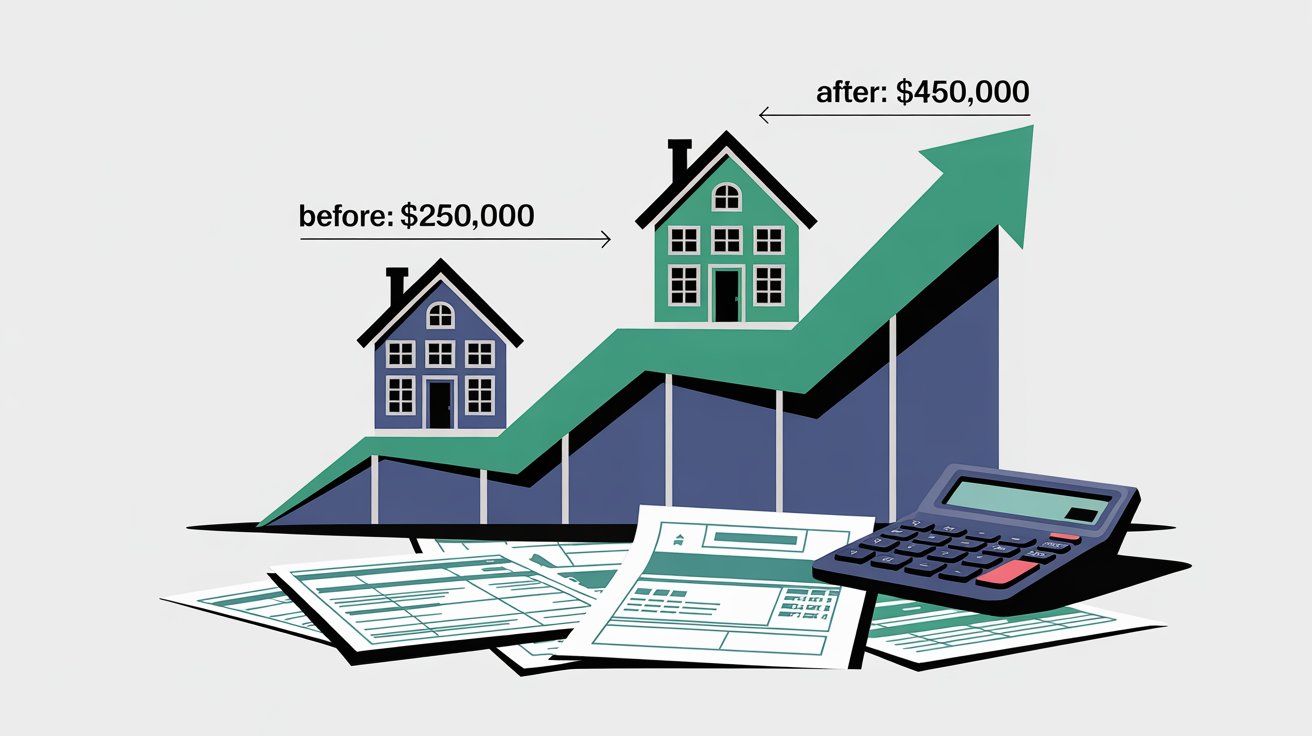
Say you bought your home for $200,000. It is now worth $600,000. If you sold it, you might owe capital gains tax on the $400,000 gain.
When that home passes to your heirs through your estate, the cost basis may be stepped up to $600,000. If they sell at that price, there may be no taxable gain.
This benefit comes from how inheritance law treats assets included in a taxable estate. Assets in a revocable trust are typically still part of your estate and may qualify.
However, some irrevocable trusts remove the asset from your estate, which could mean heirs do not receive the step-up in basis.
The rules here are technical and depend on the specific trust structure. A tax advisor can clarify how this applies to your situation.
Who Should Consider Putting Their House in a Trust?
A trust may be appropriate for:
- Homeowners whose estates may exceed state or federal estate tax thresholds.
- Parents who want to pass a home to children without court involvement.
- People in states with costly or slow probate processes.
- Homeowners with significantly appreciated property and heirs who may sell it.
- Anyone who wants clear, legally documented instructions for their home.
For most average homeowners, probate avoidance is the main reason to consider a revocable trust. Tax savings are generally secondary and depend heavily on the specific situation.
How to Put Your House in a Trust (Step-by-Step)
Getting the process right from the start avoids costly mistakes later.
1. Choose the right type of trust
Consider your goals carefully. A revocable trust works for probate avoidance. An irrevocable trust may offer tax advantages but requires giving up control. A QPRT may suit larger estates with specific planning needs.
2. Create the trust document
Work with an estate planning attorney to draft the document. It names the trustee, beneficiaries, and the rules that govern the trust.
3. Transfer property title
File a new deed that transfers ownership to the trust. This must be properly recorded to take effect. Creating the trust document alone is not sufficient.
4. Update insurance and tax records
Notify your homeowner’s insurance provider. If you have a mortgage, check with your lender, as some loans include due-on-sale clauses that a transfer could trigger.
5. Consult estate planning professionals
Tax laws change over time. An estate planning attorney and a CPA familiar with your state’s rules can help you set this up correctly and keep it current.
Common Mistakes to Avoid
Small errors in trust setup can undo the planning benefits entirely.
Not completing the deed transfer is the most common error. Many people create the trust document but never record the deed. Without that step, the home is not legally in the trust.
Skipping the insurance update is another issue. If the trust holds the home but your policy names you personally, there may be a coverage gap.
Using an outdated trust can also cause problems. Tax laws and state rules change over time. A trust written ten years ago may not reflect current law.
Attempting this without professional help often creates errors that cost more to fix later than proper setup would have cost in the first place.
Conclusion
Putting your house in a trust may be appropriate depending on your financial situation, your state’s laws, and the structure you choose.
For most homeowners, the primary benefit is avoiding probate rather than reducing taxes. Tax advantages exist but apply mainly to larger estates or specific trust types.
An estate planning attorney and a CPA are the right people to guide your decision.
What outcome matters most to your family?
Frequently Asked Questions
Does putting a house in a revocable trust reduce estate taxes?
No. A revocable trust does not remove your home from your taxable estate. Its primary purpose is to help your family avoid probate, not to lower your tax bill.
Is the step-up in basis a trust benefit or an inheritance law benefit?
It comes from inheritance law, not the trust itself. Assets included in a taxable estate may receive a step-up in basis, but eligibility depends on how the specific trust is structured.
Will my property taxes increase if I transfer my home into a trust?
Rules vary significantly by state. Many states do not reassess property for a revocable trust transfer, but irrevocable transfers may trigger reassessment depending on where you live.
Who actually benefits from estate tax reduction through a trust?
Primarily homeowners with large estates that may be subject to federal or state estate taxes. For most average estates below the exemption thresholds, this specific benefit does not apply.
Do I need an attorney to put my house in a trust?
It is strongly recommended. Errors in the deed transfer or trust document can create legal and tax complications that are more costly to fix than proper setup would have been.