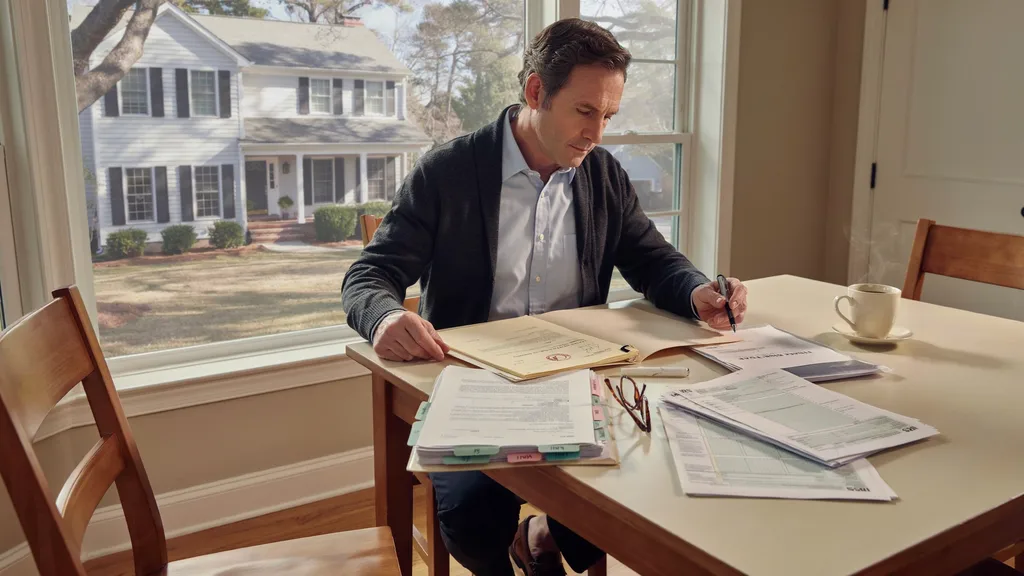
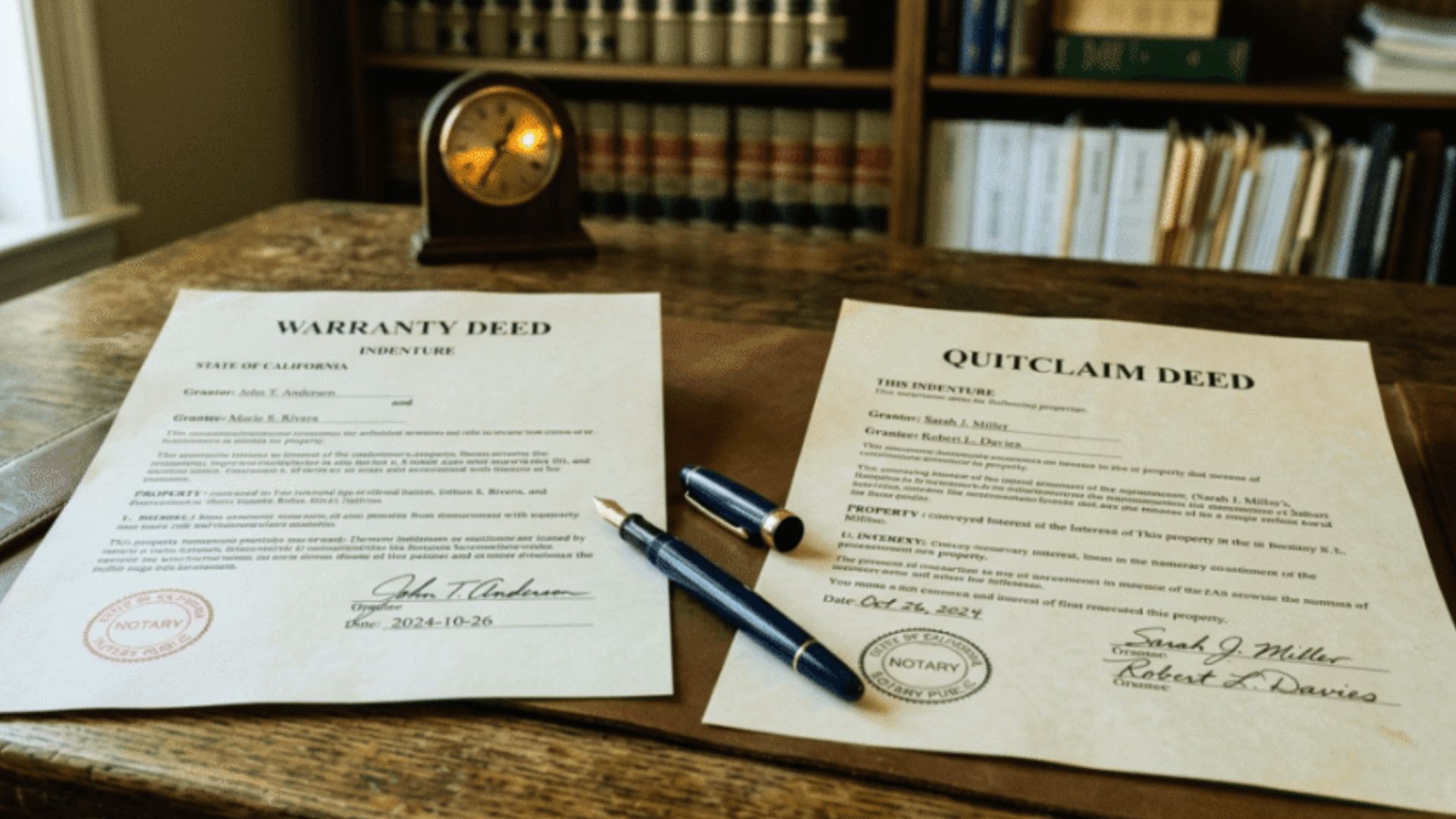
Co-ownership of a home means your name goes on the deed alongside someone else’s. That’s the short version. The real version gets messier fast.
Two names on paper doesn’t mean two equal claims. It doesn’t mean equal say, either.
Who ends up on the mortgage? Can one owner force a sale? What happens if a parent co-signs and then wants out years later? These questions catch people off guard.
I’ll break down what co-ownership of a home actually means past the basic definition. Title and mortgage connect in ways that differ from splitting rent, and different types of co-owners run into different trouble.
Some risks show up immediately. Others sit quiet for years.
What Does Co-Ownership Home Mean?
Co-ownership means two or more people hold legal title to the same home. This goes beyond roommates splitting rent. Unmarried partners buy together this way.
So do siblings, close friends, or investors pooling money for one property. A parent might co-own with an adult child to help them qualify for a mortgage.
The real difference from just living together comes down to paperwork. Your name has to sit on both the deed and the mortgage.
Sharing a lease or splitting bills doesn’t give you any legal stake in the property. Ownership only exists on paper, tied to those two documents, not to who pays what each month.
How Co-Ownership Actually Works
It comes down to three things: money, paperwork, and rules. You don’t have to split costs 50/50, since some co-owners pay based on income or how much they actually use the property.
That split matters later, because if you own as tenants in common, your share often matches what you put in. Uneven contributions today can mean uneven ownership down the road.
Being on title gives you a real legal claim, not just a promise, and that claim doesn’t disappear if you stop paying.
The other owner can’t remove your name without a court process, even after missed payments.
Usage rules matter too, even when everyone gets along, since someone still needs to decide who lives there, how guests work, or how a vacation rotation gets scheduled.
What are the Main Types of Co-Ownership
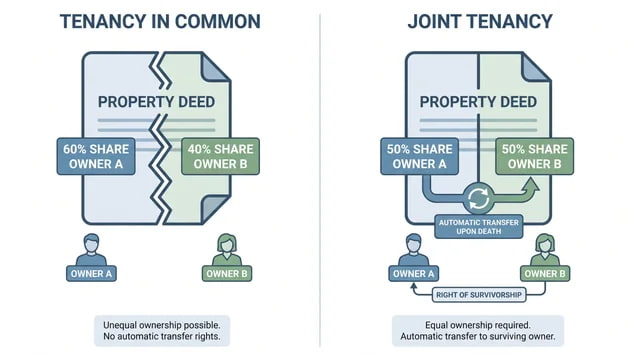
Both put your name on the deed, but they work very differently when it counts.
1. Tenancy in Common (TIC)
TIC fits when contributions aren’t equal.Maybe you put down 70% and your co-owner covered 30%. Your ownership share can reflect that split instead of forcing an even divide.
TIC also matters for estate planning.
Your share doesn’t automatically pass to the other owner when you die. You can leave it to your kids, a sibling, or anyone else in your will.
That flexibility makes TIC common between parents and adult children, or business partners who want their heirs protected.
2. Joint Tenancy
Joint tenancy comes with the right of survivorship. If one owner dies, their share passes straight to the surviving owner, no will needed.
But this only works cleanly under specific conditions. All owners generally need equal shares, and everyone usually has to buy in at the same time.
Add someone later, or split ownership unevenly, and you risk breaking the joint tenancy without realizing it.
3. Tenancy by the Entirety
Tenancy by the entirety is available only to married couples, and not all states recognize it. Where it does apply, it works like joint tenancy with one key difference: neither spouse can sell, transfer, or mortgage their share without the other’s consent.
The home is treated as a single asset owned by the marriage itself, not by two individuals separately. This structure also offers some protection against individual creditors.
If only one spouse owes a debt, a creditor generally can’t force a sale of the home to collect it. If you’re married and buying together, check whether your state offers this option before choosing joint tenancy by default.
What Happens to a Co-Owned Home When One Owner Dies
The answer depends entirely on how title is held.
Under joint tenancy, the surviving owner inherits the deceased owner’s share automatically. No probate. No will required. The transfer happens by operation of law, which means it’s fast and typically involves filing a death certificate with the county recorder.
This is one reason couples and long-term partners prefer joint tenancy; the survivor keeps the home without going through court.
Under tenancy in common, it works differently. The deceased owner’s share passes through their estate, which means it goes through probate.
Probate is the court process that validates the will, settles debts, and distributes assets to heirs. It can take months to over a year depending on the state and how contested the estate is.
During that time, the surviving co-owner shares the home with whoever is inheriting the deceased owner’s share, which could be a stranger, a distant relative, or someone with very different plans for the property.
This is why a co-ownership agreement should address death scenarios directly. If your co-owner dies, do you want first right to buy out their heirs before the share hits the open market? That clause has to be written in before you close, not negotiated after a death certificate arrives
Why People Choose Co-Ownership
Money and access are the two biggest reasons this arrangement keeps growing in popularity.
- Lower entry cost: Splitting the down payment and monthly mortgage cuts your upfront cash needed by half or more.
- Better mortgage terms: Lenders qualify co-borrowers on combined income, which lowers your debt-to-income ratio. A lower DTI can move you into a better rate tier. The difference between a 7.1% and a 6.7% rate on a $400,000 loan is roughly $100 per month over the life of the loan.
- Rising prices, tighter entry points: Home values across major markets have climbed steadily over the past decade, which means the down payment threshold climbs with them. Co-buying splits that upfront cost, making entry into appreciating markets possible before prices move further out of reach.
- Access to pricier markets: Pooled income raises what lenders approve, opening up neighborhoods a single buyer couldn’t touch.
- Bigger, better homes: Combined budgets buy more space, better condition, or a stronger location than either buyer could get alone.
Affordability and access work together here. One makes the purchase possible, the other makes it worth it.
Risks to Weigh Before You Co-Buy
Co-buying puts real risk on both people, not just the one who slips up.
If one owner misses payments, the lender doesn’t care whose fault it is. You’re both liable for the full mortgage, no matter what you agreed privately between yourselves. That private agreement means nothing to the bank.
Selling can get messy too, since one owner wanting out doesn’t mean the other agrees on timing or price. Disagreements here can drag on for months.
A partition lawsuit, the legal route when co-owners can’t agree on selling, routinely takes six months to two years to resolve and can cost each party several thousand dollars in attorney fees before any sale proceeds are divided.
Then there’s the relationship strain nobody likes to admit upfront. Money problems between co-owners spill into the relationship itself, whether that’s a partnership, a friendship, or a family tie. The financial risk and the personal risk end up tangled together.
What Goes Into a Co-Ownership Agreement
A solid agreement covers the decisions you’ll actually face, not just the big obvious ones.
Decision-Making Rules: This spells out who signs off on repairs, refinancing, or renting the place out. Without it, one owner can end up making calls the other never agreed to.
Exit Strategy and Buyout Terms: This sets the process for one owner buying out the other or selling the share, including how the property gets valued and what timeline applies. Without it, a disagreement over exit has one path: court.
A partition action is a legal proceeding where a judge can order the home sold and the proceeds split, regardless of whether either owner is ready to sell.
Courts don’t weigh sentiment or convenience, they resolve deadlock. That process takes months and costs both parties in legal fees before a single dollar changes hands.
A buyout clause in your agreement gives the departing owner a defined path out and gives the staying owner a first right to purchase, without involving a judge.
Steps to Co-Buy a House
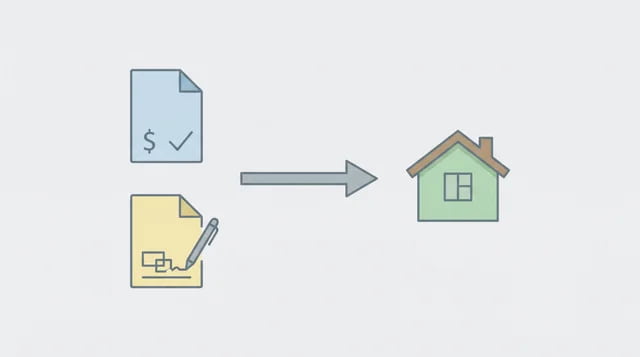
Follow these steps in order, since skipping ahead usually causes problems later.
1. Discuss Goals and Finances Together
Start with an honest money conversation before you even look at listings. Talk through income, debt, credit scores, and how long each person plans to stay.
Are you both buying for the long term, or does one person see this as temporary? Mismatched goals cause more co-ownership breakdowns than money does.
Get specific about what happens if one person’s job changes or they want to move sooner than planned. This conversation sets the foundation for everything else.
2. Get Preapproved as Co-Borrowers
Apply for preapproval together so the lender sees both incomes and credit profiles. A weaker co-borrower’s credit score can raise the interest rate for the whole loan.
Because of this, some buyers choose to leave one person off the loan entirely while still adding them to the title, landing in a common but tricky spot of being on the deed but not the mortgage.
Talk to your lender about both options before deciding, since the right structure depends on your specific credit situation.
3. Choose Your Ownership Type and Draft the Agreement
Decide between tenancy in common and joint tenancy based on your contributions and long-term plans. Then put everything in writing, ideally with a real estate attorney involved.
Your agreement should cover cost splits, decision-making rules, usage terms, and exit strategy. Don’t skip this step because things feel friendly right now.
Agreements exist for when circumstances change, not for when everyone still agrees. This document protects both of you later, not just the one who thought to ask for it.
4. Close on the Home
Closing works the same as any home purchase, but with more names on the paperwork. Both co-borrowers sign the mortgage documents, and everyone on title signs the deed.
Review your ownership type on the closing documents carefully before signing. This is your last chance to catch a title error before it becomes a legal headache.
Once you sign, your ownership structure is locked in unless you go through a formal legal process to change it later.
Is Co-Ownership Right for You?
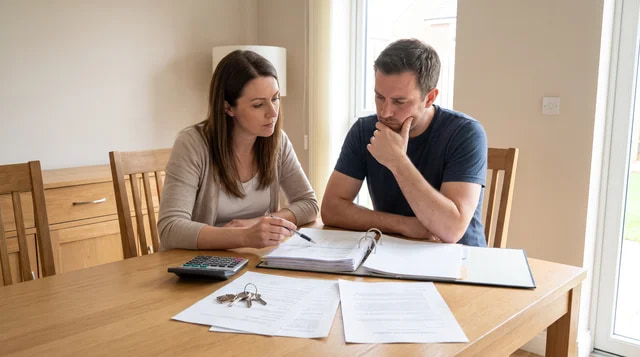
Before you sign anything, run through a few hard checks with your co-owner. You need to know you could cover the full mortgage payment if they missed one.
Without that backup, you’re taking on more risk than you might realize going in. A real exit plan matters too, and a verbal understanding between friends isn’t enough on paper.
You should also be able to handle a slower home sale if the two of you disagree on timing or price. Life circumstances shift in year three, or five, and your plan needs room for that.
Co-ownership works when both people plan for the hard moments, not just the good ones.
Get honest answers to these first, and you’ll have a solid foundation to build your purchase on.
Wrapping Up
Co-ownership home means more than sharing space and splitting bills. It’s a legal structure built on title, mortgage, and paperwork that outlasts good intentions. Plans change.
People move, jobs shift, relationships evolve. Your agreement is what protects everyone when that happens, not the trust you started with.
Get the structure right before you close, not after something goes wrong.
Talk to a real estate attorney, put your terms in writing, and go in with clear eyes. The agreement is what makes co-ownership workable not just at the start, but years in when circumstances look nothing like they did on closing day.
Frequently Asked Questions
What’s the difference between a co-owner and a sole owner?
A sole owner holds full title and makes every decision alone. A co-owner shares title with someone else, so major decisions and liability get split too.
Can a co-owner force the sale of the house if the others don’t agree?
Yes, through a legal process called a partition action. It can force a sale even when the other owner wants to keep the home.
What happens to a co-owned home if one owner dies without an agreement?
Under joint tenancy, the surviving owner gets the share automatically. Under tenancy in common, the share goes through probate to the deceased owner’s heirs.
Can you get a mortgage if one co-owner has bad credit?
Yes, but a weaker credit score can raise the rate for both borrowers. Some buyers leave that person off the loan while still adding them to the title.