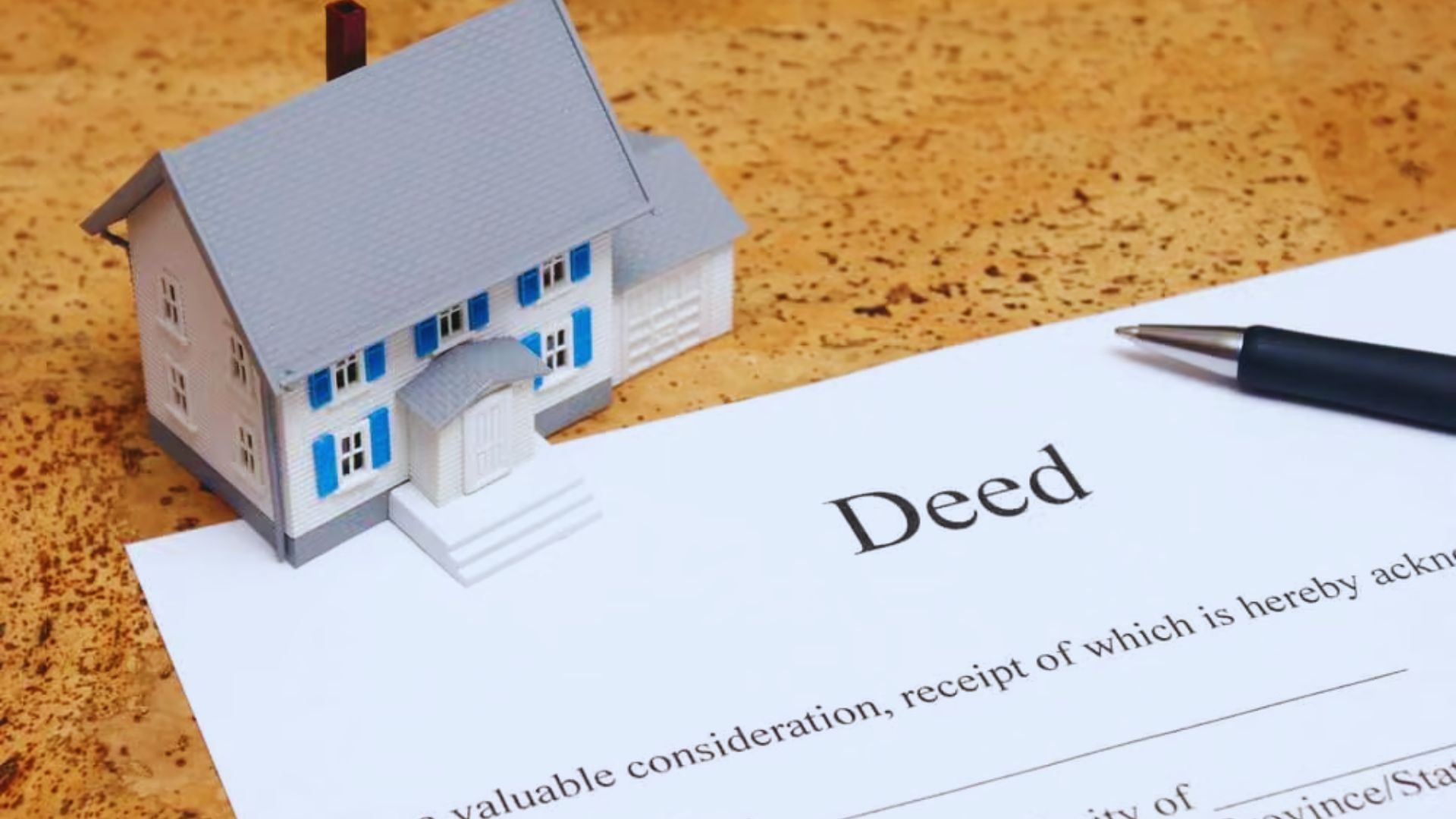
I keep hearing from people who are on the deed but not the mortgage. They got added to the title, but they never signed the loan that pays for it.
Then the worry kicks in. If something goes wrong, who’s actually on the hook?
Here’s the short version. Ownership and debt live on two separate documents. One doesn’t automatically follow the other.
That’s why you can own a home outright and still owe the bank nothing. It sounds like the better deal. It isn’t quite that simple.
I’ll walk you through exactly where the risk actually sits.
What Does It Mean to Be on the Deed But Not the Mortgage?
The deed and the mortgage do two completely different jobs. I’ve seen plenty of people treat them as the same paperwork. They’re not, and mixing them up is the first mistake.
Your deed is the ownership document. It’s recorded with the county, and whoever’s name is on it holds legal title to the home.
That title comes with real rights. You can live there, rent it out, or sell it.
Your mortgage is something else entirely. It’s a loan contract between the borrower and the lender. It has nothing to do with who owns the house.
Because these are separate documents, your name can appear on one without touching the other. If you never signed the loan, the lender can’t come after you personally.
They can’t garnish your wages. They can’t report missed payments on your credit file.
This setup shows up most often with couples. One partner gets added to the title for estate planning, but the mortgage never gets refinanced to include both names.
If that’s your situation, you end up with full ownership and zero loan obligation. That sounds like the better half of the deal. In practice, it’s not nearly that clean.
Why You’re Not Automatically Protected From the Mortgage

Owning the home on paper doesn’t protect you from losing it. I know that sounds backwards, but stick with me.
When a lender issues a mortgage, they don’t just trust the borrower’s word. They place a lien against the property itself.
That lien attaches to the house, not the person who signed the loan. It follows the property no matter whose name sits on the deed.
Why the Lien Matters More Than the Loan
This is the detail that gets stated as fact but almost never explained. Foreclosure isn’t a lawsuit against a person. It’s an action against the collateral, and that collateral is the house.
So if the person responsible for the payments stops paying, the lender can move to foreclose. It doesn’t matter if that’s an ex-spouse, a parent, or a co-owner.
You could have never missed a payment. You could have excellent credit and never signed a single loan document. You can still lose the home.
That’s because foreclosure targets the asset the lien sits on. It doesn’t target the specific person who defaulted.
If you’re the deed holder in that scenario, your ownership share doesn’t survive the lien being enforced. I’ve seen this catch people off guard more than anything else in this situation.
The Community Property Wrinkle
One more wrinkle worth knowing. In community property states, a spouse’s interest in the home can work differently than the general rule.
Sometimes their exposure to marital debt does too. That’s worth checking locally rather than assuming.
The core point holds everywhere: owning the title doesn’t cancel out what the lien can do
How This Affects Selling, Refinancing, and Your Credit
Once you get the lien part, the rest follows naturally. Let’s look at what actually happens when you try to sell or refinance.
Because the deed holder is a legal owner, their signature is required to sell the home. A mortgage-only signer can’t force a sale alone.
A deed-only owner can’t be bypassed either. Everyone on title has to agree.
But consent isn’t the same as getting paid. When the sale closes, the mortgage balance gets paid off first, straight out of the proceeds.
Whatever’s left after that goes to the owners on the deed. I’ve watched this surprise people who assumed their ownership share was separate from the loan balance.
If the home is underwater, or close to it, a deed holder who never took out the loan can walk away with little or nothing.
Refinancing works the same way, just in reverse. Neither name moves automatically just because everyone agrees it should.
Adding a deed holder to the mortgage, or removing a mortgage holder who isn’t on the deed, takes a formal refinance. Sometimes it takes a loan assumption approved by the lender.
Here’s one question I get asked constantly.
Does This Affect My Credit Score?
No. If your name isn’t on the mortgage, the loan won’t show up on your credit report.
The payment history, good or bad, won’t touch your score. Credit reporting follows the loan agreement, not the deed.
There’s one exception worth a second look. In certain community property states, shared marital debt can affect credit and liability in ways the general rule doesn’t predict.
If that might be you, it’s worth a quick check with a local attorney.
What to Do If You’re on the Deed But Not the Mortgage

What you do next depends on what you’re actually trying to protect. Are you worried about losing the home to someone else’s default? Or about being left out of future decisions?
Start by confirming exactly how the deed is held. This single detail decides what happens to your share in a default, a divorce, or a death.
Joint tenancy with right of survivorship works differently than tenancy in common. I always tell people to check this first, because it’s the detail that gets overlooked until it actually matters.
If full protection is the goal, ownership on paper isn’t enough. The more durable fix is refinancing the mortgage to include both names.
Another option is a formal loan assumption, approved by the lender. Either route lines up the title and the loan instead of leaving them split.
Here’s my honest take. This depends heavily on your state, how the deed is worded, and the mortgage terms. Get a real estate attorney or title company to look at your actual documents. Don’t rely on general rules of thumb, including this one.
Wrapping Up
Being on the deed but not the mortgage means you’re stuck with two documents that stay on separate tracks, until someone lines them up through a refinance, a loan assumption, or a change in title.
That split is really what explains the risk. You can own a home free of any loan obligation, and still watch that ownership disappear if the lien behind it doesn’t get paid.
If your situation touches community property rules, an upcoming sale, or a change in marital status, don’t guess. Get the deed and the mortgage reviewed together, not separately.
I’d treat that review as non-negotiable, not optional.
Frequently Asked Questions
Is it better to be on the deed or the mortgage?
Being on the deed gives you ownership and control. Being on the mortgage means you’re on the hook to repay the loan, without owning anything. Most people want both, for full rights and full responsibility. If you had to pick one, deed ownership protects your stake, but it won’t save you if the loan goes unpaid.
Do you own a house if you are on the deed?
Yes. The deed is the legal record of ownership, so your name on it makes you a titled owner. You get the right to occupy, rent, or sell the property. That’s true no matter whose name is on the mortgage.
Can someone sell a house if your name is on the deed?
No, not without your okay. Being on the deed makes you a legal co-owner, and a sale usually needs your signature. The mortgage balance still gets paid off from the proceeds first. Whatever’s left gets split among the owners on the deed.
What if my ex is on the deed but not on the mortgage?
Your ex still owns a share of the home’s value, even without mortgage liability. This usually gets sorted out during divorce, through a buyout, a refinance, or a court-ordered sale. Their name on the deed means their consent or payout is usually required to sell.