A notice lands in your mailbox with three words that stop you cold: unlawful detainer.
The term sounds like a criminal charge. It isn’t.
So what is unlawful detainer, exactly? It’s a specific legal process, with its own rules, its own speed, and its own limits on what a landlord can and can’t do.
Some situations trigger it. Others just look like they should, but don’t.
And the case itself moves faster than almost any other type of lawsuit, for reasons most people never hear explained.
Below, you’ll see what actually counts, what doesn’t, and why the clock runs so short once one of these gets filed.
What Is an Unlawful Detainer?
An unlawful detainer is a lawsuit filed to remove someone who’s occupying a property without any legal right to stay there.
The term actually covers two things. It’s the act itself, someone unlawfully holding onto the property, and it’s the court case filed to reclaim it.
Most people hear “unlawful detainer” and assume it means only the lawsuit. That’s just half the picture.
Anyone with lawful possession of the property can file, not only landlords. An owner, a buyer of a foreclosed home, or a property manager can all bring this case.
It’s not limited to tenants with a lease, either. Family members, guests, or partners who won’t leave after being asked can also be named in one, and in some cases, occupants who entered without permission may claim squatters rights as a defense.
What Situations Lead to an Unlawful Detainer?
The main trigger is simple: someone stays after their legal right to occupy the property ends. That can happen a few different ways.
- Holdover tenancy: the lease runs out, the tenant stays, and no new lease is signed
- Notice deadline passed: the landlord serves a valid written notice, the deadline expires, and the occupant hasn’t left or resolved the issue
- Unpaid rent, after formal termination: rent goes unpaid, the landlord serves proper notice, and the tenant neither pays nor vacates by the deadline
- Non-tenant household members: a family member or partner who was allowed to stay temporarily without a lease, refuses to leave when asked
Missing rent by itself never triggers this case. The landlord has to serve a formal written notice first, typically a 3-day notice to pay or quit, though some states use a 5-day window, and the deadline on that notice has to pass without action before unpaid rent becomes legal grounds for filing.
The notice has to meet specific requirements to hold up in court. It must be in writing, served properly (hand-delivered, posted, or mailed depending on state rules), and give the tenant a clear deadline to either fix the problem or vacate.
If the tenant pays the overdue rent or fixes the violation within the notice period, the landlord generally can’t proceed to court, the grounds disappear once the issue is cured.
Those aren’t the only grounds. A landlord can also file after:
- Lease violations: the tenant keeps unauthorized pets, sublets without permission, or breaks other written lease terms after proper notice
- Illegal activity: the tenant uses the property for unlawful purposes, like drug activity or operating an unlicensed rental
- Property damage: the tenant causes serious damage that lowers the property’s value (sometimes called waste)
In all of these, the process is the same: the landlord must serve proper written notice first and give the tenant a chance to correct the problem or leave before filing.
What an Unlawful Detainer Is Not
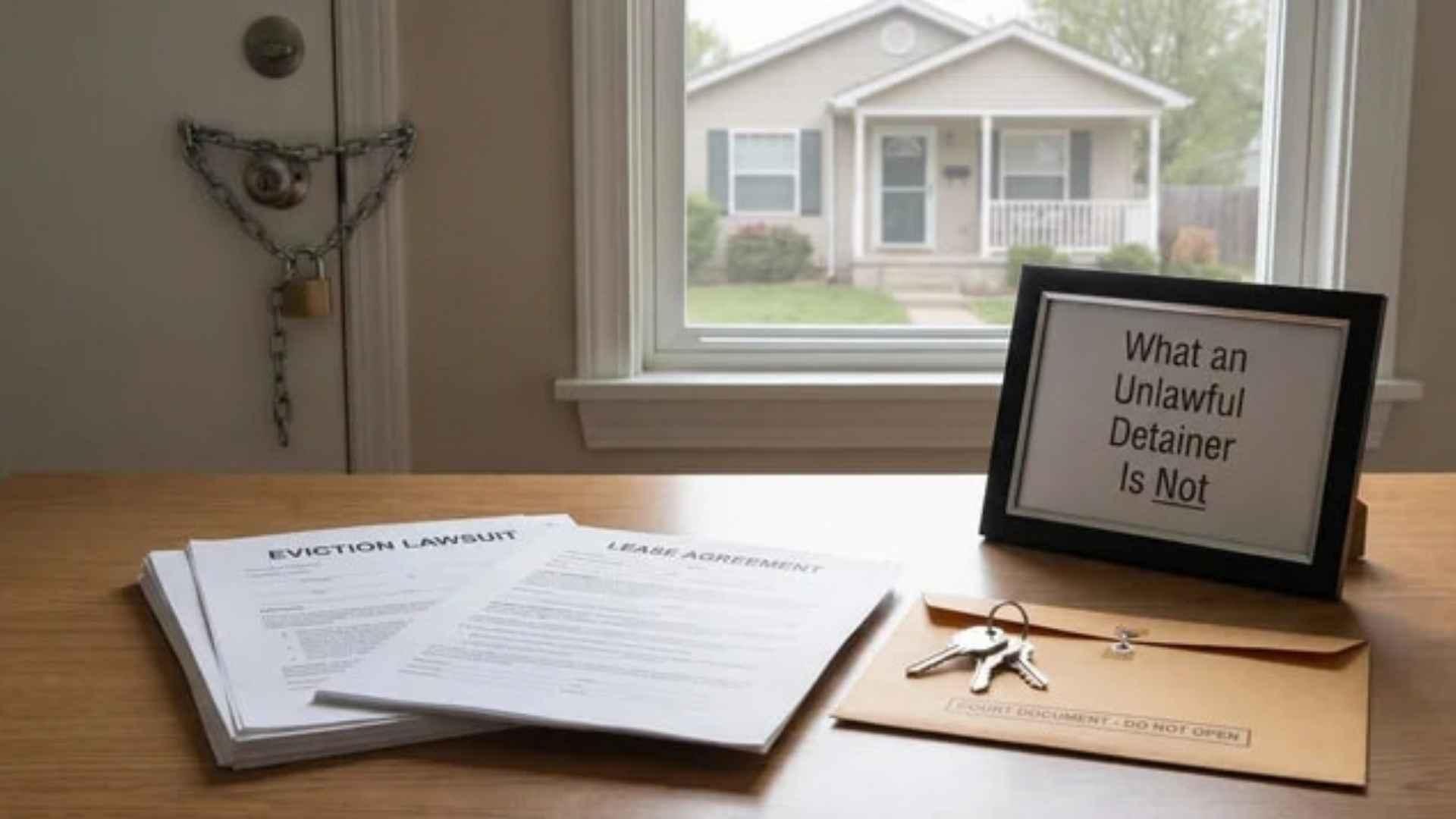
A landlord can’t remove someone from a property without first winning this type of court case.
Changing the locks, shutting off utilities, or removing someone’s belongings isn’t a shortcut around that step, it’s illegal self-help eviction, not a legal solution.
This also isn’t a criminal proceeding. It’s filed as a civil case, so being named in one doesn’t automatically create a criminal record.
And the lawsuit itself isn’t the eviction. Winning the case gets the landlord a writ of possession: a court order directing the occupant to leave. A sheriff or marshal then carries out the actual physical removal, and only after that writ is issued.
Why the Unlawful Detainer Process Moves Quickly?
These cases are called summary proceedings because the court resolves only one question quickly: who has the right to possess the property right now.
That narrow focus is what speeds things up. The court isn’t sorting out ownership or settling a dispute about damages. It’s ruling on possession alone, so the hearing covers far less ground than a typical civil case.
California, for example, now requires the occupant to respond within 10 court days of being served with the lawsuit, doubled from five days under a 2025 law change, compared to 30 days in a standard civil case.
Response deadlines reflect that same urgency. Every state sets its own window, and all of them run shorter than the 30 days a standard civil lawsuit provides, often by a significant margin.
The exact window shifts depending on where the property sits, since each state sets its own deadlines for these cases.
There’s a limit to how fast things move, though. If the occupant raises a broader dispute, like a claim to ownership, the case can slow down.
It might even get moved into regular civil court, since ownership no longer fits the narrow question these proceedings were built to answer.
Final Takeaway
Once a valid notice passes without action, the clock moves quickly, and so does the court.
It’s not a criminal case, and it’s not something a landlord can force through on their own. A court has to decide it first.
If you’re facing one of these notices, don’t wait to figure out where you stand. Talk to a local tenant rights group or an attorney before the deadline slips by.
Frequently Asked Questions
Is an unlawful detainer the same as an eviction?
Yes, in everyday use. Courts often use “eviction” as the plain-language term for this same lawsuit.
Can you go to jail for an unlawful detainer?
No, it’s a civil case, not a criminal one. Jail only becomes possible if someone later breaks a separate law, like trespassing.
Does an unlawful detainer show up on your record?
It can appear on public court records and tenant screening reports. It generally won’t show up on a criminal background check.
Can an unlawful detainer be dismissed or won by the occupant?
Yes, if the notice was invalid or the rent was actually paid. Valid legal defenses raised at the hearing can also lead to dismissal.