Not being on the deed feels like having no claim at all. Feelings aren’t the law, though. You might have more protection than you think.
But not automatically, and not in the way most people assume.
A deed only says whose name is on the title. It doesn’t tell you who has a legal claim to the property.
Your real rights come from marital property law. Not from the paperwork at the county office.
I’ve spent enough time in this area to know most people get this backward.
Whether you’re still married, headed toward divorce, or planning ahead for a spouse’s death, here’s what actually applies to you.
Does Marriage Give You Rights to a Home That’s Not in Your Name?
Yes. Marriage gives you real rights to the home, even without your name on the deed.
Those rights come from two different systems: title law and marital property law.
A deed just records who holds legal title. That’s it. It doesn’t decide who has a claim to the home’s value.
Marital property law is separate. It looks at the marriage itself, not whose name was on the paperwork.
I personally know people who think the deed settles everything, but it doesn’t come close.
This is where two wrong ideas both fall apart. “I own nothing” is wrong. So is “I automatically own half.”
Here’s the difference between the two:
- Title decides who can sign to sell or refinance the home.
- Marital property law decides who has a claim to its value.
You can have real financial rights under one system, and zero signing power under the other. Both at once.
There’s one spot where this whole picture changes: when the home sits inside a trust or an LLC. Then the entity holds title, not your spouse. That flips the usual rules and usually needs its own legal look.
What Rights Do You Have While You’re Still Married?
While you’re still married, you hold two core protections. You can live in the home. And you can block certain deals involving it.
The first is occupancy. You can treat the home as your primary residence. Nobody can force you out just because your name isn’t on the title.
The second comes from homestead laws. Most states have some version of them.
These laws stop one spouse from selling, mortgaging, or transferring the home alone. Your signature can still be required, even without an ownership stake on paper.
This is why lenders and title companies often want extra paperwork from a non-titled spouse. Sometimes it’s a signature on closing docs. Sometimes it’s a formal waiver of homestead rights.
I’ve watched people get blindsided by this requirement. They figure their signature shouldn’t matter since they’re not on the deed. It matters plenty.
This protection usually only covers your primary home. A rental, vacation property, or an investment property owned by just one spouse doesn’t get the same shield. Even during a solid marriage.
What Happens to the Home in a Divorce?
One question decides almost everything here: was the home bought before the marriage, or during it?
Get that answer first. Every rule after that depends on it.
Here’s something the simple version misses. Even separate property can pick up a claim. If marital money or labor went into it, that value can become shared.
Courts often call this “active” appreciation. It’s growth caused by money or work, not by the market moving on its own. That distinction matters a lot in practice.
I’ve seen this trip people up constantly. Market appreciation and active appreciation get treated completely differently in court.
Now let’s break this down by timing, since that’s the fork that decides where you land.
If the Home Was Bought Before the Marriage
A home bought before the wedding is usually separate property. The spouse who bought it typically keeps it.
The other spouse’s claim is usually limited to a share of the appreciation. But only the part built from marital money or effort.
Think mortgage payments made with joint income. Think a new roof, or a finished basement paid for during the marriage.
Here’s where it gets messy in real cases. Say separate money and marital money mixed together in a joint account. Proving which dollar paid for what turns into a real fight. Not a formality.
If the Home Was Bought During the Marriage
A home bought during the marriage is simpler. It usually falls under the marital or community property default.
That means it counts as jointly acquired. It doesn’t matter whose name is on the deed, or who wrote the down payment check.
There’s no separate-property starting point to carve out here. In most cases, the home’s full value is on the table for division.
What Happens to the Home If Your Spouse Dies?
If your spouse dies and you’re not on the deed, you’re not left with nothing. Not automatically.
What you get depends on one thing: did your spouse leave a will?
That answer decides which protection kicks in for you.
Here’s the good news either way. Most states give the surviving spouse a family allowance, a right to draw support from the estate while it’s being sorted out, regardless of what the will or the deed says.
Now, the details split depending on whether a will exists. Let’s go through both paths.
If Your Spouse Left a Will
Say the will cuts you out, or leaves you far less than a full share. Elective share laws in most states step in anyway.
These laws guarantee you a minimum slice of your spouse’s estate; typically a fixed fraction that varies by state, commonly cited as somewhere between a third and half.
Sometimes the length of the marriage changes the math too.
I want to be clear on one thing: this protection isn’t automatic. You typically have to file a formal claim to get it.
If Your Spouse Died Without a Will
No will means the state’s intestacy rules take over. In many states, surviving spouses can streamline this by filing a spousal property petition instead of going through full probate.
In most cases, you get a share of the home. Not necessarily all of it.
Children change the math here, whether they’re from your marriage or an earlier one. They’re often entitled to a piece too, under the same rules.
The exact split depends on your state and your family situation. Two surviving spouses in similar spots can land in very different places.
What This Doesn’t Guarantee and How to Protect Yourself

Let’s be honest about the limits here. None of this makes you a co-owner.
You still can’t sell the home on your own. You can’t refinance it, or borrow against it, without the person on the deed.
How much protection you actually get also depends on your state’s property system.
Some states use community property rules. Others use common law or equitable distribution. The two systems don’t treat this the same way at all.
Here are the community property states, plus a few states that let couples opt in:
- Arizona
- California
- Idaho
- Louisiana
- Nevada
- New Mexico
- Texas
- Washington
- Wisconsin
Most other states use common law or equitable distribution instead.
I’ve seen two spouses in nearly identical situations end up with completely different results. The only difference was which system their state used.
If you want more certainty than these default rights give you, you’ve got two real options.
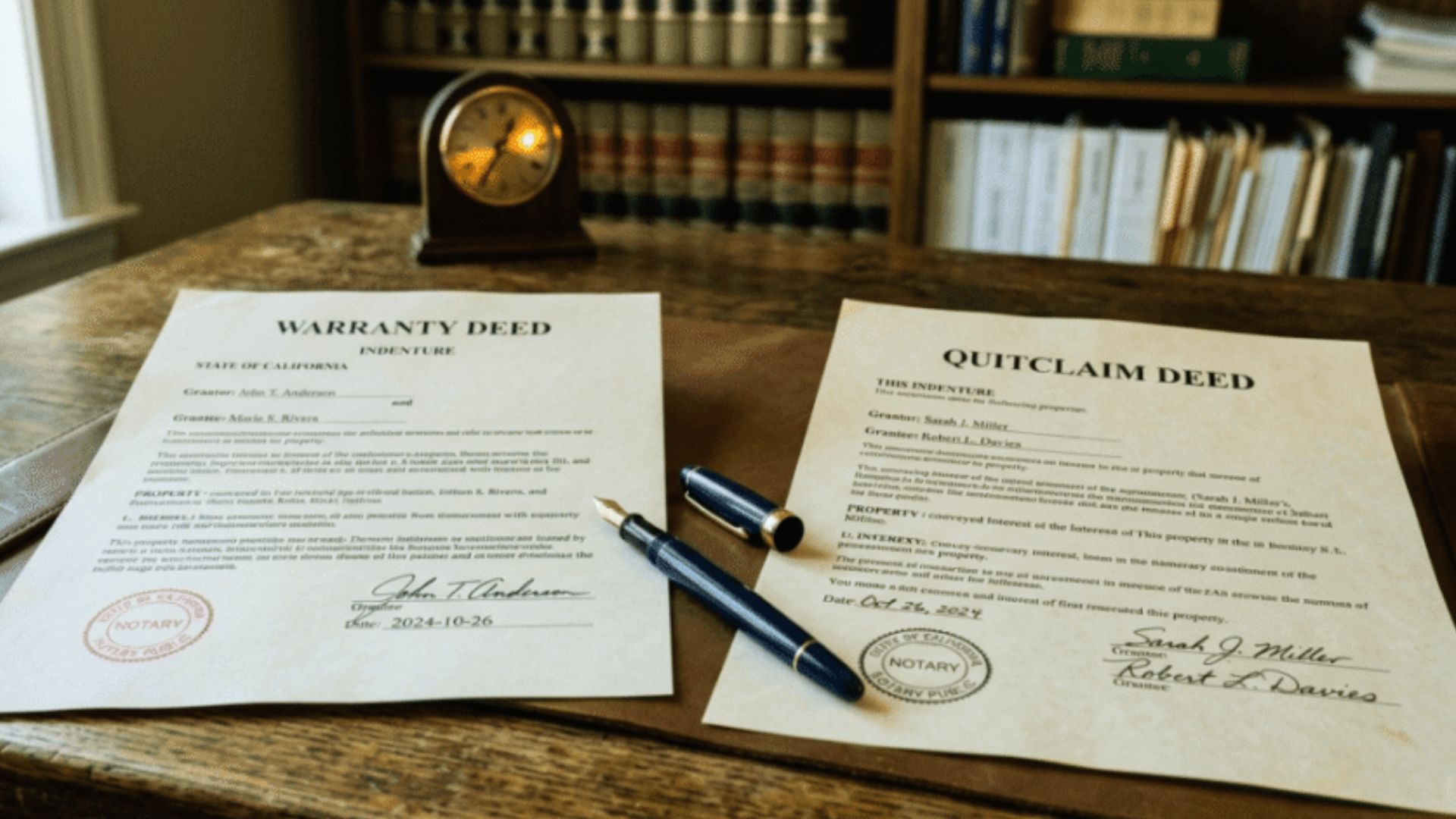
One is asking to be added to the deed. This usually means a quitclaim deed, which is a fairly simple filing.
One thing worth knowing: most mortgages have a due-on-sale clause. A transfer could technically trigger it. But the Garn-St. Germain Act, a federal law, specifically protects transfers made to a spouse from triggering it.
The other option is a postnuptial agreement. It lets both of you spell out ownership in writing, instead of leaving it to default state law.
Here’s the Bottom Line
Not being on the deed leaves you more protected than it looks, and less certain than it feels.
Real rights exist. But they come with real limits, and both depend on your state and your specific situation.
If you’re heading into a divorce, settling an estate, or just want peace of mind, don’t guess. Check how your state actually classifies the property first.
Don’t assume the best case, and don’t assume the worst one either. Find out exactly where you stand.
Disclaimer: This article is legal information, not legal advice. Property and inheritance rights vary by state. Confirm your situation with a licensed attorney before making decisions based on this article.
Frequently Asked Questions
What happens if my husband died and my name isn’t on the house?
You’re not automatically left with nothing. If he left a will, elective share laws in most states still protect you. You can claim a portion of his estate, even if the will excludes you. If he died without a will, state intestacy rules typically give you a share of the home alongside any children.
What if my name is not on the deed but we are married?
Marriage still gives you legal rights to the home, separate from whose name appears on the deed. You typically can’t be forced out. Many states also require your signature before your spouse can sell, refinance, or transfer the property. That’s true even though you’re not listed as an owner.
Does the house automatically go to a wife if the husband dies?
Not automatically, and not entirely on its own. If he had a will, its terms generally control, though elective share laws can still guarantee her a minimum portion. Without a will, state intestacy law divides the home between the wife and other heirs, such as children.
Can my wife take my house if I bought it before we got married?
Not the whole thing. A home bought before marriage is usually treated as separate property in a divorce, so she can’t claim full ownership. However, if marital funds paid the mortgage or funded upgrades, she may have a claim. That claim would cover the value the home gained during the marriage.